

Electric Bike Rack Weight Capacity: Calculate It
Electric bike rack weight capacity is the lower of two ratings: what the rack is approved to carry, and what the hitch and vehicle can support once the rack itself is included. A 60-pound tray rating does not help if the loaded bikes plus the rack exceed the hitch label. Add the bike, the battery if it stays installed, and the rack. Then stop at the lowest published limit.
Compare electric bikes before you size a rack
What does electric bike rack weight capacity include?
It includes every pound that hangs on the receiver while you drive. That is the bike or bikes, anything strapped to them, and the rack. It is not the rider payload printed on the bike frame.
Four limits usually show up, and the lowest one wins:
- Per-bike tray limit. The heaviest single bike the tray is built to hold.
- Total rack payload. All bikes together, sometimes listed with the rack's own weight already counted and sometimes not. Read the note.
- Hitch tongue-weight rating. The downward load the hitch is rated to carry. A rack sits out past the hitch pin, so it stresses the receiver differently than a trailer ball.
- Vehicle limit. The number in the owner's manual for a hitch-mounted carrier. A stronger hitch does not raise it.
If the manual, the hitch stamp, and the rack card disagree, use the smallest number. Do not average them.
How do you weigh the bike for the rack?
Use a scale, not the showroom brochure, when you can. Catalog weights often leave off pedals, a lock, a bag, or a rear rack. Those extras still ride on the car.
A simple home check works:
- Put a bathroom scale on a flat floor.
- Stand on it and note your weight.
- Pick up the bike and stand on the scale again.
- Subtract the first number from the second. That is the bike as you will haul it.
Weigh the bike the way it will travel. If the battery, charger, or lock will stay on the frame, leave them on for this check. If you will pull the battery and carry it inside, weigh the bike without it and weigh the battery on its own so you know what you removed.
Write both numbers down. Many commuter e-bikes land well above a basic pedal bike, and a fat-tire or cargo model can be heavier still. The only number that counts for your rack is the one you measured.
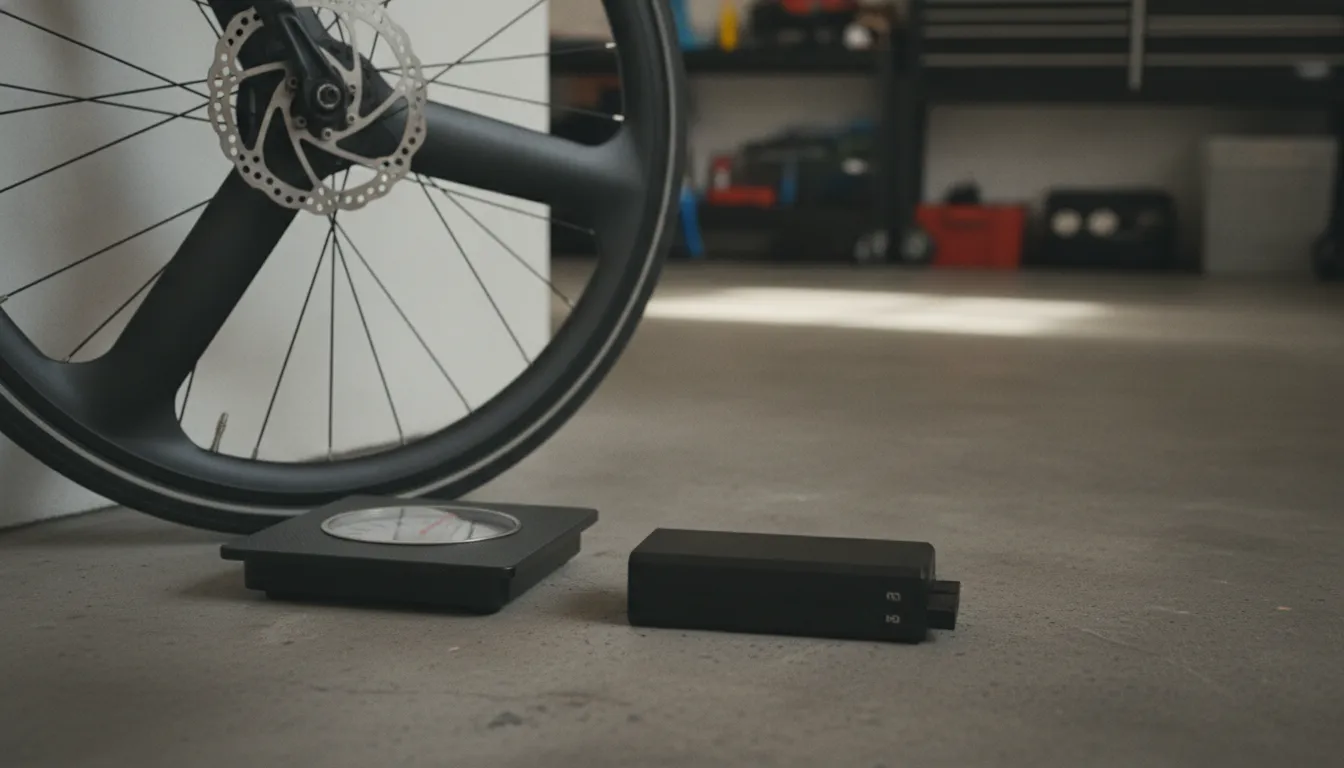
On-bike cargo limits are a different question. How to read electric bike payload capacity covers rider, cargo, and the rack bolted to the bike. Do not reuse that figure as the car-rack limit.
Should the battery come off before you load?
Take the battery off when the maker says the rack load assumes it is removed, or when leaving it on pushes you over the tray or tongue-weight number. A pack often weighs several pounds. On two bikes, that is enough to change a close call.
Removal only counts if three things are true:
- The pack actually comes off without tools you do not have at the car.
- You can carry it inside the cabin, not strapped back onto the rack.
- The rack card allows the remaining bike weight. Some cards still cap a single bike below your stripped weight.
If the pack stays on, add it back into the bike weight before you compare limits. Do not subtract a battery you plan to "probably" remove and then forget in the driveway.
Keep the pack out of a hot trunk and out of the rain. The point of removal is a lighter, cleaner load, not a battery rolling around the cargo area.
How do you add rack weight to tongue weight?
Tongue weight here means the downward load at the hitch. For a platform rack, estimate it as rack weight plus every bike and accessory on that rack. The rack's own weight is not free. A heavy platform can weigh as much as a small bike.
Use this order:
- Weigh or look up the rack by itself, empty.
- Add each bike at the travel weight from the scale check.
- Add locks, ramps, or adapters that stay on the rack.
- Compare that sum with the rack's total payload and with the hitch's tongue-weight rating.
You need both comparisons. A rack can be inside its own payload and still overload a light hitch. A strong hitch can still be paired with a rack whose trays are not rated for one heavy e-bike.
A hitch-mounted rack is not the same load as a trailer tongue. The bikes sit behind the pin, so bumps and sway stress the receiver more than the same pounds on a ball. Hitch Rider's hitch safety notes explain that difference and send you back to the label on your hitch. Their private rule of thumb is to keep the rack plus the bikes near two-thirds of the hitch tongue-weight rating. Treat that as a caution, not a new official rating. The stamped rating and your vehicle manual still control the decision.
Which hitch class number actually applies?
Class is a shorthand, not a promise for your car. Published weight-carrying tongue-weight bands, from hitch makers that cite common SAE-style ratings, look like this:
| Hitch class | Typical tongue weight | What it means for e-bikes |
|---|---|---|
| Class I. | Up to about 200 lb. | Often too small once a rack and one e-bike are added. |
| Class II. | Up to about 300 to 350 lb. | May fit one lighter e-bike if the label agrees. |
| Class III. | Up to about 500 lb. | A common start for two e-bikes if the vehicle allows it. |
| Class IV. | Up to about 750 lb weight-carrying. | More hitch capacity, still capped by the vehicle. |
Those bands come from published hitch charts, including Hitch Rider's class table and common carrier terminology sheets. Your hitch label can be lower. A Class III hitch on a light SUV might be limited by the vehicle long before 500 pounds.
Receiver size is separate. Many Class I and II hitches use a 1-1/4 inch opening. Class III and higher often use 2 inches. A 2-inch opening does not by itself raise tongue weight. Read the stamp.
If you are choosing hardware rather than doing this math, start with the electric bike hitch rack fit and setup guide. This page only answers whether the pounds fit.
How do you check the vehicle limit?
Open the owner's manual section on trailer towing or hitch-mounted carriers. Write down the maximum vertical load for the receiver. Then read the sticker on the hitch. Use the lower figure as the hitch budget.
Subtract in this order:
- Start with the lower of the vehicle limit and the hitch tongue-weight rating.
- Subtract the empty rack weight.
- What remains is the most the bikes and add-ons can weigh together.
- Check each bike against the per-tray limit, not only the total.
A higher hitch class does not increase what the vehicle maker allows. If the manual says the receiver can carry 150 pounds, a Class III hitch still does not make 150 into 500.
Also confirm the rack is approved for a hitch-mounted carrier, not only for towing a trailer. Some vehicle notes limit or forbid cargo racks even when a small trailer is allowed. If the manual is silent, ask the dealer or hitch installer before you buy.
What does a two-bike load look like?
Here is a labeled example, not a claim about a specific bike Voltaire sells. Bike A weighs 62 pounds with the battery on and 55 pounds with it off. The battery is 7 pounds. Bike B weighs 70 pounds with the battery on and 62 pounds off. The platform rack weighs 45 pounds and is rated for 60 pounds per tray and 120 pounds total for the bikes.
Both batteries off:
- Bikes: 55 + 62 = 117 pounds, under the 120-pound rack total.
- Each bike is under the 60-pound tray cap.
- Load on the hitch: 117 + 45 = 162 pounds.
Both batteries on:
- Bikes: 62 + 70 = 132 pounds, which fails the 120-pound rack total.
- Bike B at 70 pounds also fails the 60-pound tray cap.
- Hitch load would be 132 + 45 = 177 pounds, but you never get there because the rack failed first.
Now put that 162-pound battery-off load on two hitches. A hitch and vehicle both rated to 200 pounds of tongue weight can accept 162 pounds on paper, with a slim margin. A hitch limited to 150 pounds cannot. Removing the batteries fixed the rack card and still did not fix the lighter hitch.
That is why two-bike shopping is its own decision. The best rack for two electric bikes guide covers styles and fit. Use this math before you treat a two-bike label as enough.
Fat-tire bikes add width and often weight. Tray clearance is covered in the fat-tire rack fit guide. Still weigh the bike. A tray that clears a 4-inch tire can still be under the tray's pound limit.
What should you verify before you buy?
Check the labels before you pay, not after the first highway trip. Ask for four documents and keep a photo of each:
- The rack card: per-bike limit, total limit, and whether those numbers include the rack weight.
- The hitch stamp or sticker: class, tongue weight, and receiver size.
- The vehicle manual page for hitch carriers.
- Your scale notes for each bike, with and without the battery.
Reject the rack if any single bike exceeds its tray, the bikes exceed the rack total, or rack plus bikes exceed the lower of hitch and vehicle tongue weight. A salesperson's "it should be fine" is not a rating.
If you already own a heavy e-bike and want loading technique rather than this arithmetic, use the heavy e-bike car rack guide. For trip prep after the numbers work, see how to transport an electric bike safely.
Bend shoppers can weigh the decision in person. Bring the vehicle manual page, or a photo of the hitch label, to Voltaire Cycles and match a bike's real weight to a rack that is rated for it. The shop can also inspect a rack or a bike before a long highway trip.
Do the math again if you change bikes, add a second bike, or swap racks. A number that worked for one commuter e-bike can fail when a heavier fat-tire bike takes the same tray. Write the passing total in your phone so the next trip starts from a known load, not a guess.
Call Voltaire Cycles at (541) 350-0669 to check rack fit
Frequently Asked Questions
Does electric bike rack weight capacity include the rack?
Include the rack when you compare the load with hitch tongue weight and the vehicle limit. Some rack cards list only the bikes. If the card does not say the rack weight is already inside the number, add the empty rack yourself.
Can I use a trunk rack for an electric bike?
Most trunk and strap racks are built for lighter pedal bikes. An e-bike often exceeds those straps, and the vehicle maker may not allow that load on the trunk lid. Use a hitch platform rated for the measured bike unless the rack maker prints an e-bike limit you can meet.
What if one bike is under the limit and the other is over?
The heavier bike fails the setup even if the total looks fine. Per-tray limits apply to each bike. Move the heavier bike to a higher-rated tray, remove allowed weight, or pick a rack with a higher per-bike number.
Do hitch class charts replace my vehicle manual?
No. Class charts are typical bands. Your hitch label and the vehicle manual are the limits that apply to your car. A higher class hitch never raises the vehicle number.
Where should I put the battery while I drive?
Carry a removed battery inside the vehicle, secured so it cannot slide. Do not strap it back onto the rack and then pretend you saved the weight. Follow the bike maker's temperature and transport notes for the pack.