

How to Transport Electric Bike Safely
An electric bike can travel safely by car. But the best setup depends on its fit in your vehicle and what its manufacturer allows you to remove or secure. A little planning helps prevent damage and makes loading less awkward, whether you are preparing for a Central Oregon ride or a longer trip.
Get help preparing your e-bike for transport
In short: To decide how to transport electric bike, compare carrying it inside your vehicle with using a suitable carrier or truck bed. Then follow the bike and transport-system instructions for preparation, battery handling, and secure loading. For shipping or air travel, confirm current battery rules directly with the carrier before booking.
Start with the option that gives you a stable, protected way to move the bike without forcing a fit or relying on guesswork. The vehicle, available space, and amount of lifting you can manage will help narrow the choice.
How to Transport an Electric Bike: Choose the Right Method
The best way to move an e-bike depends on the vehicle, the trip, and whether you can load and secure the bike safely. For a short drive, it may fit inside a van, SUV, or hatchback; a pickup bed or rear carrier can work when the bike is secured as directed. Shipping is a separate option, but battery rules must be checked with the carrier before booking.
Start by considering the bike and the vehicle together. If carrying it inside, check that the bike fits without pressing on the display, controls, cables, or other vulnerable parts. Removing a wheel or battery may make loading easier, but only do so when the bike maker's instructions allow it. Protect the frame and interior surfaces from contact during the drive.
| Method | Check |
|---|---|
| Inside | Support and protect controls |
| Pickup bed | Prevent shifting |
| Rear carrier | Check fit; follow instructions |
| Shipping | Confirm acceptance and battery rules |
A pickup bed offers room for a bike. It still needs secure support. Prevent shifting and cargo contact. Follow vehicle and bike instructions. Do not use an open bed without a protection plan.
A rear carrier keeps the bike outside the passenger area and can be convenient for regular trips. Before choosing this route, confirm that the carrier and vehicle are intended for your bike and that you can load it without straining or lifting by fragile components. For detailed rack-fit and carrier considerations, see our guide to transporting a heavy e-bike on a car rack.
Shipping can make sense when the bike needs to travel farther than you can drive. But it is not simply a matter of boxing the complete bike and handing it to any carrier. E-bike batteries are subject to transport restrictions, and carrier policies can differ. Ask the shipper what it accepts, what preparation and packaging it requires, and whether the battery must be handled separately. Get those answers before selecting a service or preparing the bike.
Whichever method you choose, use the instructions for your specific bike, vehicle, carrier, and battery. If no option offers a clear way to load, protect, and secure the bike, pause and get model-specific advice before traveling.
How Should You Prepare an E-Bike Before Moving It?
Before loading, make the bike stable, powered down, and free of anything that can swing, snag, or press against a control. Remove only the parts that genuinely need to come off, and follow the bike maker's instructions for disassembly. A little preparation helps protect the display, levers, cables, frame finish, and loose accessories during the trip.
- Power the bike off. Turn off the display and system before handling or loading the bike. Keep the key with you rather than leaving it in the bike.
- Remove loose items. Take off a pump, bag, bottle, child seat, or other accessory that could shift or catch. Keep small parts together so they are easy to find at arrival.
- Protect contact points. Position the bike so the handlebar, brake levers, display, and cables will not be squeezed against the vehicle or another object. Use clean padding between surfaces that might rub, and avoid fastening straps over fragile controls or wiring.
- Consider the front wheel only if needed. If the bike does not fit otherwise, remove the wheel only when the manufacturer permits it and you know how to reinstall it correctly. Keep the wheel and its hardware secure, and do not let the bike rest on an exposed axle or rotor.
- Pad and stabilize the bike. Cushion likely frame-to-frame or frame-to-vehicle contact points. Secure the bike so it cannot tip, slide, or bounce during the trip, while keeping pressure off delicate components.
For an inside-vehicle trip, check that the bike remains upright or supported in a position approved by its maker. Avoid laying it on its side unless the owner's manual says that is acceptable. A blanket can prevent scratches, but it is not a substitute for restraint: the bike should not be able to shift when the vehicle turns or stops.
These basic precautions align with Liv's e-bike transport guidance, which discusses preparing a bike for vehicle transport. Your own owner's manual takes priority, especially for wheel removal, battery handling, and approved support points.
How Do You Handle the Battery and Lift a Heavy E-Bike?
Follow the bike and battery maker's instructions before removing or transporting the battery. Remove it only if the manufacturer permits; otherwise, leave it installed and secure the bike as directed. If removed, protect the battery from impact and keep its contacts from touching loose metal objects. For lifting, plan the route first, use a second person or a ramp when needed, and never lift by the display, cables, or battery.
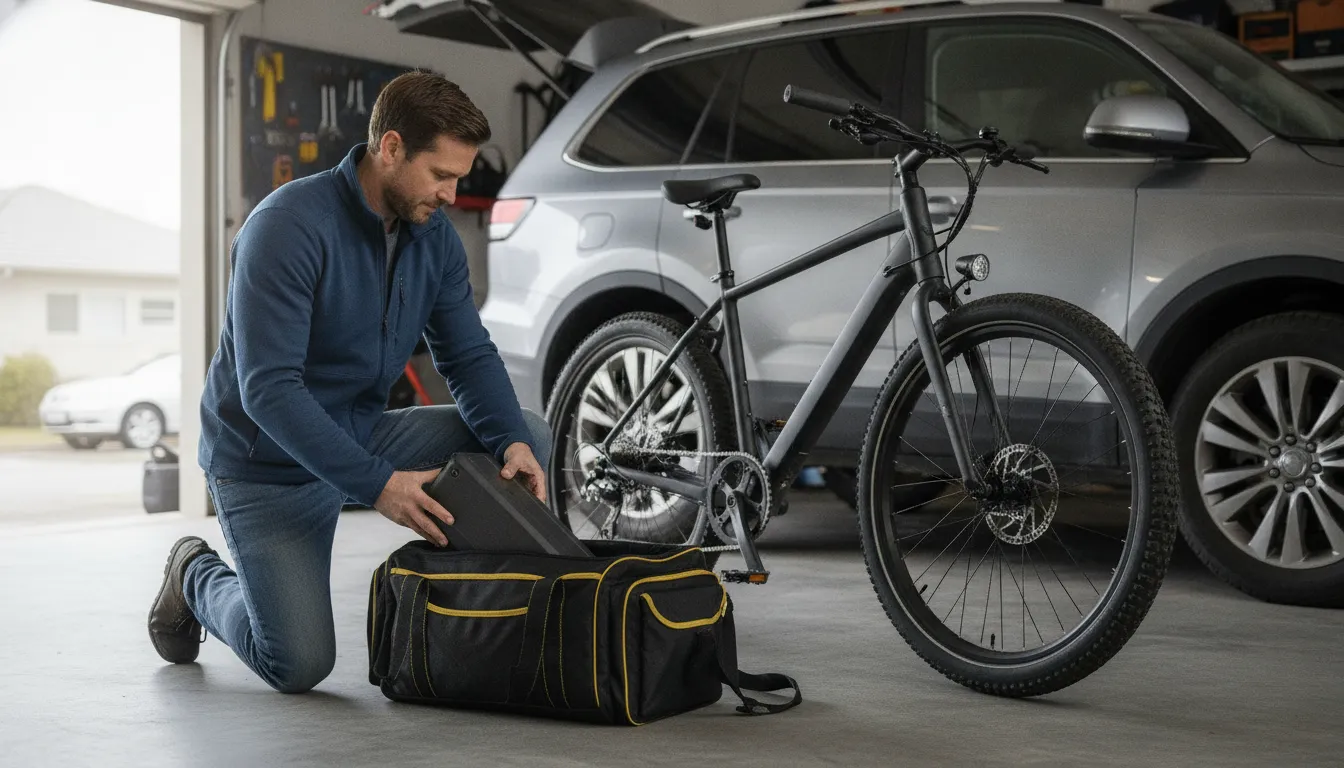
Battery removal can make a bike easier to handle, but it is not a universal step. Check the owner's manual for the correct removal and reinstallation procedure. Then carry a detached battery securely in a position where it cannot slide, be crushed, or get struck by other cargo. Keep it dry and away from loose tools or other conductive items. If the battery is damaged, do not transport it as though it were in normal condition; follow the maker's guidance.
Before lifting, clear doors, steps, and obstacles, and decide where the bike will rest. Keep the load close to your body, bend at the knees, and lift smoothly with help if you cannot control the bike safely on your own. A ramp can reduce the need to carry the full bike, but guide it carefully and have another person steady it when needed. Use the frame or the manufacturer's designated handling points, not fragile controls or wiring.
Do not lay an e-bike on its side unless the manufacturer says that position is acceptable. If it is permitted, pad the contact points and make sure nothing presses on the display, brake levers, cables, or battery. When instructions are unclear, check with the bike maker or a qualified service shop before moving it.
What Should You Check Before Securing an E-Bike to a Vehicle?
Before loading, check the instructions for your bike, carrier, and vehicle, since each setup has its own approved attachment points and handling requirements. Confirm that the bike is secured as directed, does not block your view, lights, or license plate, and has enough clearance from the road and vehicle. Recheck it before leaving and after stops.
Walk around the vehicle before departure. Make sure the bike and any removed components are secured. Straps or attachments are routed as the carrier maker specifies, and nothing can swing into a wheel, exhaust, or moving part. Check that doors, hatch, and tailgate are closed safely, and that the bike does not interfere with mirrors or required lights.
After loading, gently check the attachment points for movement without altering the carrier's instructions. If you stop during the trip, take another look before driving on. Watch for shifted straps, loosened connections, or contact between the bike and vehicle. If anything has moved, secure it again according to the manuals before continuing.
For a deeper look at choosing a compatible carrier and hitch setup, see our heavy e-bike car rack guide.
How Can You Protect an E-Bike from Weather and Theft in Transit?
On an open carrier, road spray, dust, and casual access can reach the bike during a trip. Use a cover designed for your transport setup and secure it so it cannot flap or loosen. Make sure it does not hide lights, the license plate, or other required visibility. A lock adds a deterrent at stops, but it does not replace a secure attachment or a careful arrival check.
Before setting out, check the cover's fit and fastening points. A loose cover can shift in wind or rub against the bike, while a poorly placed strap may press on controls, cables, or other vulnerable parts. Keep the bike's operating instructions in mind, especially for battery handling; do not cover a battery while it is charging, and avoid trapping heat around it.
At a stop, choose a visible location when practical and use a frame or rack lock according to its instructions. Treat the lock as one layer of security, not a guarantee. If you leave the vehicle, check that the cover remains attached and the bike is still secured to its carrier.
After arrival, remove the cover and look over the bike before riding. Check for shifted straps, loose accessories, fresh dirt or moisture around exposed areas, and anything that may have moved in transit. If you find a concern, consult the bike maker's guidance before use. Riders who need help with general service or repair questions can review Voltaire Cycles' service information.
Can You Ship or Fly with an Electric Bike Battery?
Whether an e-bike can travel by air or parcel service depends on the battery and the specific carrier's rules. Check the watt-hour (Wh) rating on the battery's manufacturer label, then confirm directly with the airline or shipping carrier before booking. Do not assume a typical e-bike battery is permitted on a passenger flight or accepted for shipment.
The FAA notes that lithium-ion batteries can overheat and enter thermal runaway if damaged, overheated, exposed to water, overcharged, or improperly protected. FAA passenger battery guidance describes limits for lithium-ion batteries: those above 100 Wh require airline approval, and those over 160 Wh are prohibited on passenger aircraft. These general battery thresholds are not permission to fly with a complete e-bike. The FAA separately advises passengers to ask the airline whether it accepts battery-powered recreational vehicles, noting that many do not. Check the FAA's recreational-vehicle guidance, then get the airline's decision for your exact bike and itinerary.
Ask whether the airline's answer changes if the battery is installed or removed. FAA guidance says spare lithium batteries must be carried in the cabin, not checked. This does not mean a large e-bike battery qualifies for carry-on. Damaged or recalled batteries that could spark or overheat must not be carried unless removed or made safe under applicable rules.
For shipping, contact the carrier before packing. Ask whether it accepts the complete e-bike, a removed battery, or a battery installed in the bike, and request current packaging requirements. Do not assume that removing the battery makes a shipment eligible. Keep the bike and battery maker's handling instructions available.
Give the airline or carrier the exact Wh rating and bike details, and confirm acceptance for your specific route or shipping method. If you cannot verify approval, choose another transport plan.
Get help with e-bike transport preparation in Bend
Frequently Asked Questions
These quick answers cover common transport questions that may come up before loading or shipping.
What is the easiest way to transport an electric bike?
The easiest method is the one that fits your bike and vehicle without awkward lifting or improvised securing. If the bike fits inside, protect the car interior and secure it so it cannot slide. Otherwise, use a compatible carrier or arrange shipping after confirming acceptance. Check the bike maker's instructions before removing parts.
What is the best way to transport an electric bike by car?
For a short trip, carrying it inside can work if it fits and can be firmly restrained. If using an exterior rack, confirm that the rack and vehicle are suitable for your particular bike, then follow their loading and tie-down instructions. Remove loose accessories and check that nothing can shift or obstruct lights or visibility.
Can you lay an e-bike on its side for transport?
Do not assume it is safe to lay your bike down. Follow the owner's manual, since the permitted position and preparation vary by model. If the manual allows it, protect the display, controls, frame, and other vulnerable parts from pressure or impact, and make sure the bike cannot move. When in doubt, transport it upright.
Can you ship an e-bike?
Do not assume a parcel carrier will accept a complete e-bike or its battery. Lithium batteries have transport requirements, and packaging and acceptance rules depend on the service and battery configuration. Check the carrier's current rules for your exact battery and route before packing or booking, and follow its instructions.
Ready to Get Your E-Bike Trip-Ready?
A quick conversation about fit, setup, or service can help you plan how to move your e-bike and what to check before departure. If you are in Bend, get started by reviewing Voltaire Cycles' service and repair information for help with your questions before the trip.