

E Bike Service Schedule: When to Book in Bend
An e bike service schedule tells you when to book, not which chores to do that afternoon. Start with the intervals in your owner's manual. Then shorten them when Central Oregon dust, rain, cold, or trail miles show up sooner than the calendar. A paved commute and a dusty descent do not wear brakes, chains, or tires on the same clock.
Use two triggers together: miles ridden and months since the last inspection. Book the visit that arrives first. A symptom such as weak braking, a skipping chain, or a hot battery overrides both clocks. Stop riding and call a shop. The seasonal task list and the description of a tune-up live on other pages. This guide only answers when each system is due.
Book electric bike service in Bend when your mile mark or your month mark arrives first.
What does an e bike service schedule cover?
An e bike service schedule covers seven booking points: new-bike setup, brakes, drivetrain, tires, battery, firmware, and an annual inspection. Each point has its own wear rate. Putting them on one yearly visit leaves the fast-wearing parts late and the slow parts early.
The manual is the authority for your model. A hub-drive commuter and a mid-drive trail bike can list different brake, spoke, and battery checks. If the manual names a mileage or a month, follow that number. The ranges below are a planning baseline for when the manual gives no interval. They also cover a manual that only says "inspect regularly." They are not a Voltaire Cycles interval. They are not a promise that a part will last that long.
Write the odometer, or a ride-log estimate, next to the date of each visit. The next booking is whichever comes first: the mile mark or the month mark. If you cannot see a trip meter, a simple note after each week of riding is enough to stay honest.
| Booking point | Baseline when the manual gives no interval | Book sooner when |
|---|---|---|
| New-bike setup. | Before the first real ride, then again at 50 to 100 miles. | The bike was shipped, racked, or assembled outside a shop. |
| Brakes. | Inspect by 500 miles or 3 months. | Long descents, wet grit, or a softer lever. |
| Drivetrain. | Inspect by 500 miles or 3 months. | Dust, mud, rain, or a noisy chain. |
| Tires and wheels. | Inspect by 500 miles or 3 months. | Goathead miles, low pressure, or a wobbling wheel. |
| Battery. | Review health at 6 months, and at every annual visit. | Sudden range loss, heat, swelling, or a bad smell. |
| Firmware and software. | Ask at the annual visit, or when the maker posts an update. | Error codes, a new display, or a recalled version. |
| Annual inspection. | Once a year, or at 1,000 miles. | Daily commuting, cargo, or a full trail season. |
Where does a new bike sit on an e bike service schedule?
A new electric bike should get a setup inspection before the first real ride, then a follow-up around 50 to 100 miles. Cables settle, spokes bed in, and bolts that left the factory tight can ease off after the first weeks of pedaling. That early visit is a confirmation, not a full annual inspection.
Book the setup even if the bike was adjusted at delivery. Ask the technician to confirm brake lever feel, rotor alignment, derailleur limits, tire pressure, torque on stem and axle bolts, and that the battery locks and the display powers on cleanly. Bring the charger and the manual so model-specific torque and software notes are in the room.
Shipped bikes and bikes that rode home on a rack deserve this visit before a long descent. A rack strap or a delivery bounce can shift a rotor or a handlebar without an obvious scratch. If anything feels vague on that first neighborhood loop, stop and book rather than "wearing it in."
How often should brakes, drivetrain, and tires be inspected?
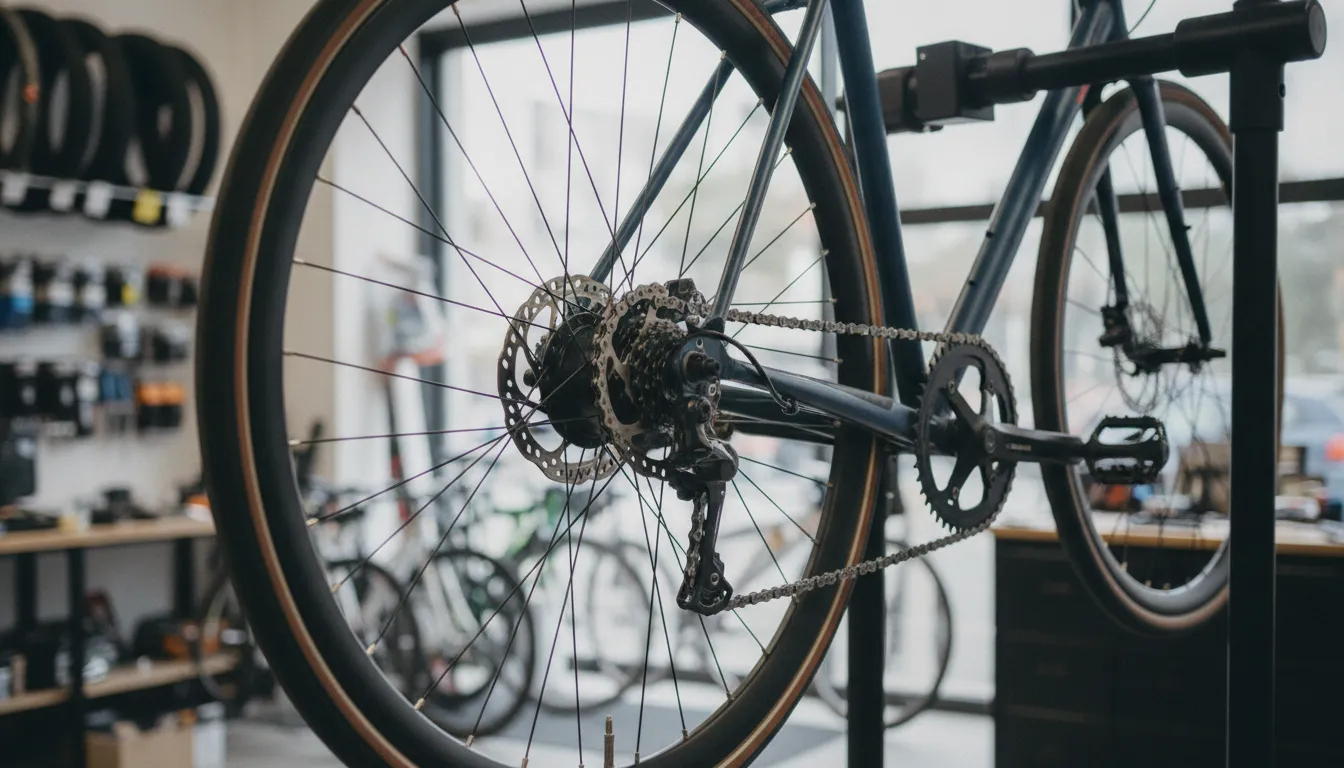
Inspect brakes, the drivetrain, and tires about every 500 miles or every 3 months, whichever comes first, unless the manual sets a tighter interval. These three systems wear from miles and from grit. They are the parts most likely to need a mid-year booking in Bend, where pumice dust and spring rain share the same week.
Brakes are due when the lever travels farther, the bike takes longer to stop, or you hear a new scrape. Weight and speed on an electric bike use pad material faster than a pedal bike of the same size, especially on the long descents west of town. Do not wait for metal-on-metal. A 3-month look catches pad wear while the rotor is still true.
The drivetrain is due when the chain sounds dry, shifts hang between gears, or you can see rust after a wet commute. Dust sticks to a wet chain and acts like sandpaper. A 500-mile inspection is a measurement of wear, not a home tutorial. Cleaning steps belong in the chain cleaning and lubrication guide.
Tires and wheels are due on the same 500-mile or 3-month mark, and immediately after a goathead puncture or a curb hit. Check for flattened tread, sidewall cuts, and a wheel that wobbles in the stand. Low pressure shows up as a shorter battery range before it shows up as a flat. If the tire is already damaged, the replacement guide is the next read, not another month of riding.
When do battery checks and firmware updates belong on the schedule?
Put a battery health review on the schedule at 6 months and again at the annual inspection. Add a firmware check to that annual visit, and also whenever the manufacturer publishes an update or the display shows a new error. Neither item should wait for a dead motor. Both are questions for a technician who can read the system, not a calendar guess.
A normal review looks at range trend, charge time, connector cleanliness, and whether the pack gets hot in ordinary use. Book the same week if range drops suddenly, the case swells, the charger smells sharp, or the pack is too hot to touch. The U.S. Consumer Product Safety Commission tells riders to follow the maker's charging steps, use only the supplied or recommended charger, and stay present while a micromobility battery charges. That guidance is on the CPSC micromobility safety page.
Firmware and controller software are not a mileage item. Some brands push a fix for a sensor, a display, or a cutoff. Others never issue one. Ask at the annual visit whether your model has an outstanding update, and bring the bike in sooner if a notice names your serial range. Do not install unofficial software to "wake up" an older pack.
Cold sheds and hot car interiors change the calendar more than they change the odometer. If the bike sleeps outside in a Bend winter, move the 6-month battery review up. Storage temperature rules live in the battery guide. This schedule only decides the booking date.
How do terrain and weather change the interval?
Terrain and weather shorten the interval. They do not replace it. Keep the manual's number as the ceiling, then book earlier when the rides you actually took were harder than the manual assumed. A 500-mile brake check can become a 250-mile check after a month of trail descents. A 3-month drivetrain check can become a monthly look after repeated wet grit.
Use the list below only as a reason to move a booking date earlier. Do not use it to skip the manual.
- Dust and pumice after trail or gravel miles: inspect the chain and brake pads at the next 250 miles, not 500.
- Rain, meltwater, or a bike washed down and put away damp: book a drivetrain and connector look within 2 weeks.
- Repeated long descents or cargo weight: inspect pads and rotors at half the usual mile mark.
- Winter storage in an unheated space: review the battery before the first spring ride, even if the annual visit is months away.
- A crash, a rack incident, or a new noise: skip the calendar and book a diagnostic visit now.
Do not invent a shorter interval for a friend with a different motor or a different pad compound. Two Segway models in the same garage can still have different wear if one commutes the river path and one climbs Phil's. Tell the shop how you ride. The technician sets the next date from that history plus the manual.

How do you build a personal booking calendar?
Build the calendar from the last visit, not from January 1. Write four lines: setup done, next brake and drivetrain check, next battery review, and next annual inspection. Each line gets a mile number and a date. The line that arrives first is the one you book.
A practical first year looks like this. Setup before the first long ride. A confirmation between 50 and 100 miles. A brake, chain, and tire inspection at 500 miles or month 3. A battery review at month 6. An annual inspection at month 12 or 1,000 miles. If a dusty July blows the chain dry at mile 300, that inspection moves up and the later dates slide with it.
Keep the note on your phone or on a shop work order. Include brand, model, odometer, and where you ride. That record stops the next visit from starting at zero. It also shows whether Central Oregon conditions are eating pads faster than the manual expected, which is the only good reason to change the baseline.
Separate this calendar from daily habits. Tire pressure and a brake squeeze before you roll out are pre-ride checks, already covered in the every-ride safety checklist. They do not reset the 500-mile clock. A professional visit is the event that resets it.
Which triggers mean book now instead of waiting?
Book now when a safety change shows up, even if the next date is weeks away. Waiting for a round number is how a worn pad becomes a ruined rotor, or a dry chain becomes a skipped shift on a climb. The mileage schedule is for bikes that still feel normal.
Call the shop the same day for a lever that pulls to the bar, a wheel or headset that knocks, or a chain that skips under power. Do the same for a cut sidewall, a motor that growls or cuts out, or a display error that returns. A battery that swells, leaks, smells, or overheats is the same kind of stop. Those are diagnostic visits. They are not "the 500-mile slot."
The repair warning signs guide lists what those symptoms mean. This page only says they cancel the wait. If the bike still stops, steers, and charges normally, stay on the calendar and bring notes to the next planned visit.
What should you bring to a scheduled visit in Bend?
Bring the bike, the charger, the keys, and the manual or a photo of the service table in it. Add the odometer reading, the date of the last visit, and a one-line note about terrain: paved commute, trail, cargo, or mixed. If a display showed a code, write the code down before it clears.
Say which clock expired. "500-mile brake and drivetrain check" is a different appointment from "battery review" or "annual inspection." Voltaire Cycles technicians in Bend service mechanical and electrical systems across brands. They document the work. They can confirm the bike on a test ride when the job calls for it. The scope still depends on the model and on what the manual requires.
What happens during the visit, from intake to the electrical checks, is covered in the guide to what a professional tune-up includes. Ask for the next due date before you leave. That date, not a guess, is the next line on your e bike service schedule.
Book the due mile mark or month mark with Voltaire Cycles in Bend.
Frequently asked questions
How often should an e-bike go in for service?
Most riders need a brake, drivetrain, and tire inspection every 500 miles or 3 months, plus a fuller inspection once a year or at about 1,000 miles. Follow a tighter number if the owner's manual prints one. Dust, rain, cargo, and long descents move the date earlier.
Is a service schedule the same as a seasonal checklist?
No. A schedule is a set of dates and mile marks for booking. A seasonal checklist is the list of tasks for spring, summer, fall, and winter. Use the checklist to know what owners can look at between visits. Use the schedule to know when a technician should see the bike.
Do electric bikes need service more often than pedal bikes?
Often yes for brakes, tires, and chains, because the bike is heavier and the motor adds torque. The battery and any software are extra items a pedal bike does not have. The exact gap still comes from the manual and from how and where you ride.
Can I skip the annual visit if I ride very little?
No. A bike that sits still still needs a yearly look at brakes, tires, bolts, and the battery. Rubber ages, pads can stick, and a pack left in a cold or hot space can change even when the odometer does not. Book the annual inspection by the calendar if you will not hit 1,000 miles.
Who sets the official interval for my model?
The bicycle and component manufacturers set it in the owner's manual. A shop can tighten the date for your terrain, but it should not replace a printed factory interval with a generic one. Bring the manual so the technician can match the visit to that model.