

E Bike Tune Up: What Professional Service Includes
An e-bike can feel fine on a short neighborhood ride while developing problems that become obvious on a climb, trail, or busy road. Routine air checks and cleaning help, but professional service should look beyond the visible parts of the bicycle. It should evaluate the mechanical systems, electrical components, battery condition, and overall safety as one connected machine.
Quick answer: A professional e bike tune up combines a systematic inspection of brakes, gears, wheels, tires, fasteners. Electrical connections, battery condition, motor, and controls with necessary adjustments, documentation, quality checks, and a final test ride. The exact work depends on the bike's condition and any symptoms you report.
That broader approach matters in Bend and across Central Oregon, where riders use e-bikes on bike lanes, multi-use paths, and trails throughout the year. A qualified, multi-brand service center can also identify when a tune-up is enough and when a symptom calls for deeper diagnostics or repair. Here is what a complete professional inspection should cover.
What Is Included in a Professional E Bike Tune Up?
A professional e bike tune up is a structured inspection and adjustment process, not simply a quick wipe-down or a single brake adjustment. The technician starts by learning how you use the bike, what you have noticed, and whether the request is routine maintenance or a symptom-driven repair. That intake gives the service team a practical starting point for evaluating a commuter, trail bike, cargo bike, or other electric bicycle.
For riders in Bend, Redmond, Sisters, Sunriver, and the wider Deschutes County area, that context matters. Bikes may see dedicated lanes, multi-use paths, and trails throughout the year. A thorough service should leave you with a clear understanding of what was inspected, what was adjusted, and whether additional work is recommended.
Request professional electric bike repair and service for your bike.
Intake and mechanical inspection
The process begins with an organized work order that records the bike, the rider's concerns, and the requested service. The technician then examines the mechanical systems that affect control and reliability, including brakes, gears, wheels, tires, fasteners, and overall fit and safety. Adjustments are based on the bike's condition rather than an arbitrary checklist. A tune-up may involve aligning or adjusting components, identifying worn parts, and explaining when a separate repair or replacement is appropriate.
Electrical and battery checks
An electric bicycle also needs an electrical review. A professional service center can check the battery system, charger, motor, controller, display, wiring, and connectors, while investigating symptoms such as inconsistent assistance or connectivity problems. Depending on the findings, the work may include electrical diagnostics, battery testing, controller programming or updates, and software or connectivity support. Those checks help distinguish a routine adjustment from a deeper electrical fault that needs dedicated diagnosis.
Safety, documentation, and verification
Safety checks and quality control should continue after the adjustments are made. The service team documents the work, records relevant findings, and confirms that the bike operates as expected. A test ride is an important final step because it allows the technician to verify braking, shifting, handling, and electric assistance in operation before the bike is returned. Voltaire's in-house Service Center is staffed by certified technicians and services electric vehicle brands, including brands not sold in the store.
The final handoff should be straightforward: you should know what the technician completed, what condition-related recommendations remain, and whether the bike is ready for your intended riding. That combination of intake, systematic inspection, electrical checks, documentation. And test-ride verification is what makes a professional e bike tune up more useful than a narrow adjustment performed in isolation.
How Does an E-Bike Tune-Up Differ From Routine Maintenance or Repair?
Routine maintenance, a professional tune-up, and repair all support a dependable ride, but they answer different needs. Owner maintenance keeps small issues from becoming larger ones. A professional e bike tune up gives the whole bicycle a systematic inspection and adjustment. Repair begins when a symptom, failure, or safety concern requires diagnosis and corrective work.
That distinction matters for riders in Bend and Central Oregon. A bike used on daily commutes, multi-use paths, or trails may need regular attention even when nothing appears broken. Simple checks at home can reveal soft tires, poor braking response, a dry chain, or loose hardware. The electric bike maintenance checklist is a useful reference for those between-ride habits.
| Service type | Best for | What it typically involves |
|---|---|---|
| Routine owner maintenance | Preventive care between shop visits | Checking tire pressure, testing brake lever response, cleaning and lubricating the chain when needed, and watching for visible wear or loose parts. |
| Professional tune-up | A broad condition check when the bike is generally rideable | Systematic inspection of brakes, gears, wheels, tires, fasteners, and other safety items, followed by appropriate adjustments, documentation, quality control, and test-ride verification. |
| Symptom-driven repair | A specific problem, failure, or unsafe riding condition | Diagnosis of the reported issue, followed by repair or replacement when needed. Electrical work may involve the battery, motor, controller, wiring, display, software, or connectivity. |
When routine maintenance is enough
Owner care is appropriate when the bike is functioning normally and the task is a basic inspection or cleaning step. Before riding, confirm that the tires are not visibly flat and that the brake levers engage the brakes before reaching the handlebars. A noisy, rusty, or dirty chain deserves cleaning and lubrication. These habits do not replace a technician's inspection, but they help you notice changes early and communicate them clearly.
When a tune-up should become a repair request
A tune-up can identify adjustment needs, but it should not be used to disguise a fault that needs diagnosis. Intermittent motor assistance, charging problems, unusual electrical behavior, damaged wiring, persistent braking concerns, or a component that has failed all deserve a clear repair conversation. Review the e-bike repair warning signs before booking if you are unsure which category fits.
At Voltaire's in-house Service Center, certified technicians can assess mechanical and electrical systems across electric-vehicle brands. The right request is the one that accurately describes the bike's condition: routine maintenance for preventive care. A tune-up for a comprehensive check and adjustment, or repair when a symptom requires diagnosis and corrective work.
Which Mechanical Systems Should a Technician Check?
A thorough mechanical inspection looks beyond whether the e-bike appears clean or the motor turns on. During an e bike tune up, a technician checks the systems that control stopping, steering, pedaling, stability, and rider contact with the road or trail. The exact work depends on the bike's condition, use, and reported symptoms. An adjustment may be all that is needed, but worn or damaged parts may require a separate repair or replacement.
Brakes and controls
Brakes deserve careful attention because small changes in lever feel, pad condition, cable tension, rotor alignment, or hydraulic operation can affect control. The technician checks that the levers engage properly, that braking components are secure, and that the system responds consistently. A basic adjustment can correct alignment or tension. It does not make a worn pad, damaged rotor, stretched cable, or leaking hydraulic component new again. If a part is beyond adjustment, the service team should identify the needed repair and discuss it before replacing anything.
Gears, chain, and drivetrain
The drivetrain includes the chain, chainring, cassette or freewheel, derailleur, shifter, and related hardware. A technician looks for poor shifting, unusual noise, contamination, excess wear, and loose or bent components. Shifting can sometimes be improved through indexing, limit adjustments, cable tension changes, and lubrication. A dry or dirty chain may need cleaning and lubrication, while a stretched chain or damaged gear may need replacement. Those are different outcomes, so a tune-up should distinguish routine adjustment from parts work rather than treating every issue as the same service.
Wheels, tires, and fasteners
Wheels should be checked for secure installation, visible damage, looseness, and straight, stable rotation. Tires need an inspection for inflation, tread condition, cracks, cuts, and other damage. Soft tires can be addressed with air, but cracked or bald tread points toward replacement rather than adjustment. Technicians also check important fasteners around the wheels, handlebar, stem, seat, rack, fenders, and other equipment. Correct tightening helps prevent movement, but a stripped, missing, or damaged fastener may require a new component.
Fit and final safety check
Mechanical service should include a practical review of rider fit and contact points. The technician can check saddle and handlebar position, controls, and anything that affects comfortable, predictable handling. Before handoff, a systematic safety review and test ride help confirm that adjustments work together under real riding conditions. Voltaire's in-house Service Center documents service work, applies quality control, and performs test-ride verification. Its team provides mechanical service for brakes, gears, and wheels for electric vehicle brands, including brands not sold in the store. Visit the professional electric bike repair page to review the service process and request help.
What Electrical and Battery Checks Belong in an E Bike Tune Up?
The electrical system deserves the same deliberate attention as the brakes, wheels, and drivetrain. During an e bike tune up, a technician should inspect the components that deliver. Control, and display motor assistance, then document what was checked and what requires further work. The exact scope depends on the bike's condition and the symptoms reported by the rider.
Battery and charger condition
Battery service begins with a condition check rather than an assumption about age or range. The technician can assess the battery as part of the bike's electrical system and determine whether testing, replacement, or additional diagnosis is appropriate. The charger should also be included in the conversation, especially if the bike charges intermittently or the rider has noticed unusual behavior. Lithium-ion batteries store substantial energy, so a battery that appears damaged, swollen, overheated, or otherwise unsafe should not be treated as a routine adjustment. It should be escalated for professional evaluation instead of opened or modified at home.
Motor, controller, and display
The motor, controller, and display work together to provide and manage assistance. A professional inspection can look for electrical-system faults, confirm reported symptoms, and identify whether the issue belongs to the motor, controller, display, or another connected component. Controller programming and updates may be appropriate when supported by the system. A display that is dark, inconsistent, or showing an error should be reported at intake, since that information can help guide the diagnostic process. Avoid clearing an error or replacing a component without understanding the underlying problem.
Wiring, connectors, and connectivity
Wiring harnesses and connectors are easy to overlook because they are less visible than the battery or motor. They still matter. A technician should inspect the accessible connections and consider whether a loose, damaged, or corroded connection could explain intermittent assistance or display behavior. Software and connectivity support may also be part of service when an e-bike uses an app or connected control system. Bring the relevant charger, display information, and any error details if requested, but do not attempt improvised wiring repairs.
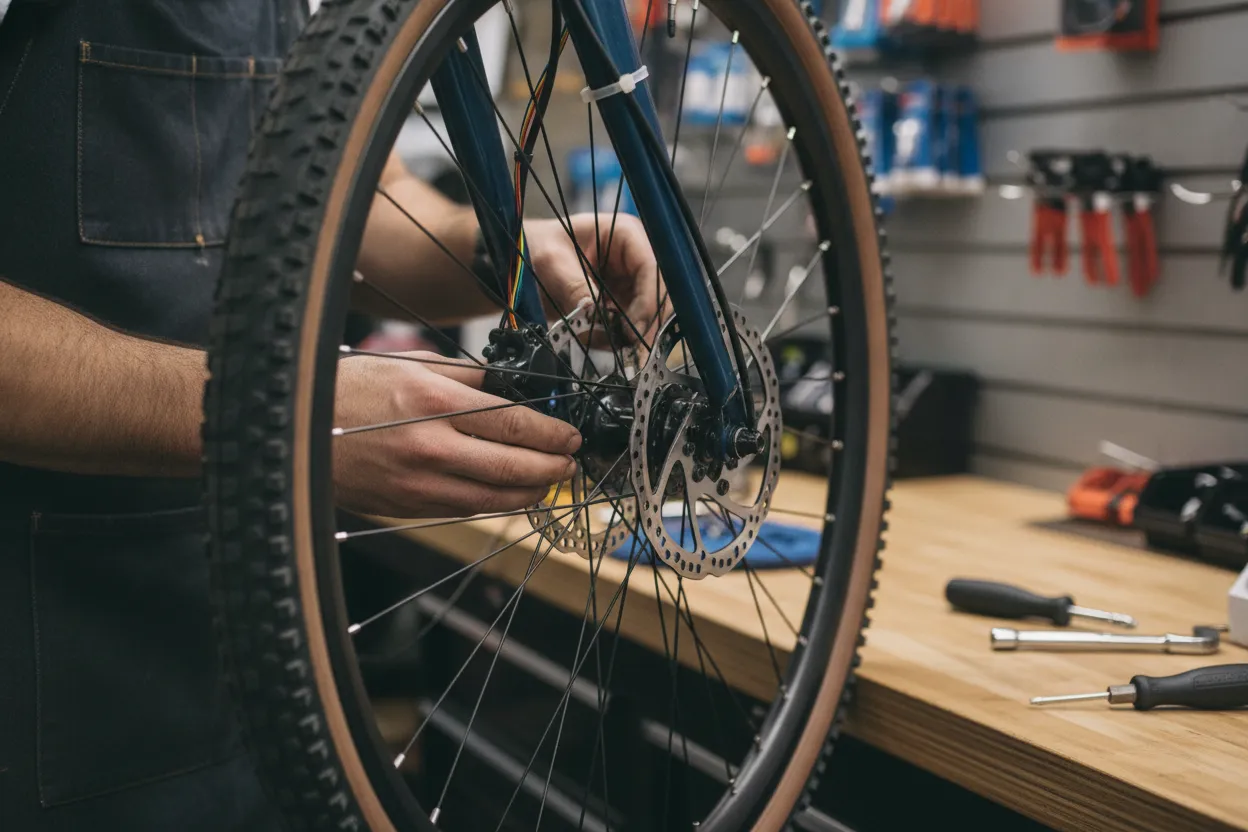
A complete process includes systematic inspection, work documentation, quality control, and test-ride verification before the bike returns to the customer. Voltaire's in-house Service Center provides electrical diagnostics, battery testing, motor service, controller updates, and software or connectivity support for electric vehicle brands, including brands not sold in the store. If a technician finds a problem beyond routine tune-up work. The safe next step is to explain the finding and recommend the appropriate repair or replacement rather than treating it as a simple adjustment.
When Should You Schedule an E-Bike Tune-Up in Bend?
There is no single mileage number that tells every rider when to book an e bike tune up. A commuter using paved bike lanes, a recreational rider exploring multi-use paths, and a trail rider in Central Oregon place different demands on the same systems. Schedule service based on how the bike feels, where it has been ridden, and whether its condition has changed, rather than waiting for a fixed calendar date.
Seasonal changes are a useful reminder to assess the bike. A tune-up before a busy spring and summer riding season can identify issues that developed during storage or winter use. It can also make sense after a period of frequent trail riding, extended wet-weather exposure, dusty conditions, or transport on a vehicle rack. Those circumstances can affect the mechanical parts that keep the bike stopping, shifting, and rolling properly. Between professional visits, basic checks such as tire pressure, brake lever feel, visible tire condition, and chain cleanliness can help you notice changes early.
Mileage alone is not enough, but increased use is still a practical trigger. If you have been riding substantially more often, carrying heavier loads, climbing regularly, or using the bike for daily transportation, ask a technician to assess it. The right scope depends on the bike's condition. A routine visit may focus on brakes, gears, wheels, tires, fasteners, and general safety, while a bike with a specific symptom may need diagnosis or repair instead.
Know when a tune-up is not the right first step
Do not treat a warning sign as a routine adjustment. Grinding, unusual play, recurring brake noise, shifting that will not settle, a damaged tire, intermittent motor assistance. Charging concerns, display errors, or a battery that behaves unexpectedly should be described when you request service. These details help the service team determine whether the bike needs a broader inspection, electrical diagnostics, or a repair beyond ordinary maintenance.
For riders in Bend, Redmond, Sisters, Sunriver, and throughout Deschutes County, a local service center can evaluate both the bicycle systems and the conditions in which you ride. Voltaire's in-house Service Center provides multi-brand mechanical and electrical support, with systematic inspection, documented work, quality control, and test-ride verification. If you are unsure whether your bike needs a tune-up or symptom-driven repair, review the options for e-bike repair in Bend and share the bike's recent use and any changes you have noticed.
What Should You Ask Before Choosing an E-Bike Service Center?
Choosing a service center is about more than finding a place that can adjust a derailleur. A complete e bike tune up should account for the bicycle's mechanical systems, electrical components, software, and real-world riding condition. Before you schedule, ask questions that reveal how carefully the shop will inspect, document, test, and explain the work.
Do you service my brand and electrical system?
Start with brand scope. Some shops limit service to the bikes they sell or to familiar mechanical components. An electric-bike service center should be able to explain whether it works on your brand, battery system, motor, controller, display, charger, and wiring. Voltaire's in-house Service Center services all electric-vehicle brands, including brands not sold in the store. Its service capabilities include electrical diagnostics, battery testing and replacement, motor repairs and replacements, controller programming and updates, and software or connectivity support.
What will the written work order include?
Ask whether the shop uses a written work order and how it records your concerns. A useful intake should capture the symptoms you noticed, the riding conditions involved, and the service you are requesting. It should also leave room for the technician to document inspection findings, recommended work, and any items that need your approval. Voltaire organizes service requests with a digital Bike Repair/Bike Tune-Up Order Form, helping keep the requested work and service notes together.
How do you check both mechanical and electrical systems?
Ask for a clear description of the inspection rather than accepting a vague promise to "look it over." Mechanical checks may include the brakes. Gears, wheels, tires, fasteners, and overall safety condition. Electrical checks may involve the battery, charger, motor, controller, display, wiring harnesses, connectors, software, and connectivity. The exact work should reflect the bike's condition and the symptoms you report. A routine adjustment is not the same as diagnosing an intermittent power or communication problem.
Do you have parts support and a quality-control process?
Parts availability can affect how a service request proceeds, especially when a diagnostic inspection identifies a worn or failed component. Ask what types of parts the shop can support and how it handles components that require replacement. Voltaire maintains service inventory that includes batteries, chargers, motors, controllers, displays, wiring harnesses, connectors, and universal components. Also ask how the finished work is checked. A systematic inspection, documented service record, quality-control review, and test ride provide a stronger handoff than an adjustment with no verification.
Finally, ask what you will receive when the bike is ready. The handoff should explain what was inspected, what was adjusted or repaired, and what you should monitor next. For riders in Bend, Redmond, Sisters, Sunriver, and across Deschutes County, Voltaire's professional electric bike repair and service provides a starting point for discussing a bike from any brand and matching the inspection to its actual needs.
Frequently Asked Questions
How much does an e-bike tune-up cost?
There is no universal price because the work depends on the bike's condition, systems, and any parts or repairs it needs. Ask for an inspection and written scope before approving additional work. A routine adjustment is different from replacing a worn component or diagnosing an electrical fault.
How often should an e-bike be serviced?
Use the bike's condition and riding demands as your guide rather than relying on one fixed interval. Schedule service when braking, shifting, wheel stability, tires, or electrical performance changes. Seasonal riders may also benefit from an inspection before heavier use, while frequent trail or commuter riders should pay closer attention to wear between visits.
What does a professional e-bike tune-up include?
A professional service should include a systematic inspection of brakes, gears, wheels, tires, fasteners, and safety-related components, followed by appropriate adjustments. For an electric bike, the shop may also check the battery, motor, controller, display, wiring, charger, and software or connectivity concerns. The final process should include documentation, quality control, and test-ride verification.
Is an e-bike tune-up the same as an e-bike repair?
No. A tune-up focuses on inspection, adjustment, and preventive maintenance. Repair addresses a known failure, unusual symptom, damaged component, or deeper electrical problem. If the bike cuts out, will not charge, makes a new grinding noise, or has unsafe braking. Describe the symptom during intake so the technician can determine whether diagnostic or repair work is needed.
Can a service center work on any e-bike brand?
Brand coverage varies by shop. Voltaire's Bend Service Center states that it services all electric-vehicle brands, including brands not sold in-store. Its service capabilities include electrical diagnostics, battery testing, motor work, controller updates, and mechanical service for brakes, gears, and wheels. Confirm the bike's brand and model when requesting service.
Ready to Schedule Your E-Bike Tune-Up?
A professional inspection can help identify mechanical, electrical, and safety concerns before they become more disruptive. Voltaire Cycles of Central Oregon serves electric bikes from all brands, so you can share your bike's symptoms and service needs with a team familiar with electric mobility. To schedule a professional e-bike tune-up or request service, contact the all-brands repair team.