

Electric Bike Safety Checklist for Every Ride
An electric bike safety checklist helps you catch preventable problems before a ride becomes uncomfortable or unsafe. In a few minutes, you can inspect the parts that control braking, steering, acceleration, visibility, and battery use. Then decide whether the bike is ready to roll or should stay parked.
Use this electric bike safety checklist before each ride: check your fit, helmet, brakes, tires, wheels, steering, throttle or assist controls, lights, visible cables, frame, battery seating, and power-up behavior. Charge only with the correct manufacturer-approved equipment, and stop riding for smoke, burning odor, unusual heat, swelling, exposed wiring, unreliable controls, or repeated cutouts.
Get help from Voltaire's electric bike repairs and all-brand service team.
The process is straightforward. Start with the rider and the mechanical parts, move to the electrical controls, then consider the route, weather, charging, and storage conditions. The goal is not to diagnose every fault at home. It is to recognize a change early, document what happened, and make a conservative decision before leaving a Bend neighborhood, Central Oregon trail, or unfamiliar route.
The sections below separate checks you can safely observe from concerns that deserve the owner's manual or a qualified technician. That distinction matters whether you ride a Segway e-bike, another established model, or a bike you bought elsewhere.
What belongs on an electric bike safety checklist before every ride?
Before every ride, check your fit, brakes, tires, wheels, controls, cables, lights, frame, battery seating, and power-up behavior. Look for changes rather than trying to diagnose complex electrical problems. If anything feels loose, damaged, unusually hot, or unpredictable, leave the bike parked and follow the owner's manual or seek qualified service.
Start with the parts that affect control. Confirm the saddle and handlebars are secure, comfortable, and adjusted for a stable reach. Squeeze each brake lever separately. The levers should feel firm, and the pads should engage without unusual noise, excessive travel, or a sudden change from your last ride. Roll the bike a short distance and test braking gently before entering traffic or a busy path.
Inspect both tires for low pressure, cuts, embedded debris, or visible damage. Use the pressure range specified for your tires and owner's manual rather than guessing. Check that the wheels spin without obvious rubbing or wobble and that quick-release levers or other wheel fasteners are properly secured. Look over the frame, fork, pedals, crank area, and cargo mounts for cracks, movement, or loose hardware.
With the bike powered off, examine the throttle, display, buttons, and brake-cutoff controls for damage or sticking. Trace visible cables and wiring without pulling, opening, or modifying anything. Make sure lights and reflectors are clean and working. If your model uses a removable battery, confirm it is fully seated and latched according to the manufacturer's instructions. Never force a connection or attempt to repair exposed wiring at home.
Turn the system on only after the bike is stable and the controls are clear. Check for unexpected warning messages, error codes, surging, or movement when you are not intentionally applying power. Keep both hands ready on the controls and begin in a quiet area if the bike has been serviced, transported, or adjusted. Model-specific controls and reset procedures vary, including among Segway systems, so the manual takes priority.
Quick comparison: Brakes should feel firm and consistent. Stop for weak, noisy, uneven, or unpredictable braking. Tires and wheels should have correct pressure, secure fasteners, and no visible damage. Stop for rim, axle, tire, or wheel movement. Controls should return and respond normally. Stop for sticking, surging, unexpected activation, or cutouts. Battery and wiring should look intact. Stop for heat, swelling, smoke, odor, liquid, or exposed wiring.
| Check | Action |
|---|---|
| Brakes | Confirm firm, consistent feel. Stop for weakness or unpredictability. |
| Tires and wheels | Confirm pressure and secure fasteners. Stop for visible damage or movement. |
| Controls | Confirm throttle and assist respond normally. Stop for sticking or surging. |
| Battery and wiring | Confirm the housing and visible cables look intact. Stop for heat, smoke, odor, swelling, or exposed wiring. |
For persistent brake, wheel, control, wiring, or power concerns, use electric bike repairs and all-brand service rather than riding until the symptom worsens.
How can you ride an e-bike more safely on roads and trails?
Ride within your ability, wear a properly fitted helmet, stay visible, and leave yourself room to stop. Plan a route suited to your experience, watch for vehicles and pedestrians, control speed before turns and descents. And practice the brakes, throttle, assist controls, and signals in a quiet area first.
Start with visibility. Choose bright or reflective clothing when conditions make you harder to see, and use the bike's lights whenever visibility is limited. Keep your attention on the route rather than on a phone or display. If your e-bike has turn signals or other rider-assistance features, treat them as helpful equipment, not a substitute for looking, signaling, and communicating with people around you.
Control speed before you need to brake
An e-bike can gather speed quickly, especially on a downhill or when leaving a stop. Select a comfortable assist level before entering traffic, a crowded path, a tight turn, or a rough section. Slow before the turn instead of braking sharply while leaned over. Leave more following distance than you think you need, because stopping takes longer on wet, loose, uneven, or downhill surfaces. Use both brakes smoothly and keep your hands ready at the levers.
New riders should practice starting, stopping, turning, shifting, and changing assist levels away from traffic. Learn how the throttle responds, if the bike has one, and confirm that you can reach the brake levers comfortably. Practice looking over a shoulder without drifting from your line. A short session in an empty lot or quiet street can make the first road ride much more controlled.
Plan for people, traffic, and changing surfaces
Choose a route that matches your comfort, fitness, and bike. In Bend and surrounding Central Oregon communities, a ride may move between bike lanes, multi-use paths, neighborhood streets, and regional trails. Check the route before leaving, including expected surface conditions, hills, congestion, and places where you may need to dismount. Verify current rules for the specific route and e-bike class rather than assuming every path has the same access.
On roads, scan for parked-car doors, driveways, intersections, turning vehicles, and surface hazards. Make your intentions clear, but never assume a driver or cyclist has seen you. On shared paths, reduce speed near blind corners, groups, children, dogs, and people walking. Give pedestrians space, announce your approach calmly when appropriate, and yield rather than forcing a close pass. On trails, stay on the designated route, avoid skidding, and respect signs, closures, other users, and changing conditions.
When visibility, traction, or your confidence drops, slow down or end the ride. A safety-first electric bike safety checklist is not about completing a planned distance. It is about making conservative choices early. That keeps the ride predictable for you and everyone sharing the road or trail.
How should you charge and store an electric bike safely?
Charge an electric bike with the charger supplied or specifically recommended by the manufacturer, and follow the instructions for your model. Keep the bike and battery in a dry, ventilated area while charging, stay nearby, and disconnect the system when charging is complete. Never charge a damaged, swollen, unusually hot, or smoking battery.
Start with the charger, not a substitute. Different electric bikes can use different connectors, voltage requirements, and charging controls. A charger that fits the port is not automatically the correct charger. Use the unit supplied with the bike or one the manufacturer explicitly recommends. For Segway systems and other model-specific equipment, the owner's manual takes priority over general advice.
Choose a charging location that is dry, clean, and well ventilated. Keep the charger and battery away from water, damp floors, heat sources, flammable materials, and clutter that could block airflow. Place the battery and charger where they cannot be knocked over, pinched, or damaged. Inspect the cable, plug, connector, and battery housing before connecting anything. If a connector is wet or visibly damaged, do not charge until the issue has been assessed.
Supervise the charging process. Do not charge an electric bike while sleeping or when you will be away for an extended period. Keep children and pets from pulling on the cable or handling the charging equipment. When charging is finished, follow the manufacturer's instructions for disconnecting the charger rather than forcing the plug or bending the cable. For additional practical guidance, review these e-bike battery charging tips.
When should you stop using the battery?
Stop charging and move away from the bike if the battery becomes unusually hot, swells. Leaks, releases a burning or chemical odor, produces smoke, or shows other signs of physical damage. Do not open the battery pack, probe it, bypass a safety system, or attempt wiring repairs. If it is safe to do so, disconnect power without touching a damaged area. Keep people away and contact a qualified service professional for guidance.
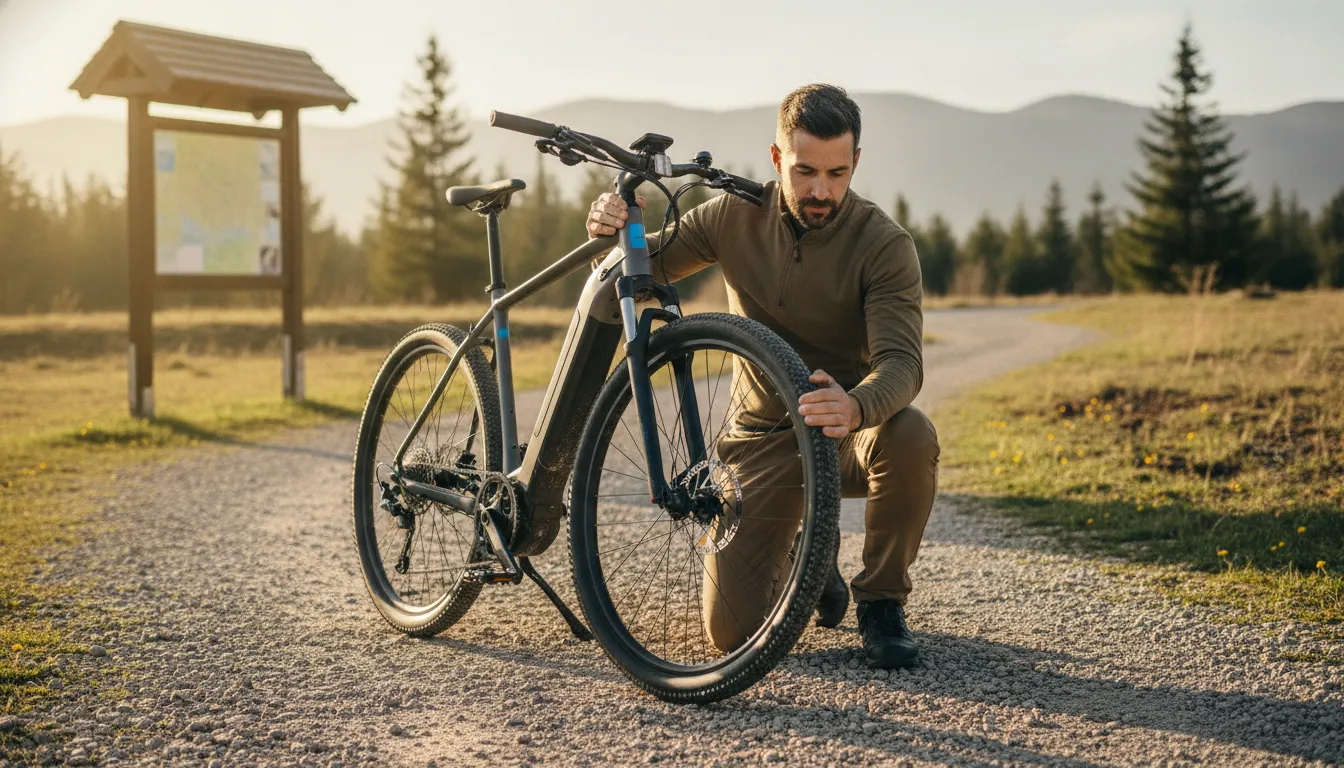
Storage deserves the same attention as charging. Keep the battery and bike in a dry location protected from extreme conditions, and follow the owner's manual for any model-specific storage instructions. Before the next ride, check that the battery is seated correctly, the housing is intact, and no connector or cable has been pulled loose. When something does not look or feel right, leave the bike parked until it has been inspected.
What should you check after rain, dust, or rough riding?
After wet, dusty, or rough conditions, let the bike dry and inspect it before riding again. Check connectors, brakes, drivetrain, tires, wheels, and fasteners for moisture, grit, looseness, or damage. If anything looks compromised, do not ride until the concern has been safely assessed.
Start with a gentle visual inspection in good light. Wipe water and surface dirt from the frame, fork, wheels, and contact points with a clean, dry cloth. Pay particular attention to areas where moisture or grit may collect, including around the battery connection, display, controls, motor wiring, and other electrical connectors. Do not assume that a component is ready simply because the outside feels dry. Follow the owner's manual for model-specific weather and cleaning instructions, especially on a Segway system.
Before switching the bike on, look for moisture inside or around accessible connectors. Do not force a plug apart, spray cleaner into an electrical connection, or attempt to dry wiring with an improvised heat source. If a connector remains wet, shows corrosion, or appears damaged, keep the bike out of use and ask a qualified technician for guidance.
Inspect the parts that affect control
Rain and dust can change how mechanical parts feel. Squeeze each brake lever and confirm that the controls feel normal. Check the brake surfaces and cables or hydraulic lines for obvious damage, contamination, or unusual looseness. Spin the wheels and listen for rubbing or grinding. Look over both tires for embedded debris, cuts, low pressure, or sidewall damage, then check that wheels and steering remain secure.
Rough riding can loosen fasteners or shift components even when no single problem is obvious. Examine the handlebar, stem, seat, pedals, rack or cargo hardware, and other accessible fasteners. Check the chain or other drivetrain components for packed-in grit, abnormal noise, or a change in shifting. Clean only in the manner recommended by the manufacturer, and avoid turning a routine wipe-down into a pressure-washing session.
A short, cautious check after the inspection can reveal changes in braking, steering, motor response, or controls, but it is not a substitute for diagnosis. If the bike feels unstable, cuts out, makes a new grinding sound, or shows suspected water or impact damage, stop riding. Voltaire's Bend service team provides electric bike repairs and all-brand service when a concern goes beyond an owner-safe inspection.
Which maintenance checks keep an electric bike ready to ride?
Regular maintenance keeps small changes from becoming ride-stopping faults. Check brakes, tire condition and pressure, wheels, steering, pedals, drivetrain, fasteners, lights, battery seating, and visible connectors on a recurring schedule. Clean only as the manufacturer directs, record changes, and use professional service when a check requires electrical testing or disassembly.
Begin with the controls that protect your ability to stop and steer. Brake levers should feel consistent from one ride to the next. Tires should have the manufacturer-recommended pressure and no cuts, bulges, or embedded objects. Wheels should spin without unusual wobble or rubbing. Check the handlebar, stem, seat, pedals, crank area, and any rack or cargo hardware for movement before loading the bike.
Move through the drivetrain next. Look for a chain that is dry, damaged, or carrying grit, and pay attention to new skipping, grinding, or clicking. Keep moving parts clean using the method and products recommended for your model. Do not use a pressure washer or direct high-pressure spray around bearings, displays, motors, batteries, or connectors.
Electrical checks should stay visual unless you are following a normal, manufacturer-directed operation. Confirm that a removable battery is seated and latched, visible cables are not pinched, and plugs are not loose, corroded, bent, or damaged. Do not open a battery or controller to investigate an intermittent symptom. Record the conditions instead: startup, hills, throttle use, pedal assist, rain, charging, or a particular error message.
Lighting and visibility equipment also belong in the routine. Clean lights and reflectors, test them before a low-light ride, and replace or repair damaged equipment before relying on it. A written log can be simple: date, mileage if you track it, what you checked, and any change you noticed. For a deeper routine-care reference, use this electric bike maintenance checklist.
If the same issue returns after a basic check, do not keep adjusting parts at random. Repeated symptoms are useful information for a technician and a reason to narrow the next ride rather than increase risk.
When should you stop riding and seek professional service?
Stop riding when a problem can change braking, steering, acceleration, motor control, lighting, or battery safety. A sticking throttle, motor surge, damaged wiring, repeated power cutouts, returning error codes, smoke. Burning odor, swelling, unusual battery heat, or abnormal brakes deserves a professional assessment before the next ride.
Use this stop-or-service decision tree
- Stop immediately: smoke, burning smell, swelling, leaking, unusual heat, exposed wiring, liquid inside the electrical system, or a crash-related battery concern. Move away from the bike if there is an active fire or rapidly heating battery, and contact emergency services when appropriate. Do not handle a damaged battery.
- Do not ride to test it: the throttle does not return, the motor surges, the display cuts out. The bike loses power repeatedly, brakes feel abnormal, steering is affected, or an error code keeps returning.
- Walk or transport the bike: if it is stable but the electrical system is unreliable. Photograph the symptom, preserve the error message, and tell the technician what happened under load, in rain, on hills, or during charging.
- Resume only after a check: consider normal use only when the issue is minor, no safety system is affected, the bike passes a mechanical inspection, and the owner's manual does not restrict use. If the symptom returns, stop.
Wet weather deserves caution. If the bike was exposed to heavy rain or liquid intrusion, power it down and let a qualified service provider determine whether the system is safe. Do not assume that a dry exterior means the connectors or controller are dry inside.
For a fuller list of symptoms that call for service, read Voltaire's e-bike repair warning signs. Schedule the next step with Voltaire's electric bike repairs and all-brand service team.
What can an e-bike service center inspect?
A qualified e-bike service center can inspect electrical and mechanical systems that are not safe or practical to diagnose by guesswork. That may include battery condition, wiring and connectors, motor behavior, controller communication, displays, sensors, brakes. Gears, wheels, software, and connectivity, with the exact work determined by the model and symptom.
An owner can document symptoms, inspect visible connections, check settings, and follow normal manual-directed startup steps. Electrical diagnosis beyond those checks may require testing voltage, current, communication between components, battery condition, controller behavior, or sensor signals. Battery packs and safety systems should not be opened or bypassed as a home experiment.
Voltaire Cycles of Central Oregon operates an in-house Service Center in Bend with certified technicians. Its documented service capabilities include electrical diagnostics, battery testing and replacement, motor repair and replacement. Controller programming and updates, brake, gear, and wheel work, plus software and connectivity support. The Service Center works across electric vehicle brands, including brands not sold in the store.
Bring useful information to the appointment
Share the model and serial information, the exact error code, photos, recent charging or weather exposure, and the conditions that trigger the symptom. Say whether the issue occurs at startup, after warming up, on hills, under load, or only with throttle or pedal assist. This turns a vague complaint into a reproducible diagnostic path.
Voltaire's service process emphasizes systematic inspection, documentation, quality control, and test verification before a vehicle is returned. If the bike is safe to transport but not safe to ride, use the electric bike repairs and all-brand service page to choose the appropriate next step. For routine prevention after the fault is resolved, a professional e-bike tune-up can address the mechanical systems that support reliable riding.
FAQs: Electric Bike Safety Checklist
What are common safety concerns with electric bikes?
Common concerns include weak or damaged brakes, low or damaged tires, poor visibility, loose controls. Exposed wiring, charging problems, battery heat or swelling, unexpected motor behavior, and repeated electrical cutouts. Check visible issues before riding, and stop when a concern affects control or battery safety.
Can I ride an electric bike with minor electrical issues?
Only consider riding when the issue is understood, does not affect braking, steering, acceleration, lights, motor control, or battery safety, and the owner's manual does not restrict use. Do not ride with a sticking throttle, surging motor, damaged wiring, hot battery, returning error code, or unreliable display.
Should I store my e-bike indoors?
Store the bike and battery in a dry location protected from moisture and extreme conditions, following the manufacturer's instructions. Keep charging equipment away from water, heat, clutter, children, and pets. Model-specific storage directions take priority, including for Segway systems.
Why does my e-bike suddenly lose power?
Sudden power loss can relate to battery condition, a loose connection, system protection under load, a control or sensor issue, or another electrical fault. Record when it happens, such as on hills, after rain, during throttle use, or while charging. Stop riding if the loss is repeated or affects control.
How long do e-bike batteries last?
Battery life depends on the model, use, storage, charging practices, temperature, and condition. Avoid assuming a fixed service life from a general checklist. Follow the manufacturer's care guidance and arrange qualified battery testing when range changes sharply, charging becomes unreliable, or the battery shows physical symptoms.
Need help with an electric bike safety concern?
A careful checklist can identify a loose part, visible damage, or an operating concern, but it cannot safely confirm every battery, controller, motor, sensor, or wiring fault. If your electric bike still cuts out, will not charge, displays a returning code, or shows a safety warning, stop riding and arrange a professional evaluation.
Voltaire Cycles of Central Oregon supports Bend and Central Oregon riders with hands-on service and all-brand electric mobility expertise. Online shoppers can also use the same service path to understand the next step for a bike that needs qualified attention.
Request electric bike repairs and all-brand service from Voltaire Cycles.