

Electric Bike Chain Maintenance: Cleaning and Lubrication
Electric bike chain maintenance is one of the simplest ways to keep your ride shifting smoothly and your drivetrain working efficiently. A clean, correctly lubricated chain helps the cassette, chainring, derailleur, and chain work together instead of grinding through accumulated dust and grit. The good news is that most routine care takes only a few minutes and can be done at home.
Schedule a free maintenance consultation with Voltaire Cycles
This guide explains how to clean and lubricate an e-bike chain, how to spot wear, what shifting problems can mean, and when a tune-up belongs with a technician. It applies to many pedal-assist electric bikes, whether you ride paved streets around Bend, commute in Central Oregon, or take your bike onto appropriate gravel and trail surfaces.
A basic pre-ride check should include the chain, brakes, tires, and other safety equipment. The NSW Government bicycle and e-bike safety-check guide also highlights checking that the chain is clean, secure, and properly maintained.
What Is Electric Bike Chain Maintenance?
Electric bike chain maintenance is the routine process of removing abrasive contamination, applying suitable chain lubricant, checking drivetrain wear, and confirming that the chain shifts and runs safely. Most riders can handle cleaning, lubrication, and visual inspections. A repair shop should handle measurements, replacement, derailleur adjustment, damaged components, and problems that continue after basic care.
An e-bike chain does not need a completely different cleaning method from a standard bicycle chain. However, electric assistance can make drivetrain care more important. The motor helps produce strong, consistent pedal force, and riders may cover more miles than they would on a conventional bike. A neglected chain can become noisy, shift poorly, and wear other drivetrain parts faster.
How Often Should You Clean an Electric Bike Chain?
Use the riding conditions as your schedule rather than relying on one fixed interval. A dry, paved ride may leave only light dust. A damp commute, dusty gravel route, or muddy outing can carry grit deep into the chain and derailleur area.
- Mostly dry pavement: Wipe the chain after rides and perform a deeper clean when it looks dirty or sounds dry.
- Dusty or gravel riding: Inspect the chain after each ride and clean it whenever fine grit is visible.
- Rain or wet roads: Dry the chain promptly and relubricate after the drivetrain is clean and dry.
- Mud or standing water: Rinse contamination away carefully, dry the bicycle, and inspect the chain before the next ride.
A quick wipe is useful, but it is not a substitute for cleaning when dirt has formed a dark paste on the chain. That paste combines lubricant and abrasive particles. Adding more lube over it can make the problem worse because the fresh lubricant holds more grit against the metal.
What Supplies Do You Need for Electric Bike Chain Maintenance?
Prepare the bicycle before you begin. Turn the system off, remove the battery if the manufacturer’s instructions call for it, and keep water and cleaner away from electrical connectors, the display, and the motor housing. Stabilize the bike so the cranks can turn freely without the bike falling.
A practical setup includes:
- A clean, lint-free rag or shop towel
- A soft brush or old toothbrush for the chain and derailleur pulleys
- Bicycle-specific degreaser or a cleaner recommended for bicycle drivetrains
- Chain lubricant selected for the weather and riding conditions
- A second dry rag for removing excess lubricant
- Good lighting for checking links, rollers, teeth, and shifting
Do not use a pressure washer. High-pressure water can push moisture and contamination into bearings, seals, electrical areas, and other places that are difficult to dry. If you need replacement drivetrain parts, a local shop can also help identify the correct speed and compatibility. Voltaire Cycles services multiple brands, not only the bikes sold in its showroom.
How Do You Clean an Electric Bike Chain Step by Step?
Cleaning should remove contamination without spreading it across the rest of the bicycle. Work slowly and keep the chain moving through the same inspection point so you do not miss a damaged link.
- Shift to a practical starting gear. Choose a gear that gives you access to the chain and derailleur. Keep the motor off while cleaning, and never activate the pedals or throttle during the process.
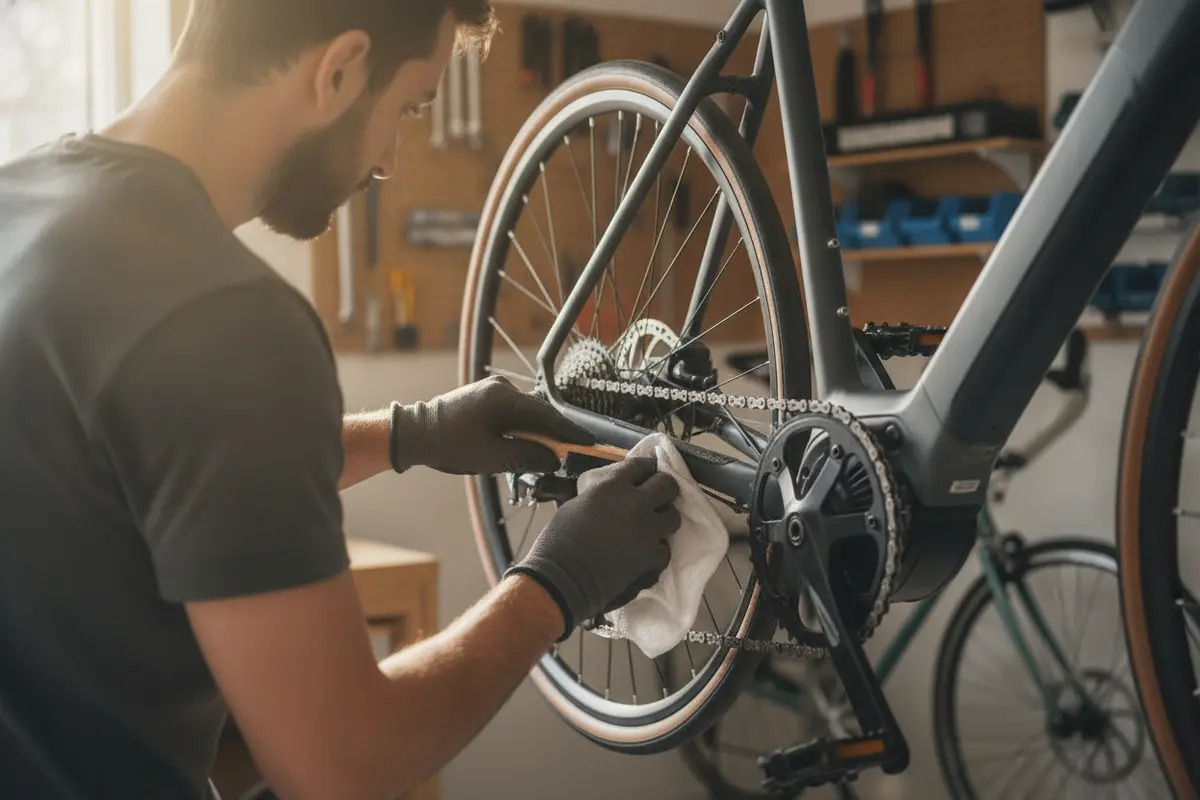
- Remove loose dirt first. Hold a dry rag around the lower section of chain and turn the crank backward by hand. Let the rag lift surface dust rather than pressing grit farther into the rollers.
- Apply cleaner to the rag or brush. Use a controlled amount of bicycle drivetrain cleaner. Applying it to your tool instead of spraying the entire bike helps protect brake rotors, pads, tires, paint, and electrical components.
- Scrub the chain. Turn the crank backward and work around the full chain. Brush stubborn buildup from the outer plates, inner plates, and rollers.
- Clean the chainring and cassette. Carefully remove debris from the teeth and between the sprockets. A folded rag or narrow brush can reach spaces where a large towel cannot.
- Inspect the derailleur pulleys. Remove packed grime from the guide and tension pulleys. Confirm that they turn and that no string, grass, or wire is wrapped around them.
- Dry everything completely. Wipe the chain several times with a clean rag. Allow remaining moisture to evaporate before applying lubricant.
If your chain is heavily contaminated, repeat the process rather than soaking the entire bicycle. A removable chain may be cleaned separately only if you understand the chain connector and can reinstall it correctly. When in doubt, ask a technician to clean and inspect the drivetrain during a drivetrain care visit or tune-up.
Which Chain Lubricant Should You Use?
Choose a bicycle chain lubricant for the conditions in which you ride. Wet lubricant generally lasts longer in rain but can attract more dust. Dry lubricant can stay cleaner in dry conditions but may need more frequent application. An all-weather product can be a practical compromise for changing conditions.
- Riding condition: Dry, dusty pavement or gravel. Lubricant approach: Dry or low-tack bicycle chain lubricant. What to watch for: Reapply when the chain sounds dry, and wipe away excess.
- Riding condition: Frequent rain or wet roads. Lubricant approach: Wet or all-weather bicycle chain lubricant. What to watch for: Clean more often because wet lube can hold grit.
- Riding condition: Mixed Central Oregon conditions. Lubricant approach: All-weather lubricant adjusted to the season. What to watch for: Inspect after wet rides and dusty routes.
- Riding condition: Rust, stiff links, or heavy buildup. Lubricant approach: Clean and inspect before choosing lubricant. What to watch for: Replacement or shop service may be needed.
Apply one small drop to each roller while turning the crank backward. Aim at the inside of the chain, where the lubricant can reach the rollers and pins. Let it sit for the time recommended on the product, then hold a clean rag around the chain and rotate the crank backward to remove the excess. The outside plates should not be wet with a thick coating.
Lubricant is not a cleaner. If the chain is dirty, clean it first. Also keep lubricant away from disc brake rotors and brake pads. Even a small amount of contamination can reduce braking performance. If you suspect lubricant has reached the braking surface, stop riding and have the bicycle inspected.
How Does Electric Bike Chain Maintenance Change in Wet Weather?
Wet-weather electric bike chain maintenance means drying the drivetrain promptly, removing road film, and replacing lubricant after the chain is clean. Water itself is not the only concern. Wet roads can carry grit and salts that cling to the chain, while storing a damp bicycle can encourage corrosion on exposed metal.
After a wet ride, wipe the frame and drivetrain with a clean towel. Avoid directing water toward the motor, battery contacts, display, or other electrical areas. Rotate the cranks by hand while drying the chain, then leave the bicycle in a ventilated location. Once dry, inspect for orange discoloration, rough links, and contamination around the cassette and derailleur.
When rainy riding is common, check the chain before every ride. A chain that looks clean but feels rough when you rotate the crank deserves attention. If you ride through muddy conditions, do not let mud dry hard around the derailleur pulleys. Remove it while it is still easier to loosen.
How Can You Check Chain Wear and Drivetrain Condition?
Visual inspection can identify many problems, but chain wear is not always visible. As a chain wears, its effective pitch changes. Continued use can accelerate wear on the cassette and chainring, making a simple chain replacement more expensive than it needed to be.
Before a ride, look for stiff links, bent plates, damaged rollers, rust, unusual side-to-side movement, and a chain that repeatedly skips. Listen for grinding or clicking that was not present before. Check the chainring and cassette teeth for abnormal wear, but do not diagnose replacement from tooth shape alone.
A chain-wear gauge is a useful tool for routine inspection. It is also important to use the correct gauge and interpret its reading for the chain and drivetrain. If the chain is skipping under pedal load, shifting across several gears at once, or showing visible damage, stop treating the issue as a lubrication problem.
Technicians can measure chain wear, check cassette and chainring condition, inspect derailleur alignment, and verify torque and adjustment. The same inspection can reveal a bent derailleur hanger, cable problem, worn jockey wheel, or drivetrain compatibility issue. For parts such as a replacement chain, confirm the number of speeds and the system’s specifications before ordering.
What Do Shifting Problems Tell You?
Shifting problems have several possible causes. A dirty chain or cassette may create noise, but so can incorrect indexing, cable tension, a bent hanger, worn chainrings, or a chain that is too worn to engage properly. Electric assistance can make skipping more noticeable because the drivetrain may be under substantial load.
- Noise in one gear: The derailleur may need adjustment, or the cassette and chain may not be engaging cleanly.
- Slow movement to a larger sprocket: Cable tension, contamination, or derailleur alignment may be involved.
- Skipping under power: Stop using high assistance until the chain and drivetrain are inspected.
- Chain falling off: Do not keep riding until derailleur limits, alignment, chainring condition, and setup are checked.
- Clicking after cleaning: Look for a stiff or damaged link rather than repeatedly adding lubricant.
Use smooth shifting habits as well. Ease pedal pressure briefly while shifting, especially when changing several gears or climbing. Avoid shifting under maximum motor and pedal load. The appropriate technique depends on the bike and drivetrain, so consult the manufacturer’s manual or a qualified technician for model-specific guidance.
Which Maintenance Can You Do, and What Needs a Repair Shop?
Routine owner care includes wiping the chain, applying the correct lubricant, checking tire pressure, looking for obvious damage, and confirming that the brakes and shifting feel normal before a ride. These tasks help you notice changes early.
Repair-shop work includes chain and cassette measurement, replacement, derailleur adjustment, hanger alignment, cable replacement, brake contamination cleanup, electrical diagnosis, and inspection of motor or sensor-related concerns. A technician should also handle a drivetrain that has been damaged in a crash or continues to skip after cleaning and lubrication.
Voltaire Cycles of Central Oregon provides a local showroom experience in Bend, including hands-on product guidance, test rides, and service support. The team works with multiple brands, so you can bring questions about an existing electric bike as well as a bike you are considering online. If you are building a maintenance kit, a compatible bicycle pump, protective cover, and brake component may be useful, but compatibility should be confirmed before purchase.
What Should Be Included in an Electric Bike Tune-Up?
A tune-up should be based on the bicycle’s condition and your riding goals, not just a generic checklist. Ask what the service includes before authorizing work. A drivetrain-focused visit may include chain and gear inspection, cleaning, lubrication, shifting adjustment, and wear measurements. A broader tune-up may also address brakes, wheels, fasteners, tires, bearings, and safety checks.
Bring useful information to the appointment: the bike’s make and model, the symptoms you noticed, when the noise or shifting issue began, and whether it appeared after rain, transport, or a fall. If possible, avoid trying several different lubricants or adjustments immediately before the visit. The original condition can help the technician identify the cause.
Schedule an electric bike tune-up consultation
Frequently Asked Questions
Can I use household oil on an electric bike chain?
Use a bicycle-specific chain lubricant instead of general household oil. Household oils may attract dirt, spread onto braking surfaces, or provide unsuitable protection. Apply a small amount to the chain rollers and wipe away excess.
Should I clean the chain after every ride?
A full cleaning is not necessary after every dry ride. Wipe the chain and inspect it regularly. Clean and relubricate sooner after rain, mud, dusty routes, or any ride that leaves visible grit.
Why does my e-bike chain skip after I lubricate it?
Lubrication does not correct a worn chain, worn cassette, bent hanger, damaged link, or incorrect derailleur adjustment. Stop applying more lubricant and have the drivetrain inspected, especially if skipping occurs under motor-assisted load.
How do I protect the chain during winter storage?
Clean and dry the chain before storage, apply a light coat of suitable lubricant, and keep the bicycle in a dry location. Follow the manufacturer’s instructions for removing and storing the battery, and inspect the drivetrain again before riding.
Consistent cleaning, correct lubrication, and timely inspections help your electric bike shift reliably and make drivetrain repairs easier to plan.