

Stealth P7R Trail Blazer Electric Bike: Trail Buyer Guide
The stealth p7r trail blazer electric bike is a high-performance trail platform that deserves a close look at its current configuration, not just its headline power. The manufacturer's current specification table lists 1.5 kW peak power, a 1.5 kWh battery, up to 150 km of listed range. 160 mm of front and rear travel, 27 mph top speed, and a 29 kg weight. Those figures give you a useful starting point, while the exact battery, tires, suspension setup, and permitted riding areas still need confirmation for the unit you are considering.
Arrange a P7R trail-bike consultation or test ride
What should you verify about the Stealth P7R Trail Blazer electric bike?
The current manufacturer page provides a concrete specification baseline, but the exact model year and configuration still matter. Its technical table lists a 1.5 kW peak output, 1.5 kWh battery, 150 km (90 mile) listed range, 45 km/h (27 mph) top speed. 160 mm of front and rear travel, a nine-speed transmission, a three-hour recharge time, 110-240V charging, and 29 kg (62 lb) weight. You can compare those details with the current Voltaire P7R product listing before planning a purchase.
A technical sheet for the P-7R adds useful detail, including a planetary-geared brushless motor, 1,000 W continuous power. 1,500 W peak power, approximately 90 Nm of maximum torque, and a 48V 31Ah lithium-ion battery. It also lists 27.5 x 2.4 inch tires front and rear. Because that sheet lists a 31.5-34 kg weight and 180 mm fork travel while the current manufacturer table lists 29 kg and 160 mm front travel. Treat the sheet as configuration or production-version context, not as a reason to blend every number together.
For a useful comparison, record the model year, battery capacity, motor output, fork and shock, tire size, brake equipment, and intended classification for the exact unit. Ask which specifications are standard, optional, or changed by the dealer. The manufacturer's current P-7R specification page is the primary source for the snapshot above.
- Confirm the model year and exact trim.
- Match the battery capacity and range claim to the unit being sold.
- Identify the fork, rear shock, travel, and available adjustments.
- Check the fitted tire size, tread, casing, and replacement options.
- Clarify top speed, motor output, brakes, and the riding classification that applies where you plan to ride.
Keep specification facts separate from test-ride impressions. A component's listed name belongs in one column of your notes, while whether the bike felt composed on a climb belongs in another. That simple separation prevents an impression such as comfortable or powerful from being treated as proof of a technical feature.
How does suspension affect trail comfort and control?
Suspension helps the tires track uneven ground, but it must suit the rider and terrain. The current manufacturer table lists 160 mm of front and rear travel. A technical sheet identifies an SR Suntour Durolux R2C2 fork with 36 mm stanchions and lists 180 mm of fork travel. So confirm which version is fitted to the P7R you are evaluating rather than assuming the older figure applies.
On a test ride, notice how the front wheel responds to small bumps and how the rear behaves when climbing, braking, and rolling over rough sections. The bike should feel composed rather than wallowy or harsh. Ask a technician to explain the controls and a safe starting setup for your weight. Suspension setup is not a substitute for speed control, appropriate line choice, or protective equipment.
Keep the first suspension check simple. Ask what the manufacturer recommends for sag or initial setup, what tools are needed, and whether the fork and shock have separate adjustments. Make one change at a time and note the result; changing several settings together makes it harder to understand what improved or worsened the ride. If you hear a new noise, see fluid, or feel inconsistent movement, stop and request an inspection rather than attempting an unfamiliar repair on the trail.
Which tires and terrain should you consider?
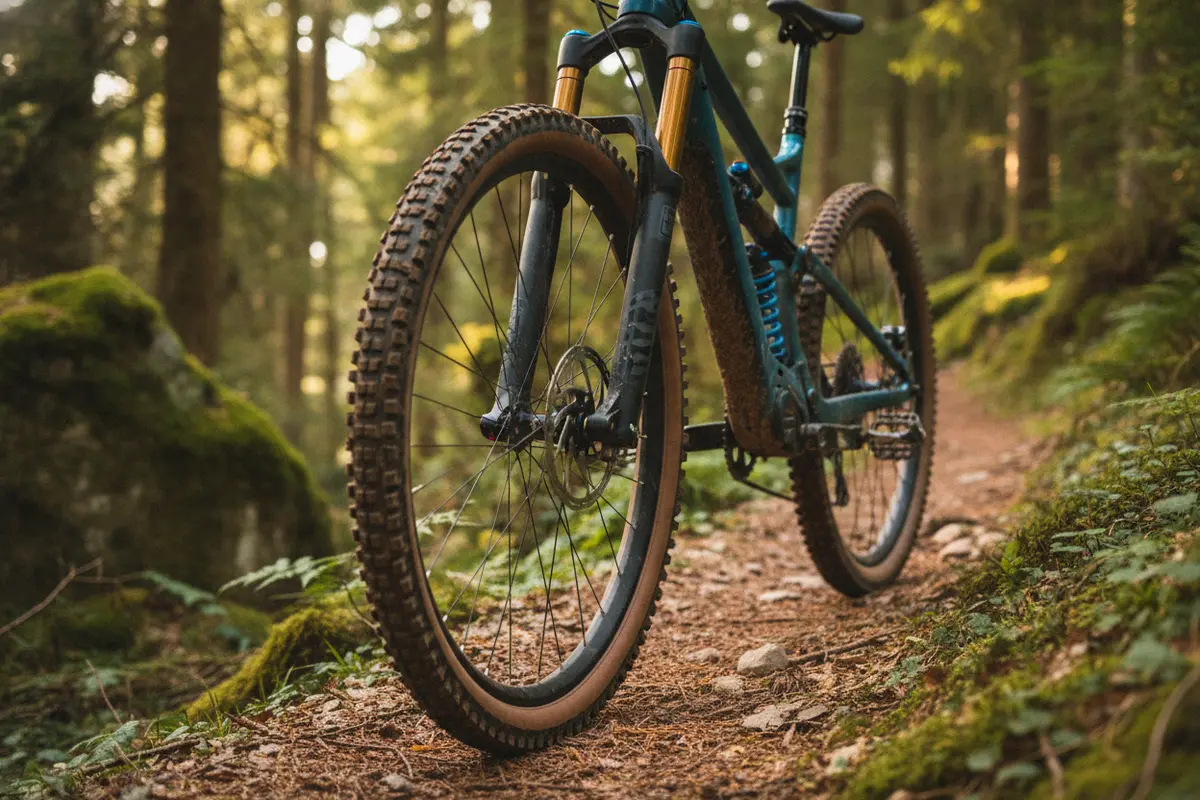
Tires connect the bike to the trail, so choose based on the surfaces you actually ride. The P7R technical sheet lists 27.5 x 2.4 inch tires at both ends. Confirm that size and the actual tire model on your unit, since tire casing, pressure, tread condition, and production changes can alter traction and rolling feel. The size is a starting point, not a promise that every loose or rocky route will suit the bike.
Do not assume a broad or aggressive tire makes every trail suitable. A tire can lose grip when conditions are wet, dusty, or loose, and the appropriate pressure depends on the tire, rim, rider, and terrain. Ask a qualified technician for setup guidance, and make small adjustments only within the manufacturer's recommendations.
Think through a familiar route section by section. A firm approach road may feel smooth, while a shaded corner could hold moisture or loose material. A steep climb can reward predictable traction, but a tire choice does not remove the need to manage speed on a descent. If possible, use a test surface that resembles your common riding rather than judging solely from a parking-lot loop.
Walk unfamiliar sections if needed. Avoid riding muddy trails where tires can damage the surface, and respect closures and posted restrictions. Different land managers can have different access rules for electric bikes, including rules tied to motor type or trail designation. Check the specific trail's current rules before setting out; do not infer access from a route's general bicycle designation.
How should you think about power and range?
Use the current manufacturer's figures as a configuration reference, not a promise that every trail ride will deliver the same result. The available technical and product sources list 1.5 kW peak power, a 1.5 kWh battery, and range figures up to 150 km. The Voltaire product description separately describes up to 100 km for the standard battery and up to 150 km or 100 miles with a long-range 1500 Wh upgrade. Those statements may reflect different batteries, test assumptions, or production versions, so confirm the battery installed in the exact P7R before using a range figure for trip planning.
The technical sheet lists 1,000 W continuous power, 1,500 W peak power, and approximately 90 Nm of maximum torque. That information helps explain why the bike may feel strong on climbs, but a number does not replace a controlled test. Learn how the twist-grip throttle and pedal input deliver assistance. How the bike responds when starting on a slope, and how to modulate output on tight or slippery sections.
Actual range changes with terrain, rider and cargo weight, assist level, speed, temperature, battery condition, tire pressure, and how often the motor works hard. Estimate the route distance and climbing, leave a practical reserve, and avoid relying on the best-case figure to get back from a remote trail. A short local loop with gentle grades needs a different plan from a longer route with repeated climbs and limited turnaround points.
Ask whether the display shows remaining charge in a way you can understand. Whether assist modes can be changed while riding, and what the manual recommends if charge becomes low. The product listing says the bike can charge from a 110V or 240V household outlet in under three hours, but verify the charger supplied with your configuration.
How do you compare the key trail-bike factors?
Compare verified specifications alongside the experience you want from the bike. This checklist separates details to confirm from practical ride questions.
| Factor | Current sourced baseline | What to evaluate or confirm |
|---|---|---|
| Power. | 1.5 kW peak; technical sheet lists 1,000 W continuous and approximately 90 Nm. | Control at starts, climbs, and low speeds; exact configuration. |
| Battery and range. | 1.5 kWh; available sources describe up to 150 km. | Battery fitted, test assumptions, terrain, load, and practical reserve. |
| Suspension. | Technical sheet lists 180 mm fork and 160 mm rear travel. | Exact fork, shock, travel, sag setup, and service needs. |
| Tires. | Technical sheet lists 27.5 x 2.4 inches front and rear. | Actual tire model, casing, tread, pressure, and replacement supply. |
| Drivetrain. | Nine-speed transmission on current manufacturer table. | Climbing gear range and pedal control when assistance is low. |
| Trail use. | Manufacturer specifications do not grant access to every trail. | Land-manager rules, closures, classification, and rider conduct. |
| Support. | Voltaire offers multi-brand service and consultation. | Model-specific parts, warranty process, and service scope. |
Use the table as a decision tool, not a scorecard where every row has equal importance. A rider who mainly uses short, familiar routes may prioritize fit, handling, and support. Someone planning longer rides may put more weight on battery assumptions, charging logistics, and route access. Write down your three non-negotiables before looking at numbers; that helps keep an impressive specification from distracting from a poor fit or an unsuitable use case.
What safety checks matter before a trail ride?
Check the bike before each ride and make sure its controls and brakes are familiar to you. A quick inspection helps catch obvious issues before they become trail problems. Follow the owner's manual for model-specific checks and service intervals.
- Inspect tires for cuts, embedded debris, damage, and appropriate inflation.
- Check that wheels are secure and brakes engage firmly without unusual noise or lever feel.
- Look for loose parts, visible cable or hose damage, and signs of suspension leakage.
- Confirm battery charge, secure mounting, and normal display and control operation.
- Wear a properly fitted helmet and carry water, a way to communicate, and basic repair supplies suited to the route.
- Start at a manageable pace, leave room for other trail users, and yield as required by posted rules.
Keep your speed appropriate for sight lines and conditions. Wet roots, loose gravel, steep descents, and crowded trail sections all call for extra care. If something feels wrong, stop in a safe place and inspect the bike rather than continuing on a questionable brake, wheel, or battery connection.
Prepare for the distance as well as the bike. Tell someone your route and expected return when riding somewhere remote, and carry enough water and weather-appropriate layers for conditions to change. Your repair kit should match the equipment and your ability to use it. Carrying a tool you do not know how to operate is not a substitute for a pre-ride inspection. Before leaving, confirm you can safely stop, shift or change assistance, and handle the bike at low speed.
Which trail rules should you check?
Confirm access with the agency or land manager responsible for the exact trail. Rules can differ between nearby routes and may change with seasonal closures or conditions. Find out whether electric bicycles are allowed on that route, whether any class or equipment restrictions apply, and whether there are temporary closures.
The Bureau of Land Management e-bike FAQ explains that its e-bike definition uses a motor of no more than 750 watts and that the rule does not automatically create site-specific trail allowances. The current P7R manufacturer table lists 1.5 kW peak power, so do not assume it fits an e-bike class or trail rule just because it has pedals. Consult the agency or land manager responsible for the exact route, and follow posted closures and instructions.
Plan for shared use. Reduce speed near hikers, equestrians, and other cyclists, communicate clearly, and give others room. Carry out what you bring in and avoid riding when conditions could cause lasting trail damage.
A practical pre-ride access check takes only a few minutes: identify the trail operator. Look for the current e-bike policy, check alerts for closures, and note any restrictions listed at the trailhead. If wording is unclear, ask the land manager instead of relying on an old forum post or a map symbol. Keep a backup route in mind, since a legal trail can still be temporarily closed because of weather, maintenance, or other conditions.
How should you plan for service and upkeep?
Ask about service access before purchase, especially for the electrical system and suspension. A capable service plan helps you understand routine care, wear items, and what to do if a warning or fault appears. Voltaire Cycles provides multi-brand repair and maintenance services; you can review the bicycle repair and service information and ask which work is supported for the specific model.
Discuss the manufacturer's maintenance schedule, battery care, brake inspection, tire replacement, suspension service, and parts availability. Get clarity on warranty handling and whether a concern needs to go through the manufacturer or the shop. Do not open or modify a battery or electrical component unless the manufacturer explicitly permits it and you have the required expertise.
Useful add-ons should match the ride, not just the bike. For example, confirm fit and load compatibility before selecting a rack such as the Topeak Beam MTX rack. A rack must be suitable for the frame and intended load; do not assume that a product listing establishes compatibility with every electric bike.
Ask who handles each kind of work. A shop may be able to inspect mechanical parts while a manufacturer has specific steps for a battery or electronic fault. Before buying, learn what information to provide if you need help: model and serial details, the displayed error, when the symptom occurs, and any recent changes. Clear notes can make a service conversation more efficient and prevent guesswork.
For a separate, upgrade-focused look at the P7 platform, review the Stealth P7 gear and cassette article. That piece addresses a modification-specific question; this guide keeps the focus on the current P7R configuration, trail fit, access, and ownership support.
Why take an in-person test ride?
A test ride lets you assess fit, control, and confidence in ways a specification list cannot. In Bend, a showroom conversation and hands-on ride can help you judge whether the bike's size, reach, handling, and power delivery suit your experience. Voltaire Cycles offers local showroom support and test rides; arrange the ride and confirm the bike is available before visiting.
Use a consistent checklist: Can you mount and dismount comfortably? Are the controls easy to reach? Does assistance feel predictable when starting and climbing? Can you brake smoothly? Does the suspension feel appropriate on the test surface? Ask the staff to explain the current specifications and setup, and take notes so you can compare fairly with other options.
Customers outside Central Oregon can use online product information and ask questions before ordering. For any purchase, confirm current configuration, delivery details, and service arrangements rather than assuming that a local test-ride experience is available everywhere.
Make the ride useful by arriving with a short list rather than trying to remember every question. Bring your usual helmet if you have one, describe the terrain you ride, and say whether you value climbing help, predictable low-speed control, or longer outings most. Ask to start with the assistance setting recommended for learning the bike, then try other settings only where the test route makes it safe. A brief ride cannot duplicate a full day on the trail, but it can reveal fit concerns and control responses that deserve follow-up.
For a practical comparison, browse the electric bike selection and compare models by verified fit, components, and intended use. If transporting a bike to local trails, confirm your vehicle setup and the rack's weight and fit limits. The Saris MHS hitch rack is one product to review for compatibility, not an automatic fit for every bike.
Request a P7R test-ride consultation with Voltaire Cycles
Frequently Asked Questions About the Stealth P7R
Can you rely on a single advertised range number?
No. Range changes with route, terrain, assistance level, load, temperature, and battery condition. Ask how the manufacturer's figure was determined and plan your own ride with a reserve.
Does a trail bike automatically have access to every mountain-bike trail?
No. Access depends on the land manager and the rules for the specific route. Check current local guidance and posted signs before riding.
What should you bring to a test ride?
Bring your riding helmet if you have one, suitable clothing, and a clear idea of your typical routes. Ask whether the shop requires any particular arrangements and verify the test bike's configuration.
What is the most useful next step?
Confirm the exact model specifications, compare them against your terrain and range needs, and arrange a test ride if practical. A careful fit and service conversation can help you decide whether this bike is appropriate for your riding.
A well-matched trail e-bike is one you can control confidently, maintain appropriately, and ride where access is permitted.