

Electric Bike Battery Winter Storage Temperature and Charging Tips
Cold weather changes how you should care for an electric bike battery. The right electric bike battery winter storage temperature and charging tips can help you avoid needless strain, plan for spring, and recognize when a battery needs professional attention. Always start with the manual for your exact bike and battery, since maker guidance takes priority.
Get battery-care guidance from Voltaire Cycles
Which electric bike battery winter storage temperature and charging tips matter most?
Store a battery somewhere cool, dry, and within the maker's stated storage range; there is no one temperature that applies to every model. Check the battery manual for a specific range, charge level, and inspection schedule before putting it away. Keep it out of freezing conditions if the manufacturer says to do so, and avoid direct sun, heaters, and locations with large temperature swings.
In practice, a dry room or stable indoor storage area is usually easier to manage than an unheated shed or a vehicle left outside. Keep the battery away from radiators, fireplaces, and other heat sources. Choose a spot where moisture cannot collect, the battery will not be knocked over, and household activity will not expose it to impact. Do not place it beside combustible clutter or where children or pets can handle it.
For Bend riders, an indoor storage spot is especially useful when overnight temperatures drop or a bike will sit between rides. Nationwide shoppers can use the same decision process: identify the model limits, control moisture and heat, and choose a location that makes routine checks simple.
Storage temperature and charging temperature are not necessarily the same limits. A battery may be acceptable to keep in a location but not ready to charge when it is cold. Record the manufacturer's separate instructions for storage, operation, and charging. If the manual is missing, ask the manufacturer or a qualified service provider for the correct documentation instead of relying on a generic number found online.
How should you prepare a battery for winter storage?
Begin with the manual's directions for storage charge and periodic checks. Manufacturers may recommend different charge levels, so do not assume that fully charging or fully discharging is best. If the manual calls for a partial charge, use the bike's display or the battery instructions to reach it. A simple dated note helps you remember what you did and when to check it again.
- Switch off the bike and remove the battery only as directed by the manufacturer.
- Inspect the case and contacts for visible damage, dirt, or moisture. Do not use a battery with a cracked case or damaged connector.
- Clean only as instructed. Keep water and cleaning products away from electrical contacts.
- Store the battery indoors in a dry location, away from children, pets, and combustible clutter.
- Record the date and follow the manual's advice for periodic checks or recharging.
Before storage, check that the charging port cover and any removable protective caps are in place as the manual describes. Do not tape over vents or openings. Keep the charger stored separately in a dry place and avoid winding its cable tightly around the power brick if that could strain the cord. Do not open the battery case or attempt cell-level repairs.
If you see swelling, leaking, unusual odor, corrosion, or heat when the battery is not in use, stop handling it. Contact the manufacturer or a qualified service provider for guidance. Do not put a suspect battery into ordinary storage and return to it weeks later. Follow professional guidance on how to keep the area safe while you arrange next steps.
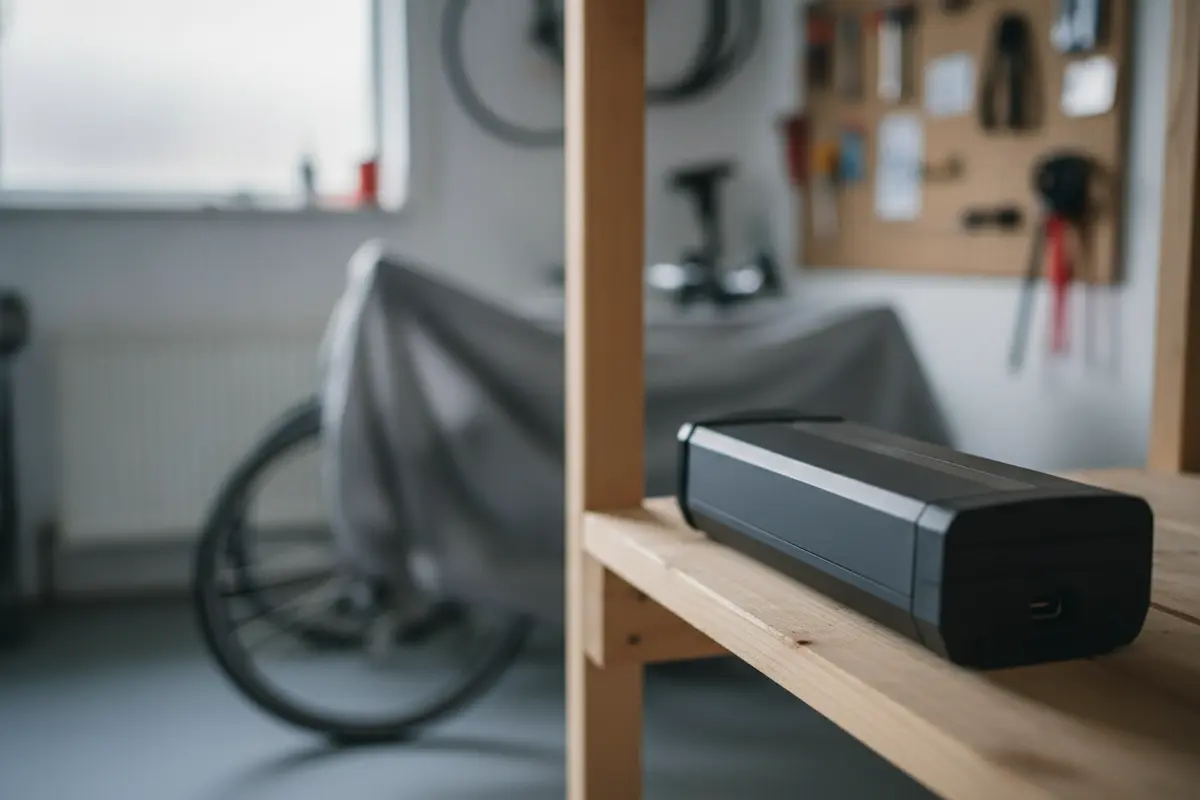
How do electric bike battery winter storage temperature and charging tips change after cold storage?
Let a cold battery warm gradually indoors, then charge only when its temperature is within the maker's permitted charging range. Do not try to warm it quickly with a heater, hot water, or a fireplace. The battery and charger instructions should determine when charging can begin.
Set up charging in a dry, well-ventilated area. Use only the charger approved for that battery, and place the equipment on a stable surface with clear space around it. Keep the setup away from exits and combustible materials, and remain nearby while it charges. Do not charge a damaged battery or cover the battery or charger. Disconnect when charging is complete as directed by the manual.
These precautions are consistent with the U.S. Consumer Product Safety Commission's micromobility device safety guidance, which includes battery and charging safety concerns. Follow the device-specific instructions as well; general safety information does not replace the limits for your particular battery.
A common winter mistake is bringing a battery inside and plugging it in immediately. A second is assuming that a charger with a matching connector is safe to substitute. Instead, allow time for the battery to reach room conditions naturally, verify the approved charger, and read any indicator lights using the manual. If an indicator or charging behavior is unfamiliar, pause rather than guessing.
How do storage and charging conditions compare?
Use this comparison as a planning aid, not a replacement for the manual. The best option is the one that meets the maker's temperature limits and keeps the battery dry, protected, and easy to monitor.
| Situation. | Better practice. | Avoid. |
|---|---|---|
| Long-term storage. | Dry indoor location; charge level and check schedule per manual. | Leaving the battery outdoors or in a damp space. |
| Battery arrives cold. | Allow it to warm naturally before charging. | Charging below the maker's permitted temperature. |
| Routine charging. | Approved charger on a stable, clear surface. | Unapproved chargers, covered chargers, or a risky unattended setup. |
| Visible damage or abnormal heat. | Stop use and seek qualified guidance. | Opening, modifying, or continuing to charge it. |
Can you leave the battery on the bike all winter?
That depends on the storage location and the manufacturer's instructions. If the bike is kept somewhere cold, damp, or exposed to temperature swings, removing the battery for indoor storage may be more practical when the design allows it. If you leave it installed, switch the bike off and protect it from moisture and extreme conditions. Do not force a removable battery or improvise a cover that traps moisture.
Think about the whole bike as well as the battery. A bike stored in a damp place may need attention to exposed electrical connections and other components. Keep the battery key or release mechanism accessible, and avoid storing heavy items against the battery housing. If the bike will remain unused for months, follow the maker's maintenance intervals rather than assuming no checks are needed.
For seasonal work, Voltaire Cycles offers multi-brand service and repairs in Central Oregon. Review the bicycle repairs and service information before arranging a visit. A technician can help assess the bike and its battery system, but battery-specific handling should follow the maker's procedures.
What changes if you ride through winter?
Storage advice is not the same as ride-day advice. Before a cold-weather ride, check the manual's operating-temperature guidance, start with a suitably charged battery, and plan conservatively because cold conditions can affect available performance. Keep the battery protected from water and impacts, and bring it indoors after the ride rather than leaving it in a cold bike overnight.
Inspect the bike before riding. Check tires, brakes, lights, and controls, and adjust your route to the surface and visibility. Do not assume a battery that performed well in mild weather will deliver identical range in the cold. If range matters, shorten the route or plan a safe turnaround point. Consider how you will get home if assistance drops sooner than expected, particularly when riding away from services or in changing weather.
After the ride, switch the bike off and wipe away moisture with the method recommended by its maker. Do not use a high-pressure spray around electrical parts. If you remove the battery, handle it as instructed and let it warm naturally before charging. A short post-ride check for water intrusion or impact damage can reveal a problem before the next trip. Avoid charging outside in wet or freezing conditions simply because the battery is near an outlet.
How can you compare winter battery-care options?
Choose a storage setup by asking whether it stays dry, stable, and within the temperature limits in your manual. Consider how often you can check the battery and whether the location is protected from accidental damage. The examples below are practical comparisons, not universal approvals.
| Storage spot. | What to consider. | General fit. |
|---|---|---|
| Indoor room with stable conditions. | Keep clear of heat, water, and clutter. | Often easiest to monitor. |
| Unheated garage or shed. | Check minimum temperatures, dampness, and temperature swings. | Use only if conditions meet maker guidance. |
| Car or outdoor location. | Temperature can change quickly; consider moisture and security. | Generally a poor choice for long storage. |
If you need help choosing an electric bike or understanding how a system fits your routine, you can browse electric bikes online or visit the Bend showroom for hands-on product guidance. The right battery-care routine depends on the exact model, not just the category name.
What should you do if the battery will not charge after storage?
First, confirm that the outlet works, the charger is the correct one, and the battery is within the manufacturer's charging-temperature range. Check the manual for indicator lights and permitted reset steps. Inspect the charger cable and accessible connection points for damage without opening the battery or attempting electrical repairs. Do not repeatedly connect and disconnect a damaged battery or try an unapproved charger.
If the battery remains unresponsive, note the conditions: how long it was stored. Where it was kept, whether it was cold before charging, and what the charger indicators show. This information can help the manufacturer or a qualified shop assess the issue. Stop testing if you notice unusual heat, odor, swelling, leakage, or visible damage. Voltaire Cycles services multiple brands; consult its multi-brand repair information to understand service options. Avoid repeatedly trying different outlets or chargers when the battery's status is uncertain.
What should you check before putting the battery away?
A short checklist makes winter storage more consistent and easier to repeat. Keep the information with the bike manual so it is available when spring arrives.
- Identify the exact battery model and locate its storage and charging limits.
- Confirm the recommended storage charge and check interval for the expected storage period.
- Choose a dry, stable place that meets the stated temperature range and avoids direct heat.
- Inspect the case and contacts; do not store a damaged battery as if it were normal.
- Record the date, charge status if known, and the next time to inspect it.
- Keep the approved charger available and use it only under the maker's charging conditions.
When spring returns, look over the case and contacts before reinstalling or charging. Refit the battery only as directed, confirm that it locks or seats correctly, then follow the normal startup procedure. If anything looks different from when you stored it, pause and ask for help rather than forcing a connection.
Explore multi-brand repair support
Frequently Asked Questions About Electric Bike Battery Winter Storage
Should I charge the battery to 100% before storing it?
Follow the storage-charge recommendation in the manual for your battery. Recommendations vary, so do not assume a full charge is appropriate for every model or storage period.
Can I charge the battery in a cold garage?
Only if the battery is within its manufacturer-specified charging-temperature range. If it is too cold, bring it indoors and allow it to warm naturally before charging.
Is it okay to use a different charger with the same plug?
No. Use only a charger approved for your specific battery system. Matching connectors alone does not establish that a charger is compatible.
When should I stop using the battery?
Stop use if you notice physical damage, swelling, leakage, unusual odor, or unexpected heat. Do not open the case; seek instructions from the manufacturer or qualified service provider.
With a dry, stable storage spot, careful temperature-aware charging, and the battery maker's instructions close at hand, you can prepare your electric bike for winter without guesswork.