

Stealth H52 Mini-Moto Electric Bike: Use and Fit Guide
The Stealth H52 mini-moto electric bike is a compact, high-powered electric ride that calls for more careful evaluation than a typical pedal-assist bicycle. Before choosing one, consider where you intend to ride, whether its size and controls suit you, and what rules apply to the vehicle in that location. Model specifications and current availability can change, so verify details with the seller and manufacturer before making a decision.
Call for a product consultation
What kind of riding suits the Stealth H52 mini-moto electric bike?
The best use case depends on the exact model configuration and where riding is permitted. A mini-moto format is not automatically suitable for every trail, road, or bike path. Confirm the manufacturer’s intended-use guidance, the vehicle’s specifications, and local access rules before planning a route.
Start with the surface and setting. A wide, firm dirt road is different from a steep, rocky singletrack trail, and both differ from paved streets or shared-use paths. Consider how much clearance and traction the bike provides, how its braking performs on loose surfaces, and whether its size and mass are manageable at low speed. Do not assume a route welcomes motorized vehicles because bicycles are allowed there.
- Private property: Get the owner’s permission and identify safe boundaries, other users, and possible obstacles.
- Public roads: Check local requirements for registration, equipment, licensing, and where the vehicle may operate.
- Trails and paths: Confirm the managing agency’s current rules for this vehicle type and power class.
- Remote rides: Plan for limited help, changing weather, and a safe way to return if the battery or vehicle has a problem.
For a comparison with other electric rides, browse the electric bike selection. A product category is a starting point, not proof that a particular model is permitted on a given route.
How can you judge fit and control?
Fit is about more than whether you can reach the seat. You should be able to mount and dismount securely, place your feet where the design intends, reach the controls without stretching, and maintain a stable posture. The bike should feel manageable when stopped as well as moving.
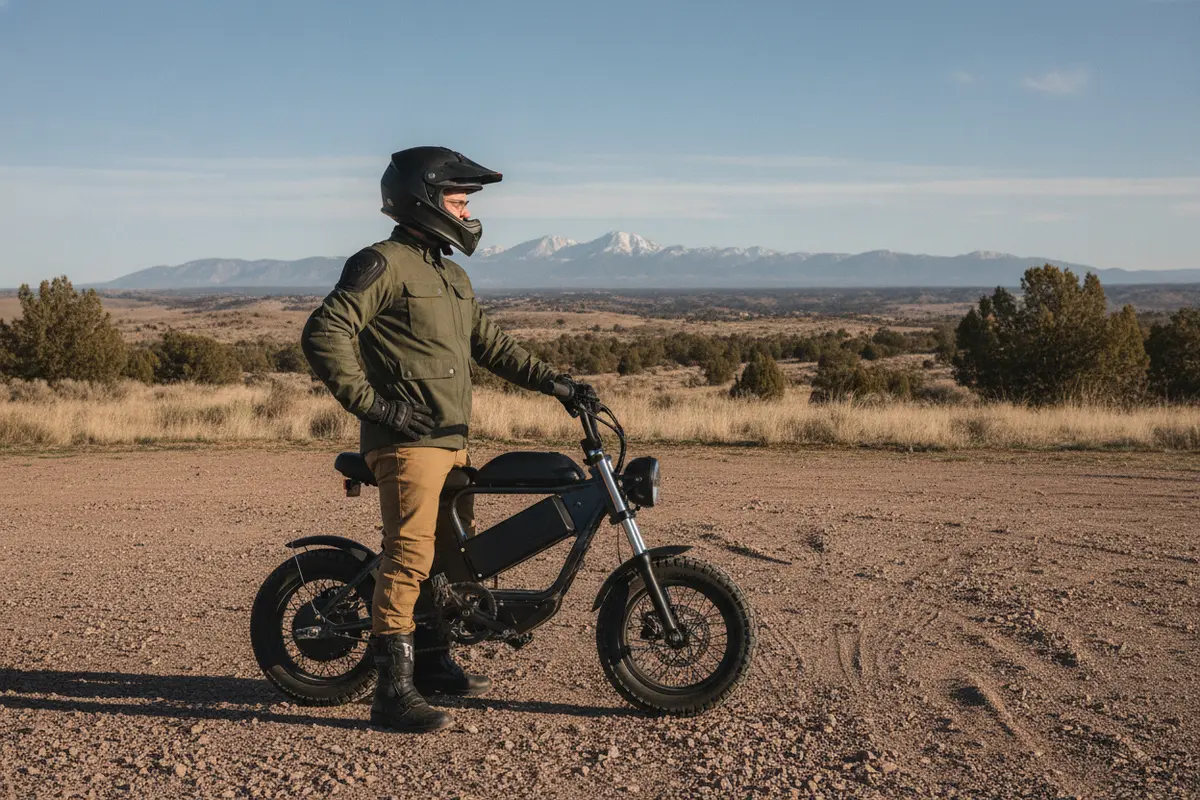
Ask for the verified dimensions, weight, seat height, and recommended rider size. Then consider your own reach, balance, and experience. A short test ride in a controlled, permitted area can reveal issues that photos cannot. Start slowly and practice braking and turning before riding on uneven ground.
Before riding, learn each control: how to start and stop the system, select any available assistance or power setting, monitor the display, and shut the bike down. Ask whether the throttle, brake cutoffs, and other controls vary by configuration. Never rely on a control description from a different model year.
During a demonstration, try a slow start, a gradual stop, a tight but controlled turn, and a dismount. Notice whether the bike responds smoothly or whether its power delivery surprises you. Ask the demonstrator to explain any modes before you use them. Keep both hands positioned to operate the brakes, and do not test acceleration near pedestrians, traffic, or obstacles. If a test ride is not available, ask for a stationary control walkthrough and written documentation instead.
What should you verify about controls, speed, and classification?
Do not infer legal classification from a product nickname, appearance, or a headline speed claim. The relevant category can depend on the vehicle’s motor, controls, maximum assisted speed, and the rules where it will be used. Obtain the exact specifications for the specific H52 version and check the current jurisdiction’s definitions.
In Oregon, review the applicable state guidance and ask the local land manager about site-specific access. The Oregon DMV vehicle types information is a useful starting point for understanding how vehicle type affects requirements; it does not settle every trail or local access question. Confirm requirements directly with the relevant agency before riding.
| Question to verify | Why it matters | Where to confirm |
|---|---|---|
| Motor output and top speed | May affect classification and appropriate riding setting | Exact model documentation and applicable agency |
| Throttle and control behavior | Changes how power is delivered and managed | Manufacturer documentation and a controlled demonstration |
| Required equipment | Rules can differ for road use and off-road settings | State, local, and land-management authorities |
| Trail or path access | Access rules may exclude some motorized vehicles | The agency managing that specific route |
Make the question concrete by naming the exact road, path, or trail system you expect to use. Rules may differ between a state highway, city street, forest road, and recreation trail, even within one region. Check who manages the route, whether motorized access is allowed for the vehicle category, and whether seasonal closures apply. Save the relevant guidance or contact information with your ride plan, and revisit it when rules or the vehicle configuration changes.
Also ask what equipment is required for the kind of operation you are considering. A headlight or mirror requirement, for example, may depend on classification and setting; do not assume a bicycle rule automatically applies. A seller can help identify the model’s documented specifications, but the appropriate public authority determines legal requirements.
How should you think about range and charging?
Use a manufacturer’s range figure as a reference, not a promise for every ride. Actual distance depends on factors such as terrain, rider and cargo load, speed, riding style, temperature, battery condition, and how much power is used. A route with climbing, soft ground, frequent stops, or a strong headwind can demand more energy than a steady ride on a firm surface.
Ask for the battery capacity, the stated test conditions behind any range estimate, charger details, and charging time. Confirm whether the charger is included and what outlet or charging instructions apply to this specific configuration. For a first outing, select a short loop near a safe return point rather than planning to use every advertised mile. Leave a reserve for detours or changing conditions.
A helpful way to assess a range claim is to map your own outing in stages. Estimate the distance to the farthest point, identify a shorter turnaround option, and note places where you could stop safely. A route that looks modest on a map may involve repeated climbs or loose ground that changes energy use. If you expect to carry equipment, include its weight in your discussion with the seller. Avoid treating a single best-case figure as a guarantee for a full day away from support.
Ask what the battery indicator shows and whether it reports a percentage, bars, or another estimate. Learn whether power delivery changes as charge decreases, and what the manufacturer says about storing the vehicle between rides. For charging, use the supplied or specified charger as directed; do not substitute an adapter or charger based only on a matching connector. Keep charging away from moisture and follow the maker’s instructions about location, temperature, and supervision.
Keep the battery and charger dry and use them only as directed by the manufacturer. If a battery is damaged, unusually hot, swollen, or emitting an odor, stop using it and seek qualified guidance. Do not attempt improvised repairs.
Which safety equipment and preparation matter?
Choose protective equipment for the vehicle’s speed, weight, and intended setting. A properly fitted helmet is essential, and additional protection such as eye protection, gloves, sturdy footwear, and protective clothing may be appropriate. Ask the manufacturer or a qualified retailer what equipment is recommended for the H52 and the way you plan to ride.
- Inspect tires, brakes, steering, fasteners, and lights before each ride.
- Check battery charge and make sure controls respond normally.
- Wear visible clothing and carry water, a phone, and basic ride supplies.
- Ride within your skill level and slow down for loose surfaces, blind corners, and other trail users.
- Do not ride impaired, and do not carry a passenger unless the manufacturer expressly permits it.
Before a remote trip, tell someone your route and expected return time. Bring a plan for a mechanical issue or depleted battery. If you are new to a powerful electric vehicle, practice in a controlled area and build confidence gradually.
A pre-ride check should be deliberate rather than rushed. Roll the bike a short distance and test each brake separately at walking speed. Look for tire damage, loose components, or cables that appear pinched or abraded. Confirm that the steering moves freely and that the throttle or other power control returns as intended. If anything feels inconsistent, do not try to diagnose a potentially serious electrical or brake fault on the trail; stop and arrange qualified inspection.
Think through the ride environment, too. Dust, rain, cold, and changing light can affect comfort, visibility, and battery performance. Choose clothing that lets you move freely and stay visible, and carry a light source if conditions could change. Share the route and expected return time with someone who can follow up. In remote areas, identify a bailout route or a place where you can safely wait for help rather than depending on phone coverage.
Riding etiquette is part of preparation. Slow down well before approaching walkers, cyclists, animals, or other vehicles. Give others room and make your presence clear without startling them. Avoid spinning the tire on loose ground or riding beyond your sightline. If a route is crowded or too narrow to pass safely, wait for a clear opportunity or choose another route.
What service should you ask about?
Before purchase, clarify who can inspect and maintain the bike, which service tasks are supported, and how warranty concerns are handled. Ask whether the local shop can work on this exact model and which repairs require manufacturer authorization or specialized parts. Service capability varies by product; do not assume every shop supports every electric vehicle.
Voltaire Cycles offers multi-brand electric mobility service, but confirm support for the specific H52 and the work you need before arranging a visit. Its repairs and service page provides a place to review service information. Keep purchase records and follow the maker’s maintenance schedule.
Ask what routine checks the owner can perform and which tasks should be left to a qualified technician. Get clear instructions for brake adjustment, tire care, cleaning, and storage if these are owner-maintainable on the specific model. For electrical diagnosis, battery work, or unfamiliar components, use the manufacturer’s instructions and authorized support. Keep a record of maintenance, symptoms, and any warning messages; a concise history can help a technician understand a problem.
Before relying on warranty support, ask where a claim begins, what records are needed, and whether shipping or transport is involved if service is not available nearby. Clarify which components are covered and how modifications may affect coverage. These are questions to resolve in advance, not assumptions about the H52’s current warranty. If the bike is used, request available service records and ask whether any open repairs or replacements are known.
What should you ask before buying the Stealth H52 mini-moto electric bike?
A useful product conversation should resolve details rather than rely on assumptions. Bring your intended route, riding experience, and questions about fit. Ask for current documentation for the exact model and configuration, especially if comparing listings or used vehicles.
- What are the verified dimensions, weight, motor output, battery capacity, and maximum speed?
- What terrain and riding conditions does the manufacturer recommend?
- How does the control system work, and can I try it in a safe, permitted setting?
- What range estimate applies to my likely terrain and riding style?
- What charger is supplied, and what are the battery care instructions?
- What protective equipment and routine inspections are recommended?
- What legal classification and access rules apply to my intended roads, paths, or trails?
- Who can perform maintenance, diagnostics, and warranty service for this exact model?
It can help to bring a written checklist and record the answers beside the documents they came from. If two listings describe different specifications, ask which model year and configuration each one covers. Request clarification when a listing uses broad language such as “off-road” without naming terrain limits or access conditions. Separate three decisions: whether the machine fits you, whether it suits the routes you can legally use, and whether the support plan works for your location.
Compare the complete ownership picture, not just the purchase listing. Consider the included charger and any supplied equipment, the practical way you will transport or store the bike, access to service, and the time needed to learn the controls. If you plan to ride only occasionally, ask how to store and maintain it between outings. If you expect frequent or remote rides, prioritize a clear maintenance pathway and a conservative range plan. None of these answers substitutes for current model documentation or local rules, but together they make a purchase decision more grounded.
For hands-on questions, local shoppers can speak with Voltaire Cycles in Bend and ask whether a demonstration or consultation is appropriate for this model. Online buyers can gather the same basics before ordering: exact specifications, intended-use guidance, documentation, and a plan for setup and service. Avoid rushing if a key detail is unclear. A careful pause is better than discovering after purchase that the vehicle, route, or support arrangement does not match your expectations.
A careful fit check, realistic range plan, and clear understanding of local rules help you decide whether this mini-moto format belongs in your riding plans. Verify model-specific details before purchase, and choose a route and pace that match your skills and the vehicle’s approved use.