

Riding an Electric Bike in the Rain: Safer Routine
Rain does not automatically cancel an e-bike ride, but it does change the decisions that keep the rider and the bike safe. Wet pavement can reduce grip, visibility can drop quickly, and water needs to be kept away from charging connections and other electrical interfaces. A good routine is simple: check the bike, slow the ride, protect the electronics, and dry everything before charging.
For Central Oregon riders, that routine matters on a commute, a quick errand, or a recreational ride when a forecast changes. The right answer depends on the exact e-bike, its manual, the condition of its seals and covers, and the road conditions in front of you. This guide explains how to make a conservative go or no-go decision without treating any e-bike as waterproof.
Can You Ride an Electric Bike in the Rain?
Most modern e-bikes can be ridden in ordinary rain when the manufacturer's instructions allow it, but they are water-resistant rather than automatically waterproof. Check the model manual, avoid flooding and submersion, reduce speed on slick pavement, and keep the battery, charge port, display, and connectors dry before charging.
That answer has two separate parts. First, the bicycle must be appropriate for the exposure. Second, the rider must be able to control it in the conditions. A bike that tolerates splashes can still be difficult to stop on wet paint, leaves, gravel, or standing water. If visibility, traction, or control is deteriorating, postponing the trip is the safer choice.
Do not generalize a water-resistance rating from one component or one Segway model to an entire bicycle. Battery housings, motors, displays, wiring, charge ports, and accessories may have different protection limits. Read the documentation for the exact model you own or are considering, and ask a qualified service team when the documentation is unclear.
When Should You Avoid Riding an Electric Bike in the Rain?
Skip the ride when rain combines with flooding, moving water, deep puddles, lightning, strong wind, poor visibility, or a damaged bike. Standing water can hide potholes and curbs, while severe weather can make braking, steering, and seeing other road users unreliable. A short delay is better than forcing a ride beyond your control.
- Do not ride through water deep enough to reach electrical housings, hubs, pedals, or the bottom bracket.
- Do not assume a sealed battery is safe after submersion or a hard impact.
- Postpone the ride when glare, spray, darkness, or heavy rain prevents you from seeing hazards.
- Avoid exposed routes during lightning, high winds, or rapidly changing conditions.
- Stop if the display, motor, controls, battery, or charger behaves unusually.
Wet trails and paths deserve the same judgment as roads. Mud, leaves, loose gravel, and pooled water can reduce control and may damage a trail surface. Check current route conditions, choose a better-drained alternative when practical, and never treat a familiar dry route as equally safe when it is wet.
How Should You Ride an Electric Bike Safely in Wet Conditions?
Ride more slowly, brake earlier, increase following distance, and make every steering, braking, and acceleration input smooth. Wet pavement reduces available grip, so enter turns at a controlled speed, keep the bike upright over slick surfaces, and avoid hard braking while turning. Test the brakes gently in a safe area before joining traffic.
Use both brakes progressively and leave extra room for intersections, driveways, crossings, and downhill sections. Painted lines, metal covers, wet leaves, loose gravel, and polished pavement can be especially slippery. Cross questionable surfaces as upright and straight as conditions allow, without sudden steering or throttle changes.
Assist level also deserves attention. Lower assistance can make acceleration easier to manage when traction is limited, but follow the specific controls and recommendations in the model manual. Keep both hands ready, keep your eyes farther ahead than the front wheel, and avoid carrying or securing cargo in a way that changes balance.
For a broader pre-ride process, use Voltaire's electric bike safety checklist before heading out. It is a useful companion for checking brakes, tires, controls, lights, and battery seating in any season.
What Should You Check Before Riding an Electric Bike in the Rain?
Before riding an electric bike in rain, inspect the parts that affect control and the openings that keep water away from electronics. Confirm that the brakes feel firm, tires have usable tread and appropriate pressure, lights work, battery covers are seated, and accessories such as fenders and racks are secure.
- Brakes: Squeeze both levers and look for a firm, predictable response. Do not ride if braking feels weak, noisy, or inconsistent.
- Tires: Check tread, visible damage, and pressure according to the model or tire guidance. Do not make a wet ride the first test of a worn tire.
- Battery and charge port: Confirm the battery is seated and any cover or port door is closed as designed. Never connect a charger to wet contacts.
- Controls and display: Check that the display, assist controls, bell or horn, and lights work before leaving.
- Fenders and cargo: Confirm that fenders, racks, bags, and straps cannot contact the tires or controls.
- Clothing and visibility: Use a properly fitted helmet, weather-appropriate layers, gloves, and eye protection. Add reflective or high-visibility elements and working front and rear lights.
Full-coverage fenders are useful because they reduce spray on the rider, drivetrain, and nearby components, but a fender is not a waterproofing system. Likewise, a bright light helps others notice you, but it cannot compensate for riding too fast for visibility. Equipment supports safe decisions; it does not replace them.
How Do You Protect an E-Bike Battery From Rain?
Protect an e-bike battery from rain by keeping the charge port, battery contacts, charger, and surrounding housing dry. Follow the exact model instructions for covers or battery removal, and never charge a battery or charger that is wet. Let the bike and charging area dry fully in a safe, ventilated indoor location before reconnecting power.
After a wet ride, turn the bike off and inspect the battery area without forcing a cover or connector. Wipe away standing water with a soft, clean cloth. Do not use a pressure washer, direct high heat, or improvised tools around sealed electrical components. If water has entered a housing or the battery was submerged, do not power up or charge it until a qualified technician has assessed it.
The same caution applies to the display and motor connections. A short ride through light rain is not permission to ignore a loose cover, cracked housing, damaged cable, or intermittent error. When in doubt, keep the charger disconnected and use the model manual or professional service guidance to decide what happens next.
For general charging habits, see Voltaire's guide to charging an e-bike from a standard wall outlet. The important wet-weather rule is simple: charging equipment and connection points should be dry before charging begins.
What Should You Wear and Carry for a Wet-Weather Ride?
Wear a waterproof outer layer that does not restrict your arms, gloves that maintain grip, eye protection, and a helmet that remains properly fitted. Carry a phone in a water-protective location, a clean cloth for a quick wipe, and a plan for getting indoors if the weather turns. Keep loose rain gear away from wheels and drivetrain parts.
Visibility works both ways. Use the bike's required lights and reflectors, choose high-visibility clothing when appropriate, and assume drivers may have reduced sight lines through windshields and spray. Avoid clothing that blocks peripheral vision or makes it difficult to operate the controls. If a hood or eyewear obscures your view, change the setup before riding.
Route planning matters as much as clothing. A route with lower traffic, better drainage, shelter, and fewer slick crossings may be preferable to the shortest route. If the forecast suggests a long period of heavy rain, plan a dry storage point or another way home instead of relying on a last-minute decision.
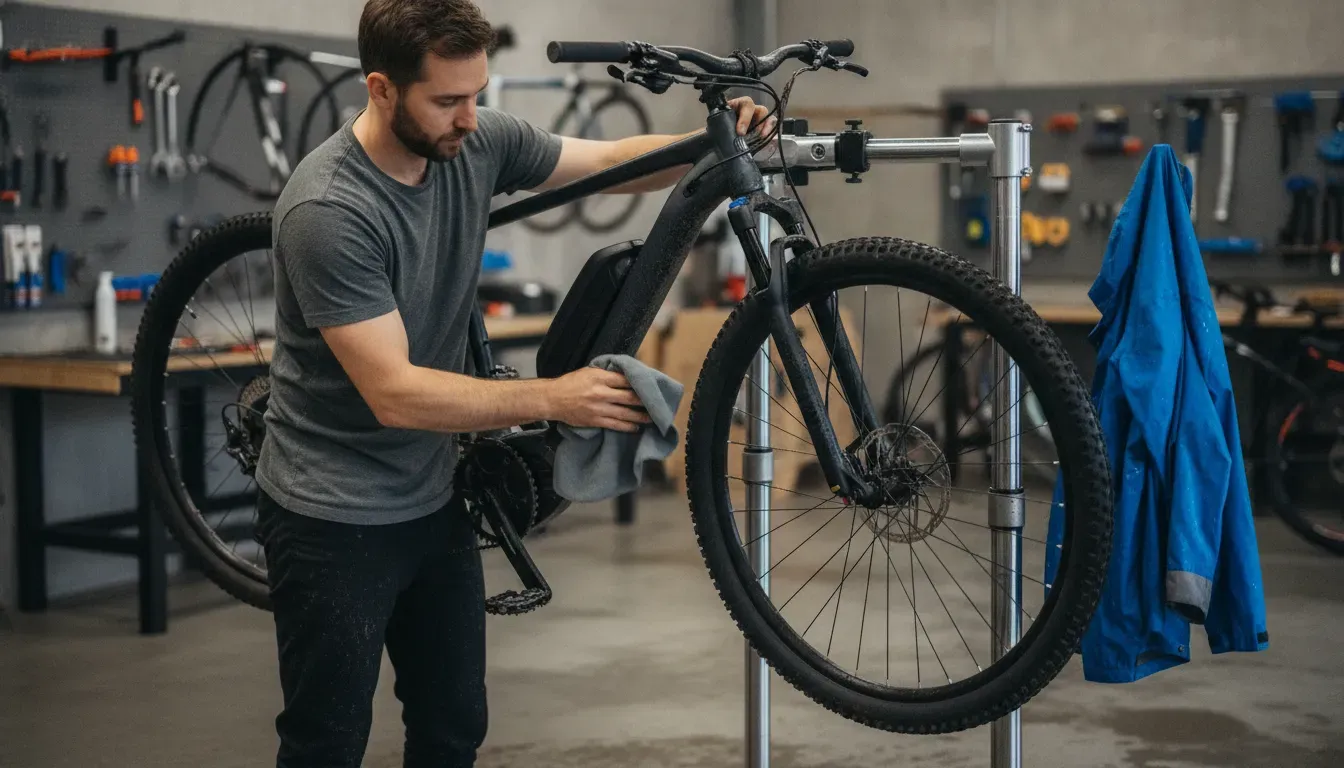
What Should You Do After Riding an Electric Bike in the Rain?
After riding an electric bike in rain, power it down, move it to a dry ventilated area, wipe off standing water, and inspect the brakes, drivetrain, battery area, display, charge port, and connectors. Remove grit carefully and let wet electrical areas dry before storage or charging. Do not seal a wet bike inside a bag.
- Park under cover and switch the bike off.
- Wipe the frame, fork, wheels, controls, display, and accessible electrical areas.
- Check the charge port and battery interface without touching wet contacts unnecessarily.
- Look for grit, leaves, or mud near the brakes, chain, cassette, and moving parts.
- Let the bike dry with ventilation. Use only the cleaning and drying methods allowed by the model instructions.
- Charge only when the bike, battery interface, and charger are dry.
- Arrange service if symptoms appear or if the bike encountered deep water or submersion.
After repeated wet rides, the drivetrain and brake surfaces may need more frequent cleaning and inspection. Voltaire's electric bike maintenance guide can help you build a broader ownership routine. Avoid applying lubricant to a dirty or wet chain without first following the product and component instructions.
When Should a Wet E-Bike Be Inspected by a Technician?
Have a wet e-bike inspected when it was submerged, shows water inside a housing, develops charging or power problems, displays an error, brakes differently, makes unusual motor noise, or has a damaged cable, battery latch, connector, or charge port. Do not troubleshoot a sealed battery system by opening it yourself.
Electrical symptoms may be intermittent, so a bike that powers on once is not automatically cleared after serious water exposure. Stop riding if the battery becomes unusually hot, swollen, odorous, or physically damaged. Keep it away from combustible materials and follow the manufacturer's emergency and service instructions.
Voltaire Cycles of Central Oregon has a Bend showroom and a multi-brand service center that handles electrical diagnostics, battery testing, motor and controller concerns, and mechanical work such as brakes, wheels, and gears. Visit Voltaire's bicycle repair services for the next step, or request a consultation when you need help interpreting model-specific guidance.
Riders who are deciding what to buy can also browse Segway electric bikes and ask the Voltaire team to compare fit, intended route, accessories, and manufacturer instructions. Do not choose a bike based on a generic promise that it is waterproof.
Wet-Weather E-Bike Questions, Answered
Can you ride an e-bike while it is raining?
Often, yes, if the specific e-bike's manual permits ordinary rain and the rider can maintain control. Slow down, brake early, use lights, avoid flooding and deep puddles, and dry the bike before charging. Water resistance varies by model and component, so do not treat any e-bike as automatically waterproof.
How do I protect my e-bike battery from rain?
Keep the battery housing, charge port, contacts, and charger as dry as possible. Make sure covers are seated as designed, wipe away standing water after a ride, and charge only after the bike and charging equipment are dry. Follow the exact manual for battery removal and inspection.
What happens if an e-bike battery gets wet?
A small amount of external rain exposure does not by itself prove damage, but water inside the battery area, contacts, or housing can create a safety and reliability concern. Do not power on or charge a battery that was submerged, is damaged, or behaves unusually. Seek qualified service guidance.
Are e-bikes fully waterproof?
No blanket answer applies. Some components may be tested for specific splash or water exposure, but ratings and limits differ by model and part. A rating does not make the complete assembled bike safe for submersion, flooding, pressure washing, or charging while wet. Check the manufacturer's documentation.
Can you charge an e-bike while it is wet?
No. Wait until the battery interface, charge port, charger, and surrounding area are dry, then follow the manufacturer's charging instructions. If water entered the housing, the battery was submerged, or charging behavior changed, leave it disconnected and ask a qualified technician for guidance.
Can you leave an e-bike outside in the rain?
Short exposure is different from regular outdoor storage. Store the e-bike indoors in a dry, ventilated location whenever possible. If outdoor storage is unavoidable, follow the model's instructions and use weather protection that does not trap condensation or leave the battery and charger exposed.