

Electric Bike Maintenance: The Complete Guide for Owners
An electric bike makes everyday riding easier, but its motor, battery, and added weight also change how quickly certain parts wear. A few minutes of inspection before a ride can catch low tire pressure, brake wear, drivetrain grime, or electrical damage before a small issue becomes a safety problem.
Schedule your e-bike service check with Voltaire Cycles in Bend today.
Electric bike maintenance means regularly checking wear items such as tires, brake pads, the chain, and drivetrain. It means following the manufacturer's guidance for the battery, motor, and electrical system. E-bikes place more stress on these components than standard bicycles. Consistent home checks should be paired with professional service when diagnostics, firmware, sensors, or battery health are involved.
The right routine is not about taking apart every system yourself. It is about knowing what you can safely inspect, what requires careful seasonal attention, and when a Bend technician can help protect both your ride and your warranty.
Why Electric Bike Maintenance Matters More on an E-Bike
An e-bike may look familiar to anyone who has ridden a conventional bicycle, but its operating demands are different. The motor and battery add weight, while electric assistance makes it easier to travel farther, climb more often, and maintain higher speeds. That combination puts additional demands on the parts that connect you to the road.
Regular checks are not about chasing perfection or performing complicated repairs at home. They are about noticing wear before it affects control, reliability, or the rest of the bike. A practical electric bike maintenance routine can help you catch a soft tire, thinning brake pad, stretched chain, or shifting problem while the fix is still straightforward.
Added weight changes how components wear
The motor and battery increase the bike's overall weight. Tires therefore carry more load, and brakes have more energy to manage whenever you slow down. E-bike tires and brake pads can require closer monitoring than the corresponding parts on a standard bicycle. Regularly check tire pressure and tread, and pay attention to changes in braking feel, unusual sounds, or increased stopping distance.
These are simple observations, but they directly support rider safety. If a brake lever feels unusually soft, a rotor is damaged, or a tire shows significant wear, avoid treating the issue as routine adjustment. A qualified technician can determine whether the bike needs a part replacement, a precise adjustment, or a more involved inspection.
Motor torque works through the drivetrain
Electric assistance also changes the load on the chain and drivetrain. The high torque and steady power delivered by many hub-drive and mid-drive systems can place additional stress on the drivetrain. Keeping the drivetrain clean, lubricated as recommended, and shifting smoothly helps, but lubrication cannot correct a worn chain, damaged cassette, or poorly adjusted derailleur.
Know what to check and what to leave to a professional
Owners can usually handle visual inspections, tire inflation, cleaning, and basic care that the manufacturer's manual permits. Electrical faults, motor diagnostics, sensor problems, and repairs involving a battery should be handled by an experienced e-bike service team. Do not improvise around components that could create a safety risk or affect your warranty.
Before every ride, run a quick routine that takes about five minutes:
- Check tire pressure and look for cuts, bulges, or flattened tread.
- Squeeze both brake levers and confirm firm, consistent stopping.
- Inspect the battery case, charging port, and visible connectors for damage or debris.
- Listen for unusual motor, chain, or brake sounds during the first few minutes.
| Task | DIY at Home | Professional Shop |
|---|---|---|
| Tire inflation and tread checks. | Yes, before every ride. | During tune-ups. |
| Chain cleaning and lubrication. | Yes, with bike-specific products. | When a chain is worn. |
| Brake pad and rotor inspection. | Visual checks. | Adjustment or replacement. |
| Battery inspection. | Visual and connector checks. | Health assessment and diagnostics. |
| Motor firmware and sensor diagnostics. | No. | Yes, with diagnostic tools. |
Whether you are commuting, riding trails, or choosing your first model, the right upkeep protects the investment and helps the bike perform as designed. Voltaire Cycles can also help you compare maintenance needs across the broader electric bike selection before you buy.
What Do Charging Habits Mean for E-Bike Battery Life?
Your battery is one of the most important parts of an e-bike, and small charging choices can support reliable performance over time. There is no universal battery lifespan because rider weight, terrain, riding frequency, and weather all affect wear. Treat the battery as a safety-critical component, follow the manufacturer instructions for your specific model, and use these habits as a practical baseline.
Daily charging habits that protect the battery
For regular riding, aim to keep the battery in a partial-charge range rather than repeatedly draining it to 0%. Washington State University recommends daily partial charging, with a target around 20% to 80% being a reasonable routine for many riders. If you need a full charge for a longer trip, follow the instructions for your bike instead of treating the 80% guideline as a hard rule.
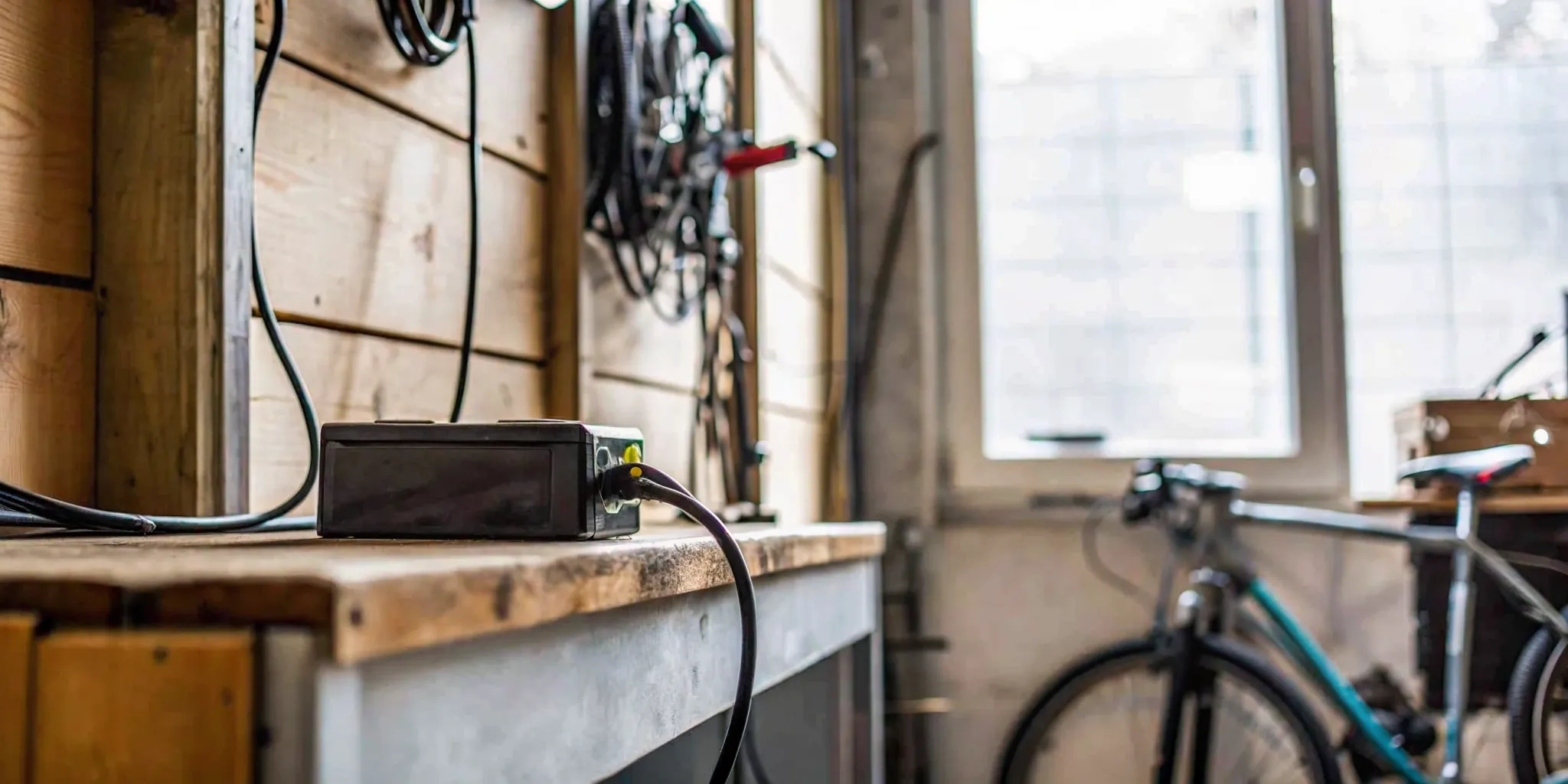
Use only the charger approved by the bike manufacturer. Princeton's e-bike fire-prevention guidance links many battery fires to aftermarket batteries and chargers, so a cheaper replacement is not worth the safety uncertainty. Place the battery and charger on a stable, nonflammable surface in a dry area. Avoid charging in direct sunlight, inside a hot vehicle, or anywhere the battery could become excessively warm.
Stay nearby while charging and never leave the battery charging overnight or unattended. When charging is complete, remove the battery from the charger and unplug the charger when it is not in use. If the battery becomes unusually hot, unplug it immediately and seek professional guidance rather than continuing the charge.
Battery storage and cleaning rules
Store an e-bike battery in a temperature-controlled indoor space, ideally between 50 and 77 degrees Fahrenheit. Keep it away from freezing conditions, extreme heat, and direct sun. For extended storage, a 40% to 60% charge is recommended, with a check every few months so the battery does not sit at zero charge. Never charge a frozen battery. Let it return to room temperature first, then follow the manufacturer's charging instructions.
Before each ride, look over the battery case, charging port, and electrical connectors. Check for cracks, debris, moisture, or corrosion, and keep connection points clean and dry. Do not open the battery pack, attempt cell-level repairs, or modify its wiring. DIY battery work can create a serious safety risk and may affect warranty coverage. If the case is damaged, swollen, leaking, discolored, or behaving inconsistently, stop using the battery and have it assessed by a qualified technician.
These simple habits make battery care a routine part of responsible e-bike ownership while keeping model-specific decisions with the manufacturer and trained service professionals.
Washington State University battery safety guidance and Princeton's e-bike fire-prevention guidance provide additional safety context.
What Are the Battery Warning Signs That Mean Stop Riding?
Your e-bike battery should not look, smell, or behave unusually. Stop riding and arrange a professional inspection if any of these warning signs appear:
- A swollen, bulging, leaking, cracked, or discolored battery case.
- Corrosion around the terminals.
- Unexpected range loss, rapid discharge, flickering, or inconsistent power delivery.
These symptoms can indicate battery failure rather than a simple charging habit issue.
Do not open the battery pack, probe its cells, or try to repair it at home. Lithium-ion packs can retain dangerous energy even when the bike is switched off. Remove the battery from service, keep it away from heat and flammable materials, and contact a certified e-bike shop for guidance. The warning signs that your e-bike needs professional service are worth reviewing before a small symptom becomes a safety problem.
Pay attention to heat during charging
A battery or charger may become slightly warm during normal use, but excessive heat is a reason to act immediately. Unplug the charger, if it is safe to do so, and move the battery outdoors if possible, away from buildings, vehicles, and anything combustible. Do not continue charging it to see whether the temperature settles. Princeton's e-bike fire-prevention guidance recommends unplugging a battery that becomes hot while charging and moving it outside when possible: review the charging safety guidance.
Changes in charging and range matter
A pack that will not hold a charge or dies soon after a full charge may have degraded cells. Longer-than-usual charging times can be another early warning sign. Reduced range can have several explanations, including weather, terrain, rider load, tire pressure, or riding mode, but a sudden or continuing change should not be dismissed. Record when you notice the symptom and whether it happens under particular conditions, then share that information with the technician.
Professional electric bike maintenance includes assessing the battery and related electrical systems without asking you to take apart a safety-critical component. Until the shop has evaluated the pack, do not ride the bike or keep charging a battery that is swollen, leaking, unusually hot, or delivering erratic power.
Book a battery health check at the Voltaire Cycles shop in Bend.
Motor, Brakes, Tires, and Drivetrain: The High-Wear Parts
The parts that move, stop, and carry your e-bike deserve a closer inspection than they might on a conventional bicycle. E-bike weight, speed, and motor assistance place additional stress on tires, brake pads, chains, and other drivetrain components. A simple check before rides, followed by timely service, can help you catch wear before it becomes a safety problem.
Brakes
Brake performance matters because an e-bike may be heavier and travel faster than a standard bicycle. Inspect the pads frequently for visible wear indicators, and look over the rotors for damage, contamination, or unusual scoring. Pay attention to changes in lever feel, squealing that does not clear after normal use, vibration, or longer stopping distances.
Keep braking surfaces free of lubricants and avoid spraying cleaners directly into calipers or other sensitive components. If a pad is worn, a rotor is damaged, or the brake system feels inconsistent, stop riding until it has been assessed. Brakes are not a good place to postpone maintenance or experiment with an unfamiliar repair.
Tires
E-bike tires can wear faster because they carry the added weight of the motor and battery and often support higher average speeds. Check air pressure before longer rides and use the pressure range printed on the tire sidewall or specified by the manufacturer. Underinflation can affect handling and increase the chance of rim damage, while overinflation can reduce grip.
Inspect the tread and sidewalls for a flattened center, cuts, cracks, embedded debris, or bulges. Replace a tire when the tread is substantially worn or the casing is compromised. Also check that the wheel is seated securely and spins without obvious rubbing.
Chain and Drivetrain
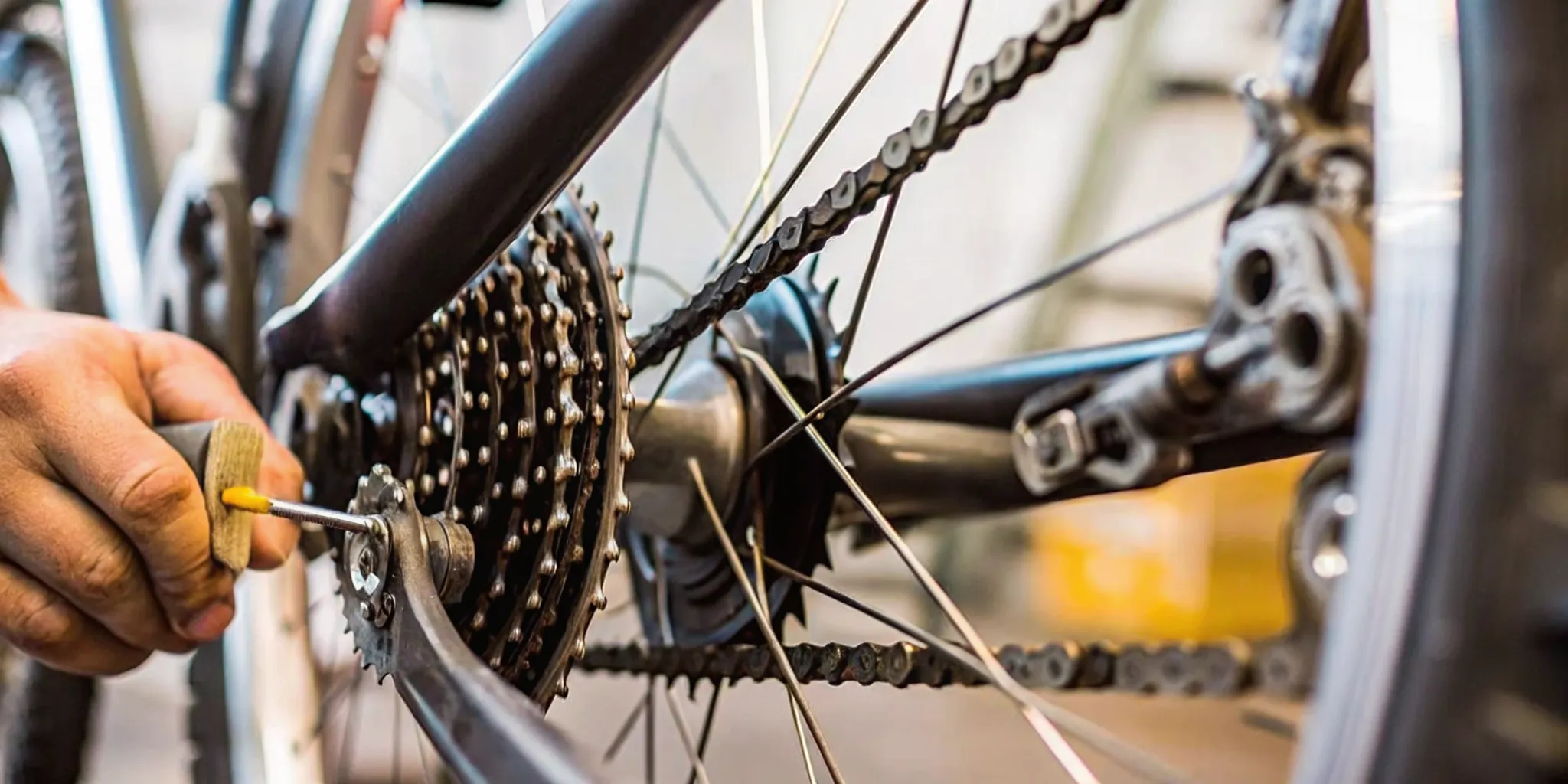
Mid-drive and hub-drive systems send higher power inputs through drivetrain components than a rider supplies alone. High torque and consistent motor assistance can accelerate chain wear, so keep the chain clean, lubricated with a bicycle-specific product, and checked for stretching. Inspect the cassette, chainring, derailleur, and shifting performance for worn teeth, bent parts, skipping, or noisy operation.
Motor care is part of this inspection, but motor diagnostics belong with a certified technician. Firmware updates and electronic sensor health require diagnostic tools and model-specific knowledge. At home, inspect the battery case and visible electrical connections for cracks, debris, corrosion, or moisture that could affect safe operation. Do not open the motor or battery housing. If assistance cuts out, error codes appear, or the system behaves inconsistently, arrange professional e-bike service before continuing to ride.
Seasonal Storage: Winter Care for Central Oregon Riders
Cold, dry stretches and sudden temperature swings are part of riding in Bend. If your e-bike will spend several weeks or months indoors between rides, prepare the battery separately from the bike and give it a stable home. A few simple storage habits can help protect battery health and make the first spring ride more predictable.
Store the battery indoors, not in the shed
Remove the battery when your model allows it and keep it in a temperature-controlled indoor space. A garage, shed, vehicle, or other area exposed to freezing temperatures is a poor choice for long-term storage. Battery guidance recommends avoiding direct sun, hot cars, and freezing conditions because extreme temperatures can cause permanent damage. The ideal storage range for lithium-ion e-bike batteries is about 50 to 77 degrees Fahrenheit, or 10 to 25 degrees Celsius. Keep the battery dry and away from heat sources, moisture, and anything that could damage its case or terminals.
Before putting it away, inspect the battery and charging contacts for visible damage, corrosion, or debris. Follow the instructions for your specific battery and bike, since removal and storage procedures vary by system.
Use a partial charge for long-term storage
For a battery that will sit unused, aim for approximately 40% to 60% charge rather than leaving it full or allowing it to reach zero. Check the charge level every few months. If it has dropped significantly, recharge it according to the manufacturer's instructions and return it to the recommended storage range. Periodically cycling the battery may also be appropriate, but use the manufacturer's guidance for your model. Do not let the battery remain at zero for months.
Warm a cold battery before charging
Never charge a frozen battery. Warm it back to a safe state with this sequence:
- Bring the battery indoors and let it reach room temperature naturally.
- Inspect the case for swelling, damage, moisture, or discoloration before connecting the charger.
- Connect the approved charger and follow the manufacturer's charging guidance.
Do not use a heater or other direct heat source to speed up the process. If the battery looks swollen, damaged, wet, or unusually discolored, do not charge or ride with it. Set it aside safely and ask a qualified technician for advice.
Planning to ride through the colder months? These winter e-bike riding tips cover preparation for active winter use. If you are visiting Bend or want to try a different setup before buying, ask about e-bike rentals.
When Professional Electric Bike Maintenance in Bend Is Worth It
Routine care at home can cover cleaning, tire checks, chain lubrication, and basic inspections. Professional service becomes valuable when your e-bike needs a complete tune-up, electronic diagnosis, or a safety assessment that is difficult to perform without specialized equipment.
Use the manufacturer's schedule as your starting point
Many manufacturers recommend a professional tune-up about every six months or every 500 to 1,000 miles. That is a useful planning benchmark for commuters, recreational riders, and anyone who rides regularly in Central Oregon. Your own bike may require a different schedule, however, so always defer to the manufacturer's manual. Motor systems, components, riding conditions, and warranty requirements vary by model.
Book service sooner if you notice recurring brake noise, shifting problems, unusual motor behavior, or changes that basic adjustments do not resolve. A tune-up is also a sensible step before a long trip, after a demanding riding season, or when buying a used e-bike and wanting a clear baseline.
Electronic systems need more than a mechanical check
An e-bike combines conventional bicycle parts with a motor, sensors, controller, display, and battery system. A qualified technician can use diagnostic tools to check motor firmware and electronic sensor health. That matters when an error code appears, assistance cuts out unexpectedly, or the bike feels different even though the drivetrain and tires look normal.
Battery evaluation is another reason to choose professional help. A service center can assess battery pack health beyond the maintenance checks available at home. That does not replace safe charging habits, but it can help identify whether a performance concern is related to the battery, electrical system, or another component.
Choose a shop that can support your actual bike
Voltaire Cycles of Central Oregon has certified technicians and services all e-bike brands, not only the models sold in its showroom. Local support in Bend gives riders a place to discuss symptoms, understand repair options, and make an informed decision without pressure. Explore e-bike service in Bend when your bike needs diagnostics or a thorough tune-up. If you are still comparing ownership options, browse the current selection of electric bikes and ask the team which maintenance requirements fit your riding plans.
Get a professional e-bike tune-up from the Voltaire Cycles service team.
Frequently Asked Questions
How often does an electric bike need maintenance?
Check your tires, brakes, chain, and controls before regular rides. Then schedule a professional tune-up about every six months or 500 to 1,000 miles, depending on use and the manufacturer's guidance. Frequent riding, steep terrain, wet conditions, and heavy loads can justify earlier service. Many manufacturers use this interval as a general recommendation, so check your owner's manual for the schedule that fits your bike.
How do I take care of my e-bike battery?
Use the manufacturer-approved charger, keep the battery away from extreme heat and cold, and avoid leaving it fully depleted for routine riding. A practical daily target is roughly 20% to 80%, while long-term storage is generally best around 40% to 60%. Store it in a cool, dry place, and never charge a frozen or visibly damaged battery. Washington State University battery guidance supports these temperature and charge-range recommendations.
Can I wash my electric bike with a hose?
Use a damp cloth, soft brush, and mild bike-safe cleaner instead of a high-pressure hose. Keep water away from the battery contacts, display, charging port, motor connections, and other electrical components. After cleaning, dry the bike thoroughly before charging or storing it. If water has entered an electrical connection or the bike behaves unusually, stop riding and have it inspected.
How long do e-bike motors last?
Motor life varies with the drive system, riding conditions, service history, loads, and manufacturer design, so a fixed mileage promise is not reliable. Keep the drivetrain adjusted, avoid forcing a noisy or malfunctioning system, and have a technician handle firmware, sensor, diagnostic, or internal motor concerns. The owner's manual is the best source for model-specific service requirements.
What is the most important part of e-bike maintenance?
Safety checks come first: confirm that the brakes stop the bike firmly. Tires are properly inflated and undamaged, and the battery shows no swelling, leaking, unusual heat, or inconsistent power. A small amount of routine chain and drivetrain care also prevents avoidable wear. If a battery becomes hot while charging, unplug it immediately and seek professional guidance.
Ready to Schedule E-Bike Service in Bend?
Regular professional attention can help you address wear, safety concerns, and electronic issues before they interrupt your rides. The Voltaire Cycles service team in Bend handles e-bikes from all brands, helping you stay on the trail and off the workbench.
Schedule your service appointment with Voltaire Cycles today.