

Motorized Unicycle Buying and Safety Guide
A motorized unicycle can look simple, but riding one asks your body to manage balance, acceleration, braking, and terrain at the same time. That combination appeals to some commuters, recreational riders, and experienced electric-mobility enthusiasts, while others may prefer a vehicle with a seat, handlebars, or a gentler learning curve.
Quick answer: A motorized unicycle may suit a rider who is willing to learn progressively, wear protective gear, follow the model's manual, and choose an appropriate riding environment. Weight, portability, fatigue, stability, braking, and the difference between city and off-road models all matter before you buy.
Explore electric-mobility options with Voltaire Cycles
The safest way to evaluate one is to look beyond top speed or novelty. Start with how the vehicle balances and responds, then consider where you would ride, how you would practice, and whether the design can be maintained and supported. Voltaire Cycles brings hands-on electric-mobility education, consultation, and service expertise to that decision without assuming every rider or model is the same. Understanding the underlying controls is the first step.
What Is a Motorized Unicycle and How Does It Work?
A motorized unicycle, often called an electric unicycle or EUC, is a single-wheel personal electric vehicle with a motor, battery, foot platforms, and electronic balance controls. The rider stands above the wheel and uses body position to control speed and direction. Models range from lightweight, entry-oriented designs to higher-performance options, so the right choice depends on where and how you plan to ride.
In simple terms, the wheel moves beneath you to help maintain front-to-back balance. Leaning slightly forward tells the system to accelerate, while leaning back reduces speed or supports braking. Your feet rest on platforms on either side of the wheel, and subtle pressure through your feet and hips helps guide turns. The electronics assist with front-to-back balance, but side-to-side balance remains largely the rider's responsibility. That distinction is important: the machine can respond quickly, but it does not remove the need for practice.
Stability and braking performance are core safety considerations, and they can feel different from one model to another. Manufacturer guidance treats both as important questions when evaluating an EUC, along with the learning process for beginners. Read the model manual for its controls, alerts, operating limits, and recommended riding conditions before attempting higher speeds.
Use category is another practical way to understand the market. Some motorized unicycles are intended for city commuting, where portability and maneuverability may matter most. Others are designed for relaxed cruising, longer touring, or off-road riding. A commuter may prioritize a manageable size and easy carrying, while a touring or off-road rider may look for a model designed around that environment. These categories are useful starting points, not substitutes for checking the exact specifications and guidance for a particular model.
That versatility places motorized unicycles within the broader world of personal electric transportation. Before choosing one, think about your usual route and the surfaces you expect to encounter. Consider how far you need to carry it and whether you want a calm cruise or a more demanding off-road experience. Start with controlled practice and build skill before riding in busy or unfamiliar settings.
Who Is a Motorized Unicycle Best For?
A motorized unicycle can suit a rider who enjoys active learning, compact transportation, and direct control over a personal electric vehicle. It may be a strong fit for confident, patient riders who will practice progressively and choose terrain that matches their experience. It is less suitable for anyone seeking an immediately familiar, seated, or especially forgiving ride.
In short, a motorized unicycle is best for riders who value portability and maneuverability and are willing to build balance and braking skills. New riders should expect a learning curve, wear protective equipment, and practice in a controlled space before attempting traffic, steep slopes, or rough terrain. A scooter, bike, or skateboard may be a better match for different comfort and transportation needs.
Consider the learning curve and physical demands
Unlike a bicycle or scooter, an electric unicycle asks the rider to manage balance, acceleration, and braking through body position and foot pressure. That can feel intuitive with practice, but it does not make the first sessions effortless. Manufacturer guidance treats beginner instruction, stability, and braking as important ownership topics. So a buyer should plan for deliberate practice rather than assume the device will be easy immediately. See the manufacturer's guidance on electric-unicycle models and rider considerations.
Fatigue is another part of fit. New riders may tire in their feet, legs, or core while making constant small corrections. Even experienced riders can find longer trips demanding, especially when standing for the entire journey. If you prefer a seated position, a lower physical workload, or a more familiar balance pattern, an electric bike or scooter may be more comfortable. Riders who want a compact deck and a different balance experience may prefer an electric skateboard. You can compare personal electric vehicles before choosing a format.
Match portability to the trip
Portability varies widely. Electric unicycles are commonly listed across a broad weight range of approximately 28 to 88 pounds. So "easy to carry" depends on the specific model and the rider's strength. A lighter unit may be practical for short carries, stairs, or mixed trips that include transit. A heavier performance-oriented unit may offer capabilities suited to experienced riders but become cumbersome when powered off and carried. Check the model's weight, dimensions, battery, and public-transport rules before buying.
Choose the vehicle around your environment
City commuting favors predictable pavement, manageable speeds, visibility, and a model designed for urban use. Off-road riding requires more attention to tire design, surface conditions, stability, and the rider's skill. Neither category removes the need to follow the manufacturer's manual or applicable local rules. In Bend and Central Oregon. A hands-on conversation at Voltaire's showroom can help you compare riding formats and practical support options without assuming that the store stocks motorized unicycles.
How Do You Learn to Ride a Motorized Unicycle Safely?
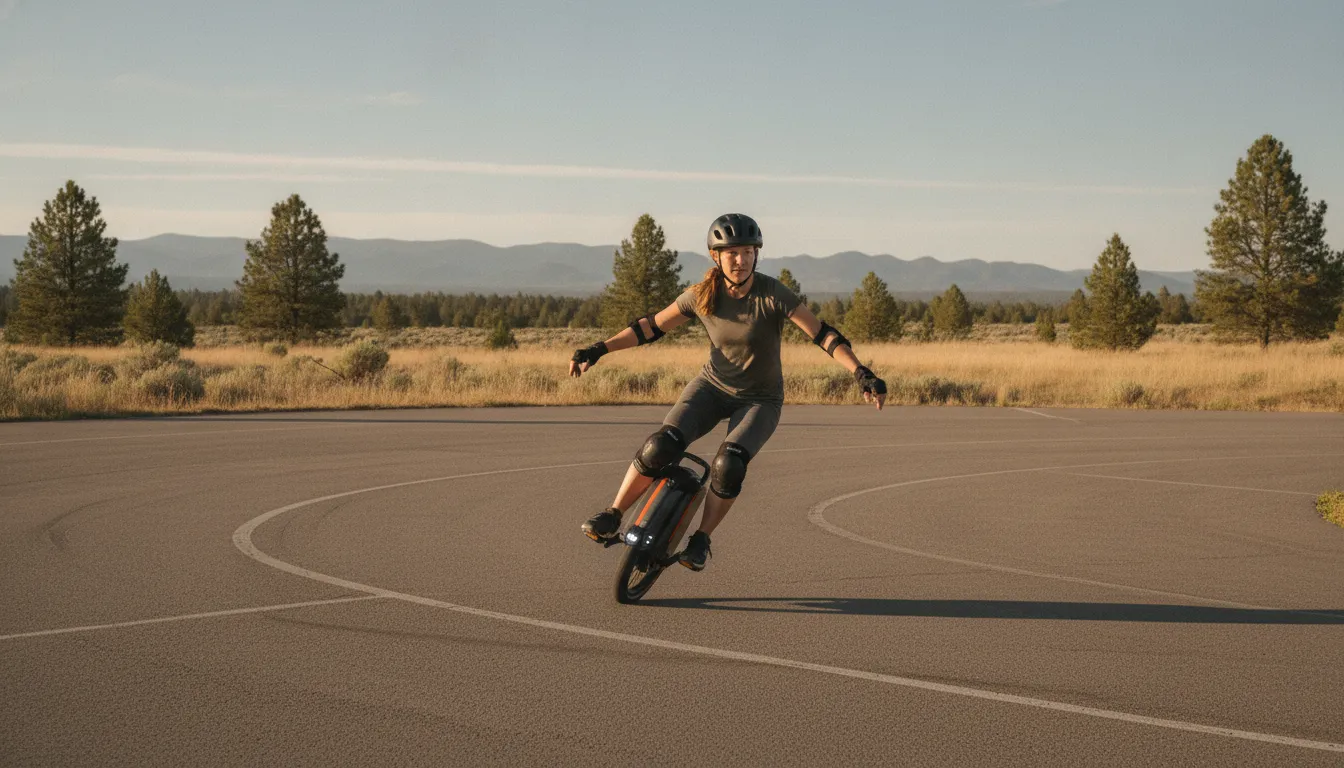
Learn in stages: begin in a private, flat, open area, practice mounting and dismounting, then add controlled turns, stops, and gradually higher speeds. Wear appropriate protective equipment, keep sessions short enough to maintain focus. And postpone public riding until you can control the motorized unicycle consistently and understand the model manual and local rules.
- Choose a controlled practice area. Start indoors or on private, smooth, level pavement with plenty of room and no traffic, steep slopes, loose obstacles, or bystanders close to your path. A wall, sturdy rail, or patient support person can make the first attempts less intimidating. Public-road riding should wait until you have reliable control, and local requirements can vary, so review applicable rules before choosing a route.
- Put on protective equipment before practicing. Use a properly fitted helmet, wrist protection, and knee and elbow pads. Closed-toe shoes with a secure sole can help you stay connected to the pedals. Voltaire's electric mobility safety checklist covers the same practical habits of protective gear and pre-ride checks that apply across personal electric vehicles.
- Practice mounting and dismounting first. With the device powered and configured according to its manual. Hold a stable support if needed and learn how to place one foot on the pedal without leaning abruptly. Repeat stepping on and off until the movement feels deliberate. Practice stopping and stepping away before attempting to travel any meaningful distance. Do not rush this stage because an awkward dismount can create more risk than a slow start.
- Build balance with short, straight runs. Look ahead rather than down at the wheel. Use gentle body movements and begin with short trips between two nearby points. Rest often. New riders may experience leg fatigue or soreness, and tiredness can reduce precision. Short, attentive sessions are more useful than a long session in which posture and judgment deteriorate.
- Add turns and braking in both directions. Once straight travel is repeatable, practice wide turns, figure-eight patterns, and gradual stops. Learn how the pedals and controls respond at low speed, then test emergency dismounts in the same controlled space. Stability and braking behavior differ by model, so use the manufacturer's instructions rather than assuming another motorized unicycle will feel identical.
- Increase speed and complexity slowly. Move from flat pavement to mild, familiar changes in surface only after low-speed control is dependable. Do not begin with high speed, steep terrain, wet surfaces, crowded paths, or off-road obstacles. Model speeds vary substantially, and manufacturer guidance treats speed and braking as safety considerations. Keep your early riding comfortably below the machine's capability.
- Decide carefully when to ride in public. Wait until you can mount, dismount, turn, stop, and recover from small balance errors without panic. Before going out, inspect the device, check battery status, confirm visibility, and verify the route and local rules. If conditions change, visibility drops, or you feel fatigued, end the ride rather than trying to push through it.
Which Motorized Unicycle Features Matter Most?
The most important features depend on where and how you plan to ride. Entry-oriented models generally prioritize manageable control and portability, commuters need a practical balance of range. Lighting, and weight, and performance or off-road riders may value larger tires, suspension, and higher capability. Specs vary significantly by model, so compare the full specification sheet with your route and experience level.
Range and top speed are useful reference points, but they should not lead the decision by themselves. Manufacturer guidance places many models in a broad range of about 20 to 75 miles per charge, with top speeds varying from roughly 12 to 44 mph. Treat those figures as model-specific claims, not guarantees for every rider or riding condition. Review the manufacturer's electric unicycle guidance alongside the owner's manual before choosing.
| Feature | Entry-oriented priority | Commuter priority | Performance or off-road priority |
|---|---|---|---|
| Control confidence | Predictable response, manageable power, and a learning-friendly feel. | Stable control for starts, stops, traffic awareness, and repeated daily rides. | Strong stability and braking response that match experienced-rider use. |
| Wheel and tire | A size and tread that feel easy to control on smooth, predictable surfaces. | A versatile tire for pavement, crossings, and changing urban surfaces. | More substantial tire construction and tread suited to uneven or loose terrain. |
| Weight and portability | Lower weight can make lifting, storage, and practice less demanding. | Balance carrying needs with the battery and equipment needed for the commute. | Accept added weight when it supports durability, stability, or terrain capability. |
| Range | Enough usable range for short practice rides, with a buffer for learning. | Coverage for the planned route, weather, rider load, and a realistic return trip. | Greater reserve for longer rides, variable terrain, and fewer charging stops. |
| Lighting | Basic visibility appropriate for controlled, permitted riding conditions. | Front and rear visibility suited to early, late, or changing-light commutes. | Lighting that helps identify terrain changes while remaining appropriate for local rules. |
| Suspension | Optional for smooth surfaces; simplicity may matter more while learning. | Useful when routes include rough pavement, curbs, or repeated surface changes. | A key consideration for impacts, uneven ground, and more demanding trails. |
| Support | Clear learning guidance, parts availability, and accessible troubleshooting. | Reliable charging guidance, maintenance information, and service communication. | Detailed manuals, diagnostic support, and serviceability for demanding use. |
Use the table as a decision framework, then check the manufacturer's stated limits for rider weight, speed, range, charging, water exposure, and intended terrain. A motorized unicycle that looks impressive on paper may be a poor fit if it is too heavy to move comfortably or exceeds your current control experience.
What Safety Gear and Riding Habits Reduce Risk?
A motorized unicycle does not offer a seat, handlebars, or a wide platform to absorb mistakes. Protective equipment and deliberate habits therefore matter from the first practice session, even when riding at low speed. The right setup cannot remove every hazard, but it can help reduce the consequences of a fall and make problems easier to spot before they become urgent.
Start with a properly fitted helmet. Add wrist guards, knee pads, and elbow protection, particularly while learning or riding on unfamiliar ground. Wrist guards are easy to overlook, but riders may instinctively reach out during a fall. Wear closed-toe footwear with a secure sole and enough support to keep your feet planted on the pedals. Avoid loose laces, sandals, and clothing that can catch on the wheel or controls.
Visibility is part of safety, not just a night-riding concern. Use the vehicle's required lighting, wear reflective or high-contrast clothing when conditions call for it. And assume that drivers, cyclists, and pedestrians may not notice a compact personal electric vehicle. Choose a practice area with good sightlines, a forgiving surface, and room to slow down without entering traffic.
Build a pre-ride and braking routine
Before every ride, inspect the tire for damage and confirm that it is inflated within the manufacturer's recommended range. Check that pedals, guards, lights, and other controls are secure. Review the battery level, look for warning indicators, and do not ride if the vehicle behaves unexpectedly. Manufacturer guidance treats stability and braking performance as important safety considerations, so practice controlled stops in a private, open area before attempting longer trips. Learn how the device responds to weight shifts, uneven pavement, and emergency braking without starting on steep terrain or at high speed.
Rules can vary by state, city, path, road, vehicle specifications, and rider age or weight. Guidance for electric unicycles specifically recommends investigating local speed and weight limits, but it does not replace current legal advice. Before using public roads, sidewalks, or trails, check applicable Oregon and local rules, signage, and the manufacturer's manual. For a practical reminder of inspection and protective-equipment habits, review this electric mobility safety checklist.
What Maintenance Does a Motorized Unicycle Need?
A motorized unicycle needs regular tire, battery, and hardware checks, plus prompt attention to unusual sounds, warning messages, or changes in handling. The basic routine is simple: keep the tire at the model's recommended pressure, charge the battery under the manufacturer's conditions. Store the vehicle properly, and use qualified service when electrical or mechanical faults go beyond the manual.
Maintenance is mostly preventive. Inspect before riding, follow the owner's manual for your exact model, and do not assume that a procedure approved for one EUC applies to another.
Check the tire and physical hardware
Check tire pressure regularly and keep it within the range specified by the manufacturer. Pressure affects handling, comfort, and the way the tire absorbs bumps. Look for cuts, embedded debris, unusual wear, or a slow loss of pressure. Also inspect the pedals, pedal mounts, trolley handle, shell, lights, and visible fasteners. A loose part, cracked housing, or new vibration deserves attention before the next ride.
A short pre-ride inspection is a useful habit. It complements the electric vehicle maintenance basics covered in Voltaire's broader maintenance guide, even though the components differ from an electric bike.
Charge and store the battery carefully
Manufacturer guidance reviewed for electric unicycles recommends keeping the battery between roughly 30% and 80% for optimal lifespan during ordinary use. After riding, let the unit cool for about 30 minutes before charging. Charge at room temperature, use the correct charger, and stop if the charger, connector, or battery becomes unusually hot or damaged.
For extended storage, the same guidance recommends approximately 40% charge in a cool, dry location. Protect the vehicle from moisture, extreme heat, freezing conditions, and accidental impacts. Check the battery periodically rather than leaving it unattended for months.
Know when troubleshooting should stop
If the motorized unicycle will not power on, reports a fault, loses expected performance, or develops a burning smell. Grinding noise, heat issue, or charging problem, stop riding and consult the manual or manufacturer support. Do not open a battery pack or bypass a warning to get back on the trail. Note the error code, recent conditions, and symptoms, then provide those details to a technician.
Voltaire documents electrical diagnostics, battery testing, motor and controller work, software updates, and mechanical service for electric vehicles. Its service center also describes systematic inspections and quality-control checks. However, EUC-specific service availability is not confirmed, so ask about your exact brand and model before arranging work through professional electric mobility service.
Is a Motorized Unicycle Right for Your Central Oregon Riding Plans?
A motorized unicycle may suit a rider who enjoys learning a balance-based vehicle, practicing deliberately, and choosing routes with care. For Bend and Central Oregon, that usually means starting on a smooth, low-traffic paved area or private property. Then evaluating whether the vehicle fits your daily destinations, comfort level, and local rules. It is not automatically the best choice for every commute or trail plan.
Direct answer: A motorized unicycle can be a good fit for confident riders who value compact personal transportation and are willing to train progressively. Central Oregon's paved paths, private practice spaces, changing weather, and varied terrain make route selection important. Confirm model limits, manufacturer guidance, and applicable local rules before riding in public areas.
Think carefully about the surfaces you expect to ride. Smooth paved paths may be more manageable than loose gravel, rutted ground, wet surfaces, snow, or steep terrain, especially while learning. Rain, dust, cold temperatures, and abrupt elevation changes can affect traction, visibility, comfort, or battery performance. Check the specific model manual rather than assuming that an off-road label makes every Central Oregon route appropriate.
Local rules also deserve a place in your planning. Requirements for speed, access, equipment, and where a personal electric vehicle may be used can vary by road, path, property, and jurisdiction. Verify current Oregon and local guidance before riding publicly. A private practice area can provide a more controlled setting while you learn mounting, turning, braking, and dismounting.
If your priorities are seated comfort, easier balancing, cargo, or a more familiar control layout, an electric bike, trike, or scooter may be a better match. Riders comparing formats can compare personal electric vehicles by stability, portability, terrain, and intended use instead of choosing by top speed alone.
Voltaire Cycles serves Bend, Redmond, Sisters, Sunriver, and the broader Deschutes County area. At the Bend showroom, the team offers hands-on product evaluation, test rides for applicable products, and expert consultation. Its broader electric-mobility service expertise includes diagnostics, battery and motor work, controller updates, and systematic inspections, but you should confirm motorized-unicycle inventory or service compatibility before making plans. Visit Voltaire Cycles electric mobility retailer to discuss alternatives and find a vehicle that matches your route and experience.
Frequently Asked Questions
Are motorized unicycles legal to ride on public roads?
Rules vary by state, city, road, and vehicle classification. Check current local speed, weight, equipment, and access requirements before riding in public. Manufacturer guidance also notes that many jurisdictions restrict electric-unicycle speeds on public roads. So confirm the rules for your exact route rather than assuming a model is street legal.
How fast can a motorized unicycle go?
Top speed depends on the model, rider, battery charge, terrain, and operating conditions. Manufacturer guidance lists electric-unicycle top speeds from about 12 to 44 mph across models, but that range is not a recommendation for beginners. Choose a model and riding speed that match your experience and local rules. Review model specifications before buying.
Do motorized unicycles balance themselves?
They use electronic control systems to respond to the rider's forward, backward, and side-to-side movements, but they do not remove the need for active balance. Riders still need practice to mount, dismount, turn, brake, and recover smoothly. Start in a flat, open practice area and follow the model's manual.
What safety gear should I wear while learning?
Wear a properly fitted helmet, wrist protection, knee and elbow pads, and sturdy closed-toe footwear. Add visible clothing and lighting when conditions require it. A pre-ride inspection is also important: check tire condition and pressure, battery status, controls, and visible damage. Voltaire's electric mobility safety checklist covers practical preparation.
When should a motorized unicycle be inspected by a service professional?
Stop riding and seek an inspection after a crash, unusual vibration, braking changes. Charging or battery concerns, repeated error codes, or damage to the tire, pedals, shell, or wiring. A qualified service team can determine whether electrical diagnostics, battery testing, mechanical work, or software troubleshooting is appropriate for that model.
Ready to Explore Your Electric-Mobility Options?
A thoughtful conversation can help you compare rider fit, learning needs, safety priorities. And the type of support you may want before choosing a motorized unicycle or another personal electric vehicle.
Contact Voltaire Cycles through the website or visit the Bend showroom to discuss your next step and available electric-mobility options.