

Electric Skateboard Safety Gear: What Riders Need
Choosing the right electric skateboard safety gear is one of the smartest steps you can take before your first ride or your next commute. Electric skateboards combine a low riding position, motorized acceleration, and small wheels that can react quickly to cracks, gravel, and wet pavement. A good setup helps protect your head, hands, joints, feet, and visibility while you build control at a comfortable pace.
Request a free electric mobility consultation
What should electric skateboard safety gear include?
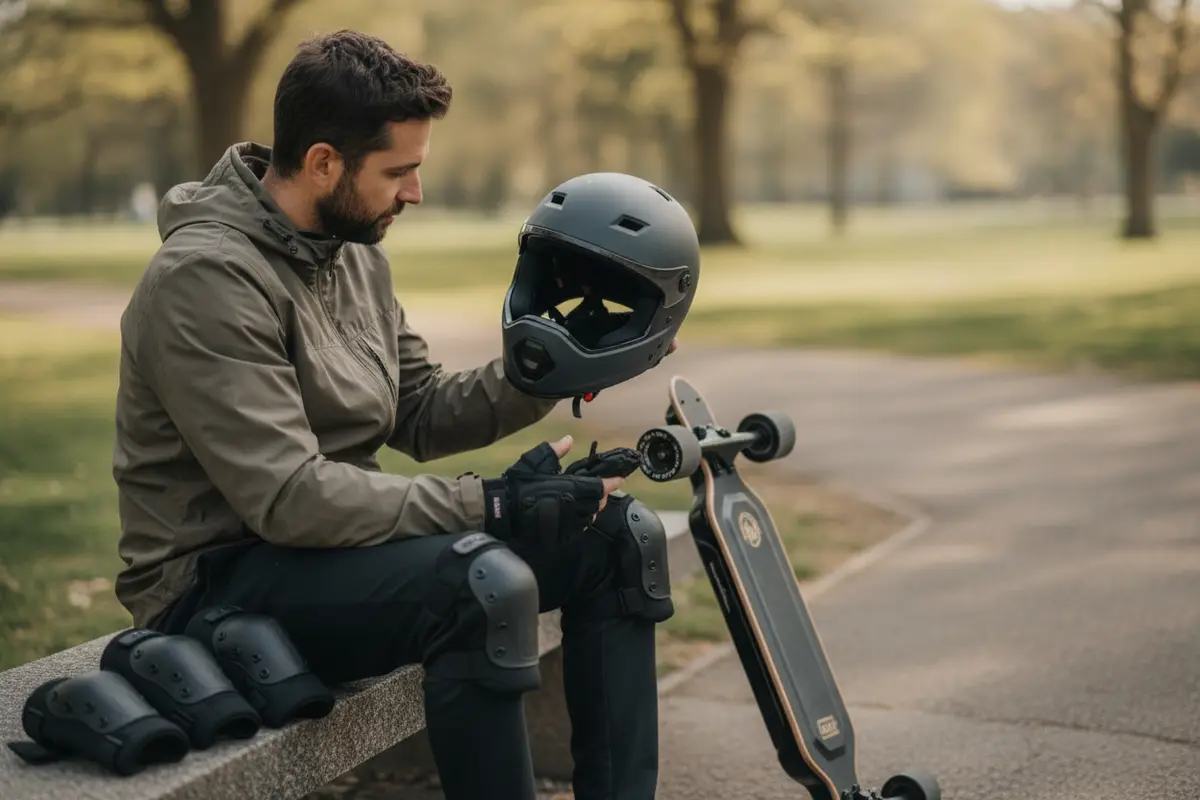
Electric skateboard safety gear should start with a properly fitted helmet, wrist protection, knee and elbow pads, closed-toe footwear, and clothing that helps other road and path users see you. The best setup depends on speed, terrain, traffic, weather, and your experience. Protective equipment cannot prevent every injury, but it can reduce exposure when a rider loses balance or steps off unexpectedly.
Think of your equipment as a system rather than a single purchase. A helmet protects the area where an impact can be most serious. Wrist guards help you avoid putting bare hands down during a forward fall. Pads provide a layer between your joints and the pavement. Shoes help you stay stable on the deck and brake with confidence. Visibility gear gives drivers, cyclists, and pedestrians more time to recognize you.
Match coverage to your speed, terrain, traffic exposure, and comfort, because gear that shifts or interferes with the remote is less likely to be worn correctly.
How do you choose a helmet for electric skateboard safety gear?
Choose a helmet that fits securely, covers the back and sides of your head, and is certified for the type of riding you plan to do. A comfortable fit matters because a loose helmet can shift during a fall. Look for a reputable safety certification shown on the helmet or its documentation, and replace a helmet after a significant impact or when the manufacturer recommends replacement.
Many riders choose a skate-style helmet because it provides broad coverage around the back of the head. A bicycle helmet may be appropriate for some lower-speed riding, but the right choice should match your speed, terrain, and local riding requirements. When comparing helmets, check these details:
- Fit: The helmet should sit level, with the front low enough to protect your forehead without blocking vision.
- Retention: Adjust the straps so the helmet stays in place when you look up, down, or from side to side.
- Coverage: More rear and side coverage can be useful for riders who travel on mixed surfaces or at higher speeds.
- Condition: Do not keep using a helmet with cracks, crushed foam, damaged straps, or a history of a hard impact.
- Compatibility: Confirm that glasses, hair, hearing protection, or a winter layer do not prevent a stable fit.
Do a simple fit check before every ride. Put the helmet on level, buckle it, and open your mouth wide. The straps should pull the helmet down slightly rather than allowing it to slide backward. Shake your head gently and look in several directions. If the helmet moves independently of your head, adjust it before riding.
For general skateboard protection guidance, review the CPSC skateboarding safety guidance, which covers protective equipment and beginner practices. For helmet fit and replacement reminders, see the CDC skateboard helmet fact sheet. The specific equipment and fit still need to match the individual rider.
Why are wrist guards important for skateboard riders?
Wrist guards are important because riders often reach toward the ground when they lose balance. A guard with a rigid or supportive palm area can help distribute force and protect the wrist during a slide. It should fit snugly without cutting off circulation or limiting the hand movement needed to hold a remote.
Try wrist guards with the remote in your hand before riding. Confirm that the guard does not press awkwardly against the trigger, buttons, or charging port. Check that the straps stay secure when you bend your wrist. If you are choosing between a minimal glove and a more structured guard, consider the surfaces where you ride and how quickly your board travels. More coverage may be worthwhile for faster riding or practice sessions where you are still learning to stop.
Do not assume that any padded glove works like a wrist guard. Check palm support, splint position, remote control, and whether the guard stays clear of clothing when you step off.
Which pads protect knees and elbows?
Knee and elbow pads add impact and abrasion protection to joints that may contact pavement during a fall. Knee pads should stay centered over the kneecap while you bend your legs. Elbow pads should cover the point of the elbow without sliding down your forearm. Adjustable straps or secure sleeves are useful because loose pads can rotate away from the joint.
Hard-shell pads can be helpful for situations where sliding or direct contact is possible. Softer protective pads may be easier to wear for short trips and can be more comfortable under clothing. In either case, inspect the closures and padding before each ride. Replace equipment when the shell is cracked, the foam is compressed, or the straps no longer hold the pad in position.
Test pads in the position you will use while riding. Bend your knees, crouch slightly, and move your arms as if you were balancing through a turn. A pad that feels centered while standing can shift when you bend. If a closure rubs or a sleeve creates pressure behind the knee or elbow, try a different size or design instead of ignoring the problem.
| Gear | What it protects | What to check | When it matters most |
|---|---|---|---|
| Helmet | Head and brain | Certification, fit, coverage, condition | Every ride |
| Wrist guards | Hands and wrists | Secure straps, palm support, remote comfort | Learning, uneven pavement, faster riding |
| Knee pads | Knees and skin | Centered fit, intact shell or foam | Practice, carving, mixed surfaces |
| Elbow pads | Elbows and forearms | Coverage and resistance to slipping | Practice and higher-risk terrain |
| Closed-toe shoes | Feet and deck control | Grip, secure laces, firm sole | Every ride, especially starts and stops |
What footwear works best on an electric skateboard?
The best footwear is closed-toe, secure on your feet, and stable enough to help you control the deck. Choose shoes with a sole that provides reliable grip without being so soft that your feet twist easily. Tie laces securely and keep loose ends away from wheels and moving parts. Avoid sandals, open-back shoes, smooth dress shoes, and footwear that makes it difficult to bend your knees.
Your stance should feel natural before you use the motor. Practice stepping on and off while the board is stationary, then test acceleration and braking at low speed in an open area. If your feet slide on the deck, stop and address the fit rather than trying to compensate with a tighter stance.
Secure shoes make it easier to shift weight, lower your center of gravity, and step off in a controlled way. Check the soles for debris and excessive wear before riding.
How can riders improve visibility with electric skateboard safety gear?
Visibility improves when you combine lights, reflective details, and predictable riding behavior. Use the board's required lighting equipment where applicable, and consider front and rear visibility when riding near dusk or in low-light conditions. Reflective elements on a jacket, vest, backpack, helmet, or ankle area can help outline your movement.
Visibility is not only about being bright. Ride where you can be seen, avoid darting between parked vehicles, and make your direction clear before changing position. Keep lights clean and charged. A small light or reflective item on a backpack can complement board lighting, but it should not distract you or other road users.
Check visibility from several angles. A front light helps you see but does not make you visible from behind, so keep bags and jackets from covering board lights or reflective areas.
Central Oregon weather can change quickly. In rain, snow, or low light, consider whether the route and your equipment provide enough traction and visibility for the conditions. Wet pavement and debris can reduce control, so postponing a ride may be the safest decision.
What safety accessories should you carry?
A practical ride kit can help you handle small problems without adding unnecessary weight. Consider carrying a charged remote, phone, identification, water, and a way to contact someone. Depending on the board and route, a compact light, basic tool, and spare charging plan may also be useful. Store equipment so it cannot interfere with your stance or wheels.
Before leaving, check the remote battery and confirm that the board responds to braking input. If you are unfamiliar with the route, share your general plan with someone and keep your phone accessible without using it while moving. A small bag should be secured so its straps cannot reach a wheel or change your balance.
If you ride an electric skateboard as part of a larger bicycle or electric mobility setup, browse compatible accessories such as the Lezyne Strip Drive light and the Kask Rapido Helmet. Always confirm compatibility, fit, and intended use before ordering. Product availability and specifications can change.
Have questions about fit or compatibility? Contact Voltaire Cycles for expert guidance.
How should you inspect your board before using safety gear?
Protective equipment works best when the board is also ready for the route. Before each ride, look over the deck, trucks, wheels, battery connection, remote, and visible fasteners. Confirm that wheels turn as expected and that nothing rubs or hangs near moving parts. A helmet cannot compensate for a loose component or a control you have not tested.
- Check the deck for visible damage, loose hardware, or anything that could affect foot placement.
- Look at wheels for embedded debris, unusual wear, or damage that could change how the board rolls.
- Confirm the remote is charged, paired, and set to the mode you intend to use.
- Test acceleration and braking at low speed in a clear area before joining a path or roadway.
- Keep the board and charging equipment dry, and follow the manufacturer's instructions for storage and charging.
Use this inspection as a reason to slow down, not as a race to start riding. If a control behaves differently, stop and investigate. Voltaire's E Bike and Scooter Service can be useful when you are unsure whether a sound, loose fastener, or braking change is normal.
How should beginners progress their electric skateboard skills?
Beginners should progress from stationary practice to slow, controlled riding before adding speed, hills, traffic, or complex surfaces. Give yourself room to make mistakes without putting pedestrians or vehicles at risk. Wear your complete protective setup during practice, not only after you feel confident.
- Inspect the board: Check the deck, trucks, wheels, battery charge, remote connection, brakes, and visible fasteners.
- Practice off the board: Learn the remote's controls and confirm which direction increases or reduces speed.
- Practice stepping off: While stationary, rehearse a controlled step-off with both feet and learn how your stance changes your balance.
- Start on a smooth, open surface: Keep speed low while practicing stance, turning, stopping, and stepping off.
- Repeat braking: Practice gentle braking, then gradual stops, leaving enough space to avoid a panic response.
- Add one variable at a time: Try a longer route, gentle incline, or new surface only after the previous skill feels repeatable.
- Ride predictably: Leave space, scan for hazards, and slow down before blind corners, crossings, pedestrians, and driveways.
Do not use a speed setting as a substitute for skill. A route that feels easy on smooth pavement may require a different approach when it includes gravel, cracks, leaves, standing water, or people. Keep both hands available for balance and control, and avoid using a phone while riding.
Look ahead for surface changes, give pedestrians room, slow down before blind spots, and stay prepared to stop. Responsible riding reduces the chance of needing protective equipment in the first place.
How do route, weather, and experience change your gear choices?
The route should determine how much protection, visibility, and preparation you bring. A quiet, smooth practice area generally requires less equipment than a faster commute with crossings, slopes, and changing surfaces. Even so, a helmet and reliable wrist protection remain sensible basics for every ride.
For a first session, choose a dry surface with clear sight lines and room to stop. For a longer commute, add visibility layers, a communication plan, and enough charge for the full route. For unfamiliar terrain, use more conservative speed settings and consider knee and elbow pads until you understand the surface. Do not treat a familiar route as permanently risk-free; construction, gravel, traffic, and weather can change it.
Wet conditions deserve special attention. Water can reduce traction, lengthen stopping distance, obscure cracks, and affect electrical components depending on the board's design. Check the manufacturer's guidance, avoid standing water, and do not ride when braking, turning, or seeing hazards is unreliable. Dry the board and equipment according to the manufacturer's instructions after an unexpectedly wet trip.
Where can you get help choosing electric skateboard safety gear?
A local electric mobility shop can help you compare fit, comfort, and compatibility before you ride. Voltaire Cycles of Central Oregon serves Bend and surrounding communities with a showroom experience, hands-on guidance, and support for electric mobility shoppers. You can also browse the electric skateboard collection online and ask questions before choosing equipment.
Bring the helmet, pads, shoes, and riding conditions you expect to use when asking for advice. If you are also transporting a bicycle or other electric vehicle, the team can help you consider related equipment such as Sure Grip Racks. The goal is a setup that you will actually wear, that fits correctly, and that supports responsible riding habits.
Whether you visit the Bend showroom or shop online, focus on a complete setup rather than choosing one item based only on appearance.
Get electric skateboard safety gear guidance from Voltaire Cycles
Frequently asked questions
Do I need to wear a helmet on an electric skateboard?
A helmet is a sensible part of every electric skateboard safety setup because falls can happen even on familiar routes. Choose a properly fitted, appropriately certified helmet and follow applicable Oregon and local rules for your age, location, and riding situation.
Are wrist guards better than gloves?
Gloves can improve comfort and protect against minor abrasion, but wrist guards provide additional support for the palm and wrist. Riders who are learning, traveling faster, or riding on surfaces with limited forgiveness may prefer the added structure of a wrist guard.
Should I wear knee and elbow pads for a short ride?
A short trip still includes starts, stops, road crossings, surface changes, and unexpected obstacles. At minimum, wear a helmet and wrist protection, and add knee and elbow pads when practicing, riding faster, or using unfamiliar terrain.
Can I ride an electric skateboard in wet weather?
Wet weather can reduce traction and visibility and may affect electrical components, depending on the board's design. Check the manufacturer's guidance, avoid standing water, and postpone riding when conditions make braking, turning, or seeing hazards unreliable.
How often should I replace protective equipment?
Inspect equipment before each ride and replace it when it has sustained a hard impact, developed cracks, lost its shape, or no longer fits securely. Follow the manufacturer's replacement guidance, especially for helmets, and do not rely on visibly damaged gear.
The safest ride is one that matches your equipment, skills, route, and conditions, so take time to prepare before pressing the throttle.