

Electric Scooter Safety: A Rider Checklist
Electric scooter safety starts before you press the throttle. A two-minute inspection, the right helmet and clothing, deliberate braking, and good judgment about surfaces can make a short Bend errand or Central Oregon outing more predictable. Use this practical checklist before, during, and after every ride, then ask a qualified service team about anything that does not feel right.
Explore Segway scooters and get help choosing a safe fit
What does electric scooter safety involve before every ride?
Electric scooter safety begins with a simple pre-ride check: inspect the tires, brakes, throttle, stem, handlebars, lights, bell, cables, and frame; confirm the battery is secure; and adjust your helmet. If any control feels loose, damaged, or inconsistent, do not ride until the issue is resolved.
Walk around the scooter in good light. Look for a tire that is visibly low, cuts in the tread, exposed cords, or a valve that is leaking. Small scooter tires can react sharply to gravel, potholes, and edge breaks, so tire condition matters more than it may seem during a garage inspection.
Squeeze each brake lever while the scooter is stationary. The levers should feel consistent, and neither should pull all the way to the handlebar. Roll the scooter forward at walking speed in a clear area and test braking gently before entering a street, path, or crowded parking lot.
Check that the stem and handlebars are tight, the folding mechanism is fully locked, and the deck is clear of loose objects. Turn on the headlight and rear light, test the bell or horn, and make sure the throttle returns smoothly when released. Confirm the display shows no warning before leaving.
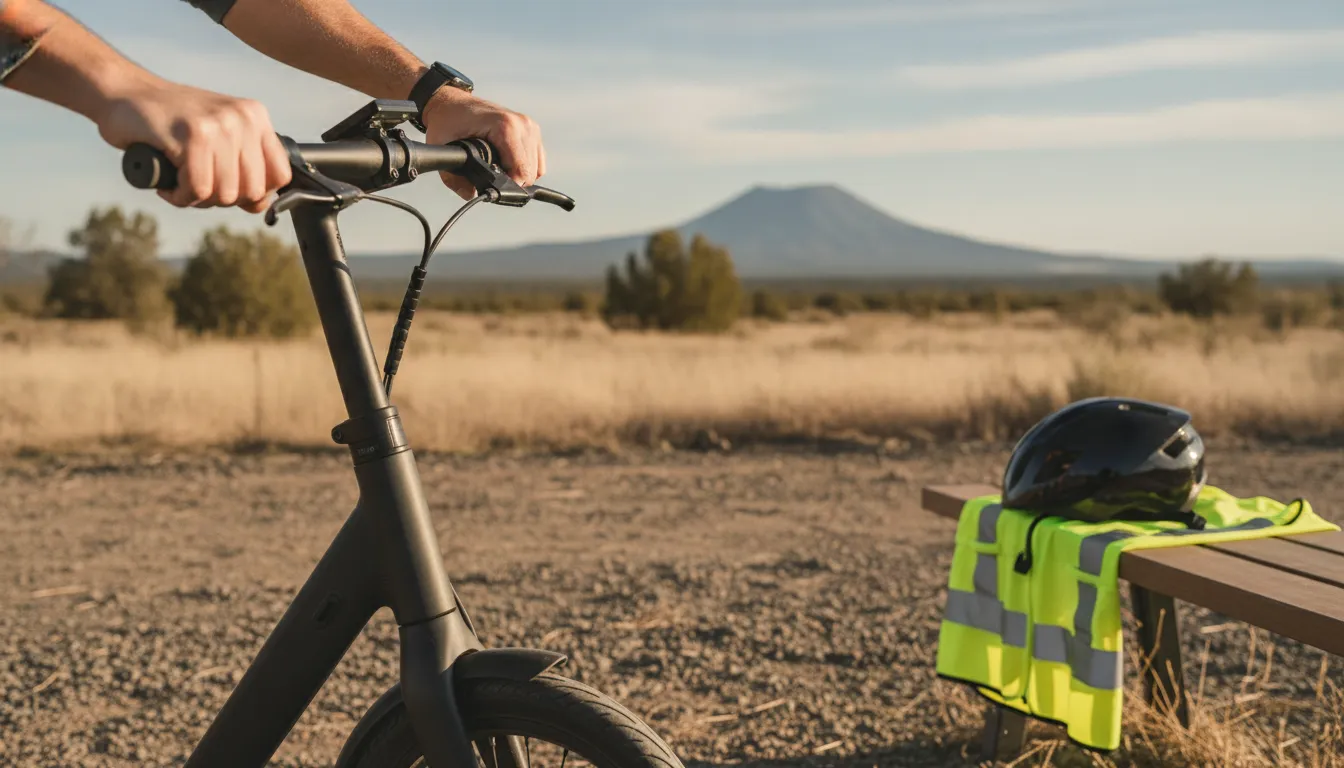
Use a repeatable inspection sequence
- Tires: Check inflation against the manufacturer's recommendation, tread, valves, and visible damage.
- Brakes: Test both levers and confirm the scooter stops in a straight, controlled way.
- Controls: Verify the throttle, display, power button, bell, and riding mode respond normally.
- Structure: Check the stem, folding latch, handlebars, deck, axles, and fasteners for movement or cracks.
- Visibility: Turn on required lights and add reflectors or high-visibility clothing when conditions call for it.
- Battery: Look for swelling, impact damage, unusual odor, heat, or a loose connection. Do not use a damaged pack.
The U.S. Consumer Product Safety Commission recommends checking the handlebars, brakes, throttle, bell, lights, tires, cables, and frame before riding. Its micromobility safety guidance is a useful reference for owners of Segway scooters and other brands.
Which protective equipment should electric scooter riders use?
A properly fitted bicycle helmet is the starting point for electric scooter safety, not an optional accessory. Add gloves, closed-toe shoes, eye protection, and visible layers according to the route and weather. Riders should choose equipment that stays secure without limiting peripheral vision, hearing, hand control, or balance.
Fit the helmet level on your head, with the front edge low across the forehead. Adjust the side straps so they form a comfortable V around each ear, then tighten the chin strap until it is snug. Replace a helmet after a significant impact, even if the shell looks normal.
Gloves can improve grip and protect hands during a fall, while closed-toe shoes provide better pedal and deck control than loose sandals. For early morning, evening, or shaded routes, use reflective details and a light-colored outer layer. Visibility is part of protection because a driver or pedestrian must see you in time to react.
Do not carry a passenger unless the specific scooter is designed and approved for it. Keep both hands on the handlebars, secure bags so they do not interfere with steering, and never hang a heavy item from the controls. Your ability to steer and brake should remain unchanged throughout the ride.
How can electric scooter safety improve braking and visibility?
Safe scooter control comes from slowing early, looking ahead, and making your intentions visible. Use both brakes smoothly, keep your weight balanced, and leave more stopping space on wet, loose, downhill, or crowded routes. Headlamps, rear lights, reflectors, and a bell help others understand where you are.
Practice braking in an empty, level area before riding in traffic. Start at walking speed, apply both brakes progressively, and keep your arms relaxed. Repeat at a slightly higher speed until you know how the scooter responds. Avoid grabbing one lever suddenly, especially while turning or crossing a rough surface.
Scan well beyond the front tire. Watch for vehicle doors, turning cars, driveways, pedestrians, dogs, drainage grates, painted lines, gravel, and pavement transitions. Small wheels can catch on obstacles that a larger bicycle wheel might roll over. Slow before the obstacle, keep the scooter upright, and cross at a controlled angle when appropriate.
At intersections, assume other road users may not see or hear you. Use a light and bell where appropriate, make eye contact when possible, and avoid darting around stopped vehicles. Signal a turn with enough time for others to understand it, but keep both hands ready for control whenever the environment becomes unpredictable.
Match speed to the surface, not the display
Clear, dry pavement
Safer adjustment: Use a comfortable speed and preserve a stopping buffer.
Reason: Unexpected doors, cars, and pedestrians still require reaction time.
Gravel, leaves, or rough pavement
Safer adjustment: Slow down, keep the scooter upright, and avoid abrupt steering.
Reason: Small tires can lose stability or stop suddenly.
Downhill route
Safer adjustment: Reduce speed before the slope and brake progressively.
Reason: Momentum increases stopping distance.
Crowded path or parking area
Safer adjustment: Ride slowly, announce your approach, and be ready to stop.
Reason: Pedestrians can change direction without warning.
For a model-specific discussion of route fit, portability, and everyday scooter use, see Voltaire's commuter electric scooter guide. A product's advertised capability does not remove the need to ride at a speed that fits the surface, traffic, and visibility.
Have a brake, tire, or control concern? Ask Voltaire's multi-brand service team
Can you ride an electric scooter in rain or wet weather?
Wet-weather electric scooter safety depends on the scooter's manufacturer guidance, surface conditions, and your willingness to stop. Rain reduces traction and visibility, while standing water can hide potholes and may harm electrical components. If the route is slick, flooded, icy, or difficult to see, postpone the ride or choose another way to travel.
Before a wet-weather ride, check the forecast, daylight, wind, and route. Avoid deep puddles because you cannot see their depth and because water can reach areas that are not designed for immersion. Painted road markings, metal covers, leaves, and smooth concrete can become especially slippery when wet.
When riding is reasonable, reduce speed before turns and braking zones. Brake earlier, steer smoothly, keep the scooter as upright as possible, and leave extra room around vehicles and pedestrians. Do not assume an IP rating means a scooter is waterproof. The owner's manual is the authority for rain, storage, and cleaning limits.
After a wet ride, power down and dry the scooter as directed by the manufacturer. Do not plug in a wet charger or charge a scooter with moisture around the port. Inspect the brakes and tires again before the next ride. Persistent electrical warnings, intermittent controls, or unusual battery behavior require professional evaluation.
How should you charge and store an electric scooter?
Safe charging is part of electric scooter safety after the ride. Use the manufacturer's charger and instructions, charge in a dry, visible location away from exits and flammable clutter, and unplug when the recommended charging cycle is complete. Do not charge while sleeping, away from home, or with a damaged battery or cord.
Let a hot battery cool as the manufacturer directs before charging. Keep the charger, plug, and port clean and dry. Never use a frayed cable, force a connector, modify a battery, or combine an unapproved charger and pack. A replacement battery should be confirmed as compatible and approved for that exact scooter.
Watch for warning signs including swelling, hissing, smoke, a sharp chemical odor, leaking, unusual heat, or a sudden change in charging behavior. If you notice one, move people away, do not handle a damaged pack unnecessarily, and follow emergency guidance. Contact a qualified technician for diagnosis instead of opening the battery yourself.
The National Fire Protection Association's e-bike and e-scooter safety guidance reinforces the importance of qualified repairs and careful charging. Store the scooter where it will not block a hallway or exit, and follow the manual for long-term storage and battery level.
What should you know about Oregon scooter rules and shared paths?
Oregon's motor-assisted scooter statutes address operation on public ways, sidewalks, roadways, and protective headgear. Rules and posted restrictions can change by location, so riders should review current law, obey signs, and confirm local path guidance before a trip. This article is a safety checklist, not legal advice or a substitute for the Oregon statutes.
The Oregon Revised Statutes, Chapter 814 includes provisions specific to motor-assisted scooters. Pay attention to the rules that apply to your route and scooter classification, as well as any city, park, campus, or trail restrictions. If you are unsure, ask the relevant local authority before riding there.
On a shared path, assume pedestrians have priority and may not hear you. Slow before passing, give a clear verbal warning or use a bell, pass only when there is enough room, and return to a predictable line. Do not weave between people, pass at blind corners, or force a pedestrian toward the edge.
At trailheads, parks, and busy areas around Bend, ride with extra patience. Keep your speed appropriate for the narrowest or most crowded portion of the route, yield as posted, and stop if the path becomes too congested. Courtesy is not separate from safety; predictable behavior gives everyone more time to respond.
Quick shared-path checklist
- Read signs and follow the path's posted direction and speed guidance.
- Slow down before blind corners, crossings, driveways, and crowded sections.
- Keep a safe following distance from bicycles, pedestrians, and other scooters.
- Give an audible warning before passing and wait if the path is too narrow.
- Yield at crossings and never assume a driver has seen you.
- Stop and walk the scooter when congestion makes riding unpredictable.
When should a scooter be inspected or repaired?
Arrange an inspection when a brake feels different, a tire loses pressure repeatedly, the stem or folding joint moves, the throttle hesitates, the display shows a warning, or the scooter makes a new noise. Stop riding after a crash or impact until the frame, steering, wheels, brakes, and battery system have been checked.
Routine care is easier when you keep a short record of tire checks, brake adjustments, charger issues, and warning messages. Bring that information, the scooter, and its charger to a qualified service provider. Multi-brand technical support is useful when the scooter was purchased elsewhere or the issue involves both mechanical and electrical systems.
Voltaire Cycles of Central Oregon supports electric mobility customers in Bend with multi-brand service and repair capabilities. The Bicycle Repair Services page explains how to request help for brakes, tires, controls, electrical systems, and other service needs. Do not try to make a safety-critical repair using an improvised part.
Request a Voltaire consultation for scooter fit, safe setup, and service guidance
Electric Scooter Safety FAQs
These quick answers summarize the most important electric scooter safety decisions: inspect the scooter first, wear a fitted helmet, ride visibly and predictably, avoid unsafe wet conditions, charge only with approved equipment, and follow current Oregon and local path rules.
What is the most important electric scooter safety check?
Check the brakes, tires, steering, throttle, lights, frame, and battery before every ride. Test the brakes at walking speed in a clear area. If a control is loose, damaged, unusually hot, or inconsistent, do not ride until a qualified technician or the manufacturer provides a safe resolution.
Should you wear a helmet on an electric scooter?
Yes. Wear a properly fitted bicycle helmet on every ride, and follow current Oregon requirements for protective headgear. Add gloves, closed-toe shoes, reflective layers, and eye protection when they fit the route and conditions without reducing your ability to see, hear, steer, or brake.
Can you ride an electric scooter in the rain?
Only when the scooter's manufacturer permits the conditions and the route remains safe. Avoid flooding, standing water, ice, and poor visibility. Wet pavement reduces traction, so slow down, brake early, steer smoothly, and dry the scooter and charging area according to the owner's manual afterward.
Is it safe to charge an electric scooter overnight?
No. Follow the CPSC and NFPA guidance to charge only with the approved equipment, stay present while charging, and unplug when the recommended cycle is complete. Charge in a dry, clear location. Never charge a scooter with a damaged battery, cord, plug, or charging port.
How should you pass someone on a shared path?
Slow down, check that there is enough room, give a clear audible warning, and pass only when the other person can respond safely. Yield as posted, avoid blind corners, and wait or walk the scooter when the path is narrow or crowded. Predictable, courteous riding lowers conflict and crash risk.