

Electric Commuter Bike Fit: Route and Class
An electric commuter bike only works when three things line up. Those are the miles you actually ride, a position you can hold, and an assist class your route allows. A longer advertised range does not fix a cockpit that is too long. It also does not fix a bike that is too fast for the path you use.
This guide is a matching method, not a ranked shopping list. If you want model picks and budget tiers, start with the electric commuter bike buyer's guide. Then come back here and test one bike against the week you really ride.
Shop electric bikes at Voltaire Cycles
What should an electric commuter bike match first?
Match the route before the motor. Write down one usual one-way trip, not a perfect weekend ride. Note miles, the biggest hill, stops, cargo, and where you will park the bike at each end. That page is the spec sheet.
A bike that looks right in a photo can still fail a four-mile trip with a bridge, a grocery stop, and stairs at the office.
Fix the failed row first: route, then fit, then class.
Use the same page for fit. You need a frame you can start, stop, and stand over without a scramble. You also need a reach you can hold for the whole trip. Class comes third. Class 1, Class 2, and Class 3 describe how the motor helps and when it stops helping. They do not describe comfort.
PeopleForBikes model rules define those three classes for a bicycle with working pedals and a motor under 750 watts. The class labels are in the PeopleForBikes model electric bicycle law. Local path rules can still narrow the choice.
Write the class limit beside the route before you compare batteries. A fast bike you cannot use on your calmest street is not a better commuter.
Voltaire Cycles in Bend can walk through that order on the shop floor. Use the contact page for the current phone and hours. Bring the route notes. A short rental from the 24-hour electric bike rental is a clean way to test one setup on a real day before you commit.
How do you size an electric commuter bike to the route?
Measure the trip you will repeat. A mapping app's bike route is a better start than a driving distance, because it follows the streets and paths you can actually use. Add any extra blocks for a safer crossing or a calmer street. Then double it.
The battery has to cover the ride home, not only the ride in.
Add a reserve on top of that round trip. Cold mornings, a headwind, a heavy bag, and a higher assist setting all cut range. Treat the largest number on a product page as a ceiling, not a promise. The electric bike range guide explains why weight, terrain, and assist level move that number.
Your job here is simpler: the bike must finish your round trip with charge left.
Hills change the motor choice more than flat miles do. A short, steep pitch wants smooth assist that shows up as you press the pedals. A long, gentle grade wants enough battery that you are not dropping to the lowest setting halfway home.
If the only hard part is one bridge, do not buy a much larger battery just to erase it. Note that climb and test it.
Cargo belongs on the same page. A lock, a laptop bag, and a grocery stop are normal on a commute, and each one uses range. If you need a rear rack, confirm the frame has mounts before you fall for a sportier build. Lights matter for the ride home in winter, even when the summer test feels bright.
Plan the round trip, then leave enough charge that a headwind or a detour does not empty the battery.
You do not need a lab formula. You need one loop that still shows charge when you get back. Repeat that loop on a colder day if cold is part of your week.
Route worksheet
| Route fact | What to write down | What it decides |
|---|---|---|
| One-way miles. | The path you will ride, not the drive. | Round-trip range, plus reserve. |
| Biggest hill. | Where it is and how long it feels. | Assist feel and battery size. |
| Stops and cargo. | Lights, bags, a lock, or a child seat. | Rack mounts and a step-through need. |
| Parking at each end. | Stairs, a rack, a car, or an apartment. | Weight you must lift. |
| Shared paths. | Paths where faster assist may be limited. | Class 1, 2, or 3. |
Read the row that fails first. If the bike will not fit in the stairwell, range does not matter yet. If the path you need is limited to slower classes, a faster top speed is not a feature. Fix the failed row, then compare motors.
Which riding position fits an electric commuter bike?
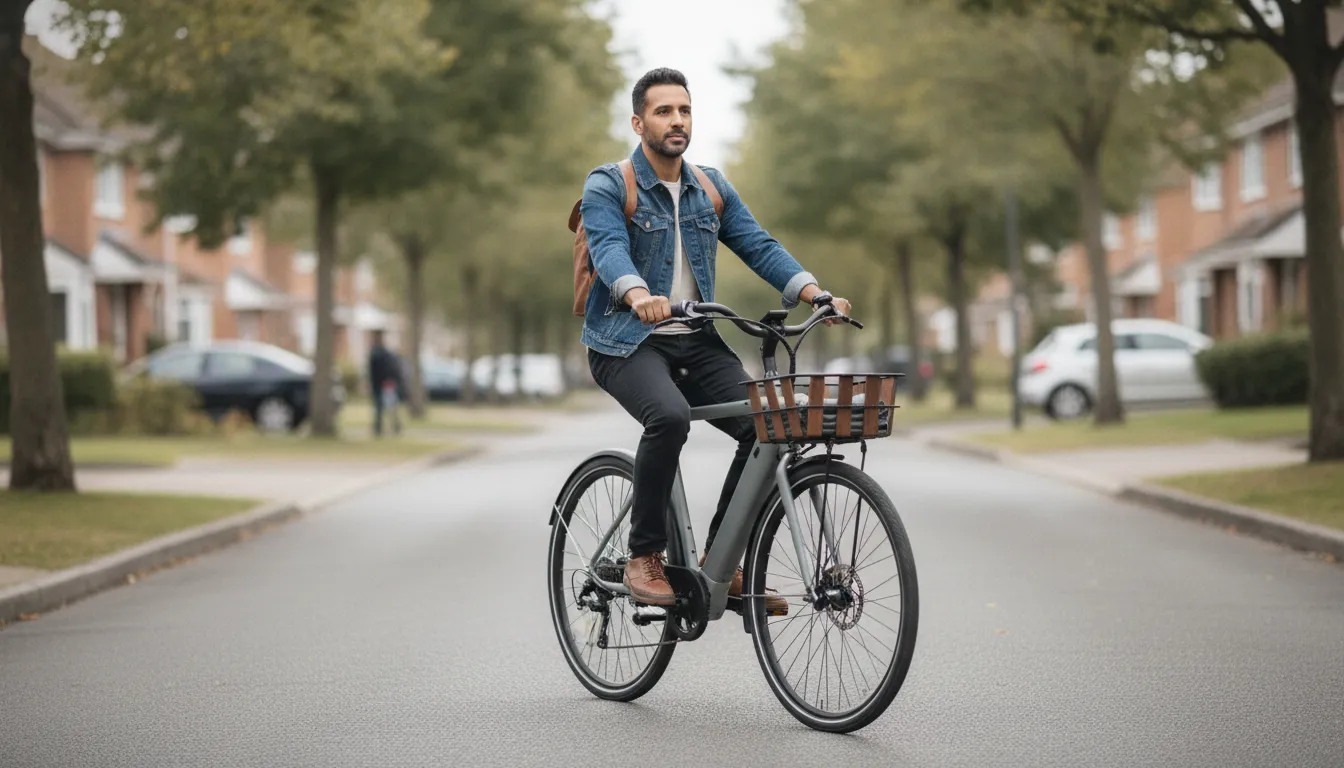
An upright position is the commuter default. You see traffic sooner, and you can check a shoulder without a long reach. A slight bend in the elbows and a back that is not rounded are the checks that matter.
If you have to scoot forward on the saddle to reach the bar, the frame is too long.
At a stop, you should get a foot down without a hop. Some riders want both feet flat. Others are fine with a controlled toe touch on a slightly taller frame. Either way, the start should feel boring.
Knee bend at the bottom of the pedal stroke should be soft, not locked. A shop can set saddle height and bar position before you judge the motor.
Step-through frames help when you stop often, wear a bag, or want an easier swing of the leg. A diamond frame can feel steadier to some riders, but only if the standover is comfortable. Weight is the other fit. If you must carry the bike up stairs or onto a rack, read the lightweight e-bike lifting guide before you fall for a heavier comfort build.
A bike that is almost right is a setup job. A bike that is far too long or far too tall is a different size.
Contact points decide whether day ten still feels good. Handlebar sweep, grip angle, and saddle shape are small changes with a large effect. Ask for those adjustments on the test ride.
Try the size the shop recommends, then one close alternative if the first reach feels off. A taller rider is not always a larger frame when the commute is stop-and-go. Control at a light matters more than a stretched-out sport position.
If your knees, hips, or back already set limits, say so before the ride. A step-through and a shorter reach can be the whole decision.
Clothing counts as fit too. The position should work in the jacket you will actually wear, not only in a light shop layer. A winter commute that forces you to shrug your shoulders is the wrong bar height. Ten calm minutes will show that faster than a spec sheet will.
How do Class 1, 2, and 3 change the commute?
Class is a legal and practical label, not a quality score. In the PeopleForBikes model, a Class 1 electric bicycle assists only while you pedal and stops assisting at 20 mph. A Class 2 can also move the bike without pedaling, and it does not assist above 20 mph. A Class 3 assists only while you pedal and stops assisting at 28 mph.
The same model text says an electric bicycle is not a motor vehicle. It is not subject to the license and registration rules that apply to motor vehicles. That is the model pattern. Your state and city still decide the details, including where each class may ride.
Oregon riders should read whether an electric bike needs a license in Oregon and the Class 1, 2, and 3 differences before assuming a 28 mph bike is welcome on every path. Path limits often split by class. The bike-path rules by class are the page for that question.
Match class to the trip, not to the biggest number.
A path-heavy ride with many walkers usually fits Class 1 or Class 2. A longer street commute is where Class 3 earns a look, if that class is allowed on your route.
A throttle is a Class 2 trait in the model. It helps a start on a hill or a sore-knee day. It does not replace a fit that lets you pedal comfortably.
Class match at a glance
| Class | How assist works | Assist stops | Typical commute fit |
|---|---|---|---|
| Class 1. | Only while pedaling. | 20 mph. | Paths and calmer streets. |
| Class 2. | Pedal or throttle, within the class. | 20 mph. | Stops, hills, and short urban hops. |
| Class 3. | Only while pedaling. | 28 mph. | Longer street routes where allowed. |
Check the label on the bike. The model law asks for a permanent label with class, top assisted speed, and motor wattage. If a seller cannot show that label, do not guess. Ask Voltaire Cycles to confirm the class before you plan a path commute around it.
A throttle does not make a bike safer by itself. It can make a hill start easier, which is useful in traffic, but you still need brakes and a position that lets you look up. Pedal assist that arrives smoothly is often easier to manage around walkers than a surge.
Test the start you will use, not the fastest mode on an empty road.
If you ride both a protected path and a busier street, choose the class that is legal on every segment you cannot avoid. Do not buy Class 3 and plan to "just go slower" unless you have checked that the bike is still allowed there. The class label is the fact. Your intention is not.
What should you test on one electric commuter bike?
Pick one bike that survives the worksheet. Then ride your route, or the closest loop the shop can offer. Do not judge it from a slow circle in the parking lot. You need a hill, a full stop, and enough minutes for your hands to tell the truth.
The Segway Myon is one upright commuter Voltaire Cycles can put you on in Bend. It uses torque sensing and lists an 80-mile maximum range. Current specs and price live on the Segway Myon product page. This test is about your fit and route, not a model ranking. Other Segway options are in the Segway collection.
- Set saddle height and bar position before the first block.
- Start on the lowest assist and climb the hill that worried you.
- Stop fully, put a foot down, and start again with your usual bag.
- Ride long enough to feel your hands, neck, and knees.
- Check the charge left against the round trip you wrote down.
- Confirm the class label matches the paths you need.
Stop the test if the reach is wrong or the standover is nervous. Those are frame problems. A different assist mode will not fix them. If the fit is good and the hill is the only issue, try one more assist level before you change bikes.
Service after the sale matters too. The all-brands repair page is where a daily bike gets brakes, tires, and checks once it is yours.
When is an electric commuter bike the wrong tool?
Skip it when the trip needs highway speed, a passenger the rack is not rated to carry, or storage you do not have. A bike you must lift onto a high rack every day can lose to a lighter build. Extra range does not help if the lift makes you drive instead.
Read the lifting guide before you decide you will get used to the weight.
Also skip a class your route does not allow. A Class 3 bike can be a poor commuter if your only calm option is a path that limits faster assist. You would own speed you are not supposed to use, and you might still need a second plan for that street.
Weather is a separate decision. Wet roads and battery care belong in the rain-riding safety guide, not in a class comparison. If one worksheet row still fails after a careful setup, change the frame or the vehicle. Do not talk yourself into a bike that failed the trip you wrote down.
In Bend and Central Oregon, plan a test ride through the Voltaire Cycles contact page.
Frequently Asked Questions
What is an electric commuter bike?
It is a pedal bike with a motor, built for repeated trips rather than a single long adventure. Upright fit, lights, racks, and a class that matches your streets and paths matter more than a huge top speed.
How much range does a commute need?
Cover the round trip plus a reserve. Hills, cold, cargo, and high assist all reduce the maximum number on the spec sheet. Test the real loop before you rely on it for work.
Is Class 3 better than Class 1 for commuting?
Not always. Class 3 assists to 28 mph while pedaling. Class 1 stops at 20 mph. Paths and local rules may limit the faster class. Pick the class your route allows.
Can I try a commuter bike before I buy?
Yes. Voltaire Cycles in Bend offers a test ride and a 24-hour rental so you can check fit, hills, and charge use on your own route. Start from the contact page for current hours.
Does this replace a model buying guide?
No. Use the electric commuter bike buyer's guide for budget tiers and picks. Use this page to see whether one bike fits your miles, your body, and your class rules.