

Electric Bike Troubleshooting: Owner Checklist
When an e-bike suddenly loses power, refuses to charge, or stops providing assist, the fastest path is a calm, repeatable check rather than swapping parts at random. This electric bike troubleshooting checklist starts with observations most owners can make safely. Then shows when a battery, motor, controller, sensor, or wiring concern belongs with a qualified technician.
Begin with the bike powered down and the owner manual nearby. A display that turns on does not prove the motor, sensors, or battery are healthy. A single symptom can have several causes. The goal is to narrow the problem without opening a battery pack, bypassing a safety system, or riding through a fault.
Get help with electric bike repairs and all-brand service at Voltaire Cycles.
Use the sections below in order. Start with the basic safety screen, then move from power and display symptoms to assist, charging, error codes, and the final ride-or-service decision.
What should you check first when an electric bike stops working?
First, stop in a safe place, switch the e-bike off, and inspect for damage before testing controls. Check the battery is charged and fully seated, look at visible connectors and wires. Confirm the brake levers are not stuck, and record any display message or error code.
That sequence separates a simple setup issue from a fault that should not be tested on the road. If the bike has been dropped, exposed to water, or involved in a crash, treat the damage as part of the diagnosis. Do not keep riding just because the display still lights up.
1. Power down and look before touching
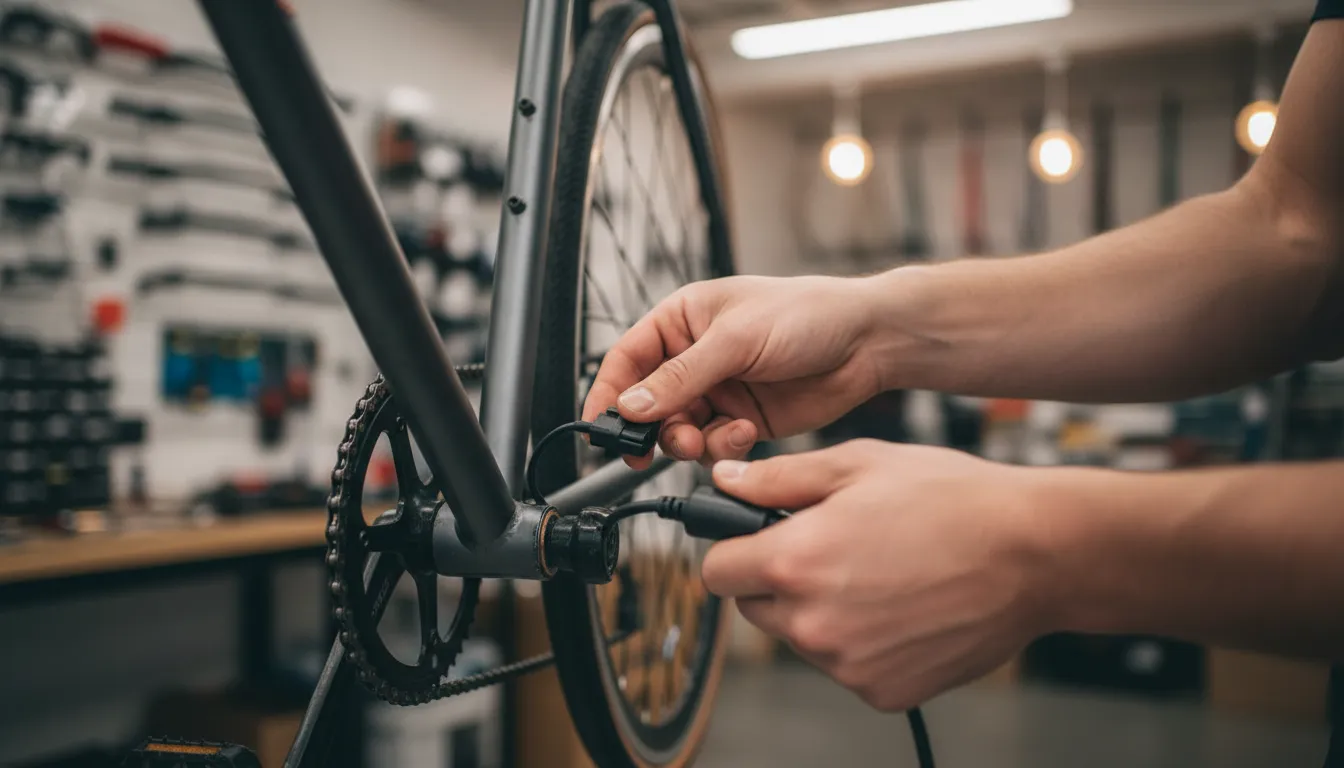
Turn the system off and remove the key or disable the power source according to the owner's manual. Let moving parts stop. Look for loose accessories, a pinched cable, a bent connector, damaged insulation, tire or wheel interference, and anything that has shifted near the motor or battery mount. Do not pull hard on a wire or probe a connector with a metal object.
Before a longer ride, a short pre-ride check should include brakes, throttle, tires, cables, lights, and frame. These mechanical checks matter because an electrical symptom is not the only reason an e-bike can become unsafe.
2. Confirm the basics
Check the charge indicator and make sure the battery is fully seated and secured. If it is removable, use only the normal removal and installation procedure in the manual. Check that the power button, display connection, and any required key or app setting are in the expected state. If pedal assist is set to zero, the bike may feel unresponsive even though the system is operating normally.
3. Record what changed
Write down when the symptom began, whether it happens only on hills or under load. Whether the battery was recently charged, and whether the bike was wet or unusually cold. Photographing an error message can help a technician. Avoid clearing a code before recording it.
This first pass should end with a clear choice: continue only if the bike passes the safety check and the symptom is minor. Or stop and arrange service if the issue affects braking, steering, acceleration, lights, battery safety, or motor control.
How do you troubleshoot an electric bike with no power or a blank display?
For no power or a blank display, confirm the battery charge and seating first, then check the power control and visible connections. If the display remains blank after the manual's normal restart steps, stop guessing and have the battery, controller, wiring, and display tested together.
Work from the simplest cause
With the bike off, check whether the battery indicator shows a charge. A battery can look installed while still failing to make full contact with the bike, so confirm that it is seated and locked using the manufacturer's procedure. Do not force the pack into place, bend contacts, or use a charger that was not supplied or recommended for that system.
Next, inspect only the visible parts of the connection path. Look for a plug that has backed out, bent pins, damaged insulation, or a cable caught against the frame. Handlebar controls, the display, and the motor cable may all be part of the same circuit. A loose connection can mimic a failed display or battery.
Separate a blank display from a motor that will not run
If the display is blank, the problem is somewhere in the power, battery, display, or connection path. If the display turns on but the motor does not respond, the battery is not automatically cleared. The brake cutoff sensor, motor cable, pedal-assist sensor, controller, throttle setting, or an active error code may be involved.
Use the display only for information the bike provides normally. Check the assist level, look for a code, and note whether the system shuts down as soon as you apply power. Do not assume a code means the same thing across brands. Segway systems, for example, can have model-specific procedures, so follow the manual for the exact bike.
Know when to stop
A weak or aging battery may fail under load before it fails during a stationary check. If the bike powers on but repeatedly cuts out, loses range suddenly, or shuts down on a hill. Do not solve the problem by repeatedly cycling the battery or buying a controller based on a guess. A technician can test the battery and the rest of the electrical system as a set.
For a battery-specific charging symptom, continue with the battery not charging troubleshooting guide, while keeping this broader checklist focused on distinguishing power symptoms from other faults.
Why does pedal assist, throttle, or motor power cut out while riding?
Power cutouts can come from a brake cutoff, assist setting, sensor or throttle connection, battery contact, controller protection, heat, or heavy load. Check settings and visible parts while the bike is off, but do not continue riding if the motor surges. The throttle sticks, the battery gets hot, or the fault returns.
Pedal assist that does not engage
Start by checking that the assist level is not set to zero and that a brake lever is fully released. Many systems reduce or stop motor output when a brake cutoff signal is active. Look at the visible sensor area for mud, a shifted magnet ring, or a loose connector. But do not dismantle the sensor assembly unless the owner's manual specifically describes that procedure.
Torque sensors measure rider input at the crank or bottom-bracket area, while cadence systems detect pedal movement. The expected response differs, so a delay or gentle start is not automatically a failure. If the assist behavior is unfamiliar, compare it with the model manual and the bike's normal operation. Voltaire's torque-sensing e-bike repairs guide can provide deeper context for that type of system.
Throttle and motor symptoms
A throttle that feels stuck, rubs, or does not snap back freely is a stop-riding issue. Check its movement with the system off. Do not test a questionable throttle by lifting the wheel and applying power. For grinding, clicking, jerking, or overheating, note whether the noise follows wheel speed, pedal input, or motor use. That observation helps a technician without requiring you to open the motor.
Cutouts on hills or under load
Hills demand more current. A weak, cold, poorly connected, or low-charge battery may cut out under load, and controller or motor heat can also contribute on a long climb. Record the conditions, then allow the bike to cool in a safe place. Repeated cutouts are not a reason to increase settings or replace parts blindly. The battery, sensors, controller, motor, and connectors may need to be evaluated together.
If the symptom affects acceleration, braking, steering, lights, or control, walk the bike home or arrange service. A temporary restart is not proof that the cause is gone.
How do you troubleshoot charging and battery problems safely?
For a charging problem, use the manufacturer's charger and instructions. Verify the outlet and visible connections. Observe whether the charger behaves normally. Stop immediately for heat, swelling, smoke, a burning odor, liquid intrusion, or visible damage. Do not open or repair the battery pack yourself.
Check the charging path without taking risks
Move the bike or battery to the charging location according to the manual. Confirm the outlet works with another appropriate device. Check that the charger is fully connected at the outlet and bike or battery. Inspect the cable and plug for cuts, crushed sections, bent pins, or moisture. Do not substitute a charger because its connector appears to fit.
Stay present while charging and follow the supplied instructions. The U.S. Consumer Product Safety Commission advises using only the charger provided or recommended by the manufacturer. It also advises against charging while sleeping. Those precautions are more important than forcing a quick diagnosis.
When charging works but range does not
A full indicator does not guarantee normal performance under load. A weak or aging battery may lose range or cut out when climbing. Cold weather can temporarily reduce battery performance. Record temperature, terrain, assist level, load, and when the cutout occurs. These details are more useful than assuming the battery needs replacement.
For practical ownership guidance, link to Voltaire's e-bike battery charging tips. If the battery will not charge, also review the battery not charging troubleshooting guide.
Red flags mean stop, not experiment
Do not charge or ride a battery that is swollen, unusually hot, leaking, smoking, or giving off a burning smell. Do not continue after suspected water intrusion until the system has been assessed. Keep damaged batteries away from flammable materials and follow local professional guidance for handling. A battery-management fault or failed cell is not an owner repair. Arrange qualified service.
Should you reset an electric bike or investigate an error code?
A normal power cycle can be reasonable when the owner's manual describes it. Record an error code before resetting. If the code returns, the bike behaves unpredictably, or the manual does not explain the procedure, arrange a professional diagnosis.
Use the manual, not a universal reset recipe
Turn the system fully off and restart it only as the manufacturer directs. Some bikes use a button combination, removable battery, app setting, or other model-specific process. A reset that is harmless on one system may not apply to another. Never disconnect wiring or bypass a brake, sensor, or controller safety feature to make the code disappear.
Before restarting, note the exact code, icons, flashing pattern, battery level, and conditions. Take a photo if the message is brief. Record whether the display is on, whether assist is available, and whether the symptom started after rain, charging, transport, or a software change.
Firmware and component questions
Manufacturer firmware updates can sometimes address software or connectivity symptoms, but use only the official process for the exact model. Keep the bike stable and powered as instructed during an update. Do not flash an unverified file or install a controller, display, throttle, or sensor because the plug looks similar. Electrical compatibility includes more than connector shape.
When a code returns after a documented restart, treat that recurrence as useful diagnostic evidence. A display can work while the motor, controller, sensor, or wiring still has a fault. Qualified service can read the symptom in context and test the system rather than masking it with repeated resets.
For a torque-sensing system, the torque sensor versus throttle comparison can help explain expected assist behavior, but it is not a substitute for the model manual or a technician's inspection.
When is an electric bike problem unsafe to ride?
Do not ride when a fault can change braking, steering, acceleration, motor control, lighting, or battery safety. Stop for a sticking throttle, motor surge, damaged wiring, repeated cutouts, returning error codes, smoke, burning odor, swelling, unusual battery heat, or brakes that do not interrupt motor power as designed.
Use this stop-or-service decision tree
- Stop immediately: smoke, burning smell, swelling, leaking, unusual heat, exposed wiring, liquid inside the electrical system, or a crash-related battery concern. Move away from the bike if there is an active fire or rapidly heating battery and contact emergency services when appropriate. Do not handle a damaged battery.
- Do not ride to test it: throttle does not return, the motor surges, the display cuts out, the bike loses power repeatedly, brakes feel abnormal, steering is affected, or an error code keeps returning.
- Walk or transport the bike: if it is stable but the electrical system is unreliable. Photograph the symptom, preserve the error message, and tell the technician what happened under load, in rain, on hills, or during charging.
- Consider a short normal use only after the check: only when the issue is minor, no safety system is affected, the bike passes a mechanical inspection, and the owner's manual does not restrict use. If the symptom returns, stop.
Wet weather deserves caution. If the bike was exposed to heavy rain or liquid intrusion, power it down and let a qualified service provider determine whether the system is safe. Do not assume that a dry exterior means the connectors or controller are dry inside.
For a fuller list of symptoms that call for service, read Voltaire's e-bike repair warning signs. Schedule the next step with Voltaire's electric bike repairs and all-brand service team.
When should you schedule professional electric bike service?
Schedule professional service when safe owner checks do not identify the cause, a problem returns, or the symptom involves the battery, controller, wiring, motor, sensors, brakes, or software. Professional diagnosis is especially important when the bike is unsafe to ride or the battery shows damage, heat, swelling, or a burning odor.
What a technician can do that an owner should not
An owner can document symptoms, inspect visible connections, check settings, and follow normal manual-directed startup steps. Electrical diagnosis beyond those checks may require testing voltage, current, communication between components, battery condition, controller behavior, or sensor signals. Battery packs and safety systems should not be opened or bypassed as a home experiment.
Voltaire Cycles of Central Oregon operates an in-house Service Center in Bend with certified technicians. Its documented service capabilities include electrical diagnostics, battery testing and replacement, motor repair and replacement, controller programming and updates, brake, gear, and wheel work, plus software and connectivity support. The Service Center works across electric vehicle brands, including brands not sold in the store.
Bring useful information to the appointment
Share the model and serial information, the exact error code, photos, recent charging or weather exposure, and the conditions that trigger the symptom. Say whether the issue occurs at startup, after warming up, on hills, under load, or only with throttle or pedal assist. This turns a vague complaint into a reproducible diagnostic path.
Voltaire's service process emphasizes systematic inspection, documentation, quality control, and test verification before a vehicle is returned. If the bike is safe to transport but not safe to ride, use the electric bike repairs and all-brand service page to choose the appropriate next step. For routine prevention after the fault is resolved, a professional e-bike tune-up can address the mechanical systems that support reliable riding.
Choosing the Right Next Step for Electric Bike Troubleshooting
Use this quick comparison to choose the next step without treating a symptom as a final diagnosis.
| What you notice | Safe first check | When to stop and seek service |
|---|---|---|
| Blank display or no power. | Check battery seating, approved charger, visible connections, and power control. | Stop if the display stays blank, contacts are damaged, or power cuts out repeatedly. |
| Assist or throttle does not work. | Check the assist setting, released brake lever, visible sensor, and throttle condition. | Stop if the throttle sticks, motor surges, or braking and control are affected. |
| Charging or range problem. | Check the approved charger, outlet, cable condition, temperature, and charging history. | Stop for heat, swelling, smoke, odor, liquid intrusion, or suspected cell fault. |
| Error code or motor noise. | Record the code or sound and follow the exact model manual. | Stop if the code returns, motor overheats, or grinding and jerking continue. |
Frequently Asked Questions
How can I diagnose a fault on my e-bike?
Power the bike down, check for visible damage, confirm the battery is charged and seated. Inspect visible connectors, check the brake levers and assist setting, and record any error code. Stop if the issue affects control or battery safety. Do not open the battery or guess at replacement parts.
What are the most common problems with e-bikes?
Common symptoms include no power, a blank display, charging failure, reduced range, sudden cutouts, missing pedal assist, throttle problems, motor noise, and error codes. Each symptom can have several causes, so use the owner's manual and the conditions of the failure to narrow the next safe step.
How do you reset your electric bike?
Follow the exact restart or reset procedure in the manufacturer's manual. Record the error code first, then power down and restart only as directed. If the code returns or the manual does not cover the symptom, arrange service rather than repeating resets or disconnecting wiring.
Why will my e-bike battery not charge?
Check the outlet, approved charger, visible cable connections, and battery placement without forcing anything. Do not charge a battery that is hot, swollen, damaged, wet, smoking, or giving off a burning odor. A battery-management or cell fault requires qualified diagnosis.
What are some common problems with electric bike motors?
Grinding, clicking, jerking, overheating, missing assist, and cutouts can involve the motor, battery, controller, sensors, or connections. Note when the sound or symptom occurs, but do not open the motor or continue riding when control or heat is involved.
Need help with an unresolved e-bike problem?
A careful checklist can identify a loose connection or setting, but it cannot safely confirm every battery, controller, motor, sensor, or wiring fault. If your electric bike still cuts out, will not charge, displays a returning code, or shows a safety warning, stop riding and arrange a professional evaluation.
Voltaire Cycles of Central Oregon supports Bend and Central Oregon riders with hands-on service and all-brand electric mobility expertise. Online shoppers can also use the same service path to understand the next step for a bike that needs qualified attention.
Request electric bike repairs and all-brand service from Voltaire Cycles.