

A Torc Sensing Ebike Repair Guide for Owners
A torque-sensing e-bike should feel like a natural extension of your pedaling, whether you are climbing a Bend hill, rolling gravel, or commuting across Central Oregon. When that feeling changes to surging power, uneven assistance, or no motor support, the cause may be simple sensor care rather than a major mechanical failure.
A practical repair guide starts with the basics: inspect the area around the motor or bottom bracket. Check for loose or damaged wiring, keep sensor contacts clean, and confirm that braking and drivetrain components are working correctly. If assistance remains inconsistent or disappears, stop guessing and have a certified technician diagnose and recalibrate the system.
Understanding what the sensor measures makes those checks more useful. Torque sensors respond to the force you apply to the pedals, so their alignment and surrounding components directly affect how smoothly assistance arrives. First, let us look at the sensor's role and why routine care matters.
What Is a Torque Sensor on an E-Bike and Why Does It Need Care?
A torque sensor detects how firmly you are pressing the pedals and uses that information to adjust motor assistance while you ride. Instead of waiting to sense that the cranks are turning, it responds to your actual effort. Press harder to climb a hill, and the motor can add more support. Ease off, and assistance tapers with you. That relationship is what makes a torque-sensing e-bike feel more like a natural extension of your own pedaling.
The sensor works continuously rather than taking one reading at the start of a ride. Modern systems can make hundreds of measurements during each pedal stroke, with some designs approaching 1,000 readings. This responsiveness helps the controller translate changing pedal force into smoother assistance across starts, climbs, wind, and uneven terrain. Research on e-bike torque control describes the sensor as a key part of matching motor output to human pedaling input. Academic research on e-bike torque control provides additional technical background.
That is the main difference from a cadence sensor. A cadence sensor primarily detects whether the pedals are rotating and then applies an assistance level based on the selected setting. A torque sensor considers how much effort you are contributing, so the response can feel more immediate and proportional. Neither system is automatically right for every rider, but torque sensing can be especially useful for people who want controlled starts. Predictable help on hills, and a connected riding feel.
| Feature | Torque Sensor | Cadence Sensor |
|---|---|---|
| What it measures | How much pedal force you apply | Whether the pedals are rotating |
| Assistance response | Immediate, proportional to effort | Fixed level once you pedal |
| Feel on hills | More natural, matches your push | Can feel on or off, less connected |
| Care needs | Clean contacts, alignment, wiring | Generally simpler to service |
For riders who notice that their assistance no longer matches their effort, a torque sensor that is dirty, misaligned, or loosely wired can be the reason.
Precision also explains why this component deserves care. The sensor and its connections operate near the motor or bottom-bracket area, where vibration, moisture, dirt, cable movement, and mechanical adjustments can affect the signal. A small problem may not look like a major mechanical failure, yet it can change how the motor responds to every pedal stroke. Keeping the surrounding area clean, checking for obvious connection issues, and following the manufacturer's service guidance help preserve accurate readings.
Regular e-bike care should therefore include more than tire pressure and chain lubrication. Brake condition, drivetrain health, firmware, and sensor performance all contribute to a reliable ride. If assistance becomes erratic, delayed, or unexpectedly weak, avoid repeatedly forcing the system under load. A qualified technician can determine whether the cause is contamination, a connection problem, alignment, calibration, or an internal electronic fault before a small issue becomes a larger repair.
Common Torque Sensor Problems and How to Spot Them
A torque-sensing e-bike should respond in proportion to the effort you put into the pedals. When the sensor, its wiring, or its mounting position is not reading that effort correctly, the change is usually noticeable on the road before any warning light appears. Pay attention to how assistance begins, changes, and stops rather than judging the system only by its top speed.
Inconsistent power or a jerky motor
One common warning sign is uneven power delivery. The motor may feel strong for a moment, then fade while you maintain the same pressure. Or it may surge as though the bike is repeatedly switching assistance on and off. A jerky launch can also point to a sensor signal that is dirty, interrupted, or inaccurate. Research and troubleshooting guidance identify inconsistent power, sudden surges, and jerky acceleration as typical symptoms of a malfunctioning pedal-assist sensor. Reviewing the sensor symptoms can help you describe the behavior accurately to a technician.
Do not assume every change in feel means the motor itself is failing. Torque systems are designed to react to rider input, so a light touch and a hard push should not produce the same result. On some e-bike configurations, light pedaling may amplify your input by about 50%, while heavier pedaling can increase assistance by as much as 300%, depending on the model. Those figures are a useful reminder that a responsive system should still feel progressive, not random.
Ghost pedaling and loss of assist
Ghost pedaling describes a situation where the bike seems to provide motor assistance even though your pedal pressure is minimal or inconsistent. Riders may also notice the opposite: they are pedaling firmly, but the motor does not respond. Misalignment or debris around the sensing area can cause ghost pedaling and sudden surges. While a more serious electrical or sensor failure can result in a complete loss of pedal assist.
A mechanically sound bike can still feel weak when the sensor is misaligned. The system may be unable to read your applied force accurately. Leading to a significant drop in assistance even when the chain, tires, and motor are otherwise functioning normally. The sensor is typically integrated near the bottom bracket or motor interface, where dirt, moisture, cable tension, or movement after service can affect its reading.
Stop riding and arrange professional diagnostics if assistance cuts out completely, the motor surges unpredictably, or the symptoms persist after basic visual checks. Avoid forcing adjustments to an enclosed sensor or its calibration without model-specific instructions. A clear description of when the issue occurs, such as on hills, during starts, or after wet riding, gives a qualified technician a better starting point for testing.
Torque Sensor Care: Cleaning, Connections, and Alignment
A torque sensor depends on a clean, stable signal between the rider's pedal force, the sensor, and the motor controller. Before assuming the sensor has failed, work through this quick inspection. Many basic fixes take about five minutes and do not require special tools. But disconnect the battery before inspecting electrical connections and stop if a cable or housing appears damaged.
- Power down and inspect the bottom-bracket or motor area. Turn the e-bike off, remove the battery if the manufacturer's instructions allow it, and look around the bottom bracket, crank area, and motor interface. Torque sensors are commonly integrated into this region, where dirt, trail grit, and moisture can collect. Look for packed debris, water intrusion, crushed housing, or anything that could interfere with the sensor's position. A sensor that is dirty or out of position may send an inaccurate signal even when the rest of the bike appears mechanically sound. This sensor troubleshooting overview identifies the bottom-bracket and motor area as a key place to begin.
- Check every visible cable and connection. Follow the wiring from the motor or bottom bracket toward the controller. Looking for loose plugs, pulled cables, sharp bends, abrasion, or a connector that is not fully seated. Improper routing can let a cable rub against the frame, catch on moving parts, or place tension on a connector. Do not yank on wires or force a plug. If a connection is loose, reseat it gently and confirm that the cable has enough slack for normal steering and suspension movement. Loose or damaged wiring is one of the first things to check when sensor signals become unreliable.
- Clean contacts and surrounding surfaces carefully. Use a clean, dry, soft brush or cloth to remove loose dirt from the connector exterior and sensor area. Keep water, degreaser, and high-pressure spray away from open electrical connections. If the manufacturer's service instructions approve contact cleaner, use it exactly as directed and allow the connection to dry fully before reconnecting the battery. Moisture and debris can compromise the responsive electronic signals that translate pedal pressure into assistance, so cleaning is preventive care as well as troubleshooting.
- Verify alignment without forcing the hardware. Check whether the sensor, crank assembly, or related mounting points appear shifted, uneven, or disturbed after a fall, transport, or repair. Misalignment can reduce assist power or create inconsistent assistance while the drivetrain remains functional. Do not loosen motor or bottom-bracket hardware unless you have the correct service procedure and torque specifications for that model. Alignment is a precision adjustment, and forcing a component can create a larger problem.
- Test at low power in a safe area. Reconnect the battery, select a low assist setting, and pedal gently in a clear area. Watch for smooth, proportional assistance rather than surges, ghost pedaling, or a complete loss of assist. If the symptom remains after the basic checks, stop riding and arrange professional diagnostics. A recurring signal problem may require recalibration or internal repair, not more cleaning.
Routine checks of connections, sensor condition, brakes, and drivetrain components help keep the complete e-bike system predictable. When alignment or wiring is beyond a simple visual inspection, a qualified technician can protect the motor and sensor from guesswork.
Brake and Drivetrain Checks That Keep Your Torque System Reliable
Torque sensing depends on a clean relationship between your effort, the bicycle's moving parts, and the motor's response. That is why routine maintenance should look beyond the sensor itself. Brake condition, chain and cassette condition, and electronic system health all affect how confidently an e-bike accelerates, climbs, and stops.
Start with the brakes
E-bikes can carry more weight and reach higher speeds than conventional bicycles, so dependable braking is not optional. Before a ride, squeeze both brake levers and check that they feel firm and engage smoothly. Listen for unusual scraping, watch for uneven pad wear, and confirm that the rotors are straight and free of contamination. A lever that pulls unusually close to the handlebar, a brake that feels weak, or a rotor that pulses under braking deserves attention before the next ride.
Brake checks are also useful after transporting the bike or riding rough gravel and trails. A shifted caliper or damaged cable can reduce stopping performance even when the issue is not obvious at a glance. If braking feels different from your normal baseline, set the bike aside and have the system inspected.
Keep the drivetrain efficient
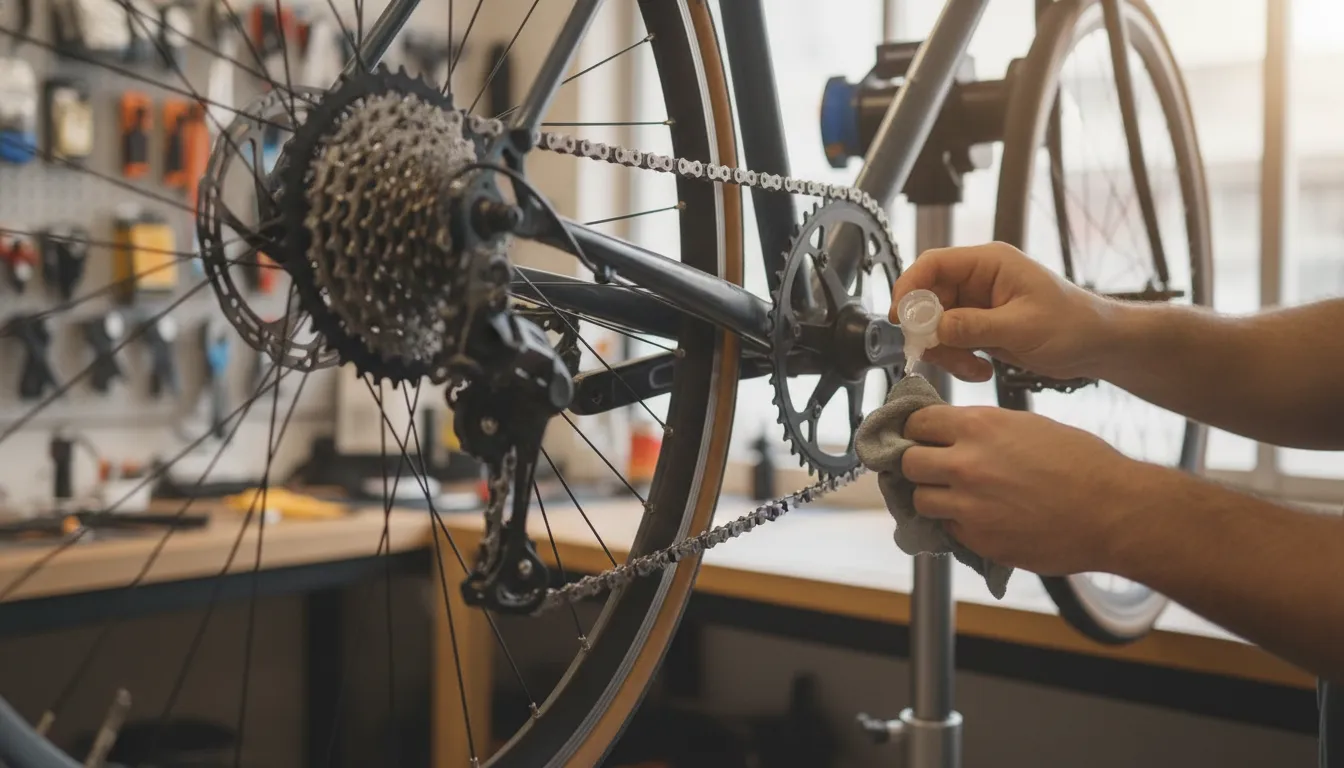
Inspect the chain, cassette, chainring, and derailleur for heavy wear, damage, buildup, or poor adjustment. A chain that is dry, dirty, worn, or poorly lubricated creates extra resistance as you pedal. That resistance changes the force reaching the drivetrain and can make the torque system work from a less consistent mechanical signal. Voltaire Cycles' maintenance guidance identifies drivetrain checks as part of routine care for sensor-equipped e-bikes, along with brake inspection and firmware or sensor health checks.
Clean the drivetrain using products appropriate for bicycle components, then apply a suitable chain lubricant sparingly and wipe away excess. Excess lubricant attracts grit. If the chain skips under load, the gears hesitate, or the motor feels uneven only when shifting or climbing, do not assume the torque sensor is the problem. The drivetrain may need adjustment or replacement parts.
Do not overlook firmware and sensor health
At regular service intervals, check for manufacturer firmware updates and review the sensor system for stored faults, damaged wiring, or abnormal readings. Software updates can include refinements to sensor data processing, while a mechanical issue elsewhere can imitate an electronic fault. A complete maintenance check considers brakes, drivetrain, firmware, and sensor health together. This approach helps preserve efficient power transfer and gives a technician better information if assist becomes inconsistent.
Battery Care for a Long-Lasting E-Bike
A well-cared-for battery helps a torque-sensing e-bike deliver the smooth assistance riders expect. The motor responds to pedal pressure, and an efficient. Healthy battery gives that system a stable supply of energy instead of forcing it to work around avoidable charging or temperature problems.
Use the charger supplied by the manufacturer, or an explicitly approved replacement. Do not substitute a generic charger simply because the plug fits. The UK government's https://www.gov.uk/government/publications/battery-safety-for-e-cycle-users guidance recommends using the correct charger and following the manufacturer's instructions for e-cycle batteries.
Keep charging and storage conditions controlled
Charge the battery in a clean, dry area away from heat sources and anything easily damaged by heat. Avoid charging immediately after a demanding ride if the pack is still very hot, and do not leave it exposed to freezing temperatures or direct summer sun. Before charging, look for swelling, cracking, unusual odor, leaking, or damaged connectors. If you notice any of these signs, stop using the battery and seek qualified service rather than opening the pack yourself.
Repeatedly charging to 100% and leaving the bike plugged in overnight is not an ideal long-term habit unless the manufacturer specifically requires it. For a bike that will sit unused for several weeks or months, a partial charge is generally more appropriate. Washington State University's battery safety guidance recommends storing lithium-ion batteries in a cool, dry location and keeping them around 50% to 80% charge for long-term storage: https://ehs.wsu.edu/lithium-ion-batteries-e-bike-e-scooter/. Check the manufacturer's storage instructions first, since battery systems can differ.
Efficient battery use also depends on the mechanical and electrical system around it. A dirty drivetrain, dragging brake, loose connection, or torque sensor that is reading inaccurately can make the motor work harder than necessary. In practical terms, consistent pedal input should produce predictable assistance, not unexplained surges or a sudden drop in range. Regular checks of the brakes, drivetrain, firmware, and sensor health help the motor distribute assistance efficiently. If the battery seems to drain unusually fast or the assist feels inconsistent after basic checks. Have the complete torque and motor system diagnosed rather than replacing the battery by guesswork.
When to Bring Your Torque-Sensing E-Bike to a Certified Shop
Basic checks can resolve a loose connection, visible cable damage, or contamination around an accessible sensor area. Stop troubleshooting at home, however, when the problem continues after those checks or when the repair reaches the bike's motor, bottom bracket, or control electronics. Torque sensors depend on accurate electronic signals, and misalignment can reduce assistance even when the rest of the bicycle appears mechanically sound.
Persistent inconsistent power is a clear reason to schedule a professional inspection. If the motor surges, assistance cuts in and out, feels unusually weak, or produces a ghost-pedaling sensation, avoid treating the symptom as a normal riding-mode difference. These behaviors can point to a dirty or misaligned sensor, damaged wiring, or an internal electronic fault. A certified technician can separate a sensor problem from issues involving the drivetrain, battery, controller, or other components instead of having you replace parts by guesswork.
Error codes and electronic symptoms
Bring the bike in when an error code returns after a safe power cycle or appears alongside an abrupt change in assist. Record the code, when it appears, the assist level, and what you were doing when the symptom started. That information helps a technician reproduce the fault. Do not open sealed motor or battery housings to investigate an electronic failure unless the manufacturer specifically provides a safe, approved procedure for that work.
Sensor replacement, recalibration, and firmware updates
Sensor replacement and advanced recalibration are not good candidates for trial and error. A torque sensor sits in a sensitive part of the drive system, and its alignment affects how the bike interprets your pedal force. Professional service may also include firmware and sensor-health checks, which are part of routine maintenance for sophisticated e-bikes. If a replacement sensor is installed without the correct setup, the bike may still deliver inaccurate or inconsistent assistance.
Voltaire Cycles of Central Oregon provides certified e-bike service and repair in Bend, including multi-brand support for complex torque-sensing systems. The team can assess advanced diagnostic needs, specialized recalibration, and safety or performance concerns against the bike's intended use. This is especially useful if you ride varied Central Oregon terrain or need dependable assistance for commuting, recreation, or longer outings.
When it is time to replace or upgrade rather than repair, you can also compare Segway electric bike models with guidance from a local mobility specialist. The goal is not to sell you a part or a new bike prematurely. It is to identify the actual fault, restore safe operation when possible, and help you make an informed next decision.
Frequently Asked Questions
Can a torque sensor be repaired?
Sometimes. Start by checking for dirt, loose connections, or a damaged cable near the motor or bottom bracket, because those issues can interrupt the sensor signal. Misalignment may also reduce assistance even when the rest of the bike is mechanically sound. If cleaning and visible connection checks do not restore consistent support, a certified technician can diagnose the system and determine whether recalibration or sensor replacement is appropriate. See certified electric bike service in Bend for advanced diagnostics.
What are the symptoms of a bad torque sensor?
Common warning signs include inconsistent assistance, jerky or surging motor response, ghost pedaling, reduced power, or a complete loss of pedal assist. These symptoms can also come from wiring, firmware, drivetrain, or battery issues, so avoid assuming the sensor is faulty based on feel alone. A technician can test the related systems before recommending a repair. Source: Upway's pedal-assist troubleshooting guide.
How does a torque sensor work on an e-bike?
A torque sensor measures how much force you apply to the pedals and uses that input to adjust motor assistance in real time. The result is typically a more natural response than a basic cadence-only system, especially when your effort changes on a hill or while accelerating. Sensor accuracy depends on clean connections, correct alignment, and healthy supporting electronics. Source: peer-reviewed e-bike torque-control research.
How do I repair a pedal-assist sensor?
Power the bike down, inspect accessible connectors and cables, and gently remove surface dirt without flooding the sensor or motor area with water. Check that the drivetrain and brakes are operating normally, then test the bike cautiously. Do not open sealed motor components or force an adjustment you cannot identify. If assist remains erratic, stop riding and bring the bike to a qualified shop for diagnostics and recalibration.
Ready to Keep Your Torque-Sensing E-Bike Running Smoothly?
Regular checks can help you catch sensor, brake, drivetrain, or battery concerns before they interrupt your next ride. For a careful diagnosis or maintenance plan, schedule service with Voltaire Cycles of Central Oregon. The Bend service team can help determine what your e-bike needs and explain the next steps clearly, whether you ride for commuting, recreation, or Central Oregon adventures.