

Electric Scooter Insurance: Coverage Questions to Ask
Buying an electric scooter is only part of responsible ownership. Before your first ride, check whether an existing homeowners, renters, auto, or health policy says anything about the scooter. Ask how the answer changes with your use and what happens if someone is injured or property is damaged. A quick conversation with an insurer can uncover exclusions before a claim makes the question urgent.
Ready to choose your next ride? Browse Segway electric mobility options
Electric scooter insurance is not automatically included in every policy. Coverage may depend on the scooter's specifications, where and how you ride, whether it is owned or rented, and the exact wording, limits, and exclusions in your policy. Ask a licensed insurer to confirm protection for liability, theft, damage, and medical costs.
Regulators in Texas and Utah both emphasize checking the policy and speaking with an insurance agent, but their guidance is not a nationwide rule. Start by separating the types of protection you may need, then ask which coverage source, if any, applies to each one.
What Does Electric Scooter Insurance Usually Cover?
Electric scooter insurance may refer to a standalone policy or coverage provided, limited, or excluded under another policy. Depending on the insurer and your scooter's specifications and use, questions may involve damage to the scooter, injuries to other people, property damage, theft, or your own medical bills. Confirm the details before riding.
There is no single coverage package that applies to every scooter or rider. A standalone policy may address collision damage, liability for injuries or property damage, and possibly theft or other losses. The available protections, exclusions, limits, and deductibles depend on the policy wording. Ask whether the insurer classifies your scooter as a motor vehicle, mobility device, recreational vehicle, or another category.
Homeowners or renters insurance may be relevant to personal property or liability questions, but it may exclude motorized vehicles or limit coverage away from home. An auto policy may not extend to a scooter either. The Texas Department of Insurance explains that home policies do not usually cover damage caused by motorized vehicles and that an auto policy probably will not cover an electric scooter. Those are Texas regulator examples, not a universal rule for Oregon or every other state.
Health insurance is a separate question. Texas regulators note that it may cover the rider's own injuries, but it would not generally cover injuries caused to someone else. Ask an insurance agent specifically about bodily-injury liability, property damage, theft, collision, accessories, modifications, deductibles, and coverage while the scooter is stored, transported, rented, or used away from home. Keep the scooter's make, model, serial number, purchase record, and intended use available when requesting a policy-specific answer.
Does Homeowners or Renters Insurance Cover an Electric Scooter?
Homeowners or renters insurance may offer some protection for an electric scooter, but coverage is not automatic. Motorized-vehicle exclusions, where the scooter is used, how it is stored, and the policy's limits can all matter. Ask your insurer to review the exact scooter and policy before you rely on coverage.
The first question is whether the policy excludes motorized vehicles. Texas insurance regulators caution that home policies do not usually cover damage caused by motorized vehicles, but that guidance is not a statement about every Oregon policy. Coverage depends on the insurer, policy language, scooter specifications, and intended use. Oregon's Division of Financial Regulation home-insurance guidance is a useful starting point for understanding how property and liability coverage can include exclusions.
Ask whether the scooter itself would be treated as covered personal property, and whether that protection applies away from home. A policy might handle theft from a locked garage differently from theft at a workplace, trailhead, or other location. Confirm whether storage requirements apply, whether accessories are included, and whether a deductible would reduce a potential claim.
Liability deserves separate attention. Ask whether the policy could respond if you injure another person or damage someone else's property, and whether riding on public roads, paths, or private property changes the answer. Do not assume personal-property coverage also provides liability protection. If you are comparing models or planning to ride in Central Oregon, review the Oregon electric scooter rules separately, since insurance questions and operating rules are not the same thing.
Before your first ride, give the insurer the make, model, purchase information, modifications, storage plan, and expected use. Request the answer in writing, including applicable limits, exclusions, and deductible, so you can make an informed ownership decision.
Which Liability, Theft, and Damage Questions Should You Ask?
Ask an insurer to explain who is protected, what property is covered, which uses or modifications are excluded, and how limits and deductibles apply. Coverage depends on the carrier, scooter, use, and policy language. Texas and Utah insurance regulators both recommend confirming coverage with an agent rather than assuming a home or auto policy applies.
| Coverage question | What to confirm | Why it matters |
|---|---|---|
| Does it cover bodily injury liability? | Ask whether injuries to another person are covered while you operate the scooter, and note exclusions for location, speed, or use. | A rider's health coverage may address their own injuries, but it generally is not a substitute for protection against claims by others. |
| Does it cover property damage? | Confirm whether damage to another vehicle, building, fence, or other property is included, and whether rented or shared scooters are treated differently. | Some coverage may focus on public-property damage rather than every third-party loss. |
| Are theft and vandalism covered? | Ask whether theft, attempted theft, and vandalism are included, plus requirements for locked storage, proof of ownership, or reporting. | The answer may change based on where and how the scooter was stored. |
| What about collision damage? | Confirm whether damage to your scooter after a crash is covered, along with exclusions and the applicable deductible. | Liability coverage for another person's property does not necessarily repair your own scooter. |
| Are accessories or modifications included? | List significant accessories and changes, then ask whether they must be declared or separately documented. | An insurer may evaluate an altered scooter differently from its original configuration. |
| What are the limits and deductibles? | Request the per-claim limits, any aggregate limits, covered loss conditions, and deductibles in writing. | Limits describe the insurer's potential contribution, while a deductible affects what you may pay first. |
Bring the make, model, serial number, purchase record, storage details, and intended riding areas to the conversation. The Texas Department of Insurance scooter guidance advises checking with an agent before riding, while Utah regulators stress that coverage depends on the carrier and exact policy wording. Ask for the relevant exclusions and keep the insurer's explanation with your records.
How Are Medical Bills and Crash Injuries Handled?
Answer: A rider's injuries and injuries caused to someone else can fall under different parts of an insurance plan. Health insurance may help with the rider's medical treatment, while liability or medical-payments coverage may address injuries to other people, subject to exclusions, limits, deductibles, and policy wording. Confirm these details with a licensed insurer before riding.
Start by separating two questions: who was injured, and what coverage was in force? Texas insurance regulators say a rider's health insurance probably covers the rider's injuries, but it will not cover injuries to people in the rider's path. That is general regulator guidance, not a promise about any particular plan. Ask whether your health policy has exclusions, deductibles, network rules, or other conditions that affect treatment after a scooter crash. Read the guidance from the Texas Department of Insurance for the regulator's full context.
Questions to ask about liability and medical payments
For injuries to another person, ask whether the policy includes bodily-injury liability and whether a separate medical-payments provision applies regardless of fault. Confirm who is covered, where coverage applies, and whether the scooter's specifications, speed, modifications, ownership, or intended use create an exclusion. Do not assume a homeowners, renters, or auto policy fills the gap. Coverage depends on the insurer and the exact policy language.
After a crash, prioritize emergency care and follow medical guidance. Then document the date, location, conditions, people involved, scooter make and model, visible damage, photographs, witness information, and every report or receipt. Keep the policy number and insurer claim contact accessible. Promptly ask the insurer how to report the incident and what records it needs. Avoid admitting fault or agreeing to payment before understanding the claim process.
What Changes for Financed, Leased, Rented, or Shared Scooters?
Financing, leasing, renting, and sharing can change who is responsible for the scooter, how it may be used, and which policy responds after a loss. Ask the lender, lessor, rental company, or insurer for written answers about coverage, liability, proof of insurance, and modifications before you ride.
A financed or leased scooter may not be fully yours until the agreement is satisfied. Ask whether the lender or lessor requires proof of insurance, which types of damage must be covered, and whether the policy must name another party as an interested party. Do not assume every financing agreement includes these conditions, or that a personal policy automatically meets them. Have the insurer review the exact make, model, power, and intended use.
Rental and shared scooters follow a different responsibility model. The rental agreement may assign some risks to the company, the rider, or both. Read the agreement before riding, paying close attention to damage, theft, crashes, injuries to other people, prohibited areas, and reporting deadlines. Texas insurance regulators specifically advise riders to review rental agreements, while noting that rental-company coverage may focus on public-property damage rather than injuries or damage to other vehicles: Texas Department of Insurance scooter guidance.
Also ask whether liability coverage applies away from home, especially for a rental. Utah regulators caution that homeowners liability coverage away from the residence may be limited or excluded because the scooter is rented. Requirements and policy language vary by insurer and jurisdiction.
Finally, disclose accessories or modifications, including changed controls, batteries, lighting, or performance parts. An undisclosed change could affect a claim or create a policy question. Keep the agreement, receipts, serial number, photos, and the insurer's answers together so ownership and condition are easier to document.
How Do State and Local Rules Affect Scooter Insurance?
Electric scooter insurance rules vary by state, city, and vehicle classification. A jurisdiction may regulate licensing, registration, road use, or liability without requiring a particular insurance policy. Treat legal compliance and prudent protection as separate questions, then confirm both with current state or local agencies and a licensed insurer.
Insurance requirements are not uniform because an electric scooter may be classified differently depending on its speed, motor, equipment, or intended riding location. State law can also differ from city or county rules. A rule about where you may ride does not automatically answer whether you need liability coverage, and the absence of a stated mandate does not mean every risk is protected.
As a qualified example from another state, Utah's insurance department says scooter regulations and requirements vary by state, often depending on engine size. It also says coverage depends on the insurer and the exact policy language. Use that guidance to understand why a general internet answer is not a substitute for checking the agency that governs your riding area. Do not treat Utah's information as an Oregon requirement.
For Central Oregon riders, start with the current Oregon agency guidance and any applicable local transportation rules. Our guide to Oregon electric scooter rules can help you identify licensing questions, but it should not replace a current agency check. Ask an insurer whether your specific make, model, speed, use, storage location, and riding routes affect available coverage.
Before riding, write down the answer to two separate questions: What does the law require, and what protection would be sensible if you damaged property, injured someone, or lost the scooter? Keeping those answers distinct makes it easier to spot gaps without assuming that a policy or legal exception applies automatically.
What Should You Document Before Your First Ride?
Before riding, record the scooter's identity, purchase details, storage setup, intended use, safety equipment, and your insurer's answers. Coverage depends on policy wording, scooter specifications, use, insurer, and jurisdiction. This record helps you ask focused questions and gives you useful details if you later need to report theft, damage, or a claim.
Keep the documents together digitally and in a secure location. Before relying on electric scooter insurance, ask a licensed insurer to explain exclusions, limits, deductibles, and claim requirements in writing.
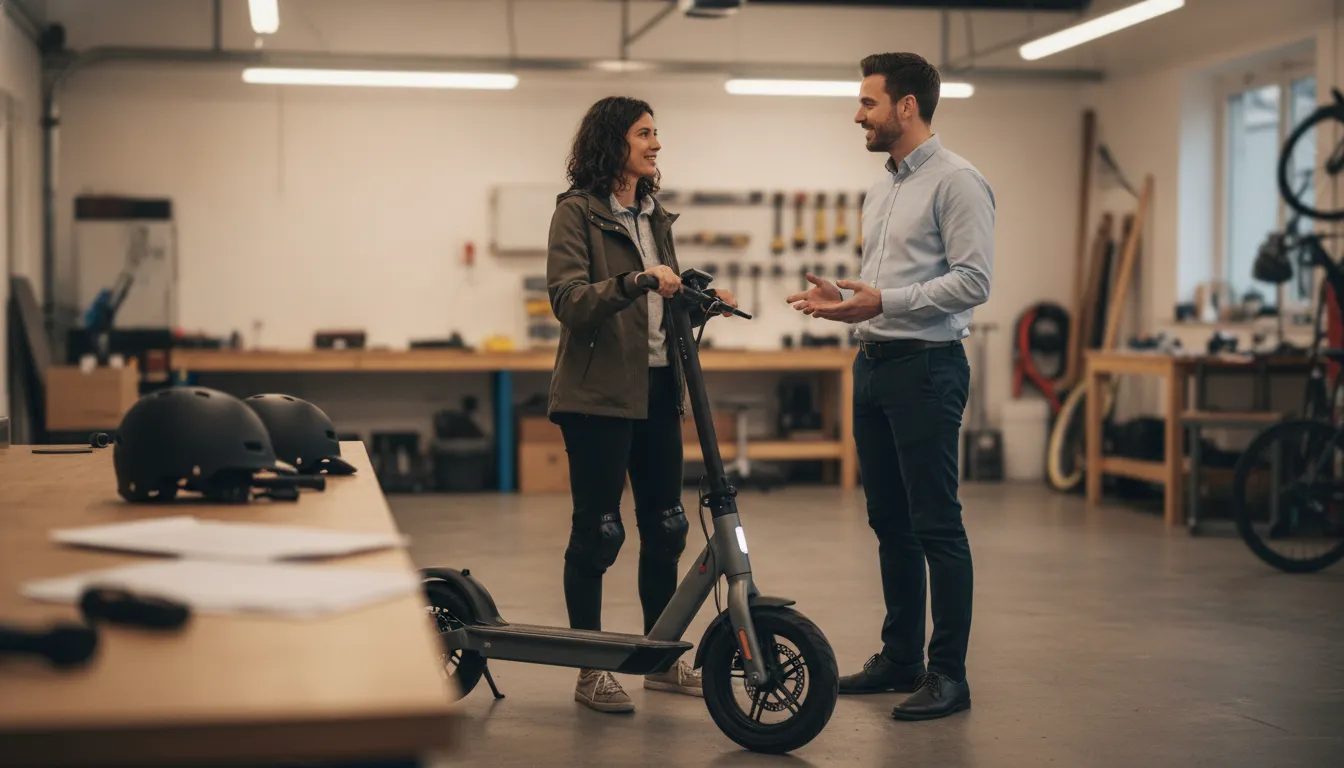
- Make and model: Record the brand, model name, and any identifying specifications.
- Serial number: Photograph the serial number and save a typed copy where you can find it.
- Purchase receipt: Keep the receipt, order confirmation, and any warranty records together.
- Policy wording: Save the relevant pages and note questions about theft, collision, liability, medical payments, exclusions, limits, and deductibles.
- Insurer confirmation: Write down the representative's name, date, contact method, and the exact answer about your scooter and planned use.
- Storage and security: Document where the scooter is stored, how it is locked, and any security equipment used.
- Safety gear: Note the helmet, lights, reflective equipment, and other gear you plan to use.
- Intended use and routes: Record whether you expect to commute, ride recreationally, travel on roads or paths, or use the scooter away from home. For product planning, consult Voltaire's electric scooter buying guide.
- Claim contacts: Save the insurer's claims phone number, online claim address, policy number, and emergency instructions.
For responsible ownership, keep service records and document damage promptly. Voltaire can also help with electric mobility service and repairs.
Browse Segway electric mobility options
Frequently Asked Questions
What insurance do you need for an electric scooter?
There is no single answer for every rider. Ask an insurer whether your homeowners, renters, auto, health, or separate scooter policy covers the scooter, your liability to others, theft, damage, and injuries. Coverage depends on the policy wording, scooter specifications, use, and jurisdiction. Texas insurance regulators advise checking with an agent before riding: Texas Department of Insurance guidance.
Is there insurance for electric scooters?
Some insurers may offer dedicated coverage, while others may address portions of the risk through existing policies or endorsements. Do not assume that a policy covers a motorized scooter because it covers bicycles or personal property. Request a written explanation of covered uses, exclusions, limits, deductibles, theft protection, and third-party liability.
Does homeowners or renters insurance cover an electric scooter?
It may cover some property or liability risks, but exclusions can apply to motorized vehicles, off-premises use, rentals, storage, or damage caused while riding. Texas regulators say home policies do not usually cover damage caused by motorized vehicles, while Oregon's regulator encourages consumers to compare policy wording. Ask specifically about your make, model, storage, and intended use.
How much does electric scooter insurance cost?
Premiums vary with the scooter, coverage limits, deductible, rider history, location, and insurer. Rather than rely on a general estimate, request quotes using the exact make and model and ask what each quote excludes. Compare the liability, theft, collision, medical, and accessory protections, not just the premium.
Does insurance cover injuries after a scooter crash?
Your health insurance may address your own injuries, but it may not cover injuries you cause to another person. Ask whether medical-payments or liability coverage applies, and confirm claim procedures before riding. Texas regulators distinguish the rider's medical coverage from injuries to others, so review both parts with an insurer.
Ready to Explore Your Electric Scooter Options?
Once you have confirmed your insurance questions with your insurer, product guidance can help you compare electric mobility options with your intended use in mind. Browse Voltaire Cycles of Central Oregon's Segway collection to review available models and take the next step with a clearer ownership plan. Browse Segway electric mobility options.