

Electric Bike Controller Problems: Safe Diagnostic Guide
When an electric bike cuts out, surges, or delivers uneven assistance, the controller may be involved, but the symptom alone does not prove it. A weak battery, battery-management system, loose connector, motor sensor, display, or damaged wiring can create a similar pattern. That is why a safe diagnosis starts with observation and isolation rather than immediately replacing an expensive part.
Need help with electric bike controller problems? Request qualified diagnostics and repair service.
Electric bike controller problems can affect how the motor starts, responds, or stops, yet riders should treat the controller as one possible cause among several. Record when the symptom occurs, and check only accessible connections and visible wiring with the bike powered down. Stop riding if there is smoke, a burning odor, swelling, abnormal heat, damaged wiring, or repeated cutouts.
For Bend and Central Oregon riders, the useful next step is to separate safe rider checks from electrical work that belongs with a qualified technician. Understanding what the controller does, and how its symptoms overlap with battery and wiring faults, makes the first decision clearer.
What Are Electric Bike Controller Problems?
Electric bike controller problems involve electronics that coordinate battery power, rider inputs, motor output, and display communication. Clues include motor cutouts, uneven assistance, unresponsive throttle or pedal assist, and display dropouts. The battery, sensors, connectors, wiring, or software can cause similar symptoms, so a symptom is not a confirmed diagnosis.
What does the controller do?
The controller acts as the system's traffic manager. It receives signals from the display, throttle, pedal-assist sensors, and other components, then regulates how electrical power reaches the motor. In practical terms, it helps manage motor performance, speed, and overall operation. The exact behavior depends on the bike's design, firmware, and component pairing.
Which symptoms deserve attention?
- Repeated cutouts: Assistance disappears during a ride, sometimes at a predictable point such as acceleration or a hill.
- Uneven assistance: The motor surges, pulses, or responds inconsistently when your pedaling or throttle input is steady.
- Display communication: The display may fail to start, go blank, disconnect, or show a system warning. Error-code meanings vary by bike, display, and controller, so use the manufacturer's manual rather than a universal code chart.
- Throttle or PAS behavior: One input may work while the other does not, or both may stop even though the display remains active.
These clues narrow the investigation, but they do not prove the controller is defective. A loose visible connector, battery protection event, motor-sensor issue, damaged wiring, or communication fault can look similar. Start with the general electric bike troubleshooting checklist and record when the symptom occurs, what input you used, and what the display showed.
Stop riding if the bike accelerates without input, develops smoke, burning odor, abnormal heat, swelling, or damaged wiring. A documented controller recall shows why unintended acceleration requires immediate attention, not repeated test rides. Have a qualified technician isolate the cause safely.
How Do Electric Bike Controller Problems Affect Motor Response?
An e-bike motor that cuts out or responds unevenly may be experiencing a controller issue. But the same symptom can come from the battery or its protection system, a motor, a sensor, or a loose or damaged connector. The timing matters: note whether it happens during acceleration, climbing, braking, throttle use, pedal assist, or after the bike has been ridden for a while.
Load-related cutouts deserve careful attention. A motor demands more electrical power when starting, climbing, or carrying a heavier load. If the battery connection, battery protection system, controller, or motor circuit cannot deliver or interpret that demand consistently, assistance may drop out. That pattern is useful evidence, but it does not identify one failed part by itself.
Separate the symptom from the suspected part
Controller-related possibilities include inconsistent power delivery, communication trouble with the display, or a protective shutdown. A battery or battery-management system may produce similar behavior. A pedal-assist sensor or throttle can create uneven response even when the motor and controller are functioning. The motor itself, connector condition, moisture exposure, and wiring can also be involved. Treat "controller problem" as a working description, not a diagnosis.
Record the riding mode, approximate battery state shown by the bike, terrain, rider input, weather, and whether the symptom returns after stopping and restarting. Photograph any displayed code and write down exactly when assistance resumes or disappears. Error-code meanings and reset procedures vary by bike, display, and controller, so use the manufacturer's manual rather than applying a universal code chart.
For broader first observations, use this general electric bike troubleshooting checklist. Keep the bike powered off for any visual connector check, and do not open the battery. Probe live wiring, bypass a safety interlock, or continue riding through repeated cutouts. Stop immediately for unusual heat, burning odor, smoke, swelling, leaking, or damaged wiring. A structured symptom record helps a qualified technician separate controller, battery, motor, sensor, and connection causes safely.
What Do Error Codes, Heat, and Wiring Tell You?
Error codes can narrow an investigation, but they do not prove that the controller has failed. The same-looking message may point to different components on different bikes. Read the code in the manual for your specific bike, display, and controller. Then record when it appeared, what the bike was doing, and whether power returns after a normal shutdown.
Do not rely on a universal F-code chart. A code such as F002 through F010 has meaning only within the system that defines it. And an unfamiliar code should be treated as a reason to pause and consult the manufacturer's documentation or a qualified technician.
| Observation | Possible area | Safe next step |
|---|---|---|
| Error code, intermittent display, or motor cutout | Controller, display, sensor, battery management system, or connection | Photograph the message, consult the system manual, and stop repeated testing if the fault returns |
| Loose, wet, corroded, or visibly damaged connector | Harness or connector interface | Power down, keep the bike out of service, and have the connection inspected without probing live wiring |
| Controller area becomes abnormally hot, smells unusual, smokes, or swells | Battery, controller, wiring, or another electrical fault | Stop using and charging the bike; move away from ignition sources and seek professional safety guidance |
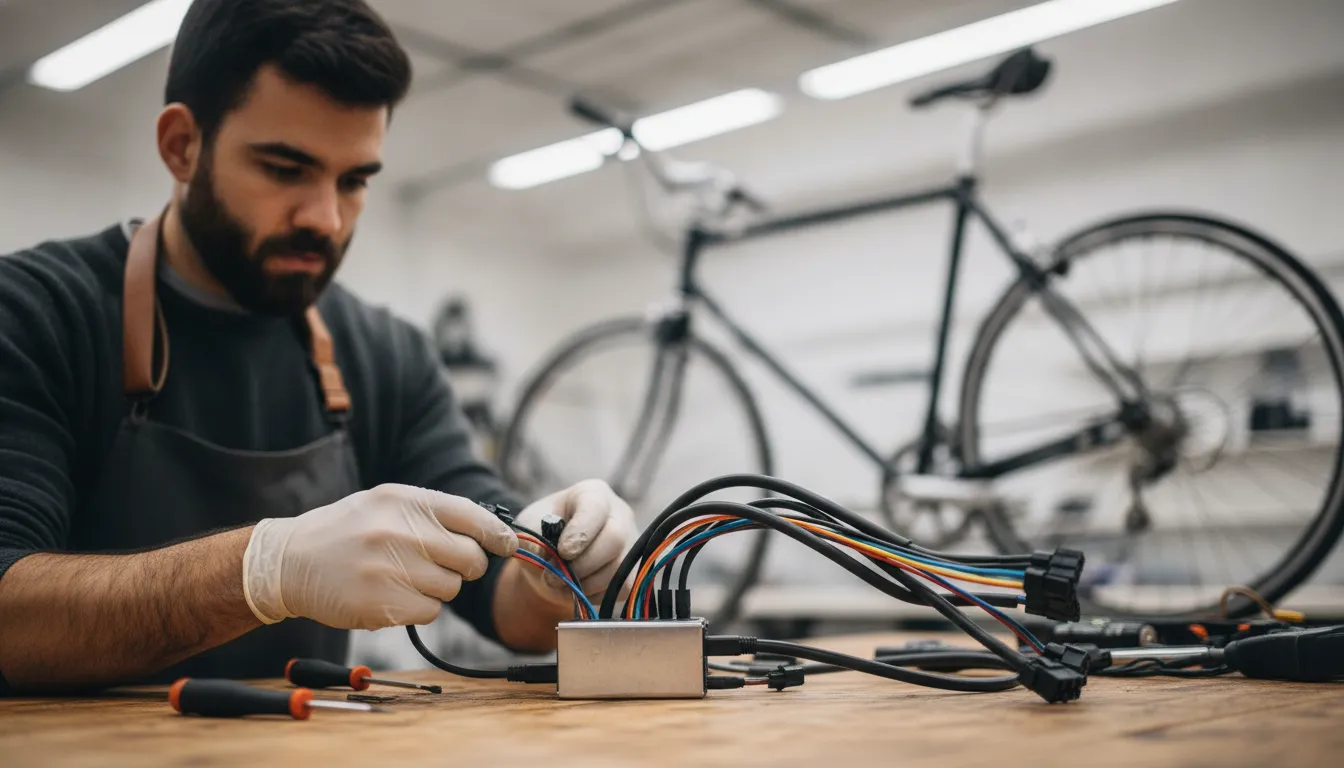
Check connectors and wiring without opening the system
With the bike powered down, a rider can look for a connector that has pulled apart, moisture, corrosion, melted plastic, frayed insulation, pinched wiring, or a cable rubbing against the frame. Do not open a battery pack, bypass an interlock, or probe energized conductors. A wet connector deserves attention before the next ride. Water has been involved in a documented controller recall where unintended acceleration was possible, so unusual behavior is a stop-use concern, not a normal reset challenge.
Visible wiring can also explain symptoms that resemble electric bike controller problems, but a visual check cannot identify every internal fault. A weak battery or its management system, a motor sensor, display, or connector can create similar cutouts and uneven response. That is why the most useful report includes the exact code, battery state, riding conditions, recent rain exposure, and a description of when the symptom starts. For broader checks, use this general electric bike troubleshooting checklist.
Know when heat changes the decision
Stop immediately if the bike or battery develops abnormal heat, an unusual odor, smoke, swelling, leakage, or damaged wiring. Do not charge it or continue riding to see whether the symptom clears. Damaged lithium-ion batteries can overheat and catch fire. Battery safety guidance recommends professional repair rather than tampering. A documented recall also illustrates why unintended acceleration requires immediate isolation and manufacturer guidance.
For recurring faults, qualified service can separate controller symptoms from battery, motor, and wiring causes. Bring the bike, charger, code photo, and symptom notes so the technician can start with evidence instead of guesswork.
Could the Battery or BMS Be the Real Cause?
A weak battery or a battery-management system (BMS) can create symptoms that resemble electric bike controller problems. If the pack cannot deliver power consistently or its protection system limits output, the bike may cut out under load, lose assist on hills, show an error, or respond unevenly. Those symptoms do not prove the controller is defective. Battery condition, temperature, contacts, wiring, motor load, and controller behavior need to be separated carefully.
Direct answer: Yes. A weak, cold, damaged, poorly seated, or protection-limited battery can mimic a controller fault by restricting power or interrupting assistance. Check the approved charging procedure and visible connections with the bike powered off. But have a qualified technician test the battery, BMS, wiring, and controller rather than opening the pack.
Safe checks before assuming the controller failed
Start with the manufacturer's instructions and the charger supplied for that specific bike. Confirm that the battery is fully seated according to the owner's manual and that any externally visible contacts are clean, dry, and undamaged. Do not scrape contacts, probe terminals, bypass an interlock, or test live wiring. If the battery was stored in a cold garage or hot vehicle, let it return to a suitable indoor temperature before charging.
Seattle Fire guidance says not to charge an e-bike battery below 32 degrees Fahrenheit or above 105 degrees Fahrenheit. Charging outside that range can be unsafe, especially when the battery is already damaged or defective. For a broader charging diagnostic path, see this electric bike battery not charging guide.
Stop riding and stop charging if the battery has an unusual odor, becomes too hot to touch, swells, leaks, smokes, or no longer holds a charge. Damaged lithium-ion batteries can overheat and catch fire. Do not open or tamper with the pack. Professional service can compare battery output and BMS behavior with motor and controller data, helping identify the real source instead of replacing parts by guesswork.
What Safe Checks Can You Do Before Service?
Before assuming the controller has failed, collect useful observations without opening the electrical system. Record when the symptom occurs, photograph any display message, and follow the bike maker's charging and restart instructions. Stop using the bike when you see dangerous battery or wiring symptoms, then give those details to a qualified technician.
- Document the pattern. Note whether the problem appears at startup, under assist, during braking, after riding in wet conditions, or only when the system is warm. Record what assist level you selected, whether the motor cuts out completely or responds unevenly, and whether cycling the power changes anything. These details help separate a controller symptom from a battery, motor, sensor, or connection issue.
- Photograph the display and error message. Take a clear photo before switching screens or restarting. Error-code meanings vary by manufacturer, display, and controller, so capture the complete code and any warning icons. Include the bike model and serial information if it is easy to locate without removing covers. This is more useful than guessing from a generic code list.
- Power the bike off before a visible inspection. Remove the key if applicable, switch the system off, and wait for the display to go dark. Look only at accessible wiring, plugs, and housings for an obviously loose connector, crushed cable, water intrusion, or external damage. Do not probe live wiring, open the controller, disassemble the motor, or open the battery pack.
- Follow the manufacturer's charging procedure. Use the supplied or manufacturer-approved charger and follow the instructions in the manual. Charge only when the battery is within the stated temperature range and on a suitable, stable surface. Seattle Fire guidance says not to charge below 32 degrees Fahrenheit or above 105 degrees Fahrenheit. For broader care guidance, see this electric bike maintenance guide.
- Use only manual-approved restart steps. If the owner's manual provides a normal power-cycle procedure, follow it once and record the result. Do not bypass an interlock, bridge a connection, install an unapproved charger, or repeatedly restart a system that is cutting out. Those actions can conceal a fault or create additional risk.
- Identify stop-use conditions. Stop riding and stop charging if you notice smoke, a burning or unusual odor, swelling, leaking, a battery that is too hot to touch, damaged wiring, unintended acceleration, or repeated hazardous cutouts. Do not tamper with the battery. Keep the bike away from ignition sources when safe to do so and arrange professional evaluation.
When Does Controller Testing or Replacement Need Qualified Service?
When electric bike controller problems involve abnormal heat, a burning odor, smoke, damaged wiring, a swollen battery, or repeated power cutouts, stop riding and avoid further testing. A technician should isolate whether the cause is the controller, battery, motor, sensor, connector, or wiring before replacing parts. Do not open a battery pack, bypass an interlock, or probe live wires.
Qualified service is also the right next step when safe visual checks do not explain intermittent symptoms, an error returns after a reset, or the motor response is uneven or absent. Controller testing and replacement can involve battery energy, programmed components, and connections that are easy to damage or misdiagnose. Symptoms alone do not prove the controller has failed.
What can a technician test?
Bring the complete bicycle, display or control accessories, charger, keys, and any removable battery that can be transported safely. Note when the cutout occurs, whether it happens under load or after warming up, what the display showed, and whether the issue began after rain, an impact, a repair, or a software change. Photos of damaged connectors or wiring can help, too.
Voltaire Cycles offers multi-brand repair, maintenance, and diagnostics. Ask the service team which inspection and repair options are available for your specific bike and symptom pattern. See the bicycle repair and service team for the available support path.
A systematic inspection can include documenting symptoms, checking relevant components and connections, identifying the failing part, and confirming the repair. Ask the technician how the repair will be evaluated before you pick up the bike. The goal is predictable operation, not merely a display that powers on.
For a broader maintenance context, review this guide to professional electric bike service. If hazardous symptoms are present, leave the bicycle powered down in a safe location and arrange qualified help rather than continuing a troubleshooting session.
Frequently Asked Questions
How can I tell if my electric bike controller is failing?
Repeated motor cutouts, uneven assistance, delayed response, or a display error can point to the controller, but they can also come from the battery, wiring, sensors, or motor. Record when the symptom occurs, especially under load, and have the complete electrical system tested rather than replacing the controller based on symptoms alone.
Can a weak battery or BMS cause symptoms that look like controller problems?
Yes. A battery with reduced capacity or a battery-management system that interrupts output can resemble a controller fault, particularly when assistance stops during acceleration or hills. Check only the exterior condition and normal charge behavior. Do not open the battery or bypass its safeguards; have a qualified technician test the battery and system.
Can loose or wet connectors cause electric bike controller problems?
They can interrupt communication or power and may create intermittent motor response. With the bike powered off and the battery safely removed if the manufacturer allows it, look for visible moisture, corrosion, damaged insulation, or connectors that are not fully seated. Do not probe live wiring. Stop riding if wiring is burned, wet inside, or damaged.
When should I stop riding and seek professional service?
Stop using the bike for smoke, burning odor, swelling, leaking, unusual battery heat, unintended acceleration, damaged wiring, or repeated cutouts. Seattle Fire advises professional repair for a broken device and says not to tamper with the battery: safety guidance. A qualified shop can perform electrical diagnostics and advise whether the battery, controller, motor, or wiring needs further testing.
Ready to Get Help With Controller Problems?
If your e-bike still shows cutouts, uneven assistance, or another controller-like symptom after safe checks, a qualified diagnostic can help separate the controller from battery, wiring, or motor causes. Share what you observed and when it happens so the service team can recommend an appropriate next step.