

How Long Does Electric Bike Battery Last in a Day?
How long does electric bike battery last in a day? It depends on how much energy the bike uses, not simply how many hours you are out. A battery may support a short high-assist ride or a longer outing with modest assistance; capacity, terrain, rider and cargo weight, temperature, and riding style all change the result. For a dependable plan, estimate your route and leave a reserve rather than counting on one advertised range figure.
Call for electric bike guidance
How long does an electric bike battery last in a day of riding?
There is no single daily runtime or mileage that applies to every e-bike. The practical answer is the distance and riding time your particular battery can support under your conditions, with enough charge left to finish the route. A display estimate is a guide, not a guarantee: it changes as the bike detects your power use, terrain, and remaining energy.
It helps to separate runtime from range. Runtime asks how long the motor can assist. Range asks how far you travel with that assistance. A slow, steep ride may use more time and energy per mile than a steady ride on level pavement. A day can also include breaks; time spent stopped does not consume energy at the same rate as climbing under power.
Think in route segments instead of a full-day promise. Identify the longest climb, roughest surface, and return distance. If your route ends far from a place to recharge, plan around the demanding part rather than an optimistic average.
What determines how long an electric bike battery lasts in a day?
Battery capacity sets the energy available, while the conditions and settings determine how quickly it is used. Two riders on similar bikes can see different results on the same route because they pedal differently, carry different loads, or choose different assist levels.
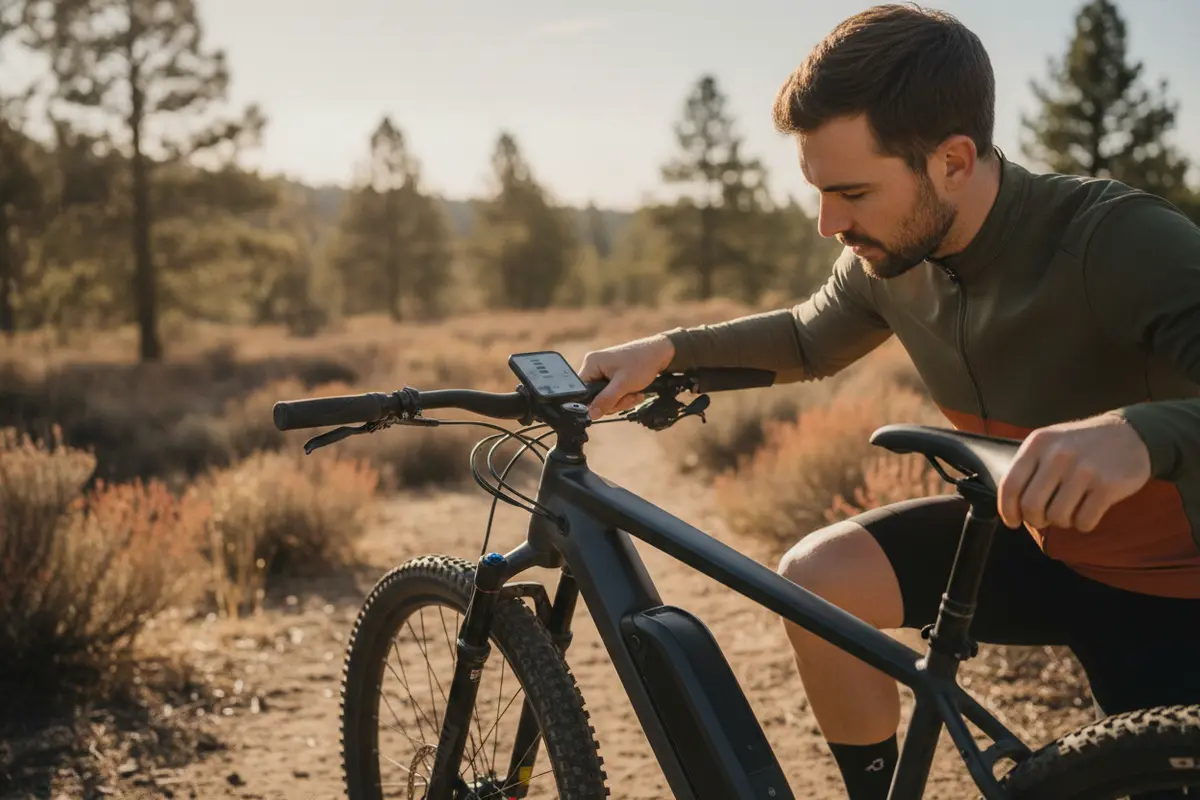
Battery size and condition
Battery capacity is commonly shown in watt-hours (Wh). In general, a larger capacity stores more energy when comparing compatible batteries, but it does not translate directly into a fixed distance. Motor system, bike setup, and use matter. An older or poorly maintained battery may also behave differently from a new one. Check the maker’s specifications for your exact bike, and use the correct charger.
Assist level and pedaling
Higher assist typically asks the system for more power. Using a lower setting where it feels comfortable, shifting to an appropriate gear, and pedaling smoothly can help conserve charge. Throttle use, where fitted, can also draw energy without the same contribution from pedaling. Choose assistance for the terrain and your comfort, rather than leaving the bike in its strongest mode for every stretch.
Terrain, surface, and stops
Long climbs demand more energy than level travel. Loose gravel, sand, mud, and rough trail surfaces can increase effort compared with smooth pavement. Frequent starts and stops may also change consumption. In Central Oregon, a ride that includes sustained climbing toward foothills or a loose trail section should be treated differently from a flat paved commute of similar distance.
Rider weight, cargo, and temperature
The total load includes the rider, bags, water, and other cargo. More weight can require more work, especially uphill. Cold conditions can reduce battery performance, so a winter ride may not match a mild-weather ride. Store and charge batteries according to the manufacturer’s instructions, and avoid assuming a summer estimate will hold on a cold day.
How can you estimate a day’s e-bike range?
Use the bike’s manual and display as a starting point, then adjust your plan for the actual route. Manufacturer range figures are typically based on stated test conditions; your combination of terrain, temperature, load, assist, and pace may differ.
- Confirm your battery capacity. Find the battery’s Wh rating and note its age and condition. If you do not know what the display or battery indicator means, consult the manual or ask a qualified service technician.
- Map the route. Note total distance, elevation changes, surface, and a realistic return path. Add a margin for detours or harder-than-expected sections.
- Choose a sensible assist plan. Decide where you may need higher support, such as a climb, and where you can use less. Do not plan around maintaining the lowest setting if that would make the ride uncomfortable or unsafe.
- Use a conservative estimate. Treat any displayed remaining range as an estimate. For an unfamiliar route, pick a shorter first outing and compare actual battery use with the distance and conditions.
- Plan a reserve. Aim to reach your destination with charge remaining, especially when the route is remote or climbing is unavoidable. Do not make the last few miles depend on a precise display prediction.
A simple route log can improve future estimates. Record distance, elevation, temperature, assist choices, and the battery indication at the start and finish. Compare rides only when conditions are reasonably similar. That gives you useful personal evidence without treating one ride as a universal rule.
How to read a route log
Record the same details each time: battery state at departure, route distance, elevation, weather, assist setting, and remaining indication at the end. If the battery gauge uses bars rather than a percentage, note the bars and conditions rather than converting them into an exact number. A few comparable outings can reveal whether a route routinely leaves a comfortable reserve. If one ride uses much more charge, look for a concrete difference such as a headwind, extra cargo, colder weather, or a longer climb before assuming the battery has failed.
Also distinguish the bike’s predicted remaining miles from the battery’s actual state indicator. A projected range can rise or fall when your pace or assist changes. It is useful for checking trends during a ride, but not precise enough to justify extending a route into an unfamiliar area.
How do riding conditions change battery use?
| Condition | Likely effect on energy use | Practical planning choice |
|---|---|---|
| Higher assist or frequent throttle | Can use charge faster | Reserve stronger assist for sections where it helps most |
| Long climbs or loose trail | Often requires more work from the system | Plan a shorter route or preserve a larger reserve |
| Heavier rider or cargo load | May increase demand, especially uphill | Count bags and gear in the route plan |
| Cold weather | Can reduce available battery performance | Allow extra margin and follow battery storage instructions |
| Steady riding on smoother terrain | May be less demanding than repeated climbs and stops | Use as a comparison only when other factors are similar |
These are directional comparisons, not mileage predictions. The bike’s system and the exact ride determine the outcome. For a multi-stop day, decide in advance whether a safe, compatible charging opportunity exists. Never assume that every outlet or charger is suitable for your battery.
The U.S. Department of Energy explains that battery energy and power are distinct measures; the bike’s Wh capacity describes stored energy, while actual demand depends on the operating conditions. See its overview of lithium-ion batteries in electric vehicles for context when comparing pack capacity and energy use.
How should you plan charging for a full day?
Start with a fully charged battery when the manufacturer’s instructions allow it. Carry the charger only if the route and destination make charging practical, and check that the charger is the one specified for your model. Charging during a lunch stop may not restore enough energy for a long return ride, so do not treat it as a guaranteed backup.
- Check battery state and the route before departure.
- Keep the return leg and climbing in mind when deciding how much assist to use early.
- Use an approved charger and a suitable, dry charging location.
- Follow the manual for temperature, storage, and charging practices.
- If battery performance changes noticeably or the system shows a fault, stop relying on the old estimate and seek service advice.
For longer outings near Bend, a route with an easy turnaround point is often a more useful first test than a remote loop. Rentals can also help riders understand how a particular style of e-bike feels before choosing one for regular rides. Browse the electric bike selection and compare bike types, intended use, and manufacturer specifications.
What should you check before buying an e-bike for day rides?
Ask about the battery’s capacity, the intended riding conditions, and how the manufacturer’s stated range was determined. Consider whether your routine includes long climbs, carrying cargo, or riding in colder months. Fit and comfort matter too: a battery estimate is not useful if the bike does not suit your route or riding needs.
Compare the bike’s battery and system details with how you actually plan to ride. The Segway collection is one place to review available models and product details. For a local, hands-on comparison, a showroom visit and test ride can help you assess fit, controls, and the level of assistance you prefer. Product specifications and availability can change, so confirm current details before making a decision.
Battery care is part of the ownership plan. Keep the battery and connectors clean and dry as instructed by the maker, use the designated charger, and arrange diagnosis when a battery or electrical system behaves unexpectedly. Voltaire Cycles provides multi-brand service; review the repair and service information for support options.
When should you ask a technician about battery performance?
Get professional advice if the battery will not charge normally, the display reports an error, the case or connector appears damaged, or your usual rides suddenly use much more charge under comparable conditions. Do not open or modify a lithium-ion battery pack. Stop using a battery that appears swollen, unusually hot, or physically damaged, and follow the manufacturer’s safety instructions.
A technician can check the bike and help distinguish a battery issue from other factors, such as settings or a drivetrain problem. Voltaire Cycles services multiple brands, so bring the bike’s make and model and explain what changed. You can also review Voltaire Cycles of Central Oregon before visiting the Bend showroom.
For a more concrete personal estimate, try a modest, repeatable ride before committing to a long loop. Choose a route with a safe exit or turnaround, ride at a comfortable pace, and note the starting and ending battery indicators. On the next outing, change only one major variable if possible. For example, keep the route and load similar but use a lower assist setting where the terrain allows it. This makes the comparison more informative than changing route, weather, cargo, and riding style all at once.
When planning with another rider, do not assume two bikes will use their batteries at the same rate. Differences in motor systems, battery sizes, tires, gearing, assist settings, and rider contribution all matter. Agree on a shared turnaround rule based on the bike with the least reserve, not the display that predicts the most remaining miles. If one rider needs more support on a climb, build that into the route choice instead of pressuring them to conserve assistance at the expense of comfort.
It is also useful to decide what “a full day” means for your outing. A few hours of riding separated by a long lunch is different from continuous riding over a large distance. Breaks give you time to check the route and battery display, but they do not automatically replenish the battery. If you want to include charging, confirm the charger, outlet access, and expected stop length in advance. Keep a non-electric return option in mind only if the bike can be ridden safely without assistance and the route remains manageable.
Before setting out, check basic ride readiness as well as charge: tires, brakes, lights, fasteners, and any cargo attachment should be in suitable condition. Mechanical drag from a poorly inflated tire or a rubbing brake can make the ride feel harder and can affect how much assistance you want. These checks do not replace battery diagnostics, but they help keep a range estimate from being undermined by a preventable setup issue. For help with a bike that needs attention, consult the multi-brand repair and service page.
Call to discuss your route and battery questions
Frequently Asked Questions
Can an e-bike battery last for a full day?
It can, depending on the route, battery capacity, assist level, and conditions. A long day with significant climbing or high assist may use more charge than a shorter, flatter ride. Plan around your own bike and leave a reserve.
Does a bigger battery always mean more miles?
A higher Wh capacity generally means more stored energy, but it does not guarantee a particular distance. Motor system, surface, load, temperature, and riding style all affect range.
Should I ride until the battery is empty?
No route plan should depend on draining the battery completely. Keep a margin for unexpected hills, detours, or changing conditions, and follow the manufacturer’s battery-care guidance.
Can I charge the battery during a ride?
Only if the charger and location are appropriate for the battery and the manufacturer allows it. A short stop may provide limited charge, so treat mid-ride charging as a convenience, not a substitute for route planning.
The best way to estimate a day’s ride is to combine your bike’s specifications with a conservative route plan, then learn from your own rides in similar conditions.