

Electric Bike Charging Station: Home and Travel Options
An electric bike charging station can mean several different things: a safe outlet in your garage. A workplace charging area, a public charging point, or a destination that welcomes riders. The best choice depends on your battery, charger, route, weather, and how long you will stop. With a little planning, you can charge conveniently without compromising battery safety or ride time.
Call Voltaire Cycles at (844) 394-3809 for a free charging consultation
What Is an Electric Bike Charging Station?
An electric bike charging station can mean a safe outlet in a garage, a workplace charging area, a public charging point, or a destination that welcomes riders. The right option depends on your battery, approved charger, route, weather, and stop length.
Some stations offer a rack, locker, or charging cabinet. Others simply provide a suitable outlet where riders use their own charger. Confirm that a location supports e-bikes before relying on it. The U.S. Department of Energy's Alternative Fueling Station Locator can help explain how public charging locations are mapped, but verify e-bike access and site rules directly.
Where Can You Charge an Electric Bike?
Most riders use several charging locations rather than one dedicated electric bike charging station. Home charging is predictable, while workplace, public, and destination options can extend a commute or make a longer ride more practical.
| Type | Use | Check | Limit |
|---|---|---|---|
| Home | Night | Dry | Access |
| Work | Commute | Ask | Policy |
| Public | Long ride | Access | Busy |
| Stop | Meals | Ask | Unclear |
Home charging
Home is usually the simplest place to charge. Keep the bike or removable battery dry, ventilated, and away from heat, clutter, and foot traffic. A standard-outlet charging guide can help with the basics, but your bike and charger manuals remain the authority.
Workplace charging
Ask whether charging is allowed, whether batteries may be brought inside, and how bikes should be secured. A shared area should not block exits, accessible routes, or emergency equipment. For Bend commuters, review these Bend e-bike commuting tips alongside your daily charging routine.
Public charging
Public charging is more common for cars than e-bikes. Look for an e-bike-specific facility, a rack with a standard outlet, or a business that clearly permits charging. Confirm hours, access, weather protection, security, and connector requirements. Save a backup stop because a listed location can be occupied, locked, or out of service.
Destination charging
Cafes, hotels, offices, trailheads, and shops may offer an outlet as a convenience. Ask before plugging in, keep the charger visible, and avoid leaving a battery unattended. Destination charging should support a route plan, not be the only reason the trip is possible.
How Do You Check Outlet and Charger Safety?
Safe charging starts with the charger and battery approved for your particular e-bike. Do not substitute a charger because its connector fits. Voltage, current, charging controls, and battery chemistry must match the manufacturer's requirements.
Use this simple check before connecting:
- Inspect the battery, charger, plug, and cable for swelling, cracks, fraying, bent pins, moisture, or unusual heat.
- Use a clean, dry outlet that is not loose or visibly damaged.
- Place the charger on a stable, nonflammable surface with ventilation around it.
- Keep the battery and charger away from heaters, direct sun, water, and combustible materials.
- Connect the charger in the order described by the bike or charger instructions.
- Stay alert for burning smells, smoke, buzzing, unexpected heat, or error messages.
If anything looks or sounds abnormal, stop charging and move away from the equipment. Do not open a battery pack or attempt a cell-level repair. A damaged lithium-ion battery needs professional evaluation and careful handling. If there is smoke or an active fire, leave the area and contact emergency services; do not carry a smoking battery through a building.
The U.S. Consumer Product Safety Commission charging guidance also recommends staying present while charging, using the supplied charger, and unplugging when charging is complete. Follow the instructions for your specific bike and battery first.
A surge protector is not a substitute for a correct charger or safe wiring. Likewise, a power strip should not be used casually in a crowded charging area. If several bikes will charge in one place, have the electrical setup reviewed and establish a clear process for spacing, supervision, and unplugging.
How Do You Confirm Charger Compatibility?
The charger must match the battery's required output, connector, charging profile, and manufacturer specifications. Do not substitute a charger because its plug fits, and do not trust a broad "universal e-bike" label without model-specific approval.
Keep the original charger when possible. If you need a second charger for work or travel. Choose one identified for the exact battery system and compare its input requirements with the place where you will use it. Never force a connector, bypass a charging control, or alter a plug.
Charging equipment is part of a good multi-brand repair and service plan. A technician can help identify a worn connector, charging fault, damaged cable, or battery issue without guessing at a replacement.
How Should You Care for the Battery at a Charging Station?
Follow the battery maker's instructions rather than relying on one universal charging rule. Keep the battery dry, avoid extreme heat, and do not charge a visibly damaged, swollen, wet, or unusually hot battery. Do not cover the charger while it operates.
When charging away from home, use a location where you can check the equipment and unplug it when the intended charging period is complete. For storage, protect the battery from impact, moisture, direct sun, children, and pets. Review this e-bike battery care and charging guide for broader ownership context.
Range changes with rider weight, terrain, temperature, wind, tire pressure, assist level, and battery age. A station can restore energy, but it cannot make an uncertain battery predictable. Plan conservatively on steep Central Oregon routes or remote stretches.
When comparing home and travel setups, consider the complete routine rather than the outlet alone. Decide where the bike or battery will be stored, how the charger will be carried, and whether the stop keeps equipment dry and secure. A convenient station that requires awkward lifting or leaves a cable across a walkway may be less useful than a simpler setup that you can repeat safely.
Before buying a second charger or relying on a public outlet, photograph the original charger label and record the battery model. Bring that information to a qualified technician or manufacturer support team when checking compatibility. This small step reduces guesswork and helps you avoid a replacement that fits physically but does not match the battery system.
How Do You Plan a Ride Around Charging?
Plan around the whole trip, not only the destination. Estimate energy for the outbound and return legs, account for terrain and weather, and identify a confirmed charging option plus a backup. An electric bike charging station is useful only when access, permission, and charger compatibility are clear before you leave.
Start by reviewing your electric bike range factors. Rider weight, hills, wind, temperature, tire pressure, assist level, cargo, and battery age can all affect how much energy a route uses. Treat a listed charging stop as a planning aid rather than a guarantee. Charging-location apps may show photos and user tips, but confirm access, hours, and site rules directly when the stop matters.
- Charge and inspect before departure. Use the approved charger according to the manufacturer's instructions. Confirm the battery indicator is behaving normally, and check the battery, charger, cable, and connectors for visible damage or moisture.
- Map the complete energy demand. Include the return trip, climbing, headwinds, heavier loads, and likely assist settings. If the route is unfamiliar, plan conservatively instead of treating the display estimate as a promise.
- Choose a primary stop and a backup. Verify that the destination or station permits e-bike charging, has a suitable outlet, and offers a secure place for the bike or battery. Keep enough charge to reach the backup or another safe location.
- Pack only compatible equipment. Carry the charger when the route depends on a top-up or when its flexibility justifies the weight. Do not substitute a charger because its connector fits.
- Recheck conditions during the ride. If weather, terrain, delays, or battery performance changes, shorten the route or use the backup plan. For outdoor travel, review options for charging an e-bike while camping before relying on an off-grid stop.
For regular commuting, record starting charge, distance, conditions, assist level, and remaining charge for several rides. That simple record helps you build a route-specific margin without relying on a generic range claim.
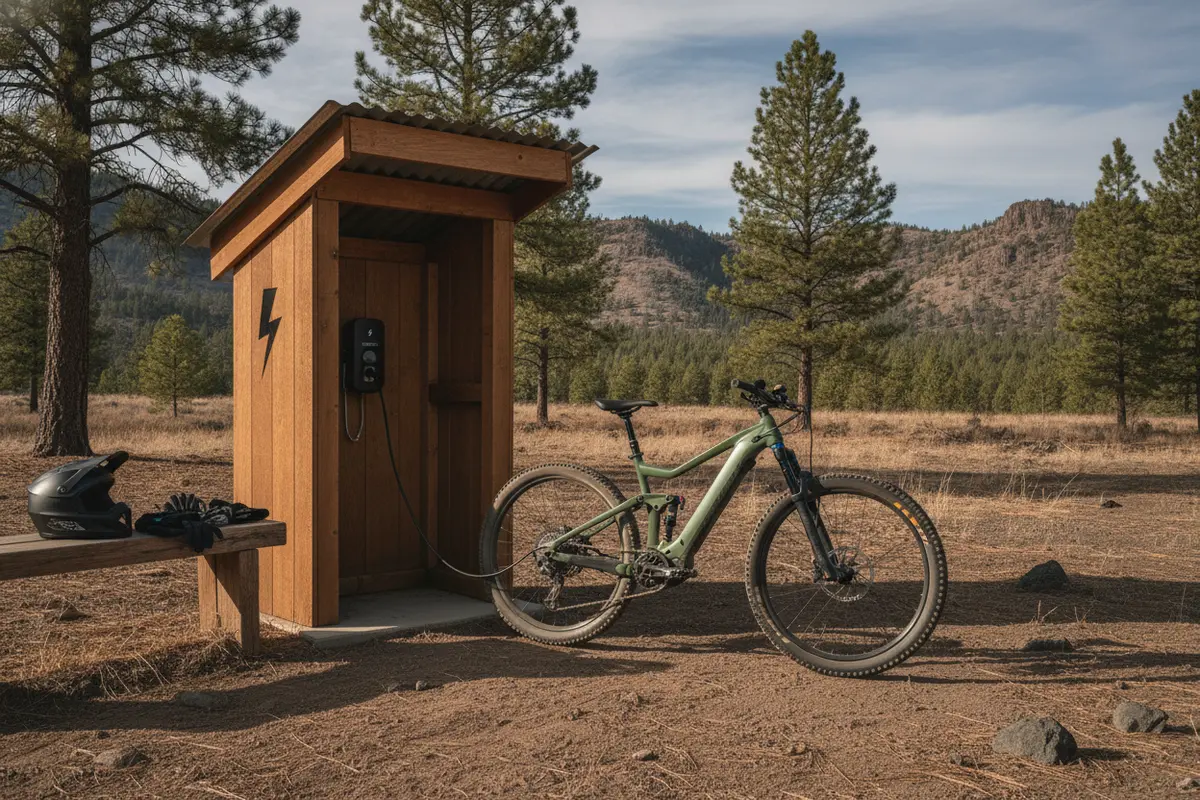
What Makes a Good Electric Bike Charging Station?
A good station supports safe access, clear rules, and a practical place to leave the bike or battery. Look for:
- A dry, stable, ventilated charging area.
- An outlet approved for your charger.
- Clear permission and operating hours.
- Secure bike parking and protection from traffic.
- Lighting or supervision away from home.
- A backup option if the station is occupied.
At home, choose a location you can reach without awkward lifting, doorway cables, or heat exposure. For a shared station, rules should explain whether riders bring a charger, where bikes may park, and how to report damaged equipment.
How Can You Set Up a Charging Routine?
Match the routine to the way you ride. A commuter may connect the battery at a consistent time each evening, while a recreational rider may charge after an outing. Avoid making charging a last-minute decision after the battery is empty.
Keep a short checklist near the station: battery, charger, outlet, connection, indicator, and unplugging. When carrying a charger, an e-bike trunk bag can help organize it, provided the load is secured and clear of moving parts.
When Should You Ask a Bike Shop for Help?
Ask for professional help when the battery will not charge, the charger becomes unusually hot, the display shows a fault, the connector is loose, or range changes suddenly. Service can also help when you are choosing between a removable-battery bike, a larger-capacity battery, or a commuting setup that needs dependable daily charging.
Bring the bike, battery, and charger together when possible so a technician can distinguish an outlet, charger, connection, control-system, or battery issue. If the battery is damaged or swollen, call ahead for handling instructions.
Voltaire Cycles of Central Oregon serves Bend and surrounding communities with electric mobility sales, rentals, service, repairs, custom builds, and electric conversions. The showroom supports hands-on conversations and test rides, while online shoppers can browse the electric bike collection before calling with questions.
Call Voltaire Cycles at (844) 394-3809 to plan your charging setup
Frequently Asked Questions
Can I charge an electric bike from a regular wall outlet?
Often, yes, when you use the manufacturer's approved charger with a suitable, dry outlet. Check the charger and battery instructions first, and do not use a damaged outlet, cable, battery, or improvised charger.
Can I use an electric car charging station for my e-bike?
Do not assume so. Electric car stations and e-bike chargers use different equipment and connections. Use an e-bike station or a standard outlet only when the site permits it and your approved charger can connect safely.
Should I carry my charger on every ride?
Carry it when your route depends on a confirmed charging stop or when the added flexibility is worth the weight. For short rides with ample starting range, leaving it at home may be more practical.
What should I do if my battery gets hot while charging?
Stop charging and disconnect only if it is safe to do so. Move people away from the area, avoid handling a damaged or smoking battery, and contact a qualified service professional or emergency services when appropriate.
How can I choose the right charging setup for commuting?
Compare your round-trip distance, terrain, storage location, battery access, workplace permission, and backup options. A consultation and test ride can help match the bike and battery setup to your actual routine.
A dependable electric bike charging station plan combines the right charger, a safe location, realistic range expectations. And a backup route, so you can spend less time worrying about power and more time enjoying the ride.