

Electric Bike Rack for SUV: Fit Guide
Choosing an electric bike rack for SUV use is a fit and load decision, not just a question of finding a rack that slides into the receiver. An electric bike may weigh substantially more than a standard bicycle, have wide tires, use a step-through frame, or carry accessories that change the loaded dimensions. A safe setup matches the SUV, hitch, rack, and specific bikes as one system.
Call Voltaire Cycles of Central Oregon at (844) 394-3809 for professional rack fit help.
This guide walks through the measurements that matter before purchase: hitch size, tongue weight, rack and vehicle payload, hatch clearance, wheel and frame support, and installation. It is designed for Central Oregon riders preparing for trail days, road trips, or everyday transport. When a vehicle or bike combination is difficult to measure, professional fit advice can prevent an expensive mismatch.
What should you check before choosing an electric bike rack for SUV use?
Start with the SUV hitch, the rack ratings, the ready-to-load bike weight, and the clearance around the rear of the vehicle. The best rack on paper is not automatically the best rack for a particular SUV. A complete fit check compares the lowest limit in the system with the actual bikes and accessories you plan to carry.
Record these details before comparing rack designs:
- The receiver opening size and the hitch's maximum tongue-weight rating.
- The rack's maximum total load and maximum load per tray or position.
- Each bike's transport weight, including any battery, basket, rack, child seat, or other accessory that stays installed.
- Tire width, wheel size, wheelbase, frame shape, and fender position.
- The distance from the receiver pin hole to the rear bumper.
- The distance from the rack's loaded bikes to the ground, hatch, glass, lamps, and license plate.
- Whether the rack tilts or swings far enough to provide the rear access you need.
Do not assume that a two-bike rack can carry two heavy e-bikes simply because it has two positions. Some racks have separate per-position limits, and the combined rack-and-bike weight must also stay within the SUV and hitch limits. The vehicle owner's manual, hitch label, and rack instructions are the controlling sources for permitted loads.
How do you calculate payload for an electric bike rack for SUV travel?
Calculate the rack, bikes, and remaining accessories together, then compare that total with the rack, hitch, and vehicle limits. A rack's advertised bike capacity usually describes the bikes only, while the hitch experiences the weight of the rack plus every loaded item. Use the heaviest realistic travel configuration, not an unloaded showroom measurement.
Use this simple worksheet:
- Bike load: Each bike as it will be transported, plus installed accessories. Why it matters: Determines per-position and combined rack demand.
- Rack load: The rack, ramp, add-on trays, locks, and adapters. Why it matters: Adds to the downward load at the hitch.
- Hitch limit: The SUV hitch's stated tongue-weight rating. Why it matters: May be lower than the rack rating.
- Vehicle limit: The vehicle and hitch combination's permitted load. Why it matters: The vehicle remains the final limiting system component.
For a two-bike setup, add the two ready-to-transport bike weights and the rack weight. Then compare the result with the rack's total rating and the hitch's tongue-weight rating. If an accessory can be removed for transport, weigh or estimate the configuration you will actually use. Removing a battery may reduce the rack load, but follow the bike and battery maker's transport guidance and secure the battery inside the vehicle as appropriate.
Also account for leverage. A hitch rack holds the load behind the receiver, so the distance from the hitch to the center of the loaded bikes affects the forces on the connection. An adapter or long extension can move the load farther rearward and may change the permitted rating. Never assume an adapter preserves the original capacity. Check the adapter, rack, hitch, and vehicle instructions together.
For broader context on vehicle load limits, review the federal vehicle load-limit guidance and then use your own SUV's placard and owner's manual for the actual numbers. This article does not replace either document.
Does hitch size determine which electric bike rack fits an SUV?
Hitch size is an important starting point, but receiver size alone does not prove that the rack and vehicle are compatible. Many SUVs use a 2-inch receiver, while some crossovers and smaller vehicles use a 1.25-inch receiver. The rack shank, hitch class, tongue-weight rating, pin location, and vehicle instructions must all agree.
Before ordering, confirm:
- Whether the receiver is 1.25 inches or 2 inches.
- Whether the rack is designed for that receiver without an unapproved adapter.
- Whether the hitch pin hole and locking pin are compatible.
- Whether the rack's own shank has the correct length for the bumper and hatch shape.
- Whether an adapter changes the rack's permitted capacity or voids a manufacturer instruction.
A larger receiver can expand the range of rack choices, but it does not increase the SUV's rated capacity. Likewise, a rack with a high published rating cannot make a lower-rated hitch safe. Use the lowest applicable limit, and stop if the manufacturer's instructions conflict or leave the combination unclear.
How much clearance does an electric bike rack for SUV need?
Measure clearance with the rack installed and the bikes loaded, because the handlebars, pedals, tires, and frame can occupy different spaces than the rack itself. Clearance should be checked at the bumper, hatch, rear glass, exhaust outlet, taillights, license plate, ground, and any rear sensors or cameras.
Measure from the receiver pin hole to the closest part of the SUV, then compare that measurement with the rack's folded and loaded positions. Check ground clearance at the lowest rack point and at the lowest part of the bike. A long wheelbase, fat tire, or low step-through frame can bring a bike closer to the pavement on driveways and uneven trailhead approaches.
Rear access is also part of fit. Some racks tilt away to open a hatch, but the tilt angle may not be enough for a particular SUV or may not be safe with bikes loaded. Test the hatch path without forcing it against a handlebar, saddle, pedal, or frame. If the rack swings or tilts, confirm that its locking mechanism is fully engaged before driving.
Do not cover lamps, the license plate, or the driver's view through required mirrors. Rear cameras and parking sensors can also behave differently with a rack installed. If the vehicle manual or rack instructions require a plate relocation kit, lighting accessory, or other equipment, treat that as part of the installation rather than an optional afterthought.
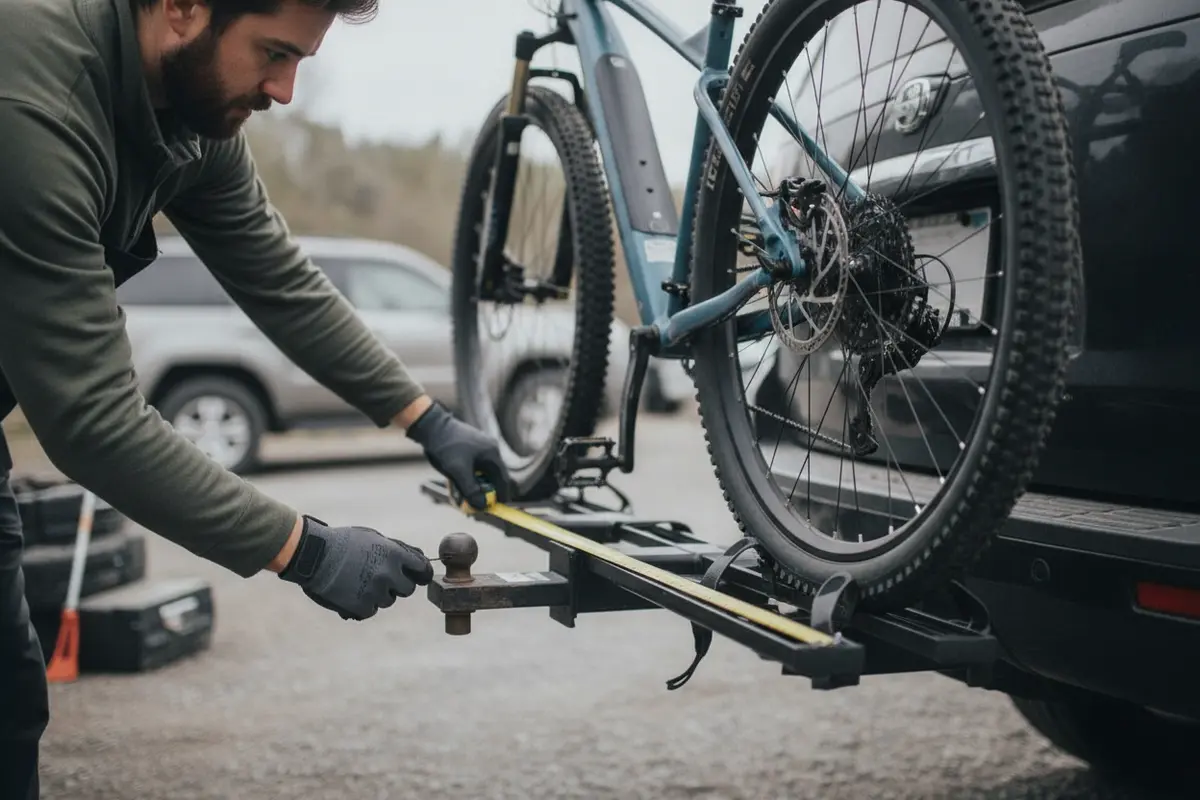
Should an SUV rack support an electric bike by the frame or tires?
For many e-bikes, wheel support is the most adaptable starting point, but the tray, straps, and contact points still have to match the actual tires and frame. A wheel-supported platform can avoid clamping pressure on a battery case or a delicate frame tube. It must still hold the wheels fully in the trays and keep the bike stable without contacting rotors, cables, displays, or fragile fenders.
Check the tray and strap system against the bike:
- Measure the tire's actual sidewall width, especially on a fat-tire e-bike.
- Confirm that the wheel hoops accommodate the wheel diameter and wheelbase.
- Make sure straps cross the tire securely and do not touch spokes or brake rotors.
- Check whether fenders, rear racks, or pannier hardware interfere with the straps.
- Confirm that step-through, full-suspension, or unusual frames do not contact a mast or clamp.
- Keep two loaded bikes separated so handlebars, pedals, saddles, and frames cannot rub together.
A frame contact point should rest on a part of the bike designed to accept that pressure. Never clamp over a removable battery, display, brake hose, exposed cable, or thin fender. If a frame-hold rack does not fit the bike's shape, use the bike maker's approved adapter or choose a different support design instead of improvising with a strap.
What is the safest way to install and load an electric bike rack?
Install the rack squarely, secure the receiver connection, and load the heaviest bike closest to the vehicle when the rack instructions allow that arrangement. Follow the rack instructions for the hitch pin, anti-wobble device, torque values, safety straps, and tray adjustments. Do not substitute hardware because a bolt appears to fit.
A practical installation sequence is:
- Inspect the receiver, shank, pin, lock, and rack hardware for damage or debris.
- Insert the rack fully, align the pin holes, and secure the locking hardware.
- Set tray spacing and wheel hoops before lifting the bike.
- Remove accessories or batteries only when the bike maker's guidance permits it.
- Load the bikes without exceeding per-position or total limits.
- Secure each wheel and any required frame or safety strap, keeping straps away from moving parts.
- Check hatch, lamp, plate, ground, and exhaust clearance before moving.
- After a short, low-speed check, stop and inspect for movement before highway travel.
Use a ramp or ask for help if the loaded bike is difficult to lift. A ramp can reduce handling risk, but it adds weight and length that belong in the capacity and clearance calculations. Recheck straps and the receiver connection during a long trip, after rough pavement, and whenever the rack is removed and reinstalled.
When should you ask for professional rack fit help?
Ask for a professional fit check when the bike is heavy, the SUV has limited receiver capacity, the rack requires an adapter, or the bike and vehicle measurements are difficult to reconcile. A short fit consultation can clarify which dimensions to record before you commit to a rack and can reduce the risk of returning a rack that technically fits the receiver but not the bikes.
Bring the SUV year, make, and model, hitch details, the bike models or measured dimensions, loaded weights, tire widths, and any accessories you plan to carry. If you are comparing more than one bike, bring the heaviest combination. Voltaire Cycles of Central Oregon serves Bend and Central Oregon riders with electric mobility consultation, service, and support across multiple brands.
For related background, see the heavy e-bike car rack guide and the electric bike hitch rack fit and setup guide. If the bike needs preparation before transport, Voltaire's bicycle repair and service team can help identify issues that could affect loading or securement. You can also browse electric bikes and learn more about Voltaire Cycles of Central Oregon.
Electric bike rack for SUV questions
Can any SUV carry two electric bikes on a hitch rack?
Not necessarily. Confirm the rack's per-bike and total limits, the combined weight of the rack and bikes, the hitch tongue-weight rating, and the SUV's permitted load. The lowest applicable rating controls. Two heavy e-bikes may exceed a rack or hitch even when the receiver size appears compatible.
Is a 2-inch hitch always required for an electric bike rack?
No. Receiver size depends on the SUV, hitch, and rack design. A 2-inch receiver may offer more rack choices, but it does not increase the vehicle's permitted load. A 1.25-inch receiver can be suitable when the rack and all manufacturer limits specifically approve the combination.
Can I open the SUV hatch with bikes loaded?
Only if the rack's tilt or swing function and the vehicle's geometry provide enough clearance. Test the complete hatch path with the bikes loaded, and never force the hatch against a handlebar, pedal, saddle, or frame. Keep required lights, the license plate, and safety equipment visible as instructed.
Should I remove the e-bike battery before driving?
Follow the bike and battery maker's transport instructions. If removal is approved, carrying the battery inside may reduce rack load and keep it away from weather and road debris. The battery's weight still belongs in your original calculations when deciding whether the rack and hitch are suitable.