

Best commuter e-bikes Central Oregon: Bend rider guide
Best commuter e-bikes Central Oregon: Bend rider guide
A Bend commute can be more demanding than the distance suggests. A route may include a gradual climb, a headwind, a cold morning, an uneven shoulder, or an errand that adds several miles before you return home. Choosing the right electric bike means matching the bike to those everyday conditions, not simply choosing the largest motor or the longest advertised range.
Explore electric bikes for Central Oregon commuting
Quick answer: The best commuter e-bikes Central Oregon riders choose balance hill-ready assistance, usable range, stable handling, weather-ready equipment, and practical cargo capacity. A test ride is important because fit, control layout, riding position, and support needs vary from one rider and route to the next.
This guide focuses on the decisions that matter for Bend and nearby Central Oregon communities. It also explains where a model such as the Segway Myon may fit, while leaving room for other commuter, comfort, cargo, and utility designs. Start with your route and routine, then compare the equipment that will make riding easier to repeat.
What should you look for in commuter e-bikes Central Oregon riders use daily?
Commuter e-bikes Central Oregon riders use daily should fit the route, rider, and routine. Begin with a comfortable riding position, predictable assistance, secure braking, dependable lighting, and enough capacity for work items or groceries. In Bend, a short test ride that includes a grade and a stop can reveal more than a specification list.
Consider the complete trip rather than only the road between home and work. A bike that feels ideal on smooth pavement may feel different on rough shoulders, shared paths, or a loaded return trip. Ask whether the frame is easy to mount, whether the controls are clear with gloves, and whether the saddle and handlebars support a relaxed posture. Step-through access can be valuable for riders who want easier starts and stops.
Assistance should feel manageable rather than abrupt. Try several settings and notice whether the motor responds smoothly when you begin pedaling. A torque-sensing system can adjust assistance to how firmly you pedal, which may feel natural when speed or effort changes. A cadence-based system can also suit riders who prefer a simpler, steady assist. Neither choice is automatically best for everyone.
Think ahead about storage. A rear rack, panniers, basket, or compatible front rack can turn an e-bike into a practical transportation tool. Before buying, confirm the bike's mounting points, carrying limits, and accessory compatibility. If your commute includes a laptop, groceries, or a change of clothes, test the bike with the cargo positioned where you plan to carry it.
Finally, factor in support after the sale. A local shop can help with fit, setup, adjustments, and service questions. Voltaire Cycles offers a broad electric bike collection and a Bend showroom experience, so shoppers can compare comfort and control in person before committing to a daily routine.
How much motor support and range do Central Oregon hills require?
For Central Oregon hills, choose assistance for the steepest regular section of your route and plan range around the full round trip. A practical starting estimate is roughly 30 to 50 usable miles for many daily commuting patterns, with reserve for temperature, cargo, detours, and battery aging. Actual range varies by rider, terrain, speed, tire pressure, and assist level.
Match the drive system to the route
A mid-drive motor applies power through the bicycle's gearing. That arrangement can feel balanced on climbs, especially when the rider is comfortable shifting. It is not a requirement for every Bend commute. A hub-drive bike may be a sensible match for flatter routes, steady pavement, or a rider who prefers straightforward operation. Compare how each system starts, responds, and settles as the grade changes.
Motor power is only one part of hill performance. Tire choice, total bike weight, rider position, gearing, battery capacity, and cargo all affect the experience. A heavy bike with a large battery may provide useful range but require more effort to move without assistance. A lighter bike may feel easier to handle at a rack or in a garage. The best comparison is the complete bike in the conditions you expect to ride.
| Commuter priority | What to compare | Why it matters in Central Oregon |
|---|---|---|
| Hills | Drive system, gearing, and assistance response | Helps match support to regular grades and loaded returns |
| Range | Battery capacity and realistic reserve | Leaves room for weather, detours, and battery aging |
| Cargo | Rack mounts, panniers, and carrying limits | Keeps work items and groceries stable |
| Comfort | Frame access, fit, tires, and riding position | Makes daily starts, stops, and rough sections easier |
Plan for usable range instead of a best-case number
Manufacturers typically describe range under defined test conditions. Your commute may include repeated starts, hills, cold temperatures, wind, low tire pressure, and a high assistance setting. Treat a maximum range figure as a reference point, not a promise. If your normal round trip is 16 miles, leaving room for an unplanned stop and gradual battery wear can make the routine less stressful.
Charging is part of range planning. Many e-bike chargers are designed for a standard household outlet, but you should confirm the requirements and charging instructions for the specific model. Use the supplied charger when directed, keep the charging area dry and ventilated, and avoid leaving a battery connected indefinitely unless the manufacturer says that is acceptable. Ask how the battery can be removed or stored if your parking area is not near an outlet.
Which weather and cargo features matter for a Bend commute?
Central Oregon weather can change between the morning ride and the trip home. A commuter setup should help you stay visible, keep spray off your clothing, and carry the items that make the ride practical. Look for integrated or compatible lights, full or partial fenders, a stable kickstand, grippy tires, and a rack system that matches your load.
Fenders can reduce water and road grit thrown up by the tires. They do not make an e-bike waterproof. Protect the display, battery contacts, charger, and other electrical components from heavy exposure, and follow the manufacturer's storage and cleaning guidance. After a wet ride, wipe down the bike and let it dry before charging. Do not use a high-pressure hose around electrical connections.
Visibility is important in early mornings, evenings, and cloudy weather. Reflective clothing or accessories can supplement the bike's lights. Use a rear light and front light that are appropriate for the riding environment, and keep them charged. A mirror can help some riders monitor traffic without turning their head as far, but it should complement, not replace, shoulder checks and attentive riding.
Cargo changes handling. Keep heavy items low and centered, secure loose straps, and stay within the bike and rack manufacturer's limits. A backpack may work for a light load, while panniers can be more comfortable for repeated commuting. Test braking and low-speed steering after adding cargo. A bike that feels nimble unloaded may need more stopping distance when carrying groceries.
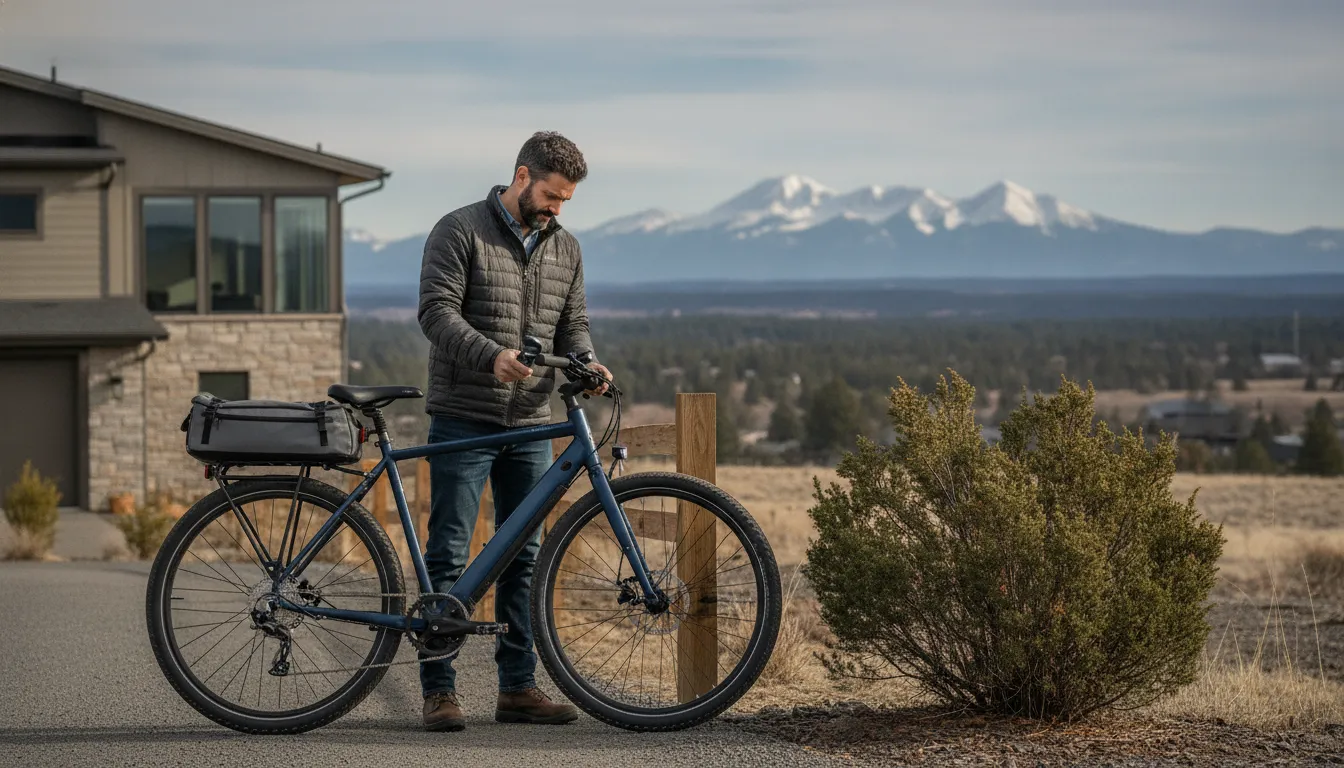
Is the Segway Myon a good commuter e-bike for Bend?
The Segway Myon is worth considering for riders who want a connected urban e-bike with commuter-oriented features. Voltaire's product information lists electronic shifting, integrated turn signals, radar compatibility, and an advertised maximum range of up to 80 miles. Those features may appeal to riders who value convenience and visibility. But the right fit still depends on the route, body position, cargo needs, and preferred level of assistance.
A maximum range number should be interpreted in context. A Bend rider carrying cargo over hills in cold weather may see a different result from a rider on a light, flat route. Ask how the Myon feels while starting on an incline, changing assist levels, turning at low speed, and stopping with the equipment you plan to carry. Try the electronic controls with the gloves or layers you expect to use.
Integrated turn signals can support visibility, while radar compatibility may be useful for riders who want additional awareness technology. These features are not substitutes for lights, safe positioning, shoulder checks, or attention to traffic. Treat them as part of the overall system and learn how they work before relying on them in a busy area.
Compare the Myon with other options in the Segway collection, then read Voltaire's Segway Myon commuter electric bike review for a closer look at the model. A local conversation can also identify whether a step-through frame, cargo design, wider tire, or different drive system would better match your daily use.
How can you use Central Oregon paths and streets responsibly?
Plan your commute around the route you can ride safely and legally, not only the route that looks shortest on a map. Check current city, county, and park rules for the specific path or street. Posted signs and local regulations can change, and a multi-use path may have different expectations from a public road. When in doubt, confirm the current rule before making that route part of your routine.
On shared paths, slow down before passing, announce your presence, and give pedestrians and other riders room. Be especially careful near trail entrances, blind corners, driveways, and crossings. On streets, ride predictably, use lights when visibility is reduced, and position yourself in a way that is appropriate for the road. A quieter route with a few extra minutes may be better than a fast route with stressful intersections.
Weather changes the route as well as the equipment. Rain, frost, wind, and debris can affect braking and traction. Leave more stopping distance when conditions are slick, inspect the tires before departure, and avoid riding through water deeper than the bike's guidance allows. If conditions deteriorate, use a safe place to stop rather than trying to maintain a planned arrival time.
Why do local test rides and service matter when choosing an e-bike?
A test ride turns a theoretical comparison into a practical decision. Before shopping, write down your normal distance, steepest climb, parking location, charging location, cargo needs, and the clothing you will ride in. Bring those details to the conversation. A good fit discussion should address how the bike will be used, not push a single model without considering the route.
Use this short test-ride checklist
- Adjust the saddle and handlebars so your reach feels relaxed and your feet can reach the ground in a controlled stop.
- Start and stop several times. Check whether the frame, controls, and assistance feel predictable at low speed.
- Ride up a familiar grade or an equivalent shop route. Test more than one assist setting and pay attention to noise and response.
- Brake smoothly, turn at low speed, and walk the bike through a tight space. Notice its weight and balance when the motor is not helping.
- Test the display, shifting, lights, and turn signals with the gloves or layers you normally wear.
- If you will carry cargo, add a representative load and repeat a stop, turn, and short climb.
Service should be part of the buying decision, especially for riders who depend on an e-bike for regular transportation. Ask who can handle assembly, adjustments, tire work, brake checks, electrical troubleshooting, and future maintenance. Voltaire's bicycle repair and service team works across brands, which can be useful if you already own an e-bike or want local support after purchase.
For local shoppers, the Bend showroom experience provides a chance to ask questions and compare products hands-on. Online shoppers can still use the same route-first process, then confirm fit, setup, shipping, and service details before ordering.
Compare commuter-ready electric bikes and plan your Central Oregon test ride
Frequently Asked Questions
Are commuter e-bikes practical for Central Oregon?
Yes, an e-bike can be practical for many Central Oregon commutes when its assistance, range, tires, weather equipment, and cargo capacity match the route. Hills, wind, temperature, and surface conditions affect the ride, so a test ride and realistic round-trip range plan are important.
What range should I look for in a commuter e-bike?
Start with the full round-trip distance, then add reserve for hills, weather, cargo, detours, and battery aging. Many riders can begin comparing options in the 30- to 50-mile usable range, but the right number depends on the route and assist level. Manufacturer range figures are not guarantees.
Can I charge an e-bike at home?
Many e-bike chargers are designed for a standard household outlet, but charging requirements vary by model. Confirm the instructions for the specific bike, use the supplied charger as directed, keep the area dry and ventilated, and store the battery according to the manufacturer's guidance.
Are electric bikes allowed on Central Oregon bike paths?
Rules can vary by city, county, park, path, and e-bike class. Check current local regulations and posted signs for the route you plan to use. Ride at a considerate speed, yield appropriately, announce passes, and follow the rules in effect for that path.
Is the Segway Myon worth considering for a Bend commute?
The Segway Myon may suit riders who want electronic shifting, integrated turn signals, radar compatibility, and a listed maximum range of up to 80 miles. A test ride is still the best way to judge fit, controls, hill response, cargo setup, and comfort for your own Bend route.