

Segway Scooter Repair: Bend Owner's Guide
A scooter that cuts out, stops charging, pulls unevenly, or develops a brake problem needs a calm, safety-first response. Some checks are reasonable at home, but electrical faults, battery concerns, water exposure, and control problems can require trained diagnostics rather than trial-and-error repairs. This guide explains when Segway scooter repair makes sense and how to prepare for service in Bend.
Contact Voltaire for Segway scooter repair guidance in Bend
Quick answer: Segway scooter repair is usually appropriate when a basic charger, connection, tire, or visual check does not explain the symptom, or whenever riding could be unsafe. Stop riding for smoke, burning odor, swelling, exposed wiring, water intrusion, brake failure, or uncontrolled acceleration. Never open a lithium battery pack or bypass a safety system.
Start by identifying the symptom and when it occurs. That simple record helps separate common mechanical wear from charging, battery, motor, controller, software, or connectivity problems, so the next step is more informed.
What problems usually lead to Segway scooter repair?
Most Segway scooter repair visits begin with a change in how the scooter rolls, stops, charges, communicates, or responds to the throttle. Some symptoms point to routine wear, while others involve electrical systems that should be evaluated by a technician.
| Symptom | Possible area to evaluate | Safe next step |
|---|---|---|
| Will not charge | Outlet, charger, port, battery, wiring | Stop if damaged, wet, swollen, or unusually hot |
| Brake feels different | Brake controls, pads, rotor, cable, wiring | Do not ride until braking is checked |
| Cuts out or surges | Battery, controller, motor, connections, software | Record when it happens and seek diagnostics |
| Blank display or error code | Display, firmware, controller, connectivity | Record the exact code before resetting |
Tires, brakes, charging faults, display warnings, motor or controller problems, and connectivity issues are the most common categories. You can document what you notice, but stop riding for smoke, a burning odor, swelling, exposed wiring, water intrusion, brake failure, or uncontrolled acceleration. Do not open the battery pack or bypass a safety system.
Tires, wheels, and brakes
Flat or damaged tires can make steering unstable and increase the risk of losing control. Wobble, unusual wheel resistance, grinding, or a wheel that does not track straight also deserves attention. Brake symptoms include a longer stopping distance, a lever that feels unusually soft or stiff, rubbing, pulsing, or a brake that does not engage consistently. A visual check is reasonable, but do not continue riding if braking performance has changed.
Charging, displays, and error codes
A scooter that will not charge may have a problem with the outlet, charger, charge port, battery, or related wiring. Intermittent charging, rapid loss of charge, or a port that feels loose should not be dismissed. A blank display, repeated warning, or error code can help narrow the diagnostic path. Record the exact code and when it appears rather than repeatedly resetting the scooter.
Motor, controller, and connectivity symptoms
The motor converts electrical power into movement, while the controller manages how that power is delivered. Hesitation, surging, loss of drive, unusual noise, or a scooter that cuts out under load may involve either system, wiring, or another fault. App pairing failures, lost vehicle data, firmware trouble, or recurring connectivity errors can also require software and electrical diagnostics. A service center may evaluate electrical systems, batteries, motors, controllers, brakes, wheels, software, and connectivity together. For broader context, review these common electric scooter problems.
What can you check safely before booking Segway scooter repair?
Some first checks can help you describe a problem without opening the scooter. Keep the work observational and external. Do not remove a battery cover, open a lithium-ion battery pack, probe internal wiring, reprogram a controller, or bypass a fuse, interlock, or other safety system. Those steps require qualified service.
- Confirm the outlet and supplied charger. Try the outlet with another device, inspect the charger cable and housing for damage, and confirm that the charger is intended for your Segway model. CPSC advises being present while charging, using only the supplied charger and an approved replacement battery, and unplugging the device when charging is complete: CPSC charging-safety guidance.
- Inspect the charging port from the outside. Look for dirt, bent contacts, looseness, corrosion, or moisture. Do not insert metal tools or force the connector. If the scooter or port became wet, stop charging and riding until a technician evaluates it. Water intrusion can turn a simple charging complaint into an electrical-safety issue.
- Record what the display tells you. Note the exact error code, warning icon, beeps, and when they appear. Take a photo or short video if the message disappears. Also record whether the scooter powers on, cuts out under load, or connects inconsistently to its app. Avoid clearing codes before documenting them.
- Make a visual tire and brake check. Look for visibly low or damaged tires, loose hardware, rubbing, cracked components, or a brake lever that feels abnormal. Do not ride to test a brake fault. A technician can inspect alignment, controls, wiring, and braking performance safely.
- Stop immediately for battery warning signs. Do not charge or ride if you notice swelling, unusual odor, discoloration, smoke, heat that seems abnormal, hissing, or visible damage. NFPA advises stopping use when a battery shows damage and having repairs performed by a qualified professional: NFPA e-bike and e-scooter safety guidance.
For more context before scheduling service, review this guide to electric scooter battery diagnosis. Share your observations with the repair team, rather than attempting controller or battery disassembly yourself.
When does a Segway scooter need professional diagnostics?
Professional diagnostics are appropriate when a Segway scooter has an intermittent or unexplained fault or continues showing error codes. They are also appropriate when it will not charge after safe basic checks or develops braking, throttle, motor, controller, or water-related symptoms. Stop riding immediately for brake failure, uncontrolled acceleration, smoke, burning odor, swelling, exposed wiring, or water intrusion. A technician can inspect the system without turning a safety problem into a larger one.
Intermittent power deserves attention even when the scooter seems normal again. Power that cuts out over bumps, during acceleration, or after warming up can point to a connection, battery, controller, or software issue. That fault may be difficult to confirm from a single driveway test. Repeated fault codes also warrant diagnosis rather than repeated resets. Record the exact code and when it appears, then stop using the scooter if the fault affects propulsion or control.
A scooter that remains unresponsive or will not charge after you have confirmed the outlet. Used the manufacturer's provided charger, and checked the port for obvious debris should be evaluated. Do not force a connector or continue charging if the battery has an unusual odor, changed color, appears swollen, or was damaged. NFPA advises that damaged lithium-ion batteries can overheat and that repairs should be performed by a qualified professional. Review NFPA's e-scooter battery safety guidance for additional context.
Brake, throttle, display, lighting, connectivity, and motor symptoms can involve linked systems. A technician may need to test the battery, motor, controller, firmware, wiring, and controls together rather than replace the first visible part. Water exposure is another reason to stop and seek advice, even if the scooter powers on. Moisture can create delayed corrosion or an unsafe electrical fault.
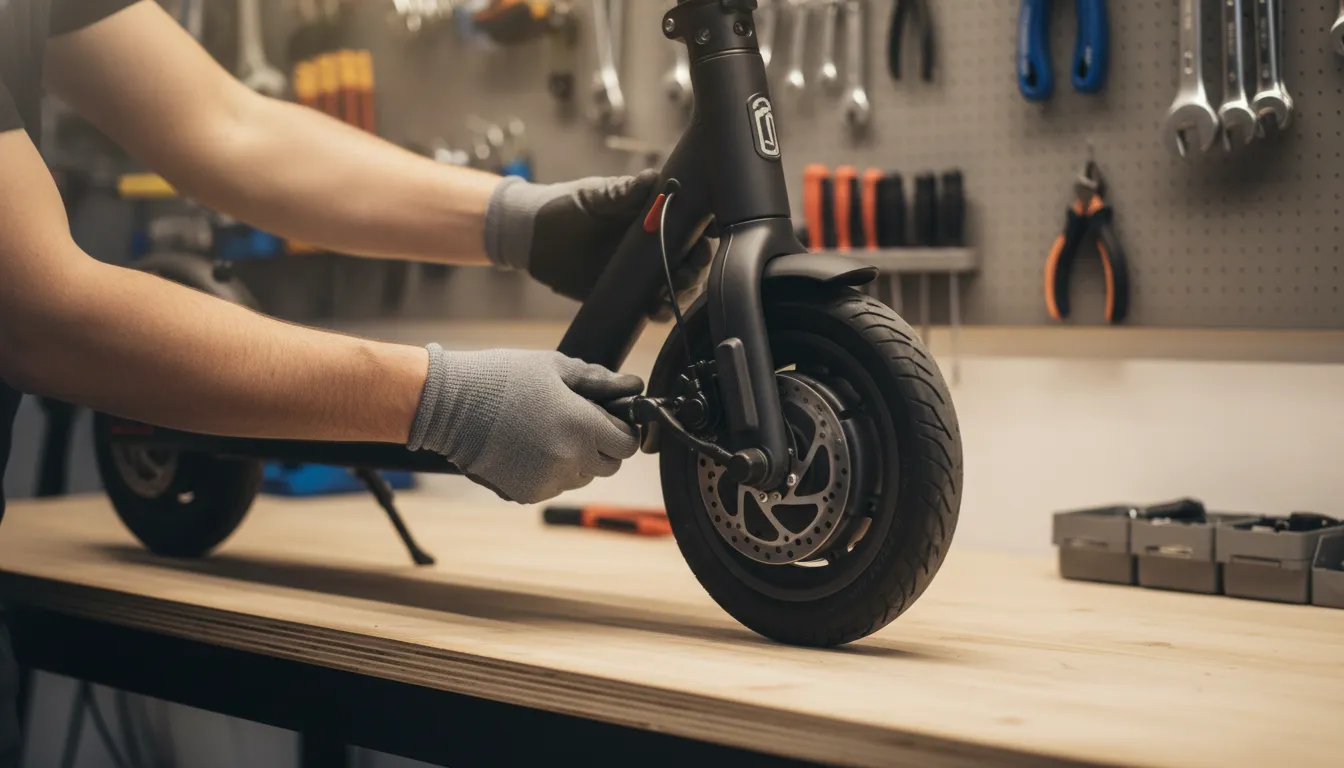
Never bypass a brake cutoff, controller protection, battery management system, or other safety feature to keep riding. These systems help limit dangerous conditions, and defeating them can conceal the original fault or create unexpected acceleration, overheating, or loss of control. The CPSC recommends checking key components before riding and following manufacturer instructions for micromobility devices. See the CPSC micromobility safety guidance. See these electric scooter safety checks before routine use, but leave persistent or safety-critical faults to professional Segway scooter repair diagnostics.
How do warranty and paid repair decisions differ?
A warranty question starts with eligibility. A paid repair question starts with the scooter's condition and the safest, most practical way to restore it. Those paths can overlap, but they are not interchangeable. Before scheduling Segway scooters and e-bikes service, identify the model, serial number, purchase date, seller, and symptom.
Segway's manufacturer warranty document explains that the applicable terms are defined by the warranty document and the original purchase receipt. It also separates coverage by product and component, rather than treating every part as equivalent. The document may specify different treatment for the vehicle, battery, charger, and wear items. Check its terms for the exact product instead of assuming they apply from another Segway model. Read the current manufacturer document at Segway's warranty PDF.
Purchase records matter because the manufacturer may need to establish when and where the scooter was purchased, and the warranty may depend on the applicable product terms. Keep the receipt, serial number, warranty materials, and relevant error-code information together. If the issue involves impact, misuse, water intrusion, modification, normal wear, or a component outside the applicable terms, coverage may not apply. Do not assume that a failed battery, tire, charger, brake, or controller will receive the same evaluation.
A customer-paid diagnostic or repair is different. You are requesting an inspection and service whether or not a manufacturer warranty covers the concern. A technician can evaluate electrical systems, batteries, motors, controllers, brakes, wheels, software, or connectivity, then explain the available next steps. That assessment does not automatically establish warranty coverage.
Voltaire can provide service guidance and help assess repair needs. But do not describe the shop as an authorized Segway warranty provider unless that authorization has been verified for your specific situation. If you are still comparing models or support expectations, the Segway Ninebot scooter guide can help you organize those questions before contacting the seller, manufacturer, or a local service team.
How should you prepare a scooter for service in Bend?
A little preparation can make a Segway scooter repair visit more useful and help the technician reproduce the problem. Bring information that identifies the scooter, records its history, and shows what happens when the symptom occurs. These items are practical recommendations, not guaranteed intake requirements, so confirm any appointment details with the Bend repair and service team before you arrive.
- Record the scooter details. Write down the exact model, serial number, purchase date, and current mileage if available. Photograph the serial-number label if it is difficult to read. Include proof of purchase and any warranty documents. Manufacturer warranty terms are product-specific, and the applicable document plus the original purchase record may determine how a warranty evaluation proceeds.
- Bring the operating equipment. Pack the charger, keys, and relevant accessories that normally travel with the scooter. If the issue involves charging, power, or connectivity, the technician may need to understand which charger and components are being used. Do not substitute a universal charger simply because its connector appears to fit.
- Document the symptom. Note every error code exactly as displayed, including when it first appeared. Take clear photos or a short video when doing so is safe. Describe whether the issue occurs at startup, under load, after charging, during braking, on hills, or only when the scooter is warm or wet. A timeline is often more useful than a general description such as "it stopped working."
- Explain recent conditions. Tell the service center about rain, standing water, washing, a fall, collision, curb impact, storage conditions, or recent changes. Water intrusion and impact damage can affect electrical and mechanical systems even when the outside looks normal.
- Transport it safely. Turn the scooter off, prevent it from rolling, and secure it so controls, cables, and folding points are not strained. Do not ride it to the appointment if the brakes or steering are unreliable, or if it has uncontrolled acceleration, exposed wiring, smoke, a burning odor, or swelling. If the battery is damaged, hot, leaking, smoking, or swollen, do not bring it in a personal vehicle. Move away from the scooter and contact emergency services when appropriate for an active fire or immediate hazard. Never open the battery pack or bypass its safety systems.
Voltaire's Bend service center is staffed by certified technicians and supports brands sold in-store and other electric mobility brands. Providing complete information helps the team determine whether the next step is inspection, diagnostics, warranty guidance, or paid service.
What happens during a professional scooter service visit?
A professional service visit should begin with a clear symptom report and a safety check, not an assumption about which part needs replacement. The technician can review the model, serial number, charging history, error codes, recent impact or water exposure, and the conditions that trigger the fault. That information helps create a more useful diagnostic path.
Voltaire's service workflow can include systematic inspection, electrical and mechanical diagnosis, work documentation, quality control, and a verification ride. The service center's documented diagnostic areas include batteries, motors, controllers, brakes, wheels, software, and connectivity. These systems can interact, so replacing the first visible component may not solve the underlying problem.
Inspection and diagnosis come before a repair decision
An inspection may identify tire or brake wear, a loose or damaged connection. A charging concern, a display or firmware issue, or a more complex motor and controller fault. A technician can then explain what is known, what still needs testing. And whether the next step is a repair, a part evaluation, warranty guidance, or further manufacturer support. Parts compatibility, availability, rush options, timing, and final outcome should be confirmed rather than assumed.
For local owners, the Bend repair and service team offers a starting point for discussing the scooter and the symptoms. Voltaire supports multiple electric mobility brands, including brands not sold in the store, but warranty authorization and coverage remain product-specific questions.
Quality control matters before return
After an approved repair, quality control should address the original complaint and any related safety concern. A verification ride or equivalent functional check can help confirm braking, controls, propulsion, and basic operation before the scooter returns to the owner. Ask what was inspected, what was repaired, what remains to monitor, and which follow-up steps are recommended.
Request Segway scooter repair guidance from Voltaire
Frequently Asked Questions
Are Segway scooters repairable?
Yes, many Segway scooter problems can be evaluated and repaired, including issues involving tires, brakes, batteries, motors, controllers, software, and connectivity. The right repair depends on the model, symptom, and condition of the affected component. Basic checks may be reasonable, but sealed battery packs and electrical systems should be left to a qualified technician.
What should I do if my Segway scooter is not charging?
Check that the charger and outlet are appropriate for your model, inspect the charging port for visible damage or contamination, and note any display message or error code. Do not open the battery or bypass a safety system. If the scooter still will not charge after safe checks, arrange professional diagnosis because the fault may involve the charger, battery, controller, wiring, or another component.
How much does Segway scooter repair cost?
There is no responsible universal price. Cost depends on the diagnosis, labor involved, parts required, and whether the issue affects the battery, motor, brakes, controller, or another component. A service provider should inspect the scooter and explain the recommended scope before you approve paid work. Warranty evaluation and customer-paid repair are separate decisions.
Can I use a universal charger for my Segway scooter?
Do not assume a universal charger is safe or compatible. The U.S. Consumer Product Safety Commission advises using the charger supplied with, or recommended by, the manufacturer and using an approved replacement battery pack. Follow the model-specific charging instructions, remain present while charging, and unplug the scooter when charging is complete. CPSC micromobility charging guidance.
When should I stop riding my Segway scooter?
Stop riding if you notice smoke, a burning odor, battery swelling, exposed wiring, water intrusion, brake failure, or uncontrolled acceleration. Do not continue testing a scooter with a serious safety symptom, and do not open a lithium battery pack. Keep the symptom details, error codes, and photos or video for the technician so the next diagnostic step is clear.
Get started with Segway scooter repair guidance
If you are unsure whether your Segway scooter needs a simple adjustment or professional diagnostics, a clear description of the symptoms can help determine the next step. Share what you have noticed, including when the issue occurs, so the service team can better understand your situation in Bend or Central Oregon.