

Recumbent Electric Trike Bend Oregon: Comfort and Fit Guide
Choosing a recumbent electric trike in Bend, Oregon, is about more than finding a seat that looks comfortable. Fit, steering feel, stability, assist behavior, and where you plan to ride all affect whether a trike feels right in everyday use. Start with your mobility needs and intended routes, then evaluate the trike in person when possible.
Call for a free electric mobility consultation
A recumbent trike places the rider in a laid-back position, often with a supportive seat and a low center of gravity. Electric assist can make starts and hills easier, but models differ in frame layout, controls, turning behavior, and carrying capacity. This guide offers a practical way to assess those tradeoffs without assuming one design works for every rider.
What should you check when choosing a recumbent electric trike in Bend, Oregon?
In brief: Match the trike to your body, ability to get on and off, route conditions, and storage needs. Confirm that you can reach controls, steer smoothly at low speed, brake confidently, and position your feet comfortably. A test ride helps reveal details that a product photo or specification list cannot.
Begin by describing a typical ride. Will you use paved paths, neighborhood streets, or longer outings with varied surfaces? Will you carry a bag or everyday items? Are you looking for relaxed recreation, practical transportation, or added mobility support? These answers narrow options before you compare features.
- Fit and access: Check seat position, leg extension, handlebar reach, and how easily you can get seated and stand again.
- Control: Make sure steering, brakes, display, and assist controls are easy to reach and understand.
- Stability: Notice handling during a gentle turn, stop, and restart. A three-wheel layout does not remove the need to learn its handling.
- Support: Ask what service and maintenance are available for the model and its electrical system.
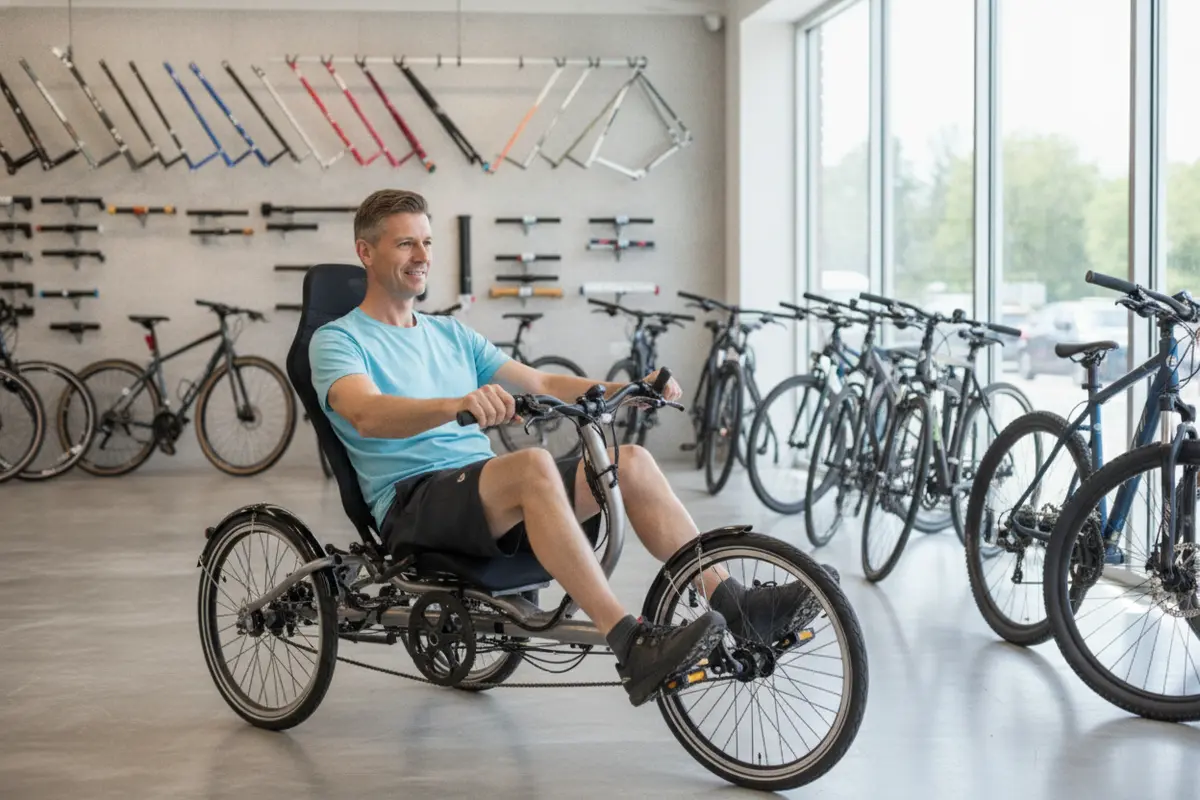
How does recumbent seating affect comfort and fit?
A reclined position can distribute support across the back and seat rather than relying on a conventional upright posture. That may appeal to some riders, but comfort depends on the particular seat, frame, and rider. Consider pressure points, back support, ease of entry, and whether you can adjust your position during a longer ride.
During a fitting, sit on the trike for more than a quick moment. Place your feet on the pedals and check that your knees retain a comfortable bend through the pedal stroke. Your hips should feel supported, and you should not strain forward to reach the bars. If the seat or controls adjust, ask how the adjustment works and whether it can be repeated easily.
Test the transition on and off the trike. A low seat may be comfortable once settled but harder to enter or leave. Try the movement slowly and safely, with assistance if needed. If you use a cane, walker, or another mobility aid, consider where it can be placed while riding and whether you can manage that process independently. Wear the shoes you expect to ride in; footwear can change pedal reach and foot retention. Ask whether the seat angle and leg boom can be adjusted, and note the settings that feel comfortable so they can be restored after transport or service.
Which trike layout and controls should you compare?
Recumbent trikes vary in steering layout and the position of the front and rear wheels. Rather than relying on a general label, compare how a specific model turns, brakes, and fits your reach. Ask a knowledgeable shop to explain controls and let you practice in a calm, open area before riding near traffic or other path users.
| Factor | What to check | Why it matters |
|---|---|---|
| Seat and frame | Entry height, back support, leg reach, adjustability | Comfort and ability to get on and off |
| Steering | Handlebar reach, turning response, low-speed control | Confidence while maneuvering and parking |
| Brakes | Lever reach, stopping feel, service access | Controlled stops and routine upkeep |
| Electric assist | Control placement, assist levels, charger and battery details | Useful support for routes and charging routine |
| Carrying and storage | Rack or bag options, overall dimensions, storage location | Practicality at home and on errands |
Ask whether the trike uses a hub-drive or mid-drive system, and how assist responds when you start pedaling. No single motor layout is best for every rider. The useful question is whether its feel, gearing, and controls suit your route and comfort with operating the system. Request a demonstration of starting, changing assist levels, and stopping. Try each control while stationary first, then repeat the operation at low speed in a clear area. If buttons are small or a display is difficult to read, identify that before purchase rather than discovering it on a longer ride.
How should you plan for Bend routes and everyday use?
Central Oregon offers a mix of paved routes, neighborhood streets, and hills. A trike that feels settled on a flat lot still needs evaluation on the surfaces and gradients you expect to ride. Ask about the manufacturer’s intended use and check local rules for planned destinations. Do not assume every path or trail allows every type of electric vehicle. The Oregon Department of Transportation provides state bicycle safety guidance; review current local rules as well as the vehicle maker’s instructions before heading out: Oregon Department of Transportation bicycle and pedestrian programs.
Think through practical details before buying:
- Map a familiar route. Include surfaces, hills, crossings, and distance. Use it as a basis for questions about range and assist.
- Check access at home. Measure doorways, storage space, and tight turns. Confirm how the trike can be moved and stored.
- Plan charging. Ask which charger is included, how the battery is accessed, and what the manufacturer recommends for charging and storage.
- Consider transport. A recumbent trike may be larger or shaped differently from a standard bicycle. Verify dimensions and transport options instead of assuming a standard rack will work.
- Prepare for riding. Choose a helmet and visibility equipment appropriate to your use, and practice controls before a busy route.
Range depends on factors such as rider weight, terrain, assist setting, stops, temperature, and battery condition. Treat a published range as a guide, not a guarantee for your personal ride. Ask the manufacturer how range estimates are established and discuss your route with the retailer. If your usual ride includes a return climb, include that in planning rather than estimating only the distance in one direction.
Think about exposure and visibility too. A low recumbent profile can sit below the sightline drivers expect from upright riders. Choose routes with good sight lines where possible, use appropriate lights and reflective details, and practice predictable turns and stops. A mirror may help you monitor approaching traffic; test its position without compromising your ability to steer. Carry a charged phone and tell someone your route if you are exploring an unfamiliar area.
What should you ask about service and ownership?
Electric trikes combine bicycle components with electrical parts, so clarify how routine service is handled. Ask what maintenance the trike needs, where replacement parts can be obtained, and whether local technicians can assess the specific make and model. Voltaire Cycles offers multi-brand service and repair support; a conversation can help determine a suitable next step.
Useful questions include:
- What inspection or tune-up schedule does the manufacturer recommend?
- Who can diagnose the motor, display, battery, and wiring if a problem occurs?
- What does the warranty cover, and how do warranty claims work?
- Can the seat, controls, or contact points be adjusted after the initial fitting?
- What is the process for safely removing, charging, and storing the battery?
Before purchasing online, check the listing for model details, included components, shipping arrangements, and manufacturer support terms. For an in-person purchase, bring a list of your route and access needs. A useful consultation should clarify tradeoffs instead of pushing a particular setup. Record the model name and any key parts or battery details; that information can make future service questions easier to answer.
For cargo, confirm that the trike has a suitable way to carry what you plan to bring. A bag mounted behind the seat may affect access or balance, while a front arrangement may change visibility or steering feel. Follow the maker’s weight limits and secure loose items so they cannot reach wheels or controls. Test loading and unloading while the trike is parked, especially if you need to manage a mobility aid at the same time.
Why take a test ride before deciding?
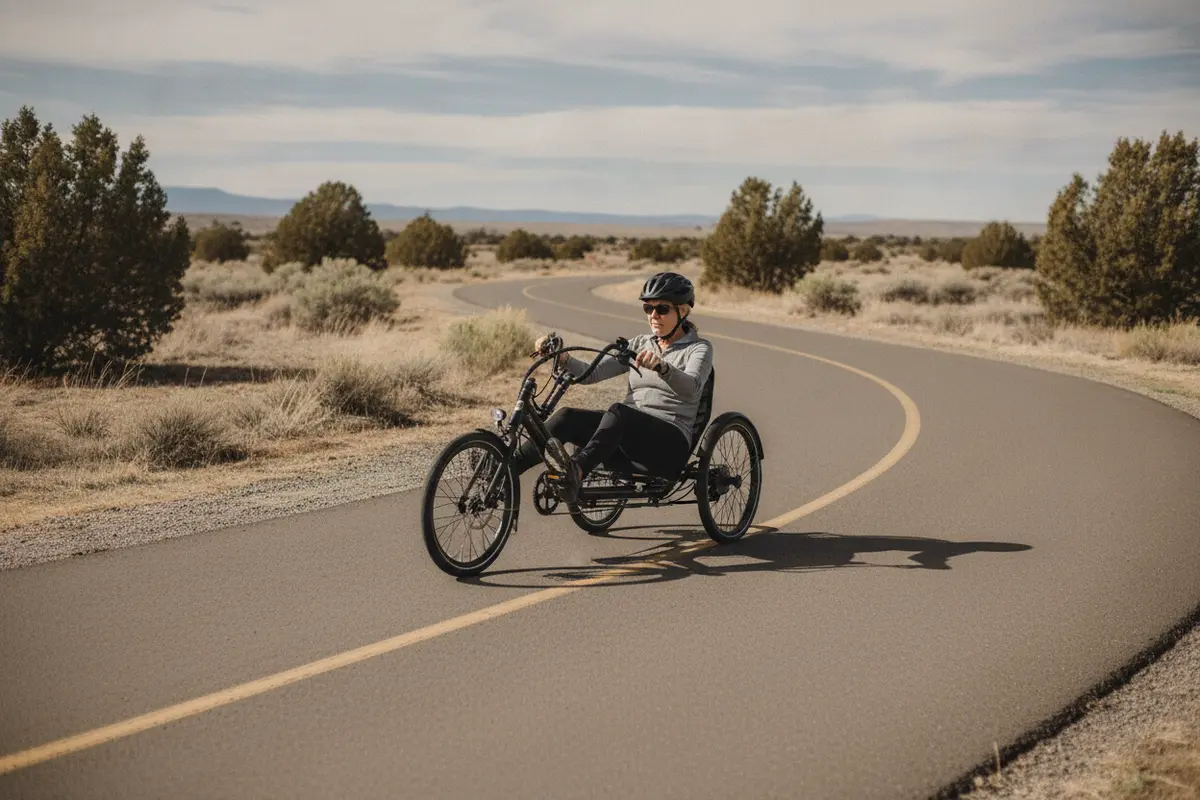
A test ride can reveal whether the trike’s seat, reach, and steering work for you. Start in a quiet, level area. Practice mounting, starting, gentle turns, braking, and stopping. Then, if appropriate, try a short section that resembles your normal route. Take time to understand the response; riding a recumbent design may feel different from an upright bicycle.
Bring another person if that makes the visit more comfortable, and share mobility or accessibility considerations with staff. Ask for time to learn the controls and repeat a maneuver if needed. Voltaire Cycles has a Bend showroom where shoppers can explore electric mobility options and receive consultation. You can also compare options online and contact the shop with specific questions. The Trident Trikes Titan recumbent product listing is one example to review for a recumbent format; confirm current specifications and availability directly.
After the ride, pause and assess rather than deciding from the first impression. Did you feel steady when accelerating and turning? Could you stop without reaching awkwardly? Was it easy to see the display and operate the assist? Did the ride expose pressure or fatigue? If possible, ride a second model under similar conditions. A side-by-side comparison helps separate a design preference from a setup issue, such as seat position or control reach.
What is the next step for finding a recumbent electric trike in Bend?
Write down your preferred riding position, typical route, storage limits, and any assistance you need getting on and off. Use those details to compare models and schedule a focused conversation or test ride. The right choice should feel manageable in real use, not only comfortable while sitting still.
For repairs or ongoing support, review the shop’s all-brand bicycle repair and service information. Explore electric bicycles and mobility options, and ask which products best match your needs. If transport is part of your plan, check whether the hitch rack option is compatible with your vehicle and the trike before relying on it.
Use the showroom visit to make your comparison practical. Bring the dimensions of the storage area, the route notes, and any questions about lifting or transporting the trike. Ask to repeat the same low-speed turns and stops on each candidate. Keeping the test conditions similar makes it easier to notice whether a difference comes from fit, steering, braking, or the electric assist rather than from an unfamiliar control sequence.
Consider what a typical outing asks of you from start to finish. Can you move the trike from storage, get seated, secure belongings, and reach the starting point without strain? At the destination, is there room to park it securely and get off comfortably? These small practical checks matter as much as the feel of the seat because they determine whether the trike fits your real routine.
For an online purchase, write down any unanswered questions before checkout: exact dimensions, weight, assembly needs, included charger, battery removal, and who handles technical support. Save the product description and manufacturer documentation for reference. If any detail affects safe use or compatibility with your home, vehicle, or mobility needs, confirm it directly rather than relying on a guess.
Talk with a local mobility specialist about fit and a test ride
Start with the riding position and route that feel right for you, then confirm details with a careful fitting and test ride before making your decision.