

Best Torque Sensing E-Bike Comparison: What Riders Should Know
A best torque sensing ebike comparison starts with the way you want the bike to respond when you pedal. Torque-sensing assist reacts to pressure at the pedals, while cadence sensing generally responds to whether the cranks are turning. That difference can shape the ride feel, especially when starting, climbing, or changing effort. The best choice is the one that fits your routes, comfort, and expectations.
Explore electric bikes and compare options
For shoppers in Bend and Central Oregon, an in-person test ride can make these distinctions easier to feel. Online shoppers can use the same questions below to narrow options and then confirm details on the individual product page. Motor type alone does not establish overall quality: fit, controls, gearing, tires, braking, battery needs, and service support matter too.
What does torque sensing feel like on an e-bike?
Torque sensing varies assistance in response to how firmly you pedal. A light, steady push can call for a more measured response, while harder pedaling may prompt stronger assistance, depending on the bike’s settings and system. This can feel connected to your effort rather than like a fixed boost triggered simply by turning the pedals.
That feel is not automatically better for every rider. Some people prefer the direct relationship between effort and support. Others want a predictable assist level that asks little of them once they begin pedaling. The system’s tuning, assist modes, gearing, and the rider’s technique all affect the result.
How should you compare torque sensing and cadence sensing?
Think about how each system fits your habits. Torque sensing can feel intuitive to riders who like adjusting effort naturally. Cadence sensing can suit riders who prefer assistance that engages when they pedal, even if they are not pushing hard. A test ride helps reveal how quickly assistance begins and how smoothly it changes.
| Comparison point | Torque-sensing assist | Cadence-sensing assist |
|---|---|---|
| What prompts assistance | Pedal pressure or effort | Pedal rotation |
| Ride feel to evaluate | How closely support tracks changing effort | How consistently support engages while pedaling |
| Useful test | Vary pressure while holding a steady cadence | Start pedaling gently and note when support begins |
| Questions to ask | Can assist levels be adjusted? How does it behave at low speed? | How responsive is engagement? Can output be moderated with settings? |
| Other factors to compare | Fit, battery capacity, gearing, brakes, controls, intended terrain, and available service | |
Do not assume every model in a category behaves the same. Motor placement, software, selected assist mode, and component setup can change the sensation. Compare actual bikes and their specifications, not just a label in a product description.
Which riding situations make the comparison useful?
Consider where and how you ride. A route with frequent stops puts emphasis on starting behavior and low-speed control. Hilly roads make it useful to notice how smoothly assist changes as effort rises. For relaxed recreational rides, you may care more about a natural-feeling response at a comfortable pace than about maximum output.
- Commuting: Check how assistance engages from a stop, how easy the controls are to use, and whether the bike’s fit works for repeated trips. Picture your usual ride, including intersections, short errands, and places where you might need to slow down. A system that feels comfortable in a brief test should also be easy to manage when you repeat those starts and stops.
- Climbing: Try a gradual hill if available. Notice whether you can keep a comfortable cadence and select an assist level that feels manageable. Test both a steady seated effort and a gentle increase in pressure, if safe. Pay attention to gearing as well as motor response; a suitable gear can help you pedal smoothly rather than forcing you to push hard at a slow cadence.
- Casual riding: Ride at an easy pace and see whether the system supports the effort you want without feeling abrupt. If your outings include mixed surfaces or changing slopes, consider how the bike responds when you move from flat ground to a rise and back again.
- Physical comfort: Choose a safe, comfortable level of effort. A helpful ride should match your ability and goals, not require you to prove a point. Ask whether assist settings can be adjusted to support a gentler pace, and make sure the riding position does not create strain during the test.
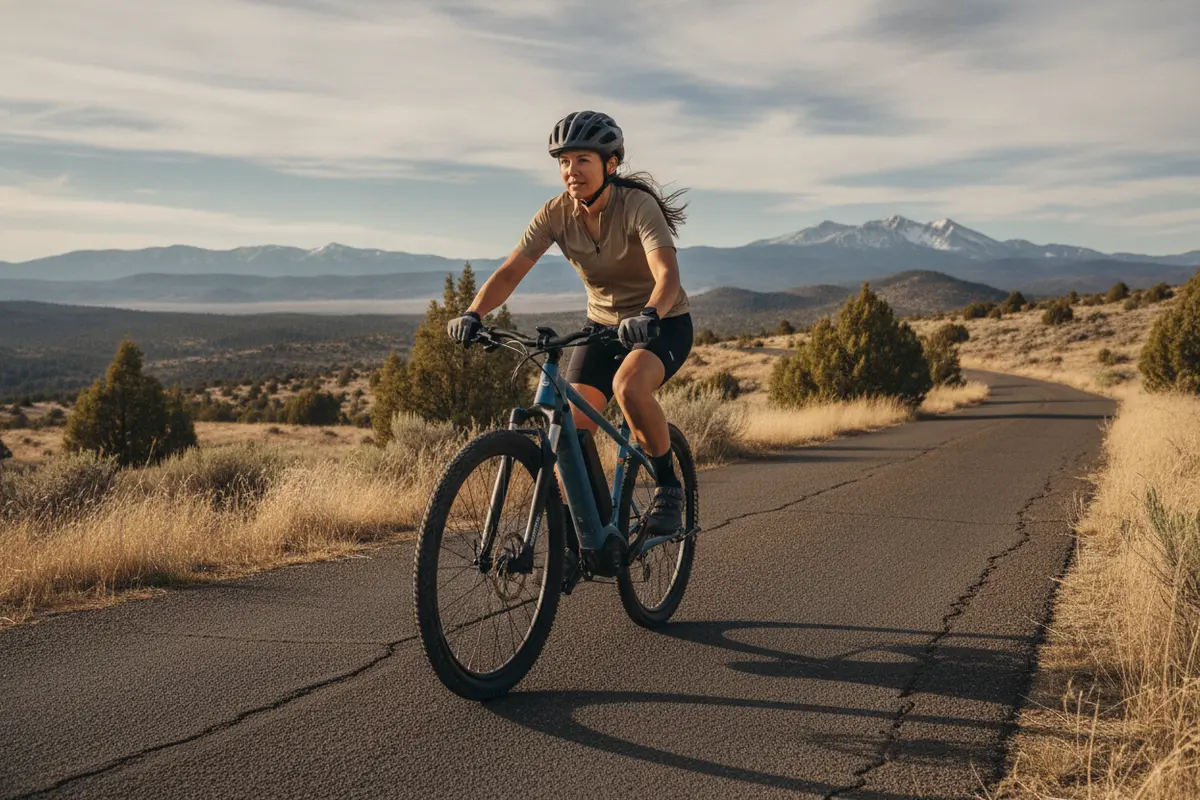
What should you test on a torque-sensing e-bike?
A useful comparison is structured. Ride each candidate in similar conditions where possible, and keep the assist setting consistent. Ask a shop to explain the controls before riding. Start in a low-support mode in a safe area, then try a moderate setting as you become familiar with the bike.
- Start gently. Notice how the bike responds when you begin pedaling from a stop. Check whether the initial assistance feels controlled and predictable.
- Change your effort. Keep your cadence fairly steady, then pedal more firmly and more lightly. Pay attention to whether the assistance changes smoothly.
- Try a modest incline. Use a safe route and a suitable gear. Observe how the bike feels as the slope changes, without treating a short ride as a full range or performance test.
- Use the controls. Shift assist modes and check whether the display and buttons are clear to you. Ask how settings affect the ride.
- Check fit and handling. Confirm saddle height, reach, balance, braking, and low-speed steering. A motor sensor cannot compensate for a bike that does not fit.
Take notes right after each ride. Record which bike felt easiest to control, which assist levels you actually used, and what questions remain. If multiple riders will share the bike, each person should assess fit and control separately. To keep the notes useful, write down the model, assist setting, route surface, and whether the bike was tested with a similar load. Small differences in setup can otherwise blur your memory of the ride.
How do battery and range fit into a comparison?
Sensor type alone does not tell you how far an e-bike will go on a charge. Range depends on the complete system and riding conditions, including battery capacity, assist level, terrain, rider and cargo load, speed, stops, temperature, and the condition of the battery. Treat advertised figures as estimates for stated conditions, not a promise for every route. The U.S. Department of Energy explains that vehicle energy use and range vary with driving conditions and operating factors; the same practical caution applies when evaluating range estimates for an e-bike, whose exact range should be checked with its manufacturer’s specifications: Department of Energy guidance on fuel economy.
Think through a typical ride instead. How long is it? How much climbing does it include? Can you charge at your destination? Would you rather have reserve capacity for longer outings or a lighter, simpler setup? Compare battery specifications on the actual models under consideration and ask the retailer how the manufacturer describes range.
For a helpful side-by-side, compare the battery details shown on the product pages and clarify what is included with the bike. Voltaire Cycles offers online purchasing and local showroom guidance; shoppers can also ask about practical questions before deciding.
What other e-bike features matter as much as the sensor?
A best torque sensing ebike comparison should include the whole bike. A comfortable frame and suitable riding position can matter more over a long ride than a small difference in sensor feel. Brakes, tires, gearing, suspension where fitted, weight, display layout, and carrying needs all deserve attention.
- Fit: Check frame size, standover, reach, and adjustability. Ask whether the riding position suits your back, shoulders, and hands.
- Gearing: Confirm that the gear range fits your hills and preferred pedaling cadence.
- Braking: Learn how the brakes feel and whether the bike’s setup suits your intended use and load.
- Controls: Make sure you can read the display and use assist controls without distraction.
- Service: Ask who can diagnose and maintain the bike, and what routine care the manufacturer recommends.
Customers in the region can ask about bicycle repairs and service when evaluating long-term support. If you plan to carry a bike by car, check the rack’s stated compatibility and weight limits. For example, compare a candidate setup with the Saris MHS 2-Bike Hitch Rack details rather than assuming every rack fits every frame or vehicle.
How can Central Oregon shoppers choose where to test ride?
A showroom visit can turn a spec comparison into a practical decision. Bring a short list of routes and describe how often you ride, your comfort preferences, and any cargo or access needs. Ask to try more than one assist mode and, if available, more than one sensor style. You can explore Voltaire’s electric bike collection online before visiting the Bend showroom.
During a consultation, focus on clear questions rather than chasing a single feature. Ask what motor system the bike uses, how its assist is controlled, what the display indicates, what charging process is recommended, and what service options apply. If you are shopping online from outside Central Oregon, verify fit guidance, included components, shipping details, and support arrangements on the current product listing. A useful message or call can begin with your intended terrain and typical trip length, then move to the particular models you are comparing. That gives the conversation a practical starting point and helps surface questions about setup or support that a spec sheet may not answer.
What is the simplest way to make a final choice?
Use a short scorecard after test rides. Rate each candidate from one to five for response feel, comfort, control clarity, hill behavior, and confidence in service support. These are personal ratings, not lab measurements. A bike that scores well across the factors you value is often a better match than one chosen solely for a sensor label.
| Factor | What to record | Why it helps |
|---|---|---|
| Assist response | How smoothly support changes as you pedal | Reflects your preferred ride feel |
| Fit and comfort | Reach, saddle position, hand comfort, and balance | Supports enjoyable regular use |
| Route suitability | Performance on your typical terrain and stops | Connects the bike to real trips |
| Practical ownership | Battery questions, charging, and service access | Surfaces details beyond the test ride |
Before deciding, look at the scorecard for trade-offs rather than searching for a perfect result in every column. One bike may feel more natural at low effort, while another may fit better or have controls you understand more quickly. Decide which differences matter for the trips you take most often. If you are uncertain, repeat the same short test instead of relying on a vague first impression. A second ride can help separate a preference for the sensor response from the comfort or handling of the bike itself.
Call Voltaire Cycles for a free consultation
Frequently asked questions
Is torque sensing always better than cadence sensing?
No. It is a different way to deliver assistance, not a guarantee of a better ride. The better match depends on your preferred feel, bike setup, routes, and comfort. Compare real bikes in a safe test ride when possible.
Can I compare torque sensors without riding uphill?
Yes. On level ground, vary your pedaling pressure while keeping a steady pace. Notice how the assistance changes. A gentle incline adds another useful test, but it is not essential to begin comparing response.
Does a torque sensor determine e-bike range?
No. Range depends on battery capacity, assist use, terrain, load, conditions, and other parts of the system. Review each model’s battery information and treat range estimates as conditional guidance.
What should I ask before buying?
Ask how the assist modes work, what battery and charger are included, how the bike fits your route, and where service is available. Confirm current product details with the retailer before purchase.
The right comparison is the one that helps you feel confident about the complete bike, not just its sensor. Take time to test fit, controls, and response, then choose an e-bike that suits the rides you actually plan to take.