

Electric Scooter Tire Replacement Guide
A worn scooter tire is more than a cosmetic issue. Cuts, repeated air loss, cracking, or a change in handling can affect braking, cornering, and stability. Before ordering a replacement, identify how the wheel is built and confirm the specifications for your exact scooter.
Electric scooter tire replacement may involve changing a pneumatic tire, inner tube, tubeless tire, or solid tire, and in some designs the wheel or related hardware may also need service. The correct choice depends on tire type, size, rim and hub construction, valve, load requirements, and the manufacturer's instructions.
The job is not identical across scooters. A pneumatic tire may require tire levers, a valve tool, an accurate pressure gauge, and the correct tube or sealant. Tubeless and solid tires can require bead-breaking equipment, a compressor or controlled inflation method, and model-appropriate mounting tools. Hub-motor wheels add careful cable handling and axle-hardware work. Do not improvise around a tight bead, motor wiring, or a wheel you cannot stabilize. The first step is understanding what the replacement actually includes, so you can plan the repair safely and know when professional help is the better choice.
What does electric scooter tire replacement involve?
Electric scooter tire replacement may involve more than fitting new rubber. Depending on the wheel design, the work can mean replacing the tire, changing an inner tube, refreshing a tubeless seal, or servicing the complete wheel assembly. The correct approach depends on the scooter's tire construction, wheel, rim, hub, and manufacturer specifications.
A pneumatic tire uses air to provide cushioning and may have a separate inner tube. If the outer tire is sound but the tube is punctured or leaking, tube replacement may be the appropriate repair. A tubeless tire holds air against the rim without a separate tube. A small puncture may sometimes be addressed through a suitable seal or repair method, but damage to the tire, bead, or rim can require replacement or wheel service.
A solid tire contains no air-filled tube. It can reduce the risk of a conventional flat, but installation may be more difficult and the tire still needs inspection for wear, cracking, cuts, or deformation. Solid, pneumatic, and tubeless tires are not universally interchangeable. Matching the size alone does not confirm that a tire will fit the rim or clear the scooter's fork, fender, brake, or motor assembly.
For Bend and Central Oregon riders, the practical first step is identifying the tire type and documenting the wheel before disassembly. Voltaire Cycles' certified technicians provide electric vehicle repairs and service, including wheel-related work across multiple brands. If the wheel includes a hub motor, wiring, or unfamiliar fasteners, professional inspection can help prevent an unsafe installation.
How do you know a scooter tire needs replacement?
Replace an electric scooter tire before riding if it has unsafe tread wear, a cut, puncture, crack, bulge, exposed material, or another visible defect. Repeated pressure loss also needs attention, especially when the tire will not hold the pressure specified for your scooter. Stop riding until the tire and wheel are inspected.
Start with a visual check before each ride. Look for tread that is noticeably worn smooth, uneven, or flattened in one area. A flat spot can change how the scooter rolls and corners. Irregular wear may also point to incorrect inflation, so do not treat pressure adjustment as a substitute for replacing a damaged tire.
Inspect both sidewalls and the tread for cuts, punctures, cracks, bulges, or exposed cords and other internal material. These are not cosmetic concerns. General tire guidance hosted by the National Highway Traffic Safety Administration advises replacing a tire with cuts, punctures, cracks, or other damage before riding. That document addresses motorcycle equipment, not electric scooters, so use it as general safety guidance and follow your scooter manufacturer's specifications.
Pay attention to pressure behavior. A pneumatic tire that repeatedly loses air may have a puncture, damaged valve, bead problem, or rim issue. A tire that looks inflated but goes soft after a short period should not be repeatedly topped off and ridden. Frequent pressure loss can make steering feel vague and reduce stability.
Changes in handling are another warning. New vibration, wobbling, pulling, unusual noise, harshness, or difficulty tracking straight can indicate a tire, wheel, valve, or rim problem. Bulges or visible separation require immediate replacement, not a test ride. If you are unsure whether the defect is in the tire or wheel, keep the scooter parked and have a qualified technician inspect it.
Are solid or pneumatic tires better for a scooter?
Neither tire type is best for every scooter or rider. Pneumatic tires can provide a more forgiving ride, while solid tires reduce the risk of punctures and pressure loss. For an electric scooter tire replacement, match the tire design to the wheel, rim, load requirements, and manufacturer specifications.
Use this comparison as a starting point, then review the scooter manual and the exact wheel design. For a deeper overview of the tradeoffs, read solid or pneumatic scooter tires.
Scooter tire type comparison| Pneumatic or tubed | Tubeless | Solid |
|---|---|---|
| Air cushions bumps and may feel more comfortable on rough pavement. Pressure must be checked, and a puncture may require a tube or tire repair. A rider who values comfort and can monitor pressure may prefer this design. | Air provides a similar compliant ride without a separate inner tube. The tire and rim must seal correctly, and installation can be difficult if the bead is tight or the wheel design is unfamiliar. It may suit riders who want pneumatic comfort with fewer tube-related parts. | No air pressure means fewer pressure checks and less concern about ordinary tube punctures. The ride can feel firmer, and fitment or installation may be demanding because the tire must seat correctly on the rim. It may suit riders who prioritize puncture resistance and simpler pressure maintenance. |
Whichever design you choose, do not assume a solid tire can replace a pneumatic one, or that every tire of the same apparent size will fit. Confirm the tire marking, rim, hub clearance, valve arrangement when applicable, and manufacturer approval before ordering or installing.
How do you choose an electric scooter tire replacement?
Start with the scooter's exact model, then match the replacement to the manufacturer's specification. Do not choose a tire based only on its outside diameter or a marketplace listing. Read the markings on the existing tire and compare them with the owner's manual, including the tire size, tire type, and any model-specific fitment notes.
Record the complete sidewall marking before removing anything. A marking such as 8.5x2.0 describes important dimensions, but it does not by itself confirm compatibility. Check whether the scooter uses a pneumatic tire, an inner tube, a tubeless setup, or a solid tire. Also identify the wheel and rim construction, hub shape, and valve type. Manufacturer guidance notes that tires, rims, inner tubes, and air valves must be correctly matched. Mismatches can damage the bead during mounting or allow the tire to slip from the rim. The cited guidance is for motorcycles, not a universal electric-scooter rule, so use it as a compatibility principle and defer to your scooter manual.
Confirm the replacement's load rating meets or exceeds the model's specified rating. Then check physical clearance around the fender, fork, motor hub, brake rotor, and wiring. A tire that appears to fit may rub when the wheel turns, interfere with a brake component, or fail to accommodate the scooter's electrical wheel assembly. Never assume a different width, tread pattern, valve position, or tire construction is an upgrade.
For comparison only, Voltaire lists an 8.5x2.0 scooter tire. That product listing is not proof that it fits your scooter. Confirm the exact model, dimensions, construction, load rating, rim, tube or tubeless setup, and manual requirements before ordering. If the markings are missing or unclear, have a technician identify the wheel before beginning the electric scooter tire replacement.
What are the basic steps for replacing a scooter tire?
Electric scooter tire replacement is not one universal procedure. Wheel design, tire construction, hub motors, wiring, and fasteners vary by model. Treat the sequence below as a planning guide, then follow your owner's manual for the exact removal method, compatible parts, and tightening specifications. If the wheel assembly or tire bead is unfamiliar, professional service is the safer choice.
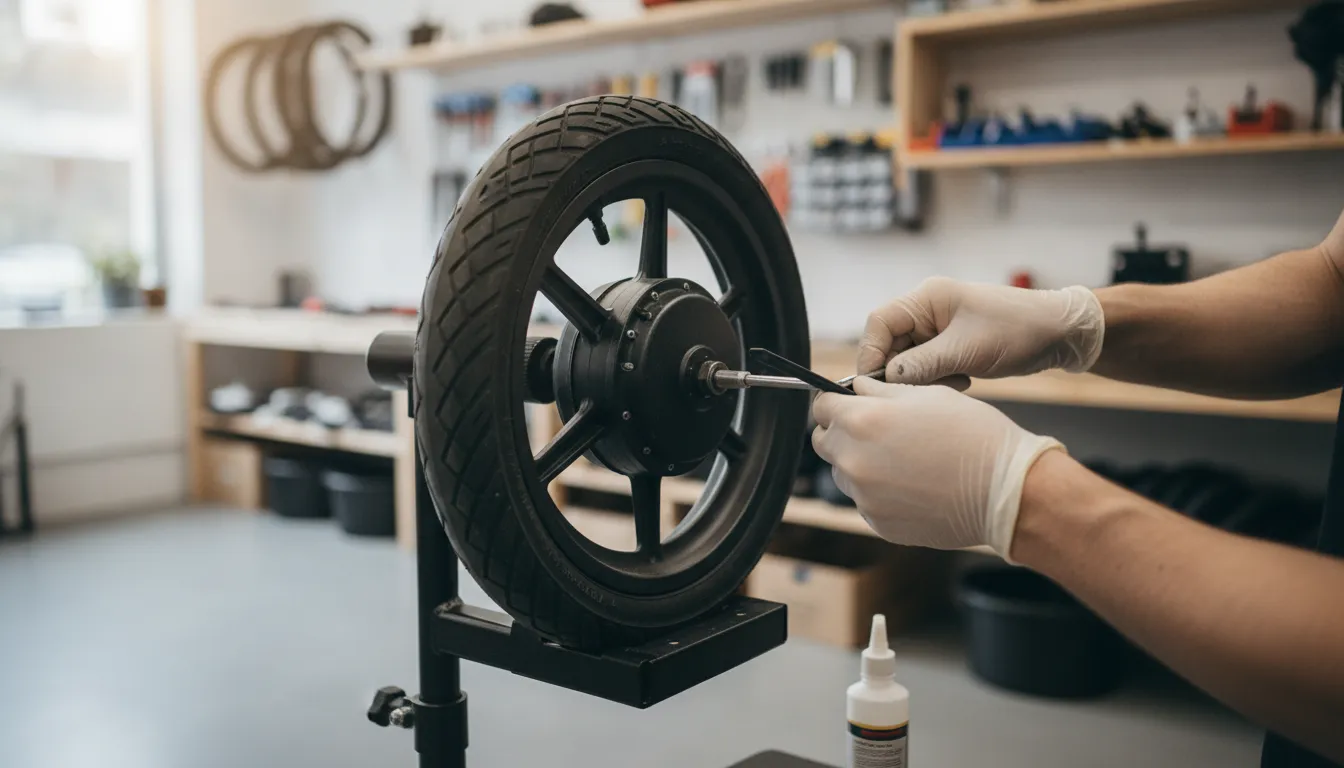
- Power down completely. Turn off the scooter, remove the key if applicable, and disconnect the charger. Do not work around a powered hub motor or exposed wiring.
- Read the manual and stabilize the scooter. Confirm the wheel removal procedure and place the scooter on a stable stand or work surface so it cannot roll or fall. Disconnect or remove the battery only if the manufacturer specifically directs you to do so.
- Document the wheel orientation. Photograph the axle hardware, spacers, washers, brake components, fender brackets, and cable routing before loosening anything. This record can prevent an incorrect reassembly.
- Remove the wheel carefully. Follow the model-specific procedure, supporting the wheel as fasteners come out. Never pull, twist, or sharply bend motor cables. A hub motor may make this step substantially more involved than a conventional wheel removal.
- Release the tire setup. For a pneumatic tire, deflate it fully before breaking the bead. A tubeless setup may require releasing the bead seal, while a tube-type tire requires careful tube removal. Solid tires do not deflate and often need specialized tools or a qualified tire method.
- Install the correct replacement. Match the specified tire size, construction, rim, valve, tube, and load rating. Replace a damaged tube when appropriate, and inspect the rim and valve area before seating the tire. Avoid forcing mismatched parts onto the wheel.
- Reinstall and secure the wheel. Route wiring exactly as documented, replace spacers and hardware in the correct positions, and tighten fasteners to the manufacturer's instructions. Do not invent a torque value or substitute a generic one.
- Perform post-install checks. Confirm that the wheel turns without rubbing, the brake clears the rotor or drum, cables are protected, and pneumatic pressure matches the manual when checked cold. Complete a cautious, low-speed test only after every component is secure.
Because solid tires and hub-motor wheels can require specialized equipment, stop if the tire will not seat correctly, the rim is damaged, wiring is strained, or you cannot verify the installation. A qualified service center can inspect the wheel and complete the job without guessing at model-specific requirements.
What should you check after the replacement?
After an electric scooter tire replacement, verify pressure, alignment, fasteners, brake clearance, wiring, and leak resistance before riding normally. Follow your scooter's manual for specifications, then make a cautious low-speed test. If anything feels loose, unstable, noisy, or electrically unusual, stop and have the installation inspected.
For a pneumatic tire, check pressure when the tire is cold and use the manual's specification. Riding warms the tire and changes the reading, so do not adjust pressure immediately after a ride. NHTSA TireWise offers general tire-maintenance guidance for road vehicles, but scooter owners should follow their own manufacturer's instructions. Check again after the scooter has sat, and look for a slow leak around the valve, bead, or tube. Correct low pressure promptly.
Spin the wheel by hand, if the scooter design permits, and confirm that it tracks straight without rubbing. Check that the axle, wheel nuts, and other fasteners are secure according to the manual. Do not guess torque values. Confirm the brake rotor, drum, or caliper has clear movement and does not drag against the new tire or wheel. On hub-motor models, inspect throttle, display, and motor wiring for pinching, twisting, or excessive strain before securing the assembly.
Before riding in traffic, perform a short test at walking speed on a clear, level surface. Apply the brakes gently, listen for rubbing or clicking, and assess steering and stability. Use these electric scooter safety checks, and review the Segway scooter service guidance if you own that brand. If the installation needs professional attention, ask Voltaire's certified technicians about multi-brand service and the model-specific wheel work they can assess.
Need help confirming your installation? Request a repair consultation with Voltaire Cycles.
Frequently Asked Questions
How much does it cost to replace a tire on an electric scooter?
There is no reliable flat price for every scooter. The total depends on the tire type, wheel design, tube or tubeless setup, parts required, and how difficult the wheel is to remove. A service center can inspect the scooter and confirm the parts and labor involved before work begins.
How do you fix a flat electric scooter tire?
First, stop riding and identify whether the tire uses a tube, a tubeless setup, or a solid construction. A pneumatic tire may need a puncture repair, tube replacement, or complete tire replacement. Check the owner's manual and avoid riding if the wheel, tire, or valve is damaged. Difficult wheel or hub-motor work is best handled by a qualified technician.
What size is an electric scooter tire?
Electric scooter tires do not use one universal size. Read the markings on the existing tire, then confirm the tire type, rim and hub design, tube or tubeless format, load rating, and manufacturer specifications in the manual. Matching only a diameter or width can still produce an incompatible or unsafe replacement.
Can solid electric scooter tires be replaced?
Yes, solid tires can be replaced, but installation is often more demanding than changing a pneumatic tire because the tire does not deflate and may fit tightly on the rim. The correct size and construction still matter. If removal could damage the rim, motor wiring, or wheel assembly, use professional service rather than forcing the tire off.
Ready to Get Help With Your Scooter Tire?
Choosing the correct tire and completing the installation carefully can protect handling, braking, and ride comfort. If you are unsure about compatibility, wheel fitment, or whether the tire, tube, or wheel needs service, contact the Bend service team for practical guidance. Book a repair consultation for your electric scooter tire replacement and discuss the right next step for your scooter.