

Segway Scooter Repair: Common Issues and Service
When a Segway scooter will not start, loses range, shows an error, or feels different under braking. The hard part is knowing whether you are looking at routine maintenance or a repair that should not wait. Segway scooter repair is not one single job. The right next step depends on the symptom, the model, the battery and charger, and whether the problem affects safe control.
Start with a safety-first triage. Stop riding if the scooter has structural damage, unusual battery heat or odor, swelling, smoke, or a braking or steering problem. For less urgent symptoms, document what happened and use the manufacturer app or manual to identify any code before contacting a qualified service provider.
Submit a repair service request to Voltaire Cycles
This guide explains common fault patterns, safe owner checks, and what Bend-area and nationwide owners should prepare before booking service.
What are the common problems that lead to Segway scooter repair?
Common Segway scooter repair triggers include no-start conditions, charging or range changes, error messages. Loss of acceleration, brake or tire problems, and damage after a fall or water exposure. A symptom is a useful starting point, but it does not identify the failed part by itself. A scooter that will not power on could have a charger, battery, wiring, controller, display, or connection issue. A short ride could reflect battery condition, riding conditions, a charging problem, or a system fault.
Electrical symptoms deserve a measured approach. If the scooter powers on but will not accelerate, cuts out, or displays an error, record the exact message and note when it appears. Segway manuals direct owners to check error information through the Segway-Ninebot app. That record can help a technician separate a repeatable fault from an intermittent connection or operating-condition warning.
Power, charging, and range symptoms
A charger that does not indicate a normal charge, a battery that stops accepting charge. Or a scooter that loses range unusually quickly should be evaluated before parts are replaced. Do not assume the battery is the problem simply because range changed. Charger compatibility, connections, temperature, age, and the scooter's control system can all matter. The CPSC says to use the supplied charger and an approved replacement battery. It also warns that a universal charger can fit a device while still being incompatible with its battery.
Brakes, tires, steering, and folding parts
Mechanical symptoms are often easy to notice but can be urgent. Squealing, rubbing, a soft brake lever, a loose stem, a damaged fork, wobble, a damaged tire. Or a folding mechanism that does not lock securely are reasons to stop riding until the scooter is inspected. Small scooter tires can react sharply to objects or uneven surfaces. A loose control or brake component can change how the scooter handles.
Heat, water, and impact damage
Do not continue testing a scooter after a hard impact or suspected water intrusion when the battery, wiring, display, or controller may be affected. Stop use if the battery has an unusual odor, excessive heat, popping sounds, swelling, or a color change. Those signs call for a qualified professional, not a battery opening or improvised repair. A repair shop can inspect electrical and mechanical systems together when one event may have created more than one fault.
Which Segway scooter checks are safe to do at home?
At home, limit your checks to the owner's manual, external condition, approved charging equipment, visible connections, and the exact symptom record. Do not open a lithium-ion battery, bypass a safety device, splice unknown wiring, or keep riding to see whether an intermittent fault gets worse. The goal is to collect useful information without turning a manageable service issue into a safety risk.
Begin with the model and the manual
Write down the model name, serial information if available, approximate age, and any recent changes. Note whether the scooter was dropped, ridden through water, stored in unusual temperatures, modified, or paired with a different charger. Check the model-specific manual and the Segway-Ninebot app for an error notification. Segway documentation distinguishes an error notification from a temperature warning, so the exact wording matters.
Inspect without disassembling
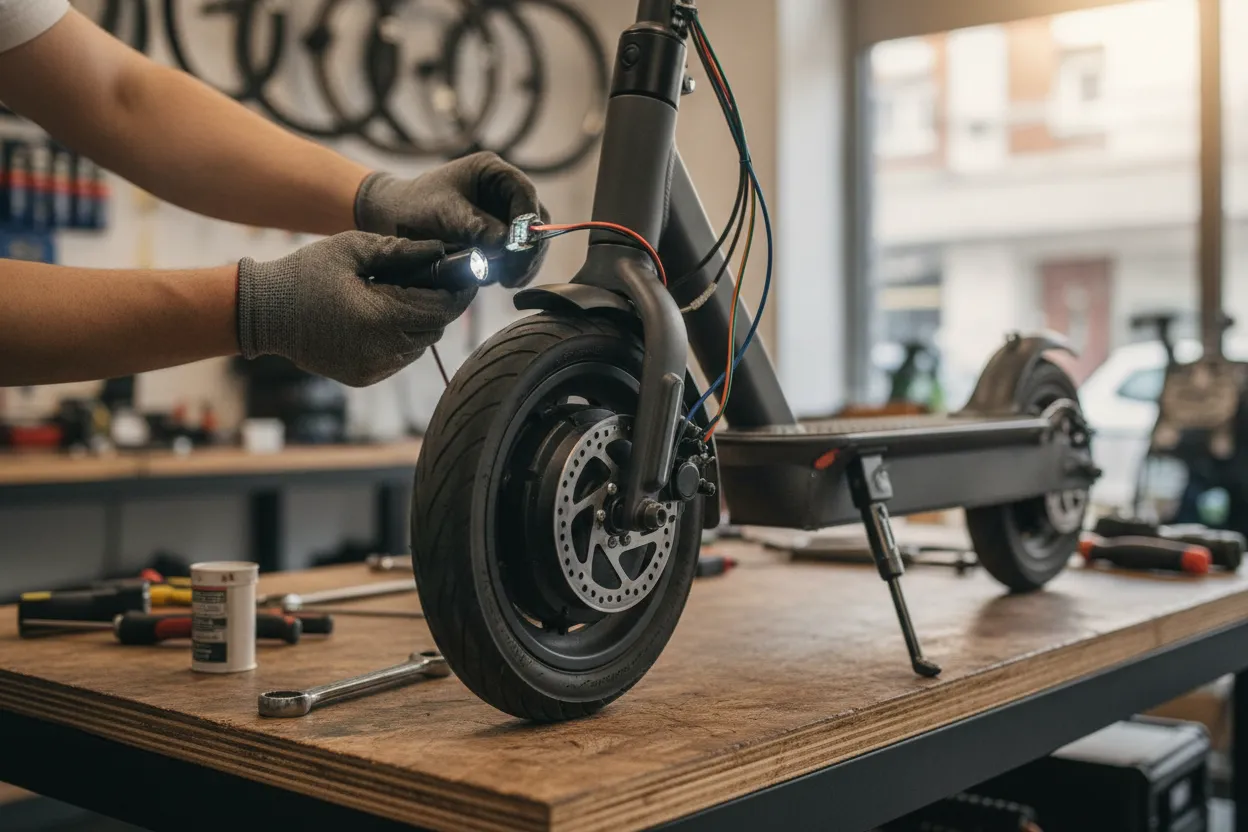
With the scooter powered off, look for obvious damage to the handlebars, stem, fork, folding area, brakes, throttle, lights, tires, cables, and frame. Confirm that controls move as expected without forcing them. Check for a loose external connector only when the manual identifies it as owner-accessible. Do not remove covers or probe battery terminals. If anything is cracked, bent, hot, swollen, wet, or loose in a safety-critical area, stop and arrange an inspection.
Charging also has a clear boundary. Use only the supplied or correctly approved charger. Follow the manufacturer's instructions, remain present while charging, and unplug when the charge cycle is complete. Do not charge a damaged battery or charger. If you notice heat, odor, swelling, popping, or a color change, stop using the device and move away from do-it-yourself battery work.
For battery-specific symptoms, read Voltaire's electric scooter battery diagnosis and replacement guidance. For general ride-readiness, the electric scooter safety checks guide can help organize a pre-ride inspection. Neither replaces model-specific diagnosis when the scooter has a persistent fault.
When should you book professional Segway scooter repair?
Book professional service when a problem affects braking, steering, folding security, battery safety, power delivery, or a persistent electrical fault. A professional inspection is also sensible when the repair involves a battery, motor, controller, internal wiring. Firmware or connectivity diagnosis, or a part that must be matched to a particular Segway model.
| Symptom | Owner response | Why service may be needed |
|---|---|---|
| No power or intermittent shutdown | Stop riding and record when it happens | Battery, controller, wiring, display, or connection diagnosis |
| Charging or range change | Use only approved charging equipment | Battery health and charger compatibility need testing |
| Brake, stem, fork, tire, or folding issue | Do not ride until checked | A mechanical fault can affect control and stability |
| Error or temperature warning | Save the code and follow the manual | Technician interpretation can prevent unnecessary parts swapping |
| Heat, odor, swelling, or impact damage | Stop use and do not charge | Battery or structural inspection requires qualified handling |
Repair versus replacement is a diagnosis question
It is reasonable to ask whether an older scooter is worth repairing, but a useful answer requires more than the scooter's age. Ask what failed, whether the correct part is available, whether the frame and battery are safe, and what the repair is intended to restore. A clear diagnosis can reveal that a charger, tire, brake component, or connection issue is smaller than a complete battery or controller replacement. Avoid deciding from a generic online price because model, parts, labor, and damage history vary.
What a qualified service center can evaluate
Voltaire's service operations include electrical diagnostics, battery testing and replacement, motor and controller work, mechanical repairs, and software or connectivity help. The team describes a safety-first process with inspection, documentation, quality checks, and test-ride verification. Service fit can depend on the scooter model and condition, so confirm acceptance before transporting or shipping a Segway scooter. Voltaire's Bend repair and service options page is a useful starting point. Its bicycle-oriented page should not be read as an unconditional promise for every scooter model.
Recall symptoms are a separate path. Check current CPSC recall notices and the manufacturer's instructions when a stem, fork, or folding mechanism may be affected. A recalled scooter may need the manufacturer's remedy rather than an ordinary paid repair.
What should Bend and nationwide owners expect from service?
Bend-area owners can start with a local consultation and confirm whether the shop accepts their Segway scooter model. Nationwide owners should clarify shipping, parts, warranty, and authorized-service options before sending a device. Those paths are related, but they are not identical. A local showroom conversation can make it easier to describe a symptom, review a model, or discuss a safe next step. A national support path may instead involve phone or email guidance, parts shipping, warranty administration, or referral to an authorized service provider.
Before a Bend visit, bring the scooter information, charger if requested, error details, and a concise timeline. Ask whether the model can be inspected, whether the shop wants the charger or accessories, and whether the issue should be handled under a manufacturer process. Do not assume a page describing bicycle repairs means every Segway scooter repair is accepted without confirmation.
For a shipped scooter, ask how the service provider wants the device prepared. Confirm whether the battery may be shipped under applicable carrier and manufacturer rules. Confirm the service address, packaging instructions, expected diagnostic steps, and who handles warranty decisions. Voltaire's knowledge base describes technical support, parts shipping, warranty administration, and authorized-service referrals for national buyers. Those details support a careful conversation, not a guarantee that every repair can be completed remotely.
Local and online shoppers can also review the Segway electric mobility lineup when identifying a model or considering a replacement. If you are unsure whether the current scooter, a newer model, or a different riding setup is the better path. Ask for an advisory comparison rather than assuming repair is the only answer.
How do you prepare a Segway scooter for a repair appointment?
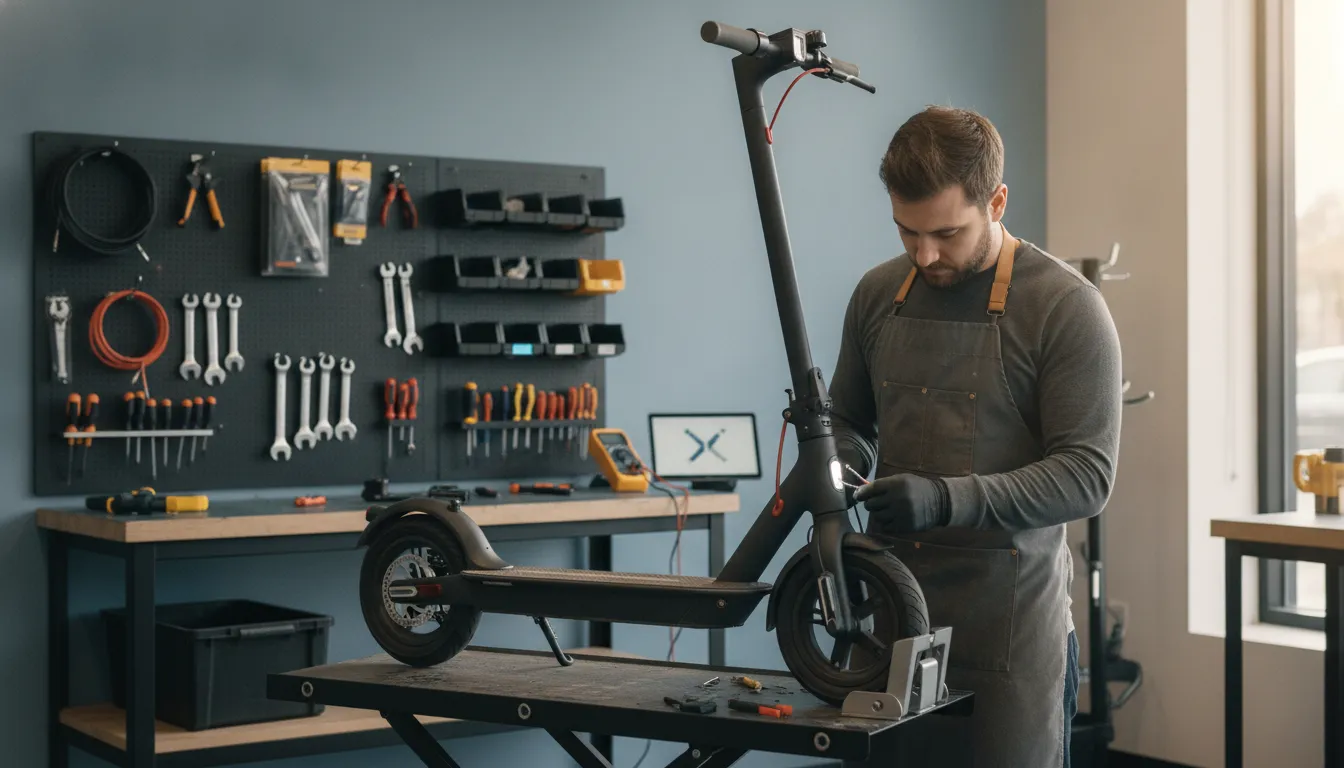
A prepared service request gives a technician a better starting point and helps you avoid an unsafe ride to the shop. Use this sequence whether you are contacting a Bend service team or asking about a national support path.
- Identify the scooter. Record the exact model, serial information if available, purchase source, and approximate age. Include photos of the full scooter and any damaged area.
- Describe the symptom. Note what happens, when it began, whether it is repeatable, and whether it appears during charging, startup, acceleration, braking, folding, or app connection.
- Save codes and warnings. Capture the exact error or temperature notification from the display or Segway-Ninebot app. Do not clear information by repeatedly restarting a scooter that is hot, damaged, or unstable.
- List the history. Tell the service provider about falls, water exposure, storage conditions, modifications, replacement parts, and charger changes. A complete history is more useful than a guess about which part failed.
- Separate safe transport from riding. If the brakes, steering, folding mechanism, frame, battery, or charger may be compromised, do not ride the scooter to the appointment. Ask how it should be transported.
- Confirm the service path. Ask whether the model and symptom fit the provider's capabilities, whether a manufacturer recall or warranty process may apply, and what items should accompany the scooter.
- Request a diagnosis and scope. Before approving work, ask what was found, which parts are involved, what is excluded, and how the repair will be verified. Do not rely on an estimate based only on a generic symptom.
When you are ready, submit a repair service request with the model and symptom details. You can also review the Segway scooter dealer in Bend guide if your next decision is whether to seek local product and support guidance.
Review Bend repair and service options before booking
Frequently Asked Questions About Segway Scooter Repair
What are the common problems with Segway scooters?
Common issues include no-start or shutdown symptoms, charging and range changes, error notifications, loss of acceleration. Brake or tire problems, loose folding or steering parts, connectivity faults, and damage after an impact or water exposure. The symptom does not identify the failed part, so persistent or safety-related problems should be diagnosed before replacing components.
How much does it cost to fix a Ninebot scooter?
There is no reliable single price for a Ninebot repair. The cost depends on the model, failed component, parts availability, labor, damage history, and whether a manufacturer warranty or recall process applies. Request a diagnosis and written scope before approving work. Avoid choosing a charger or replacement battery based only on a generic online price.
Is it worth repairing an electric scooter?
It can be, but the decision depends on safety, the failed part, the scooter's condition, parts support, and the expected result of the repair. A technician can help compare repair with replacement after inspecting the battery, frame, controls, and other affected systems. A scooter with unsafe structural or battery damage needs a safety decision first.
How do I get repairs done on my Segway scooter?
Start with the model, symptom, error information, and service history. Check Segway's current support and recall instructions, then contact a qualified provider to confirm model fit and the correct local or shipping path. Bend owners can ask Voltaire about local service options. Nationwide owners should confirm parts, warranty administration, authorized-service referrals, and transport requirements.
What is the average lifespan of a Segway scooter?
There is no universal lifespan that applies to every Segway scooter. Battery condition, storage, charging practices, riding environment, impact history, maintenance, and parts support all affect useful service life. A diagnosis is more helpful than an age-only rule, especially when the scooter still has a safe frame, controls, and supportable components.
If your Segway scooter has a persistent fault or a safety-related symptom, do not keep riding to see whether it improves. Gather the model and error details, confirm the service path, and ask for a diagnosis before approving parts or labor. Voltaire Cycles serves Bend and Central Oregon shoppers with local consultation options and can help nationwide buyers clarify support and authorized-service questions. Start a repair service request or contact Voltaire Cycles with your scooter model and symptom.