

Torc Sensing Ebike Smart Sensor Technology Explained
An e-bike can feel remarkably natural when its assistance responds to how hard you pedal, not simply to whether the cranks are turning. That response comes from several parts working as one system: a torque sensor measures rider effort. A controller interprets the signal, and motor software converts it into carefully measured assistance.
In a torc sensing ebike smart sensor technology system, the torque sensor detects pedal force and the controller adjusts motor output in proportion to that effort. Integrated sensors can also help the system respond to changing road and load conditions, supporting smoother and more predictable performance. Research on adaptive e-bike motor control describes this process in technical detail.
The result is more than extra power. It is a conversation between rider, bicycle, and motor, with the system constantly deciding how much help fits the moment. Understanding that conversation starts with the way torque sensing changes acceleration, hill climbing, and control compared with cadence-based assistance.
Explore the Segway electric bike collection and schedule a test ride at Voltaire Cycles.
How a Torque-Sensing E-Bike Feels Different From a Cadence Bike
The difference is easiest to notice when you change speed, start from a stop, or climb a hill. A torque sensor responds to how firmly you press the pedals. When you push harder, the motor can provide more proportional assistance; when you ease off, assistance decreases with you. That relationship is why torque-sensing systems tend to feel natural and intuitive rather than separate from your pedaling. Research on e-bike motor control describes the same principle: the motor can be controlled to reduce the torque required from the rider while preserving a responsive pedal feel (peer-reviewed e-bike motor-control research).
A cadence sensor uses a simpler signal. It detects whether, and generally how quickly, the crank is turning. It does not directly measure how much force you are applying. As the Heybike comparison notes. That can create a start-stop sensation: the motor switches on once it detects pedaling and may continue assisting while the pedals are turning, even if your effort changes. Neither system is automatically right for every rider, but the distinction matters if you want assistance that follows your effort closely. For a broader explanation, see our guide to torque sensing vs cadence sensor electric bike.
| Sensor type | What it measures | Riding feel | Hill-climbing | Power control | Typical use |
|---|---|---|---|---|---|
| Torque sensor | Pedal force, or how hard you are pushing | Natural and proportional. Assistance rises and falls with your effort. | Strong fit for climbs because harder pedaling can prompt more motor assistance in real time. | Fine control through your legs, selected assist level, and motor response. | Commuting, hills, longer rides, fitness-focused riding, and riders who want a connected feel. |
| Cadence sensor | Pedaling movement and crank speed | Simple and predictable, but the motor may feel abrupt when it starts or stops. | Can help on hills, though the response is based primarily on detected pedaling rather than effort. | Usually determined by assist mode after the system detects that you are pedaling. | Flat commutes, casual riding, and riders who prefer straightforward assistance. |
On a torque-sensing bike, you still control the experience. Shift to an easier gear, apply steady pressure, and the system can meet that effort without making every pedal stroke feel like an on-off switch. That is especially useful when navigating a rolling Bend route or adjusting your pace around other riders. Cadence systems can be perfectly practical, particularly for riders who want motor help with minimal physical input. The key is to match the sensor behavior to the way you ride. Our guide on how smart torque sensors improve e-bike ride quality explains the rider benefits in more detail.
How Smart Sensor Technology Powers a Torque-Sensing E-Bike
A torque-sensing e-bike feels responsive because several components work as one coordinated system. The torque sensor measures how much force you apply to the pedals. The controller interprets that information along with other system signals. Motor software then translates the instructions into a precise level of assistance. Instead of delivering a fixed response whenever the cranks turn, the bike can react to changes in your effort and riding conditions.
That integration is what makes smart sensor technology useful. It connects rider input to motor output in real time, helping the bike support your effort without overwhelming it. For a closer look at the rider experience, read our guide to how smart torque sensors improve e-bike ride quality.
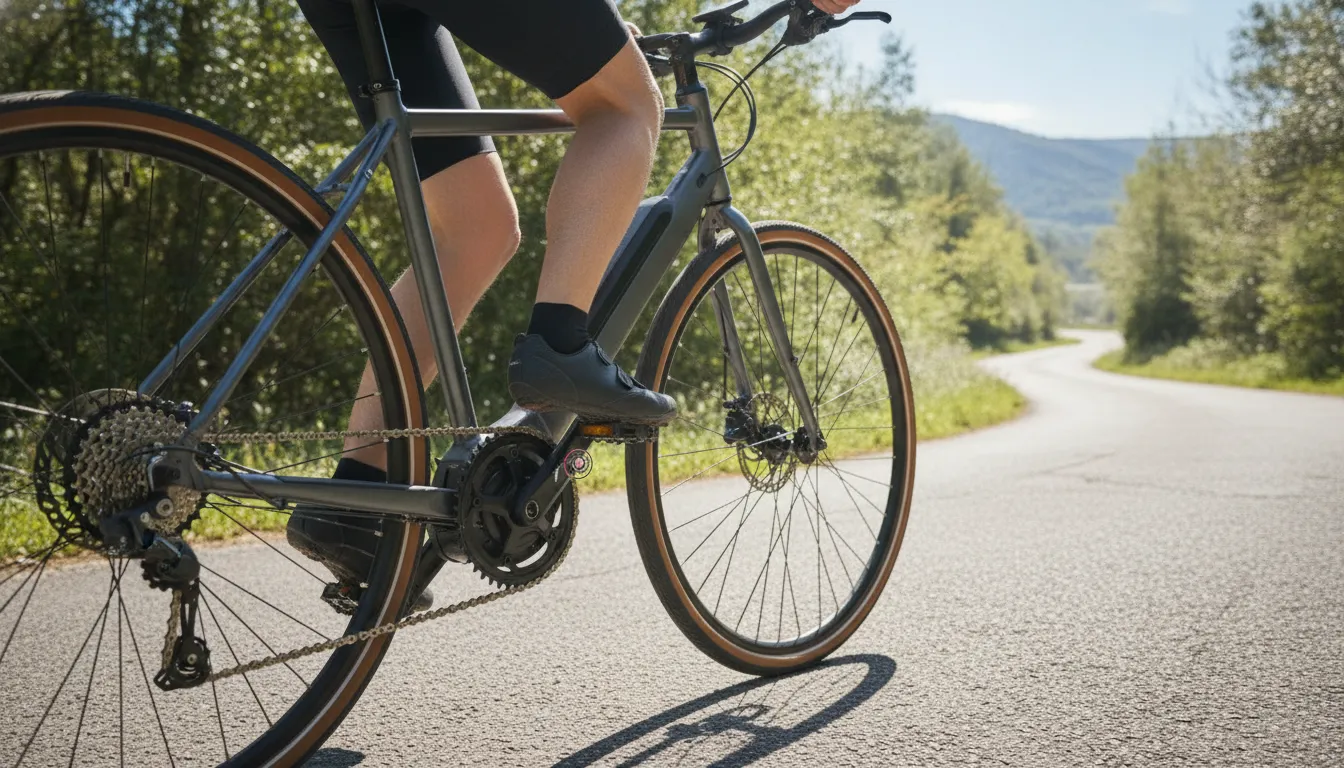
1. The torque sensor measures your effort
The process starts at the pedals. A torque sensor detects the force you are applying through the crank and drivetrain. A light pedal stroke produces a different signal than a hard push. That distinction gives the system information about your intent, not just whether the pedals are moving.
Research on electrically assisted bicycles describes how motor torque can be controlled to reduce the pedaling torque generated by the rider. In practical terms, the motor can provide proportional support while you continue contributing to the ride. The sensor does not simply turn assistance on or off. It supplies the input needed for a more responsive relationship between your legs and the motor. Research published in the academic literature explains this motor-control relationship in greater detail.
2. The controller interprets the signals
The controller is the system brain. It receives the torque sensor's signal and combines it with information from the rest of the e-bike, such as selected assistance level and motor operating conditions. It then determines how much power the motor should deliver.
This step matters because the sensor's measurement is only useful when the bike can interpret it consistently. The controller helps turn a changing pedal force into an actionable command. If you increase pressure to accelerate or climb, the controller can recognize the stronger input and request more assistance. When you ease off, the command can reduce assistance as well. Voltaire's explanation of how the controller interprets sensor signals covers this relationship in plain language.
3. Motor software delivers proportional assistance
Motor software provides the rules that connect the controller's instructions to the motor's behavior. It manages how quickly assistance responds, how strongly it builds, and how the system adapts within the selected ride mode. The goal is not maximum output at every moment. It is useful output that matches the rider's effort.
Smart systems can also account for changing road and load conditions. Integrated sensors help optimize motor assistance as those conditions vary, and research notes that motor torque can be adapted when the system has information about external loads. That can make support feel more predictable when a route changes from smooth pavement to an incline or when the bike carries a different load. The result is a connected feedback loop: you pedal, the sensor measures, the controller interprets, and the software commands the motor. Explore Voltaire's Segway electric bike collection to compare models, or visit the Bend showroom for guidance on how different systems feel during a test ride.
What Is Torque Vectoring in an E-Bike?
Torque vectoring sounds like a feature borrowed from performance cars. But the underlying idea is straightforward: the bike adjusts how much motor assistance is available as the demands on the system change. In an e-bike, that demand comes from the rider's pedal force, slope, surface, speed, and total load. Instead of delivering one fixed level of power, the motor system responds to the information gathered by its sensors.
On most e-bikes, this does not mean that power is being split between two independently driven wheels. More often, "torque vectoring" is used as a practical way to describe adaptive motor control. The sensor and controller work together to match assistance to the rider's effort and the riding conditions. A rider pushing harder on a climb may receive more support, while a lighter pedal input on level pavement can produce gentler assistance.
How does adaptive torque control work?
A torque sensor measures the force applied through the pedals. The controller interprets that signal, considers the selected assistance mode and other available inputs, and tells the motor how much torque to produce. The result is a responsive connection between the rider and the bike. Assistance builds with the rider's effort instead of waiting for a simple pedal movement signal.
Research on smart electrically assisted bicycles describes this principle as adaptive control based on external loads. When the system has information about changing riding conditions, motor torque can be adjusted for those conditions rather than remaining constant. This academic research on adaptive motor control provides the technical foundation for that explanation.
Why does torque vectoring matter to the rider?
The benefit is control that feels more predictable. When climbing, carrying gear, or starting into resistance, the motor can respond to a meaningful increase in pedal force. On flatter ground, the bike can avoid feeling unnecessarily aggressive. That can make starts smoother, help the rider maintain traction and balance, and reduce the need to constantly change assistance modes.
Sensor quality, controller programming, and calibration all influence the result. Two bikes may both advertise torque sensing yet feel noticeably different on the road. For a deeper look at how this technology affects the buying decision, see Voltaire Cycles' guide to the best torque-sensing e-bikes. A test ride remains one of the clearest ways to judge whether the system delivers the smooth, controlled response you want.
Why Sensor Accuracy and Calibration Matter
A torque-sensing system is only as useful as the information it receives. The sensor measures how much force you apply to the pedals, then the motor uses that input to provide proportional assistance. In practical terms, accurate readings help the bike respond to your effort instead of delivering the same burst of power every time the cranks turn. Research on electrically assisted bicycles describes this relationship as motor control that reduces the pedaling torque required from the rider while preserving a natural connection between effort and assistance. The underlying research is available through the National Library of Medicine.
That precision affects the way a bike feels from the first pedal stroke. When the sensor recognizes a gentle input, the motor can build assistance smoothly. When you push harder, the system can respond with more support. The result is less of the abrupt surge that can make a low-quality or poorly adjusted system feel jerky, especially when starting from a stop. It also helps the motor avoid supplying more power than the moment requires, which can support more efficient battery use during ordinary riding.
Calibration keeps those benefits consistent. A sensor may need a known reference for what no pedal force feels like, and the system must interpret that baseline correctly as conditions change. If the reading drifts, assistance can feel delayed, overly strong, or uneven from one ride to the next. Proper setup and periodic service help preserve predictable feedback, so the same level of effort produces a familiar response over time.
Why does accuracy matter on hills and in traffic?
On a hill, your pedal force usually increases as the load rises. Accurate sensing lets the motor respond to that effort rather than waiting for a fixed cadence or a sudden command. Research on smart electrically assisted bicycles notes that, when the system recognizes external loads, motor torque can be adapted to the riding conditions. That can make a climb feel more controlled and reduce the need to constantly change assist settings. Explore the electric bikes collection to compare systems, then use a test ride to evaluate how naturally the assistance follows your input.
Traffic presents a different challenge. Riders need measured starts, quick adjustments, and confidence when slowing and accelerating around other people. A well-calibrated torque sensor can make those changes more predictable, giving you support that follows your pedaling instead of catching you off guard. For commuters and recreational riders alike, that consistency is a meaningful part of smart sensor technology, not just a technical specification.
The Role of Motor Software and Controllers in a Smart System
A torque sensor produces useful information, but it does not decide how the bike should respond on its own. The controller acts as the system's decision center. It receives signals from the torque sensor, speed sensor, motor, battery, and other inputs, then translates those signals into instructions for the motor. In practical terms, it determines how much assistance to provide, how quickly to deliver it, and when to reduce or stop that assistance.
Motor software gives the controller its operating logic. It maps rider effort to motor output rather than treating every pedal stroke as an on-or-off command. When you press harder on the pedals, the system can increase assistance. When your effort eases, it can reduce output. That proportional response is a major reason torque-sensing systems tend to feel more connected than basic cadence-based systems.
How the controller turns effort into assistance
The sensor measures force at the crank, bottom bracket, or another part of the drivetrain. The controller interprets that signal alongside speed and operating limits. It then commands the motor to produce a suitable level of electromagnetic torque. Research on electrically assisted bicycles describes this control approach as reducing the pedaling torque required from the rider while matching motor behavior to human effort. The published study explains how motor torque can be controlled in response to rider pedaling torque.
Software also helps smooth the transition into and out of assistance. A well-calibrated system avoids delivering an abrupt surge when the rider starts pedaling. While still providing more support when the bike encounters a hill, heavier load, or changing surface. The goal is not simply maximum power. It is predictable power that suits the rider, the selected assistance level, and the riding conditions.
Adapting to roads, loads, and rider needs
Smart control becomes especially valuable when conditions change. A rider may encounter an incline, carry additional cargo, or need to accelerate after a stop. Integrated sensors can help the system account for external loads and adapt motor torque to those conditions, rather than relying on one fixed output. Engineering research on adaptive e-bike control describes this relationship between sensed loads and motor torque.
That continuous adjustment can support a steadier ride and help avoid unnecessary battery use. It can also make assistance feel more manageable for commuters, active adults, and riders who want dependable support without constantly changing settings. Some research has further examined pedal-force data as a potential input for activity and health monitoring, although an e-bike's health features depend on its specific hardware and software. A review of smart electrically assisted bicycles discusses their potential as health monitoring systems.
Software updates, sensor calibration, wiring, and controller condition all affect how this intelligence feels on the road. If assistance is inconsistent, delayed, or unusually abrupt, professional diagnosis is worthwhile. Voltaire Cycles provides e-bike service and repairs for all brands, helping riders evaluate the complete system instead of replacing parts by guesswork.
Frequently Asked Questions
How does a torque sensor work on an e-bike?
A torque sensor measures how much force you apply to the pedals. The controller interprets that signal and tells the motor how much assistance to provide, so the response rises and falls with your effort. This proportional control is documented in research on electrically assisted bicycles and motor control (academic research on e-bike motor control).
Torque sensor vs cadence sensor: which is better?
Neither system is automatically best for every rider. A torque sensor usually feels more natural because assistance responds to pedal pressure, while a cadence sensor responds mainly to whether the cranks are turning. Torque sensing is often the better fit for riders who want nuanced control on hills, starts, or technical surfaces. A cadence system may suit someone who prefers a simpler, more consistent assist level.
Do torque sensors affect e-bike range and battery use?
They can influence how efficiently assistance is delivered, but range still depends on battery capacity, assist level, speed, terrain, rider weight, tire pressure, and weather. Because the motor responds to actual pedal effort instead of delivering one fixed output whenever the cranks turn, a well-tuned system can avoid unnecessary power delivery. Treat the manufacturer's range estimate as a starting point, not a guarantee.
Why does an e-bike feel jerky with a cadence sensor?
A cadence sensor can activate assistance when it detects crank rotation, even before the system knows how hard you are pushing. That can make starts and stops feel less gradual, particularly in a low gear or crowded setting. A torque-sensing system can feel smoother because its controller receives a measure of rider effort and adjusts motor output accordingly. Sensor calibration and software tuning also matter.
Can smart sensor technology improve e-bike safety?
Smart sensors can help the system adapt motor assistance to changing rider effort, road conditions, and loads. That may improve control and predictability, but sensors do not replace attentive riding, appropriate speed, braking technique, or equipment checks. Research describes adaptive motor control as a way to respond to external loads (research on adaptive e-bike assistance).
Ready to Experience Smarter E-Bike Assistance?
Seeing how sensors, controllers, and motor software work together is helpful, but the ride feel is easiest to understand in person. Take a test ride to compare responsive torque assistance and find an electric bike that fits your riding style.
Shop the Segway electric bike collection or get started with a test ride at Voltaire Cycles.