
Torc Sensing Ebike Dealers in USA: A Buyer's Guide
Buying an e-bike is not only about choosing a motor and battery. The dealer you choose can shape how confidently you ride. From understanding the difference between torque and cadence sensing to getting the bike adjusted for your body, terrain, and goals.
The best torque-sensing ebike dealers in the USA combine nationwide online purchasing with real human support. Voltaire Cycles offers that hybrid experience: you can shop from anywhere in the United States, while riders near Bend. Oregon can visit the showroom, take a test ride, and receive expert service from a team that works with electric mobility every day.
That combination matters because a torque-sensing system should feel natural, responsive, and appropriate for the way you ride, not merely impressive on a product page. Start by understanding what torque sensing changes in everyday riding, especially when you accelerate, climb, or navigate varied terrain.
Schedule a free e-bike consultation to compare torque-sensing models and plan your test ride.
Why Choose a Torque-Sensing E-Bike in the First Place?
The biggest appeal is the way the bike responds to you. A torque sensor measures how much force you are applying to the pedals, then signals the motor to provide assistance in proportion to that effort. Push harder and the bike helps more. Ease up and the assistance eases with you. That real-time response creates a ride that feels connected to your own pedaling instead of switching between human power and motor power.
That distinction matters when you are starting from a stop, adjusting your pace, or riding through changing terrain. With proportional power delivery, you can make small changes to your effort and receive a small, predictable change in assistance. You do not have to anticipate a sudden surge after the pedals begin turning. This is one reason torque-sensing systems often feel especially natural to commuters, recreational riders, and anyone who wants an e-bike to behave more like a traditional bicycle.
Cadence sensors primarily detect whether the cranks are rotating. They can work well, but their response may feel delayed or more binary because the system is reacting to pedal movement rather than the force behind it. If you are comparing the two systems, this guide to choosing a torque sensing e-bike explains the practical differences in more detail.
Control is also a safety consideration. Predictable acceleration gives you more confidence when pulling away in traffic, entering a turn, or managing a narrow path. A controlled start can be particularly helpful on an incline, where an abrupt burst of motor power may unsettle the rider. Torque sensing does not replace good judgment or careful braking, but it can make the bike's response easier to anticipate. Research on electric-assisted bikes has also found that torque-sensing systems show promise for improved control under varied external loading conditions, which supports their usefulness beyond flat, uncomplicated roads: PubMed research on torque control.
The result is not simply a faster bike. It is a more communicative one. The motor supports your decision-making instead of dictating your pace, whether you are conserving effort on a longer ride or adding power for a short climb. That feel is personal, so a test ride remains the best way to decide whether torque sensing suits your balance, strength, riding goals, and preferred level of assistance.
Torque Versus Cadence Sensing: What the Difference Really Is
The key difference is what the motor uses to decide how much assistance to provide. A torque sensor responds to how hard you are pressing the pedals. A cadence sensor responds mainly to whether, and how quickly, the cranks are turning. Both systems can help you ride farther and with less effort, but they do not feel the same when you start, slow down, or change terrain.
Torque sensing measures your pedaling force and lets the controller deliver power in real time. Press harder when approaching a hill, and the assistance can rise with your effort. Cadence sensing is simpler in its response. Once the system detects pedal rotation, it activates assistance at a preset level, which can make power delivery feel delayed or more binary. For a deeper technical explanation, read our guide to torque sensing vs cadence sensor.
| Riding characteristic | Torque sensing | Cadence sensing |
|---|---|---|
| What it measures | How much force you apply to the pedals | Whether and how fast the pedals are rotating |
| Power delivery | Assistance rises and falls more proportionally with your effort | Assistance typically switches on after pedaling is detected and may feel more fixed |
| Starting from a stop | Often feels more controlled, including when starting on an incline | Can feel delayed before the motor engages, then more abrupt when it does |
| Riding feel | Closer to an amplified version of your own pedaling | More like a motor that provides a selected level of help while you keep the pedals moving |
| Best fit for | Riders who want precise control, natural response, or frequent changes in pace | Riders who prefer straightforward assistance and a simpler system |
That controlled start matters on a driveway, a ramp, or a Bend street that rises immediately from an intersection. Torque sensing can help the bike build assistance in step with your initial pressure rather than waiting for a sustained rotation signal. It does not remove the need for proper gearing, balance, or careful throttle and pedal technique, but it can make low-speed control feel more predictable.
Cadence sensing is not automatically the wrong choice. Some riders value strong, consistent assistance and do not mind a short engagement delay. The right system depends on your strength, riding habits, terrain, and comfort with the bike. A test ride is the most useful way to compare these responses. That is especially true if you are shopping among torc sensing ebike dealers in usa. Riding one is the clearest way to understand how the terminology translates to an actual ride.
Torque Sensing on Hills, Trails, and the Daily Commute
Terrain is where torque sensing becomes easiest to appreciate. Instead of delivering assistance simply because the cranks are turning, the system responds to the force you apply through the pedals. Push harder as a hill steepens, and the motor can provide more support. Ease off near the crest or on level ground, and the response can settle with you.
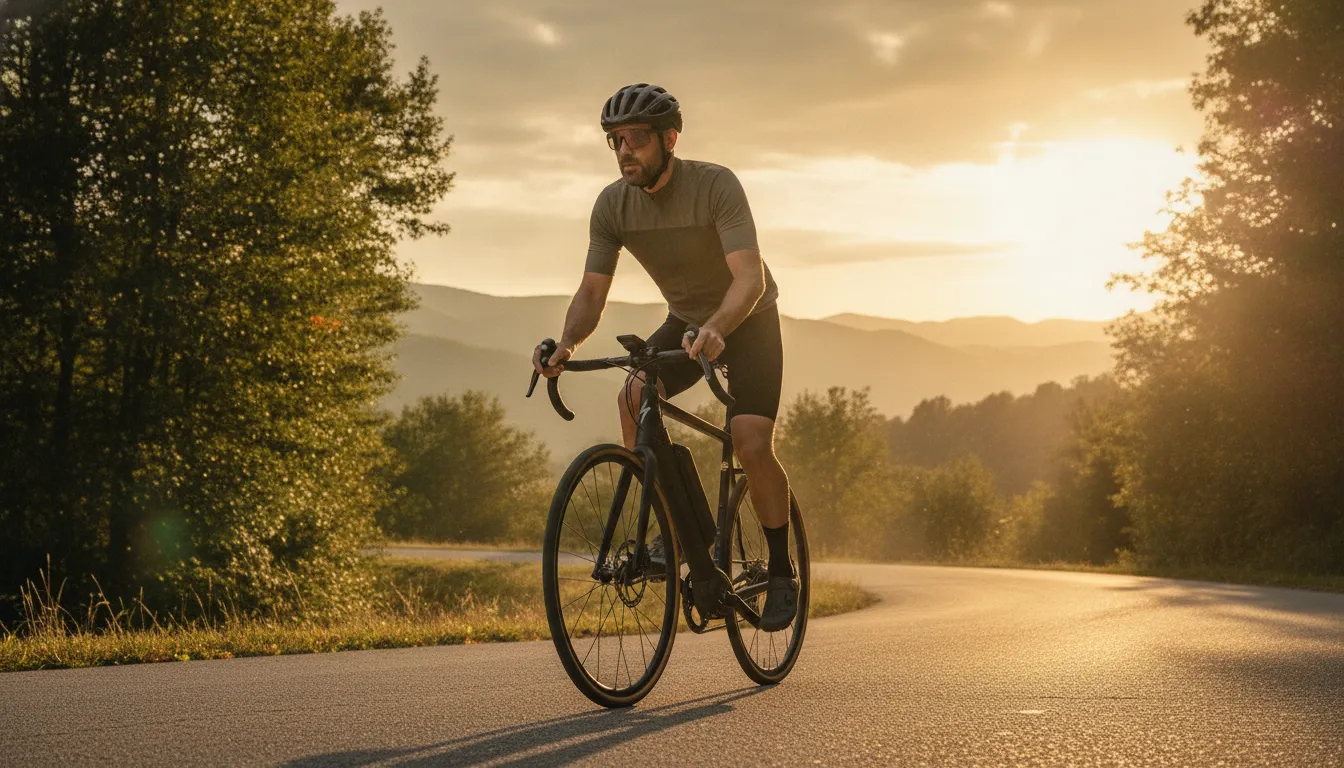
That proportional behavior helps create a controlled start on an incline. A rider can apply pressure gradually rather than receiving an abrupt surge as soon as the pedals begin moving. This is useful when starting from a stop sign on a slope, leaving a driveway, or getting moving with a loaded bike. It also helps newer riders and anyone who values a predictable feel keep better control of the bike.
More control when the trail gets technical
On a steep or uneven trail, traction and balance can matter as much as raw motor power. Torque-sensing systems are particularly useful when the rider needs small, deliberate changes in assistance. A measured pedal input can help the bike move over a rocky section without making the motor feel like it is switching abruptly between off and on. The result is a more manageable connection between your effort, the terrain, and the bike's acceleration.
Research published in PubMed found that torque-sensing control shows promise for improving responsiveness under varied external load conditions. That matters in real riding, where the load changes with a rider's weight, cargo, gradient, surface, and pace. It does not eliminate the need to choose an appropriate assist level or use good trail technique, but it can make the power delivery easier to modulate.
A natural response for everyday riding
On a daily commute, the same sensor behavior can feel less like operating a machine and more like riding a bicycle with a helpful tailwind. Your input remains part of the experience, whether you are accelerating from a light, climbing a neighborhood grade, or carrying groceries home. Torque sensors adapt in real time to variables such as rider weight, riding style. And whether the route is flat or hilly, so the response can feel more personal than a fixed assistance pattern.
For riders comparing systems, the best test is still a ride that includes the terrain they actually use. Try a controlled start on a hill, pedal through a corner, and notice how smoothly assistance follows your effort. That practical comparison often reveals more than a specification sheet, especially for commuters, recreational riders, and trail users who need confidence in changing conditions.
Why the Right Torque-Sensing Ebike Dealer in the USA Matters
A torque-sensing e-bike can feel remarkably natural, but the system behind that feel is more involved than a simple on-off assist. Torque sensors measure how much force you apply to the pedals, then the controller delivers assistance in real time. That interaction between sensor, motor, controller, drivetrain, and software is why professional dealer support matters from the first setup through years of riding.
The right dealer helps ensure the bike is assembled, adjusted, and configured for the way you actually ride. Professional installation and service are especially valuable with torque-sensing systems because their greater complexity leaves more room for an incorrect adjustment or overlooked issue to affect performance. A qualified mechanic can also identify developing problems early, before a small concern becomes an expensive repair or leaves you without a dependable bike.
Fit affects comfort, control, and power transfer
Motor technology is only one part of the riding experience. Frame geometry, contact points, component quality, and fit all influence how confidently you can use that assistance. A professional dealer can adjust saddle height, handlebar position, controls, and other contact points to place you in a more comfortable and effective riding position. That matters whether you are commuting, climbing Central Oregon hills, or looking for an e-bike that feels manageable on longer recreational rides.
Dealer support also makes ownership easier when a warranty question arises. When choosing an e-bike, manufacturer support and warranty coverage deserve the same attention as motor output or battery capacity. A local dealer can help document the issue, communicate with the manufacturer, identify the correct replacement, and explain what happens next. That guidance can be far more useful than trying to diagnose a sensor or controller problem alone.
Test rides reveal what specifications cannot
Product pages can describe torque sensors, assist levels, and motor ratings. But specifications cannot tell you exactly how a bike starts, responds to your pressure, or behaves on an incline. Test rides are the only objective way to compare the feel of different motor types and power-delivery systems. Ride at an easy pace, start from a stop, climb a hill, and try several assist levels. You will quickly notice whether the response feels smooth and proportional or delayed and abrupt.
That is the practical value of working with a reputable local electric bike dealer. You are not choosing from a spreadsheet alone. You can ask questions, compare systems in person, receive a proper fit, and know where to turn for service after the sale. For shoppers comparing torque-sensing ebike dealers in usa. That combination of technical support and firsthand evaluation is often more important than chasing the highest number on a product page.
A Dealer With Both Online Convenience and a Bend Showroom
Buying an e-bike does not have to mean choosing between an online checkout and personal support. Voltaire Cycles combines both options. Customers anywhere in the United States can shop online, compare electric bikes and other mobility products, and arrange a purchase from home. Riders in Bend and Central Oregon can also visit the showroom to ask questions. Compare models in person, and get help from people who work with electric mobility every day.
That combination is especially useful when you are comparing torque-sensing and cadence-sensing systems. Product specifications can tell you about motor output, battery capacity, and components, but they cannot fully describe how power delivery feels beneath you. A test ride lets you compare acceleration, handling, fit, and control in a way that product photos and reviews cannot. Local showrooms and test rides also give riders a chance to experience the intuitive feel of torque sensing firsthand.
At the Bend showroom, you can see different types of electric mobility products in one place, including trikes, commuter e-bikes, and mountain e-bikes. That broader view can make the decision easier if your needs are not limited to one category. A commuter may value an upright position and practical storage, while an outdoor rider may need different geometry, tires, and support for uneven terrain. Someone seeking additional stability may find that a trike deserves consideration alongside a conventional e-bike.
The showroom experience also helps with the details that affect everyday use. You can discuss real-world range and battery capacity rather than relying only on idealized test conditions. Staff can help match the bike to your height, riding goals, route, and comfort preferences. Compatible accessories, including racks, lighting, and storage, can be selected with the bike and custom-installed when appropriate. Understanding the e-bike's legal classification is another valuable part of the conversation, particularly when you plan to ride on roads, paths, or trails with specific rules.
For shoppers outside Central Oregon, the online store provides access to the same product guidance without requiring a trip to Bend. For local riders, the benefit continues after the sale through technical assistance and multi-brand e-bike service. That matters because an e-bike is a long-term mobility tool, not just a one-time shipment. Dealer-backed maintenance can help identify issues early, support warranty questions, and keep a more complex torque-sensing system working as intended.
If you are local, start with a test ride and a conversation about how you actually plan to ride. If you are shopping from elsewhere, use the online store and ask for guidance before ordering. Voltaire Cycles offers the perspective of an electric bike dealer with local showroom support, while keeping the buying process accessible to customers nationwide.
How to Buy a Torque-Sensing E-Bike Nationwide With Local Support
Buying online can expand your choices, but the best experience does not end when the box arrives. Use these steps to choose a torque-sensing e-bike that fits your riding and gives you a reliable support plan, even if the dealer is not in your town.
- Define your riding style and terrain. Start with where and how you will ride. Note whether your routine includes paved commuting, neighborhood errands, long recreational rides, steep roads, or technical trails. Include your preferred riding position, expected cargo, and any accessibility considerations. Rider weight, riding style, and terrain all affect how a torque sensor adapts assistance in real time. So a useful dealer conversation begins with your actual plans rather than a motor specification alone.
- Arrange a test ride before committing. Ask the dealer whether you can ride a torque-sensing model in conditions that resemble your routine. Try a flat start, a stop-and-go section, and an incline if possible. A test ride is the most objective way to compare motor types and power delivery, because written descriptions cannot reproduce how assistance responds to your pedaling. If you are shopping nationwide, ask about a showroom appointment, a local partner, or a detailed remote consultation that covers fit and setup.
- Confirm service and warranty support. Before paying, ask who handles assembly, calibration, diagnostics, warranty claims, and replacement parts. Confirm what the manufacturer warranty covers, how claims are submitted, and whether the dealer will facilitate support after an online purchase. A clear answer is more valuable than a low upfront price when the bike uses a more complex torque-sensing system.
- Verify multi-brand service capability. A dealer that works across brands may be better positioned to support your bike if your needs change or if you already own another electric mobility product. Ask about routine maintenance, electrical diagnostics, and post-purchase adjustments. A reputable local electric bike dealer should explain what its technicians can service before you buy, not make broad promises afterward.
- Check e-bike class and legal compliance. Ask which class the bike falls into and where that class can legally be ridden in your intended area. Dealer guidance can help you understand the specific classification and local rules, including restrictions that may apply to paths or trails. Keep the model documentation and confirm that the advertised configuration matches the compliant version you will receive.
That process lets you combine nationwide product access with practical local accountability. The right dealer should make it easy to understand the bike, test its feel, plan service, and ride within the rules.
Ready to find your torque-sensing e-bike dealer with local support? Contact Voltaire Cycles today.
Frequently Asked Questions
What is the difference between a torque sensor and a cadence sensor?
A torque sensor measures how hard you press the pedals and adjusts motor assistance in real time. A cadence sensor primarily detects that the pedals are turning, so its power delivery can feel more delayed or binary. Torque sensing usually feels more like an extension of your own effort, while cadence sensing may feel more like an on-off assist system.
Are there e-bike dealers in the USA that offer torque-sensing test rides?
Yes. Local electric-bike shops and brand showrooms may offer hands-on test rides, although availability varies by location and model. A test ride lets you compare motor response, frame fit, starting control, and riding position instead of relying only on specifications. Voltaire Cycles offers showroom test rides in Bend, Oregon.
Is a torque-sensing e-bike better for hills?
It can be a strong choice for hills because the motor responds proportionally to your pedaling effort. That makes it easier to control assistance while starting on an incline, climbing varied terrain, or easing off near a corner. Your motor size, gearing, battery, rider weight, and terrain still matter, so ask a dealer to match the complete bike to your routes.
Can I buy a torque-sensing e-bike online without a local dealer?
You can purchase online, but local assembly, fitting, diagnostics, and future service can make ownership easier. If no nearby shop supports the model, ask the seller how warranty work, replacement parts, software issues, and repairs are handled before ordering. A hybrid retailer can provide online convenience while still offering in-person support where available.
How do I find a reputable torque-sensing e-bike dealer?
Look for a dealer that offers test rides, explains torque and cadence systems clearly, services the brands it sells, and can help with fit and accessories. Confirm the warranty process and ask whether the shop can diagnose electrical issues after the sale. Multi-brand technical experience is useful when your needs change or your preferred model is not from one brand.
Ready to Choose Your Torque-Sensing E-Bike?
A short conversation can help you compare torque-sensing options with your riding style, comfort needs, and plans for local support. Voltaire Cycles can help you take the next step online or connect with the Bend showroom experience when a hands-on ride would be useful.