
Torc Sensing Ebike Dealers in Oregon: A Local Guide
Choosing an electric bike in Oregon is easier when you can do more than compare specifications on a screen. In Bend, a hands-on test ride can show whether the motor responds naturally on climbs. How the bike feels under your own pedaling, and whether local support is available after purchase.
For shoppers seeking torc sensing ebike dealers in Oregon, Voltaire Cycles of Central Oregon is Bend's local torque-sensing e-bike dealer for Segway e-bikes. The showroom team can help you compare options, arrange a test ride, and provide expert service and repairs for electric mobility products.
That local guidance matters because torque sensing describes how an e-bike responds to your effort, not simply how quickly the pedals turn. Understanding that difference will help you judge whether a torque-sensing system fits your commute, Central Oregon recreation, or everyday riding needs.
Browse Segway e-bikes at Voltaire Cycles and plan your Bend test ride
What Is a Torque-Sensing E-Bike?
A torque-sensing e-bike uses a sensor to detect how much force you are putting into the pedals. The harder you press, the more motor assistance the bike provides. That creates a riding experience that feels closely connected to your own effort, rather than like the motor is switching on independently of you.
The distinction becomes clearer when you compare torque sensing with cadence sensing. A cadence sensor measures how fast the cranks are turning. Once it detects that you are pedaling, the system generally delivers assistance according to the selected mode. A torque sensor, by contrast, measures how hard you are pedaling. It responds to the pressure in your pedal stroke, so the motor can add support in proportion to the work you are doing.
| Feature | Torque sensor | Cadence sensor |
|---|---|---|
| What it measures | How hard you pedal | Whether and how fast the cranks turn |
| Assist behavior | Matches motor help to your effort | Delivers set assistance once you pedal |
| Ride feel | Natural, intuitive, connected | Can feel more on/off |
| Hills and starts | More power as you press harder | Consistent response regardless of effort |
Why does torque sensing feel more natural?
Imagine starting from a stop. With a responsive torque system, a firm push on the pedals prompts stronger assistance, while a gentle spin produces a lighter response. You remain in control of the pace and effort, and the motor follows your input instead of asking you to adapt to a fixed burst of power.
This is why many riders describe torque-sensing assistance as intuitive. The bike does not simply recognize that the pedals are moving. It interprets your effort and translates it into motor support. The result is a smoother connection between rider and bicycle, particularly for people who want an e-bike to feel like an extension of their own pedaling.
What difference does it make on hills and during stop-and-go riding?
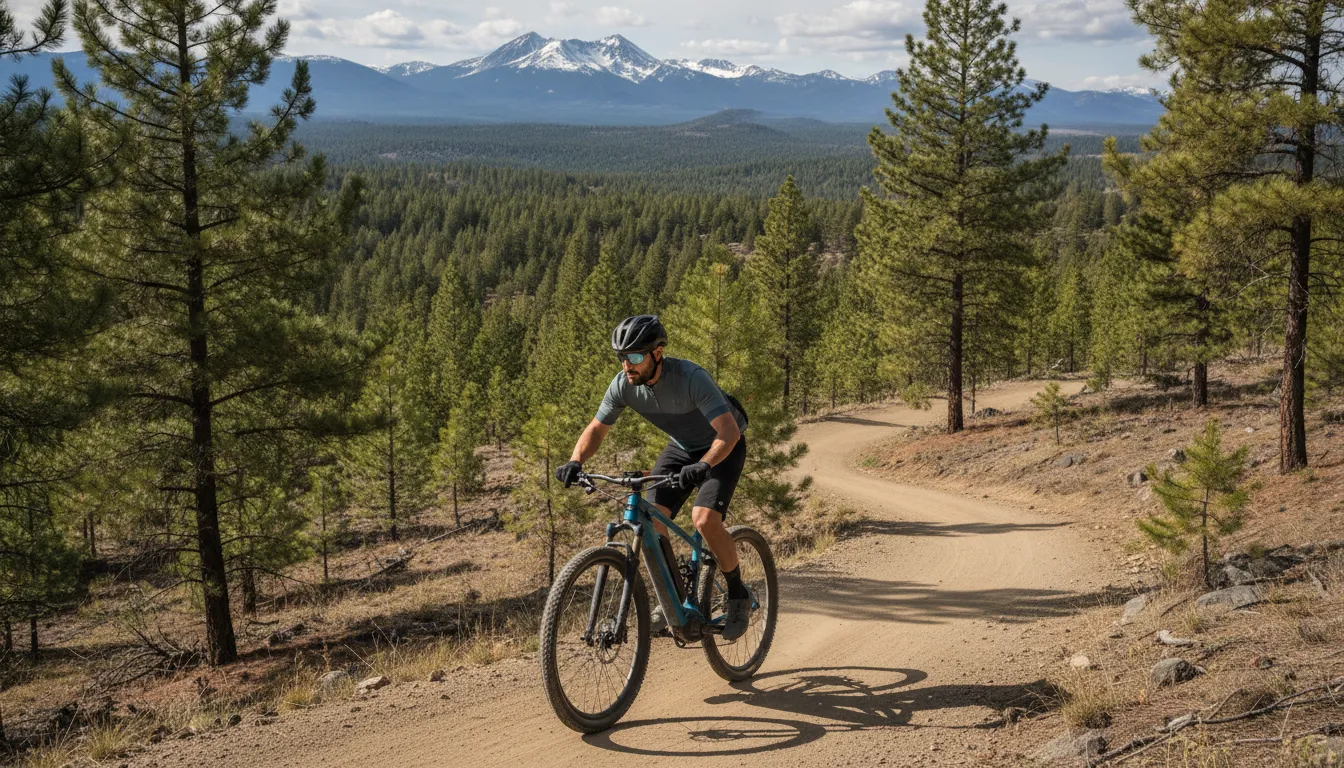
Hills reveal the difference quickly. As the incline increases, riders naturally press harder on the pedals. A torque-sensing system responds to that added effort with more assistance, which can make climbing feel controlled and predictable. This input-based response is one reason torque-sensing e-bikes are generally well suited to hills.
The same principle helps on start-stop routes. At a crosswalk, busy intersection, or trail junction, you can ease into the pedals and receive measured support rather than an abrupt surge. When you need more help, a stronger pedal stroke communicates that need directly. That can feel more manageable than the on/off character some riders associate with cadence-based systems.
Neither sensor type is automatically right for every rider. Cadence systems can offer consistent assistance with minimal pedal pressure, while torque systems reward active input. If you are unsure which response suits your commute, recreation, or Central Oregon terrain, a hands-on test ride is more useful than a specification sheet. For a deeper comparison, see torque sensing versus cadence sensing on an electric bike before choosing your next ride.
Why Buy a Torque-Sensing E-Bike from a Local Dealer?
Buying online can make it easy to compare models, but a product page cannot tell you how a torque-sensing e-bike will feel under your own feet. That distinction matters. Torque sensors respond to how hard you pedal, while cadence sensors respond primarily to whether the cranks are turning. The result can feel more intuitive and connected, especially when your route includes hills, starts, stops, or changing terrain.
At a local electric mobility retailer in Bend, you can test that difference before making a decision. A short, hands-on ride lets you compare how quickly assistance responds when you ease off, press harder, climb, or pull away from a stop. You can also evaluate practical details that are easy to overlook online, including frame fit. Riding position, control placement, braking feel, and how naturally the motor supports your effort. Voltaire Cycles offers test rides and expert consultation so the choice is based on your goals, not just a list of specifications.
Advice for Central Oregon riding
Local guidance is especially useful when your riding environment is varied. A commuter in Bend may want smooth starts and predictable assistance, while a recreational rider may care more about climbing feel. Control on uneven surfaces, or how the bike behaves when the trail changes grade. An experienced local retailer can ask about your route, fitness, comfort preferences, and intended use, then help you determine whether torque sensing is the right fit. That conversation is more useful than treating every e-bike as interchangeable.
There is also value in having knowledgeable support after the sale. Torque-sensing e-bikes combine electronic sensors, motor controls, a battery system, and a mechanical drivetrain. Maintenance and troubleshooting require technical knowledge, including attention to sensor operation and calibration. Voltaire Cycles provides certified technical expertise and multi-brand service capabilities, giving riders a local resource when an adjustment, repair, or service question arises. You can review the retailer's electric mobility repair and service options before choosing where to buy.
For shoppers comparing torc sensing ebike dealers in Oregon, the best question is not simply who offers the lowest listed price. Ask whether you can ride the model, receive advice suited to Central Oregon, and get help maintaining the system over time. A Bend showroom turns the purchase into an informed fit decision, with local support that an online-only transaction cannot provide.
What to Look For in a Torque-Sensing E-Bike Dealer in Oregon
A torque-sensing e-bike is an investment in how you ride, not just a set of components. The right dealer should help you evaluate the motor response, fit, service plan, and ownership support before you commit. Use this checklist when comparing an Oregon electric mobility retailer with an online-only seller.
- Ask to test ride the models you are considering. A specification sheet cannot show whether the assist feels smooth when you start, responsive when you push harder, or comfortable on a climb. Look for a dealer with relevant models in stock and a safe place to ride them. Try the same hill or route in several assist levels, and notice whether the motor follows your effort naturally. If you are comparing torque-sensing and cadence-sensing systems, read this guide to torque-sensing vs cadence-sensing e-bikes before your visit, then use the test ride to connect the explanation to a real bike.
- Confirm that service staff understand sensors and drivetrains. Ask who diagnoses motor-assist issues, adjusts the drivetrain, and handles firmware or sensor-related concerns. A serious dealer should be able to explain how torque sensing works, what routine maintenance involves, and when a problem requires manufacturer support. Certified or manufacturer-trained technicians are especially valuable, but ask what those credentials cover rather than accepting a vague service claim. Multi-brand experience can also matter if your household owns more than one type of electric mobility vehicle.
- Read the warranty and price policy before buying. Request the warranty terms in writing. Check what is covered, who performs repairs, how parts and labor are handled, and whether exclusions apply to the battery, motor, display, or sensor system. A transparent best-price guarantee should explain eligible competitors, time limits, and documentation requirements. Clear policies make it easier to compare the real cost of ownership instead of comparing only advertised prices.
- Look for product knowledge that goes beyond the sales pitch. If you are considering Segway, the retailer should be able to discuss the relevant models, riding positions, assist behavior, battery considerations, and intended use. The advice should account for commuting, recreation, hills, and your comfort level, not simply steer you toward the most expensive option. Good product expertise helps you choose a system that fits your actual riding goals.
- Choose a location you can return to. E-bikes need ongoing care, adjustments, and occasional troubleshooting. A local showroom gives you a practical place to bring the bike back, ask follow-up questions, and get help after the first ride. For Central Oregon shoppers. A Bend location with hands-on consultation and service access can be more useful than a distant seller that only answers questions through a web form.
The best dealer makes the buying decision easier by letting you experience the difference, explaining the technical details plainly, and standing behind the ownership experience after checkout.
The Voltaire Cycles Advantage in Bend
Choosing an electric mobility retailer is about more than finding a model that looks good online. The right fit depends on how the bike responds to your effort. How it handles the roads and inclines you ride, and whether knowledgeable support is available after the purchase. In Bend, Voltaire Cycles of Central Oregon gives riders a place to evaluate those details in person.
As a local electric mobility retailer and authorized Segway dealer, Voltaire Cycles brings the Segway lineup into a hands-on showroom experience. You can review the Segway e-bike collection, ask questions about the system, and arrange a test ride before committing. That matters with torque-sensing e-bikes because the difference is easiest to understand when you feel how motor assistance responds to your own pedal pressure.
A test ride also gives you a chance to assess practical details that product specifications cannot fully explain. Pay attention to how naturally assistance starts, how the bike responds when the road rises, and whether the riding position feels comfortable for your regular routes. Voltaire's team can discuss those observations with you rather than steering the conversation toward a one-size-fits-all recommendation.
Advice shaped around Central Oregon riding
Voltaire Cycles provides expert consultation for customers deciding whether a torque-sensing e-bike matches their terrain and goals. A commuter, a recreational rider. And an active adult looking for a more supportive way to explore Central Oregon may need very different combinations of frame design, assist behavior, and equipment. A local conversation helps connect those needs to a realistic choice.
The retailer also offers a best-price guarantee, giving shoppers another reason to compare options with the team before buying. The goal is not simply to move a product. It is to help you choose electric mobility equipment that makes sense for how you intend to ride. With the option to shop online when that is more convenient.
Support after the sale
Sensor systems and drivetrains require informed maintenance, especially when a rider depends on consistent assist response. Voltaire Cycles offers certified technical expertise and multi-brand service, including bike and e-bike repair. That local support can be valuable when you need help understanding a service recommendation, maintaining your setup, or keeping an e-bike ready for regular use.
If you are still comparing sensor systems and models, review the best torque-sensing e-bikes buyer's guide before visiting. Then bring your questions to the Bend showroom and use a test ride to make the decision based on your own experience.
Segway Torque-Sensing E-Bikes Available in Bend
Segway gives Central Oregon riders a useful range of electric mobility options, from practical commuting models to performance-oriented machines. At Voltaire Cycles, the starting point is not a catalog specification alone. It is how a model responds when you pedal, turn, climb, and transition between different surfaces. A hands-on test ride can make those differences much easier to understand.
On a torque-sensing e-bike, the system responds to how much force you put into the pedals. A relaxed pedal stroke receives lighter assistance, while a stronger effort can call for more motor support. That response can feel more connected than a system that primarily detects whether the cranks are turning. It is especially useful when your pace or effort changes frequently, such as when leaving a stop. Climbing a Bend neighborhood hill, or adjusting your output on a mixed-use route.
Segway models are a natural part of that conversation because the brand spans more than one kind of rider. The Segway Myon is positioned as a commuter electric bike, making it a relevant option for shoppers who want a practical model for everyday transportation. A commuter may value controlled, predictable assistance as much as outright power. The right setup should help the rider settle into a comfortable pace without making the motor feel disconnected from their effort.
At the performance end of the Segway lineup, the Segway Xaber 300 provides a benchmark for the brand's electric dirt-bike and e-moto direction. It is not a substitute for a commuter e-bike, but it illustrates why responsive control matters to riders who care about confident power delivery on more demanding terrain. The Xaber 300 is also one of the Segway models covered in Voltaire Cycles' review content. So shoppers can use that material as part of their research before visiting the showroom.
These models should not be treated as interchangeable. Your intended route, riding position, experience level, and need for transport versus recreation all influence the better fit. Voltaire's team can help compare the Segway range with other options in the all-electric bike collection, then narrow the search through conversation and a test ride.
For shoppers who already know they want the brand, browse the Segway e-bikes online before coming to the Bend showroom. Bring questions about assist feel, service, riding goals, and where you plan to ride. The goal is a confident choice supported by local electric mobility expertise, not a rushed purchase based on a single number.
Choosing the Right Torque-Sensing E-Bike for Central Oregon Riding
Central Oregon asks an e-bike to do more than cruise on flat pavement. A typical ride may include a daily commute, rolling grades, a long return route, or a trail where the surface and incline change quickly. The right torque-sensing e-bike should match how you ride, how much effort you want to contribute, and where you expect to use it.
Start by considering the terrain you ride most often. Torque sensors measure how hard you pedal, then adjust motor assistance to your effort. Press more firmly as a hill steepens and the system can provide more support. Ease off on level ground and the assistance can reduce. That responsive behavior is especially useful on Central Oregon climbs, where a fixed level of assistance may feel excessive on one stretch and insufficient on the next.
For commuting, look for a system that feels predictable during frequent starts, stops, and changes in grade. Torque assist can make it easier to control the bike's response because power follows your input rather than arriving only because the pedals are turning. Riders who want to arrive without exhausting themselves can contribute lightly and let the motor provide support. While riders seeking exercise can pedal harder and receive assistance that complements that effort.
Match battery expectations to the way you ride
Battery range is not a single promise that applies equally to every rider. Terrain, rider effort, assist level, wind, load, tire pressure, and stop-and-go riding all influence how much energy a trip requires. Torque sensing can support efficient use of the battery by matching assistance to the effort you are actually applying. Rather than delivering the same response whenever the cranks move. That can be helpful on mixed routes with both flatter commuting sections and climbs, but it does not eliminate the need to plan for distance and elevation.
Before choosing a model, describe your normal route and your return-trip priorities to a knowledgeable retailer. Ask how the bike behaves when climbing, whether the controls let you adjust assistance easily, and how the battery and drivetrain should be maintained. A hands-on ride is often the clearest way to decide whether the response feels natural. Our guide to how torque sensors improve e-bike riding provides additional context before you visit.
Trail riders should pay close attention to control and confidence, not just motor output. A torque-sensing system can feel more intuitive when traction, grade, and cadence change together. But the bike still needs to suit the intended trail use, fit the rider, and offer appropriate service support. Voltaire Cycles can help Central Oregon riders compare those factors through expert consultation and test rides. So the choice is based on real riding goals rather than a specification sheet alone.
Frequently Asked Questions
Which e-bikes have torque sensors?
Torque sensors are found on many commuter, trail, and performance e-bikes. They measure how hard you pedal and adjust motor assistance to match your effort. Because sensor equipment varies by model and trim, review the current specifications or ask a dealer to confirm whether a particular e-bike uses torque sensing.
What is the difference between a torque sensor and a cadence sensor on an e-bike?
A torque sensor measures how much force you apply to the pedals, while a cadence sensor measures whether and how quickly the cranks are turning. Torque sensing generally feels more natural because assistance responds to your effort. Some e-bikes use both systems to balance responsive control with consistent power delivery.
Are torque-sensing e-bikes better for climbing hills?
They can be, especially when you want assistance to increase as you pedal harder on an incline. That responsive feel helps you manage changing terrain without relying only on a preset assist level. Motor power, gearing, battery condition, rider weight, and hill grade still affect climbing performance.
Where can I find torque-sensing e-bike dealers in Oregon?
Look for an Oregon electric mobility retailer that can verify sensor specifications, offer a hands-on test ride, and provide service after the sale. Voltaire Cycles in Bend offers expert consultation, test rides, and certified multi-brand service. A local visit lets you compare how different assist systems feel on real Central Oregon terrain.
Can a dealer help me choose the right sensor system?
Yes. Share how you plan to ride, including commuting, hills, trails, distance, and comfort preferences. A knowledgeable dealer can explain the tradeoffs between torque, cadence, or combined sensors and help match the system to your terrain and riding style.
Ready to Try a Torque-Sensing E-Bike in Bend?
Choosing a torque-sensing e-bike is easier when you can compare the fit, riding position, and power response in person. Voltaire Cycles can help you narrow the Segway options for your goals, answer practical questions, and arrange a hands-on test ride at the Bend showroom. Call 541-350-0669 to plan your visit, then browse the collection before you arrive.