

Segway Ninebot Electric Scooter Review: Compare Features
Segway Ninebot Electric Scooter Review: Compare Features
Shopping for a Segway Ninebot electric scooter review is really a search for a better buying decision. A useful review should do more than repeat a top-speed number. It should show which features affect comfort, control, portability, range planning, maintenance, and everyday fit. This guide uses current Voltaire Cycles product-page information and a practical review framework for Bend and Central Oregon riders. It is not a claim of independent laboratory testing.
Book a no-pressure electric mobility consultation in Bend before you buy.
What should a Segway Ninebot electric scooter review compare first?
The first comparison should be rider fit, not brand reputation. Check the exact model, stated payload, weight, suspension, tire design, controls, lighting, braking system, and intended route. Then compare the product-page claim with how you actually ride: your distance, hills, pavement, storage space, weather exposure, and access to service.
The name "Ninebot" is used in many search results and product discussions, but current Voltaire product pages may present the models under Segway names such as the E3 Pro and E2 Pro. Confirm the exact model and variant before comparing specifications. A review that combines numbers from different generations can make a familiar name sound more consistent than the products really are.
The two current Segway scooter options to compare
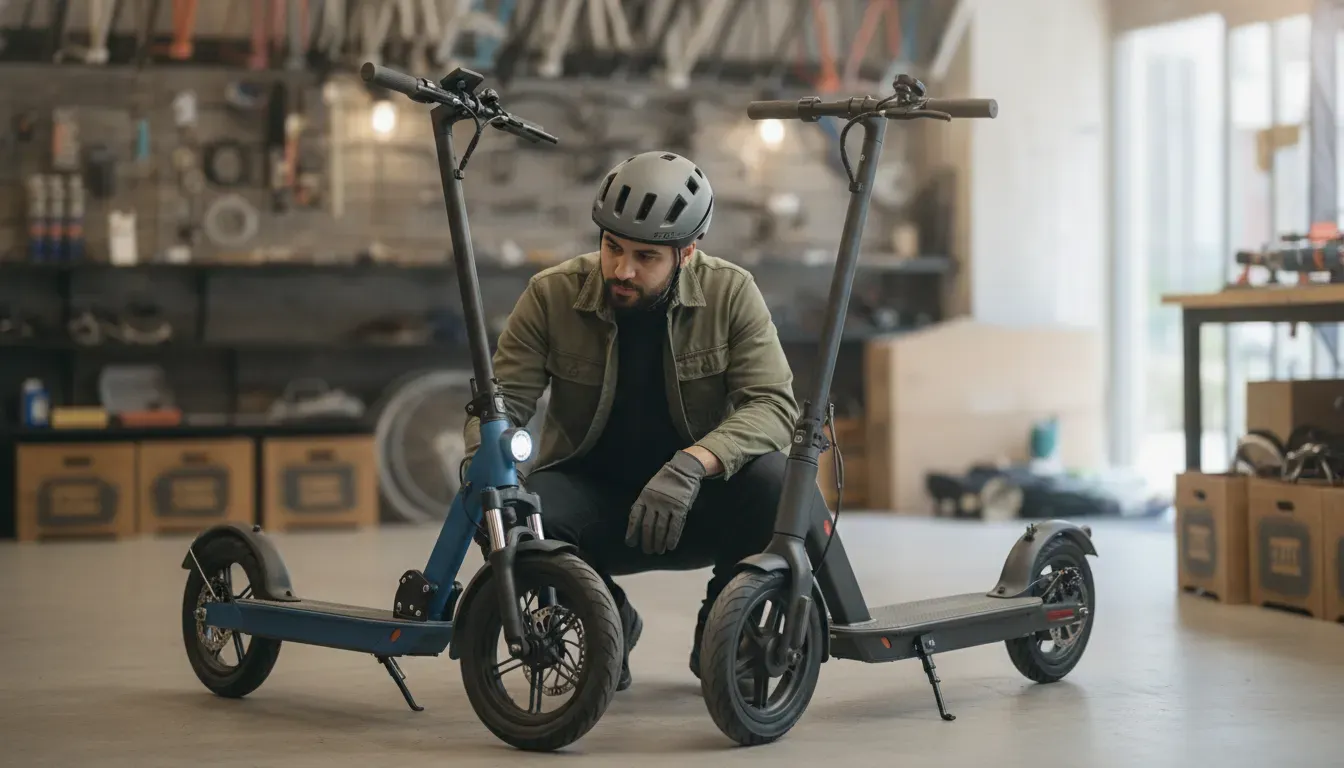
Voltaire's verified product pages provide a useful starting point for a feature comparison. The E3 Pro and E2 Pro serve different decision priorities, and the available information is not equally detailed for both. That difference is important: a careful review labels unknowns instead of filling them with assumptions. See the current Segway E3 Pro product page and Segway E2 Pro product page for the exact variants being compared.
| Feature | Segway E3 Pro | Segway E2 Pro | How to use the comparison |
|---|---|---|---|
| Live product-page price checked September 19, 2026 | $599.00 sale, $699.99 original | $499.00 sale, $599.00 original | Prices and promotions can change. Recheck before purchase. |
| Ride and stability messaging | Dual suspension and beginner-friendly positioning | Stability-focused copy and Traction Control System messaging | Match comfort and confidence priorities to your route. |
| Stated range | Up to 34 miles; Sport Mode approximately 17.5 miles | Not stated in the verified rendered page evidence | Do not treat a maximum claim as a guaranteed route distance. |
| Stated speed | Approximately 20 mph | Not stated in the verified rendered page evidence | Confirm the exact current specification and local rules. |
| Weight and payload | Approximately 40.1 lb and 265 lb maximum payload | Not stated in the verified rendered page evidence | Weight affects carrying and storage. Payload includes rider and carried items. |
| Other visible features | 256 RGB lights | Traction Control System messaging | Ask which features matter for visibility, control, and your riding conditions. |
The E3 Pro is the more clearly documented option in the current rendered product information. Its dual suspension, stated payload, stated weight, and two range figures make it easier to screen against a commute or recreation plan. The E2 Pro remains a relevant comparison for shoppers prioritizing a stability-oriented design and a lower listed price at the time of this check, but its missing rendered specifications mean you should ask for the current technical details before making a direct range or speed comparison.
How should a Segway Ninebot electric scooter review judge range?
Range should be treated as a planning question, not a promise. The E3 Pro page states up to 34 miles and about 17.5 miles in Sport Mode, but actual distance depends on speed, rider and cargo weight, hills, wind, temperature, tire condition, starts and stops, and battery age. Leave a buffer rather than planning to arrive at zero.
Start by estimating your normal round trip and the places where you can safely charge. If your route includes sustained climbs, frequent intersections, cold weather, or a heavier combined rider-and-cargo load, compare your needs with the more conservative figure rather than the maximum headline claim. Ask whether the stated number is a controlled-condition estimate, and record which riding mode it represents.
Battery range is also different from battery lifespan. A scooter can cover less distance on a charge as conditions change without the battery being defective. Long-term battery health is influenced by storage, charging habits, mileage, heat, cold, and maintenance. For model-specific charging guidance, use the current owner documentation and ask a qualified service team when the scooter shows unusual charging, power, or error behavior.
Comfort and control are more than a suspension label
Suspension is one useful feature, but it is not the entire ride-quality story. During a review or test ride, pay attention to how the deck feels under your feet, how naturally the handlebar height fits you, how much vibration reaches your hands, and whether the scooter stays predictable during starts, stops, and turns. Smooth control matters as much as a feature list.
Suspension and surface quality
The E3 Pro's dual suspension gives it a clear comfort-related feature to investigate. That does not mean it will erase every bump or suit every rider. Test the actual model over the surfaces you expect to use. A paved neighborhood route, a rougher section of pavement, and a controlled stop can reveal more about confidence than a marketing phrase.
Stability and traction
The E2 Pro product page emphasizes steadiness and a Traction Control System. Treat that as a feature to understand, not a guarantee that every surface is safe. Loose gravel, standing water, painted lines, leaves, and uneven transitions can reduce traction for any small-wheeled vehicle. Slow down, keep the scooter upright, and avoid riding conditions beyond the model's instructions.
Braking, lighting, and visibility
A serious review should identify the brake controls, braking feel, lighting arrangement, and rider visibility from the current product documentation. Do not assume that two scooters with similar listed speeds stop or feel the same. Test braking progressively in a safe area and inspect the controls before regular riding. The E3 Pro page visibly lists 256 RGB lights, but that should not be confused with a complete nighttime visibility assessment.
Use Voltaire's electric scooter safety checklist before your first ride and after storage.
Portability and rider fit can decide the purchase
An electric scooter can be a good match on paper and still be inconvenient if you cannot carry, store, or secure it comfortably. The E3 Pro is listed at approximately 40.1 pounds, which is meaningful for riders lifting it into a vehicle or carrying it up stairs. Its listed maximum payload is 265 pounds, and that figure should include a backpack or other carried equipment.
Ask the same questions about every model you compare:
- Can you lift it safely without twisting or losing control?
- Will the folded or stored footprint fit your vehicle, garage, or entryway?
- Does the handlebar and deck position feel stable for your height and stance?
- Does the payload cover you and the gear you actually carry?
- Can you lock and store it in a dry, secure place between rides?
The current E2 Pro page did not expose detailed weight, speed, range, or battery figures in the rendered information checked for this review. That is not a reason to dismiss it. It is a reason to request the missing specifications and evaluate the actual unit before purchase, especially if portability or payload is a deciding factor.
What should you check about charging and ownership?
Before ordering, confirm which charger is included, where the scooter can be charged, how long a full charge takes for the exact model, and what the manual says about temperature and storage. Those details were not all visible in the current product-page evidence, so this review does not invent them. A retailer or manufacturer should answer them for the exact variant you plan to buy.
Ownership questions are just as important as first-day performance. Ask how tires, brakes, fasteners, lights, displays, and charging connections are inspected. Learn which symptoms mean stop riding immediately, such as a brake problem, damaged wiring, unusual battery heat, or a charging fault. Routine maintenance can protect comfort and control, while electrical and battery concerns deserve qualified attention rather than guesswork.
App and security features also require model-specific confirmation. Do not assume that every Segway or Ninebot scooter has the same app functions, tracking options, firmware process, or anti-theft tools. If a feature matters to you, verify it on the exact product page or in the current manual before treating it as part of the buying decision.
Is a Segway Ninebot scooter a fit for Bend and Central Oregon?
A Bend-area buyer should compare more than a national spec sheet. Think about your route, elevation changes, paved surfaces, storage, temperature swings, and how often you will need help after the sale. Oregon riding rules can change and depend on vehicle classification and where you ride, so review current guidance rather than assuming a model's advertised speed is always a lawful riding speed.
Voltaire Cycles combines online shopping with a Bend showroom, technical consultation, and multi-brand service. That local support is valuable when you want to compare stance and controls in person, ask fit questions, or understand a maintenance concern. Current product availability and test-ride access can change, so ask the team whether the exact Segway model is available for an in-person evaluation before making a trip.
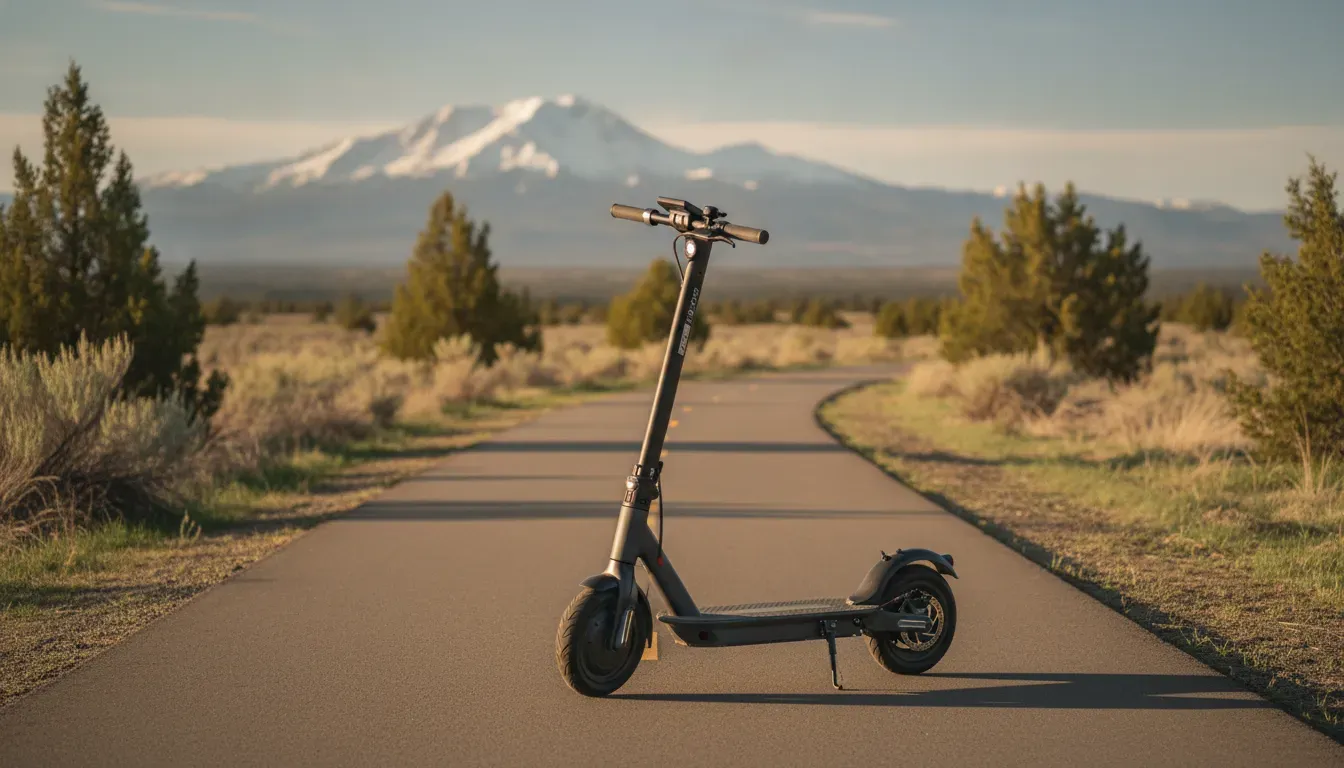
For Oregon-specific classification, age, helmet, lighting, path, and operating guidance, use the linked state sources and Voltaire's educational article as a starting point. Treat that information as general education, not legal advice, and confirm the current rule that applies to your scooter and route.
Read Voltaire's Oregon electric scooter licensing and rules guide.
Who should choose the E3 Pro, and who should keep comparing?
The E3 Pro deserves a closer look if you value a clearly documented dual-suspension design, want the current page's stated 34-mile maximum range and 17.5-mile Sport Mode figure, need the listed 265-pound payload, or want to compare a roughly 40.1-pound scooter before buying. Those are screening points, not a promise that it is the right choice for every route.
The E2 Pro deserves a closer look if stability-focused design and Traction Control System messaging align with your priorities, or if its current listed price fits your budget. Because the detailed rendered specifications were not available in this check, ask for the exact weight, range, speed, battery, charger, and warranty information before comparing it directly with the E3 Pro.
Keep comparing if you need a scooter for steep or extended routes, need a specific payload or carrying weight, expect frequent wet-weather exposure, or cannot store and charge it safely. A different class of electric vehicle may fit better. The right answer is the model that matches your complete use case, not the one with the most attractive single number.
Compare the current Segway electric bike and scooter selection at Voltaire Cycles.
Frequently asked questions about a Segway Ninebot electric scooter review
Is Segway a good electric scooter brand?
Segway can be a strong brand to consider, but the exact model matters more than the name alone. Compare construction, ride comfort, braking, range conditions, portability, service access, and current support. A balanced review should identify both the feature that solves your problem and the tradeoff that may make another model a better fit.
How long does a Ninebot scooter last?
There is no reliable one-number lifespan for every Ninebot scooter. Service life depends on mileage, storage, charging, weather exposure, rider and cargo weight, terrain, and maintenance. Tires, brakes, fasteners, and batteries need different kinds of care. Follow the exact manual and seek qualified service for electrical, battery, or braking concerns.
What are common problems with Segway scooters?
Common ownership checks include tire wear or loss of pressure, brake adjustment, loose hardware, lighting or control issues, charging behavior, app pairing, error messages, and water exposure. Normal wear is different from a safety-critical fault. Stop riding if braking, electrical, or battery behavior seems unsafe, and ask a qualified technician to diagnose it.
How fast does a Segway Ninebot scooter go?
Speed depends on the exact model, mode, rider, battery level, and conditions. The current E3 Pro page checked for this review lists approximately 20 mph, but that is not a recommendation to ride at that speed everywhere. Confirm the exact model specification and the current Oregon rules for the route where you plan to ride.
What should I ask before buying?
Ask for the exact model and variant, current price, weight, payload, range conditions, speed, charger, charging time, tires, suspension, brakes, lights, app requirements, warranty, return terms, and service options. Then ask whether you can evaluate the scooter in person. Those answers will tell you more than a generic brand ranking.
Talk with Voltaire's service team about setup, maintenance, and electric scooter repair support.