

How Fast Can an Electric Dirt Bike Go?
How fast can a electric dirt bike go? There is no single speed that describes every model or every ride. The motor, controller, settings, rider, battery condition, tires, and terrain all shape the result. A maximum listed in a product description is a reference point, not a guarantee for every trail. Consider where you can legally ride and what speed you can control comfortably.
Explore electric bikes and compare your options
Top speed can help narrow a shortlist, but it cannot tell you how a bike accelerates, brakes, handles uneven ground, or fits your route. Voltaire Cycles offers local showroom support and test rides in Bend, along with online shopping. Use the speed figure as the start of a comparison rather than the only reason to choose.
How fast can a electric dirt bike go in real riding?
There is no universal speed for an electric dirt bike. Each model has its own capability, while riding mode, charge, rider load, surface, and conditions affect the pace you experience. A manufacturer's stated maximum refers to a particular bike and set of conditions. It should not be treated as a prediction for every outing.
Separate three questions. The advertised maximum asks what a particular setup may achieve. A usable pace asks how quickly you can ride while keeping enough control to respond. Permitted access asks whether that vehicle can use the route at all. A high answer to one does not settle the others. A smooth open stretch gives a rider more room than a narrow trail with loose stones, blind turns, or other users. In that setting, traction, sight lines, braking, and low-speed balance may matter more than reaching a maximum. A lower mode can help when learning controls or approaching a technical section, if the bike offers one.
An off-road electric dirt bike is not necessarily an electric bicycle simply because both use electric power and two wheels. Their controls, performance, and rules may differ. Start with the exact model and manufacturer information rather than a broad category label.
What changes electric dirt bike speed?
A specification describes the machine, but a real ride combines the bike, rider, setup, and environment. When two listings show similar maximums, ask whether they quote the same kind of figure and whether the bikes deliver power in a similar way.
| Factor | How it may affect the ride | What to verify |
|---|---|---|
| Motor and controller | Shape acceleration and power delivery. | Confirm exact model and settings. |
| Battery state | Charge and condition may influence performance. | Ask how performance can vary with charge. |
| Rider and load | May affect climbing and reaching a stated maximum. | Review manufacturer rider guidance. |
| Terrain | Loose, steep, or uneven ground changes traction and manageable pace. | Compare with your intended routes. |
| Tires and setup | Influence grip and handling. | Follow maker recommendations. |
| Mode | May limit speed or soften power response. | Learn what each mode changes. |
These factors do not provide a formula for guaranteed speed. They explain why one rider's report may not match a listing or another rider's experience. A steep climb, soft ground, or heavier load can change how a bike feels. Ask about the conditions behind a quoted figure instead of treating an anecdote as a controlled comparison.
How should you interpret a speed specification?
Check the exact model, version, and configuration, then look for units and conditions. Find out whether the number is a maximum, a limit, or a value associated with a specific mode. A maximum does not explain acceleration, braking, comfort, or suitability for your terrain. Use it to prepare questions for the manufacturer or retailer.
A comparison worksheet can keep one number from dominating the decision. Record model, quoted speed, mode tied to the claim, range guidance, rider guidance, and intended surfaces. Add unanswered questions. A model with a lower maximum but better fit and manageable response may be more useful for your routes.
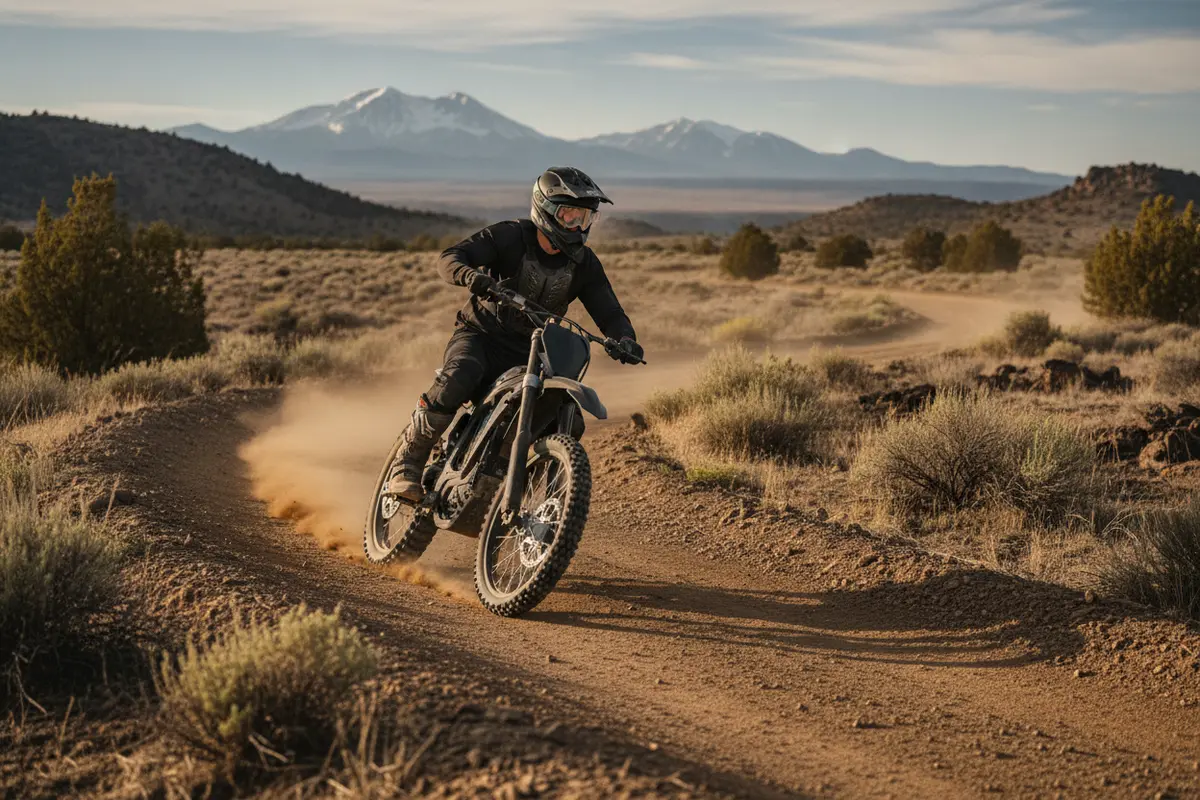
How should you compare electric dirt bike speed claims?
Begin with the precise bike rather than the category name. Similar-looking vehicles can have different motors, batteries, controllers, and settings. Comparison is useful only when you understand what each number represents and the assumptions behind it.
- Confirm model and configuration. Write down the complete name and version. Ask whether the specification applies to the exact bike offered.
- Compare like units. Make sure figures use the same units. Convert them before drawing conclusions if necessary.
- Ask how the maximum is reached. Find out whether a mode, surface, or rider assumption applies. If the source does not explain, mark the claim as uncertain.
- Compare response, not just the ceiling. Ask how the bike behaves at lower speeds and whether modes change power delivery. Predictable control can matter more than a higher theoretical maximum.
- Consider the complete outing. A route may include climbs, stops, rough ground, and a return leg. One short section cannot describe the whole trip.
- Match the bike to the rider. Experience, fit, reach to controls, braking confidence, and maker guidance belong in the comparison.
Write down the terrain you expect, how long you want to ride, your off-road experience, and whether another person may use the bike. Compare models against those needs instead of sorting from fastest to slowest. Browse the electric bike collection as a starting point for online comparison.
What does a useful comparison look like?
Imagine choosing between two bikes with similar quoted maximums. One listing explains its modes and rider guidance; the other gives one figure without conditions. The first offers a better basis for asking about fit, handling, range, and access. That does not prove it is the better bike, but it makes the comparison more informed.
If your regular route is a short technical loop rather than an open straightaway, top speed may matter less than accurate placement, low-speed power control, and smooth braking. For a longer ride, range guidance and route planning deserve more attention. Priorities depend on how you use the machine.
Does speed affect range and handling?
Top speed alone cannot tell you how far a bike will travel. Hills, stops, rider load, temperature, tire choice, surface, and settings can affect energy use. Start with maker range guidance and ask what conditions it assumes. Treat range as an estimate to check against your route, not a promise based on one number.
Break the route into sections. Note climbs, rough areas, and expected stops. A loop that starts with a descent may require energy for the return climb. If there is a remote section, leave a reasonable margin rather than planning to finish at the edge of an estimate.
Speed also changes how much time you have to notice and react to the surface. A rut, loose patch, tight turn, or another trail user may appear quickly. Traction and braking matter, especially on unfamiliar ground. Slow down when visibility is limited or people are nearby, wear protective equipment, and inspect the bike before riding.
For a route with a steady climb, rough connector, and shared segment, do not plan around the speed you might reach on a flat road. Ask whether range guidance covers the route, handling suits the rough section, and what pace is suitable where others may be present. This keeps performance, energy, and control in the same decision.
Where can you ride an electric dirt bike?
Do not assume an off-road electric bike is allowed on every trail, road, or public-land route. Access depends on vehicle classification, land manager, local rules, and route. On federal public lands managed by the Bureau of Land Management, begin with the Bureau of Land Management and identify the office responsible for your destination. Confirm current rules directly rather than relying on a product description.
Before buying or planning, record the vehicle make and model, route name, and whether the land is public or private. Ask the responsible manager whether that exact vehicle may use the route and whether seasonal closures or designated-use restrictions apply. An old forum post is not a substitute for current route information.
Do not automatically treat an electric dirt bike as an electric bicycle. A route that allows a particular class of e-bike may not allow a higher-powered off-road machine. Identify the vehicle and verify its status with the authority responsible for the path or property. Access belongs in the purchase decision, not as a detail to postpone until after delivery. If a rule is unclear, seek clarification first.
Which electric dirt bike speed is right for you?
The useful speed is the one that fits the rider, setting, and route, not the largest figure in a listing. A newer rider may value predictable response and manageable handling. Experienced riders still need to consider access, terrain, protective equipment, and personal control.
- Relaxed recreation: Prioritize comfortable fit, understandable controls, and manageable power response.
- Technical trails: Focus on traction, braking, suspension, and low-speed control.
- Long outings: Compare battery and range guidance with the route, including the return leg.
- Developing riders: Check maker guidance, fit, and whether controls feel manageable.
- Shared use: Consider whether size, setup, and settings suit each intended rider.
If a test ride is available, assess more than acceleration. Notice your riding position, reach to controls, power delivery, and how the bike feels at a modest pace. Begin in a setting suited to your experience and follow shop instructions. A short ride cannot reproduce every trail, but it can help reveal whether fit and response make sense.
Voltaire Cycles provides showroom support and test rides in Bend. The team also offers multi-brand repair and service; review its bicycle repair and service information when considering support after purchase. Online shoppers can use product details and maker guidance to frame questions before choosing.
What should you ask before buying?
Prepare questions about the exact bike. Clear answers help separate a headline from details that matter on your intended ride.
- What is the stated top speed, and what conditions or configuration apply?
- Which modes are available, and how do they change speed or power response?
- What range guidance does the manufacturer provide, and what conditions does it assume?
- What rider, setup, and maintenance guidance should I follow?
- Where may this exact bike be ridden, and which land manager can confirm access?
- Can I compare the controls or take a test ride in an appropriate setting?
- What service support is available for this model?
Bring a route description: surface, elevation, duration, and whether it is shared. That gives a product specialist a useful starting point beyond asking for the fastest option. For care over time, see repair and service details and ask which maintenance information applies to the specific vehicle.
Browse electric bikes and compare models
Frequently asked questions
Can an electric dirt bike reach its advertised top speed on every ride?
No. Rider, battery state, mode, tires, and terrain can affect the pace you experience. A stated maximum describes a particular model and conditions, not every outing.
Is top speed the most important specification?
No. Fit, power response, braking, range, service support, and legal access all affect whether a bike suits your needs. Compare those details alongside any speed claim.
Can I ride an electric dirt bike on an e-bike trail?
Do not assume that you can. Confirm the exact vehicle is permitted under current rules with the responsible land manager or property owner.
How can I tell whether a bike will feel too fast?
Ask how modes work and try it at a modest pace in a suitable setting if a test ride is available. Consider whether you can control acceleration and braking comfortably, and follow maker guidance.
The best choice is a bike whose performance, handling, and support fit the rider and routes they can use. Compare specifications carefully, confirm access rules before riding, and ask for guidance when a listing leaves important conditions unclear.