

Exway X1 Max Riot Electric Skateboard: Buyer Guide
An electric skateboard can look like a simple choice until speed, range, drivetrain, rider weight, and local availability change the decision. The Exway X1 Max Riot deserves a closer look because its belt-drive setup is designed for riders comparing stronger power delivery with the practical demands of ownership.
Contact Voltaire to compare current electric skateboard options.
The exway x1 max riot electric skateboard is a performance-oriented longboard-style model with a swappable Riot drivetrain. Its best fit depends on verified specifications, intended terrain, riding experience, and whether the board is currently available.
This guide separates manufacturer-listed specifications from retailer listing details and measured ride impressions, which are not the same thing. It also covers safety, charging, maintenance, and alternatives so Bend-area riders and online shoppers can compare the board realistically. Start with the numbers that define its capabilities, then weigh how those limits align with your route and riding goals.
What are the verified Exway X1 Max Riot electric skateboard specs?
The current Exway X1 Max product listing identifies the Riot as a 45 km/h electric skateboard with a 230 Wh battery, an advertised range of 30 km (18 miles), and a 30% hill-climbing claim. It lists a 7.6 kg weight and 200 kg maximum load. Retailer specifications differ, so the source matters.
| Specification. | Exway X1 Max listing. | Exway Canada listing. |
|---|---|---|
| Dimensions | 972 x 296 x 136 mm. | 972 x 296 x 136 mm. |
| Riot weight | 7.6 kg. | 7.9 kg. |
| Top speed | 45 km/h. | 45 km/h. |
| Advertised range | 30 km / 18 miles. | Approximately 30 km. |
| Battery | 230 Wh. | 230 Wh. |
| Hill-climbing claim | 30%. | 30%. |
| Charging time | 1.8 hours quick / 5 hours standard. | 1.8 hours quick / 5 hours standard. |
| Maximum load | 200 kg / 440 lb. | 136 kg / 300 lb. |
| Wheels and remote | 85 x 56 mm 80A wheels; R2 remote. | Not specified in the cited listing. |
For the primary current reference, see the Exway X1 Max product listing. The Exway Canada page reports the same dimensions, speed, battery, range, hill claim, and charging figures, but gives different Riot weight and maximum-load figures and adds a six-month warranty statement. Do not merge those values into one specification set. Confirm the applicable configuration and support terms before purchase.
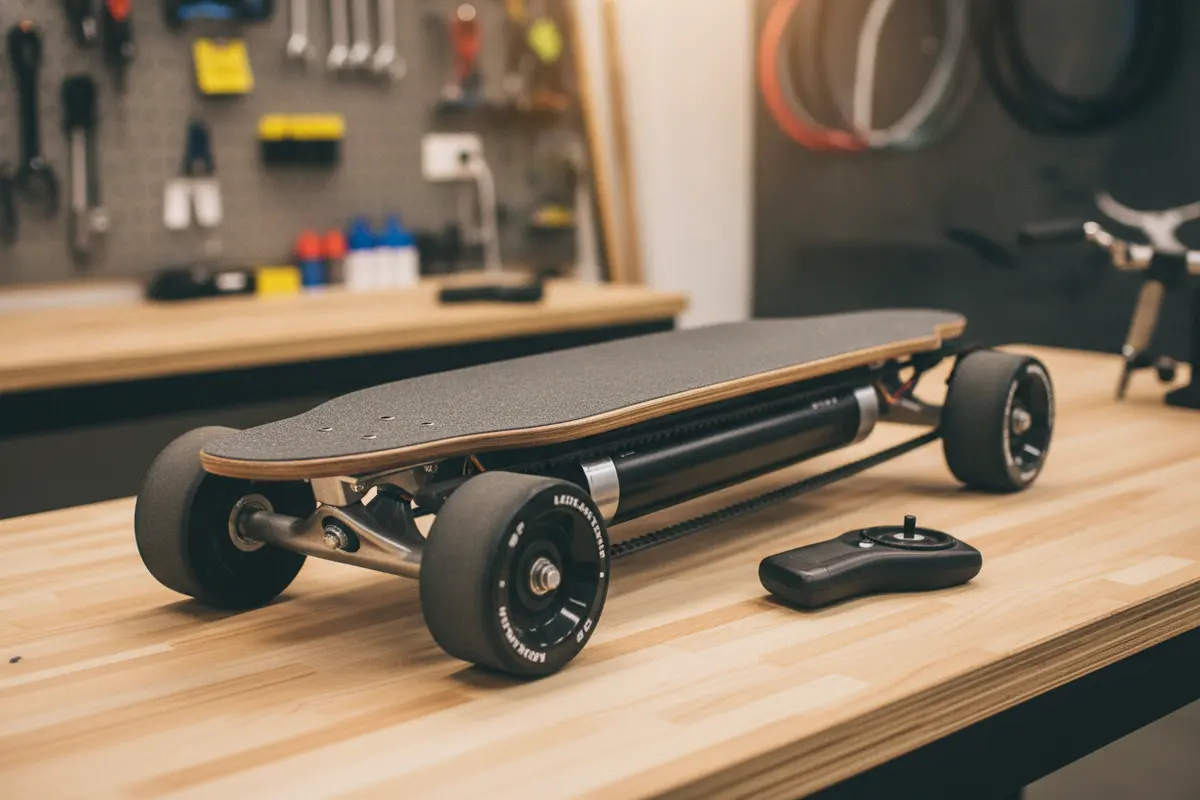
Voltaire's Exway X1 Max Riot listing describes the board's integrated battery and speed controller, concealed electronics, and swappable Riot drivetrain. Those design details complement the product-listing specifications but are not substitutes for measured ride testing.
Is the Exway X1 Max Riot electric skateboard available now?
Current answer: Voltaire's captured Exway X1 Max Riot listing is marked Sold out. The Exway Canada listing presents the X1 Max-Riot configuration, but that does not confirm local inventory or guarantee that an order can ship today. Availability can differ by seller, region, and configuration.
These signals are not interchangeable. A local product page describes the retailer's current listing status, while the Exway X1 Max product listing is a separate product listing. It presents the X1 Max-Riot configuration, but its status does not establish Voltaire's stock position in Bend.
For anyone shopping for an exway x1 max riot electric skateboard, use this short check before making plans:
- Open the Voltaire listing and confirm whether the Sold out label has changed.
- Check the Exway product listing for the Riot configuration and current order message.
- Confirm that the exact drivetrain is Riot rather than the Hub version, since the page presents both configurations.
- Ask the retailer or manufacturer to confirm fulfillment timing before assuming a purchase can ship.
A page being live means the model remains documented. It does not, by itself, establish that a particular board is physically available or that a stated delivery estimate applies to every destination. Recheck both pages close to purchase time, especially if your Central Oregon riding plans depend on a specific arrival date.
How does the Riot drivetrain affect ride feel and rider fit?
Answer: The Riot belt system is the performance-oriented drivetrain option described by Exway, while the hub system is quieter and more protected from debris. The integrated deck and concealed electronics give the board a longboard-like profile. Your stance, experience, route, and comfort with evaluation should guide the choice more than an advertised performance claim.
Exway describes the Riot belt system as providing stronger torque, acceleration, braking, and power delivery than its hub alternative. It also says the belt setup works with a wide selection of longboard wheels, which can give riders more opportunity to tune the board's feel. These are manufacturer-described characteristics, not independent measurements. Read the Exway X1 Max drivetrain notes for the source description.
The tradeoff is that a belt drive exposes more drivetrain hardware than a hub motor. Exway describes its hub system as quieter, lower-resistance, and more protected from debris, with the motors and electronics hidden for an ordinary-longboard appearance. That can matter on dusty paths or for riders who prioritize a subdued ride. The Riot may be a better fit for someone who wants the belt system's stated adjustability and is prepared to inspect it regularly.
How does the deck shape affect comfort?
Voltaire's product description presents the board as an integrated, longboard-like design with concealed electronics, a longer deck, and reinforced edges. A longer standing platform may feel more accommodating for a rider who prefers a wider stance, while a compact rider may want to confirm that the foot placement feels natural. Stance comfort is personal, so do not decide from dimensions alone.
For Bend pavement, evaluate the board on a quiet, smooth, legal riding area before attempting hills, rougher surfaces, or traffic-adjacent routes. At low speed, notice whether you can keep a relaxed stance, reach the controls without shifting your feet, and modulate acceleration and braking smoothly. Check the deck edges, wheel clearance, belt area, and concealed components visually before each ride. Start with a conservative control setting and protective equipment, then stop if the surface or handling exceeds your experience.
What range, charging, and terrain limits should you plan for?
Answer: The Exway X1 Max listing gives approximately 30 km of range from the 230 Wh battery, but that figure is conditional rather than a guaranteed route distance. Speed, rider load, hills, surface, temperature, riding mode, and battery condition can all change the result. Exway lists 1.8 hours with a quick charger or 5 hours with the standard charger.
The Exway X1 Max listing gives a 230 Wh battery and a maximum range of 30 km (18 miles). The listing labels the range as an endurance estimate, so treat it as a planning reference under favorable conditions, not as a promise that every ride will reach 30 km. You can review the Exway X1 Max product listing alongside the local Exway X1 Max Riot listing.
For route planning, leave a reserve instead of turning around at the advertised limit. A route with sustained climbs, repeated acceleration, a heavier rider, rough pavement, or frequent stops may use more energy than a steady ride on smooth, level ground. Start with a shorter familiar loop, note the battery change, and extend the route only after you understand your own conditions. The published 30 percent hill-climbing figure is a product-listing specification, not an independent test result.
What terrain is a realistic match?
The Riot is best evaluated as a performance electric skateboard for suitable paved routes and controlled riding, not as a promise of unlimited trail capability. Inspect the route for holes, bumps, rocks, and debris before riding, and account for local rules and whether the surface gives you enough room to slow and stop. Central Oregon routes can change quickly from smooth pavement to loose or uneven surfaces, so a route that looks manageable on a map may not be appropriate for this board.
For a deeper discussion of board fit, surfaces, and off-pavement tradeoffs, see our off-road electric skateboard review guide. Keep the distinction clear: manufacturer claims describe intended capability, while your safe range and terrain limit must come from conservative planning and actual riding conditions.
When charging, follow the manufacturer's directions, use the supplied or approved charger, remain present, and unplug the board when charging is complete. The CPSC provides micromobility charging guidance for these precautions.
What safety and maintenance routine supports ownership?
A safe routine starts before the ride: wear a helmet and protective gear, inspect the route and board, and ride within your control. Charge only with the manufacturer-provided or recommended charger while present, unplug when finished, and stop using a battery or charger that is damaged, swollen, unusually hot, or behaving abnormally. Serious defects belong with a qualified repair shop.
The CPSC recommends a helmet and protective gear, checking for loose or broken parts, and inspecting the riding area for holes, bumps, rocks, and debris. On the X1 Max Riot, walk around the board before each outing. Look for looseness at the trucks, cracks or damage in the deck, unusual belt wear, and anything that could affect wheel or motor movement. Confirm that the remote, brakes, and controls respond normally at low speed in a clear area.
Choose daylight and a route where you can see and be seen. Stay clear of moving vehicles, expect drivers and pedestrians not to notice you, and follow local rules for riding locations and traffic use. Keep speed below the level you can handle, avoid riding impaired, and consider riding with someone rather than treating an unfamiliar route as a solo test. The CPSC also recommends visibility equipment where appropriate. See its skateboard safety guidance and micromobility safety information.
Charging deserves the same discipline. Follow the Exway instructions, charge on a suitable dry surface, remain present, and disconnect when charging is complete. Do not substitute an unapproved charger or battery. If the battery becomes swollen, unusually hot, damaged, or erratic, stop charging and contact the manufacturer or a qualified technician instead of opening the pack.
For service boundaries, a rider can handle visual checks and routine cleaning, but a cracked deck, persistent truck looseness, damaged wiring, braking fault, or drivetrain problem should not be improvised. Review Voltaire's all-brand repair details to confirm the available service scope before bringing in the board.
How should you compare the Riot with other electric skateboards?
Short answer: Compare the Riot with the Exway Flex Riot and Exway Atlas by drivetrain, deck format, terrain goals, and how easily you can carry and stand on the board. The Riot listing is currently sold out, so confirm configuration and stock before choosing between a stealth longboard-style board, a flexible carving platform, or an Atlas setup.
The Exway X1 Max Riot listing describes an integrated, longboard-like design with concealed electronics and a swappable belt or hub drivetrain. That makes the key comparison question your intended route and ride feel, not a generic claim about which board is best. A belt setup may be relevant when you want the drivetrain option described by the manufacturer, while a hub setup can appeal to riders who prefer a more concealed format. Confirm the supplied configuration before ordering.
The Exway Flex Riot is described with a seven-ply maple and bamboo composite deck, vibration dampening, and a choice of hub or belt drive. Its flexible deck and carving-oriented description may fit a rider who values deck movement and standing comfort. Compare that with the Riot's longer, more integrated longboard-style design, then consider how often you will carry the board, where you will store it, and whether your route is smooth pavement or rougher terrain.
The Exway Atlas is a different format to investigate. Voltaire's earlier overview describes Atlas configurations with two- or four-wheel drive and larger all-terrain tires. Those features raise different questions about clearance, weight, turning, transport, and route suitability. Review the electric skateboard types guide before assuming an all-terrain format is appropriate for every Central Oregon route.
Support should be part of the comparison. Voltaire is a Bend-based electric mobility retailer with sales and service, but the current X1 Max Riot listing is marked Sold out. Availability can change, so verify stock, drivetrain, remote, replacement-part questions, and service expectations before making plans around this model.
Contact Voltaire to confirm current Exway options, availability, and support questions.
Frequently Asked Questions
What are the key Exway X1 Max Riot specifications?
The Exway X1 Max product listing gives the Riot a 230 Wh battery, 45 km/h top speed, approximately 30 km of range, 972 x 296 x 136 mm dimensions, and 1.8-hour quick-charging or five-hour standard-charging times. The listing also gives 7.6 kg and a 200 kg load limit, so confirm the current configuration before purchase.
How much range can I expect from the Riot?
Treat the approximately 30 km figure as a manufacturer estimate, not a guaranteed route distance. Rider weight, speed, hills, temperature, terrain, riding style, and battery condition can materially change results. Plan a conservative route with enough reserve rather than treating the published maximum as a promise.
Is the Exway X1 Max Riot currently available from Voltaire?
The captured Voltaire product listing shows the board as out of stock. Inventory can change, so check the live Exway X1 Max Riot listing before making a purchase decision or contact the retailer about current alternatives.
What is the difference between the Riot belt drivetrain and a hub setup?
The Riot is the belt-drive version, and the listing describes the drivetrain as swappable with a choice between belt sound and a more stealth-oriented hub setup. Belt and hub systems involve different ride feel, wheel compatibility, sound, and service considerations, so choose based on your priorities rather than assuming one is universally better.
What should a first-time rider check before riding?
Wear a helmet, inspect for looseness or cracked parts, check the route for rocks and other hazards, and stay within a speed you can control. The CPSC recommends following manufacturer charging directions, using the approved charger, and being present while charging. Warranty terms should also be confirmed directly before purchase.
Ready to Compare Current Electric Skateboard Options?
The right board depends on your route, riding experience, and how you plan to use it. Current listings and specifications can change, so a quick conversation can help you compare available options and identify a practical fit before you buy.
Contact Voltaire to compare current options, verify availability, and discuss fit.