

Electric Bike Travel Battery Rules: Flying and Shipping
Electric bike travel battery rules can shape every part of a trip, from booking a flight to choosing how to move your bike across the country. The battery is usually the most complicated piece because airlines, shipping companies, and other carriers set different limits. Start by identifying the exact battery specifications, then confirm the current rules with the company that will carry it.
Call for help planning your e-bike travel
What information do you need before traveling with an e-bike battery?
First, find the battery’s watt-hour (Wh) rating, voltage, and whether it can be removed. These details help you ask the right questions, but they do not guarantee that an airline or shipper will accept the battery. Policies can vary by carrier and route, so check the specific trip rules before buying a ticket or shipping label.
Look for a label on the battery or its documentation. If the watt-hour rating is not printed clearly, check the manufacturer’s manual or product information. Do not infer a rating from appearance or assume that the bike’s motor rating describes the battery. If the label is damaged or the specifications are unclear, contact the manufacturer or a qualified retailer before making travel arrangements.
- Watt-hours: The battery’s energy capacity, commonly shown as Wh.
- Voltage and amp-hours: Useful identification details if you need to confirm the published capacity. If the label lists volts and amp-hours but not Wh, ask the manufacturer to confirm the Wh rating rather than relying on an estimate.
- Removability: Determine whether the battery comes off without specialized work and whether removal affects how the bike can be packed.
- Condition: Do not travel with a damaged, swollen, leaking, or recalled battery. Ask the manufacturer or carrier what to do instead.
Take a clear photograph of the battery label and keep the manual or manufacturer specifications accessible. When you contact a carrier, describe the exact battery and route. Ask about the bike and battery separately: a carrier may accept a bicycle while refusing its battery, or require special handling for one part.
How do airline electric bike battery rules work?
Airline acceptance depends on the carrier’s current dangerous-goods policy, the battery’s capacity, and whether it is installed or carried separately. Many e-bike batteries exceed the capacity permitted for passenger aircraft, and airline rules can differ. Never assume that a battery is allowed because it is removable or because another airline accepted a similar one.
Before booking, contact the airline directly and ask for written or clearly documented guidance about your exact battery. Provide its Wh rating, whether it is installed, and the flight itinerary, including connections. Ask whether the bike itself can travel without the battery, whether a smaller auxiliary battery is allowed, and how the battery must be protected or declared. Check rules again close to departure, since policies can change.
For context, the U.S. Department of Transportation’s aviation guidance explains that lithium batteries are subject to restrictions in air travel. Use official guidance as a starting point, then follow the airline’s specific instructions for your itinerary: FAA PackSafe: Lithium Batteries.
Do not rely on a general rule found in an old forum post or travel blog. Limits and exceptions may depend on whether the battery is installed, spare, or part of a mobility device, as well as the carrier and route. A policy for a standard consumer e-bike may not apply to a powered wheelchair or other mobility aid.
Can you remove an e-bike battery for a flight?
Removing the battery may help you separate the bike from its power source, but it does not make an otherwise restricted battery acceptable to an airline. Ask the airline whether it will carry the bicycle without the battery, and ask separately how the battery may be transported. If the battery is not accepted, arrange a legal and safe alternative rather than hiding it in checked luggage or a bike case.
If the carrier permits the bike to travel without its battery, follow the bike maker’s packing instructions. Turn off the system, remove the display or other detachable electronics if the manual recommends it, and protect electrical contacts from short circuits or impact. Keep the battery terminals protected in the manner specified by the manufacturer and airline. Do not improvise with materials that could damage the battery or trap heat.
A battery that is permanently integrated into the frame may make air travel more difficult. Confirm whether the battery can be removed by an authorized technician and whether the airline will accept the bike with it installed. Do not attempt to dismantle a battery or modify the frame to meet a carrier requirement.
What should you know about shipping an e-bike battery?
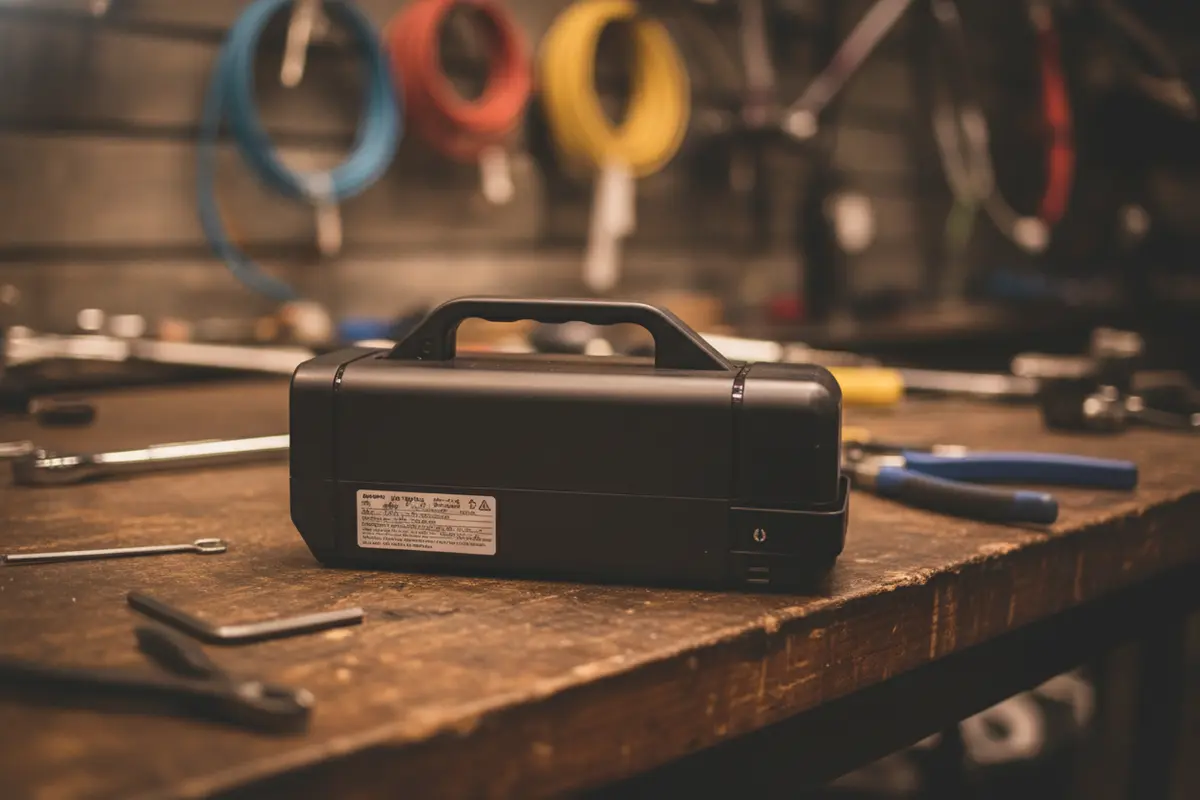
Shipping a lithium-ion e-bike battery is not the same as mailing an ordinary parcel. Dangerous-goods requirements can affect whether the battery is eligible, how it must be packaged, which service can carry it, and what documentation is required. Rules may also differ for a battery packed with equipment versus one shipped by itself.
Contact the shipping company before packing or tendering the parcel. Give the exact battery chemistry and Wh rating, describe whether it is damaged or being recalled, and ask which services accept it on your origin-to-destination route. Ask whether the battery can ship separately, must be installed in the bike, or needs an approved package and trained shipper. If the carrier cannot confirm acceptance, do not send it as a routine parcel.
Use the manufacturer’s original packaging when available and follow the carrier’s instructions precisely. Do not cover required labels, add unapproved packaging, or describe the parcel inaccurately. Some carriers limit shipments to trained or approved shippers. A retail counter employee may not be able to accept a shipment that requires a specialized service.
For an e-bike purchase or service plan, ask whether the retailer or manufacturer can coordinate compliant shipment. Voltaire Cycles offers multi-brand bicycle repair and service; contact the team for guidance about the bike itself and confirm all battery transport arrangements directly with the carrier.
What do watt-hours tell you about travel eligibility?
Watt-hours describe stored energy and are a key figure carriers use to evaluate lithium batteries. A larger Wh rating can trigger stricter limits or make a battery ineligible for a particular service. The number is a screening detail, not a universal pass or fail threshold; the carrier’s rules for the specific service control.
Do not confuse watt-hours with motor watts. Motor output describes the motor, while Wh describes battery energy capacity. A bike’s product name or advertised range also does not substitute for the battery label. If a carrier asks for technical documentation, provide information from the manufacturer rather than making assumptions.
| Travel method | What to confirm | Practical next step |
|---|---|---|
| Passenger flight | Battery Wh, installed or spare status, route, and airline acceptance | Ask the airline before booking and obtain instructions for both bike and battery |
| Parcel shipping | Battery condition, packaging, service eligibility, labels, and documentation | Ask the carrier’s dangerous-goods team before packing or dropping off |
| Personal vehicle | Secure placement, protection from impact, heat, and moisture | Follow the bike and battery manuals; secure the battery separately if recommended |
| Train, bus, or ferry | Operator policy, battery capacity, and any booking or packing requirements | Check the operator’s current policy for your exact route and vehicle |
This comparison is a planning aid, not a statement that a particular carrier accepts a particular battery. Confirm details directly before travel.
How should you label and prepare an e-bike battery?
Keep the battery identifiable and protect it according to the manufacturer’s and carrier’s instructions. The label should remain readable when required, and the battery should not be packed in a way that risks crushing, puncture, movement, or contact between terminals. Carrier-specific packing and marking directions take priority.
- Record the make, model, Wh rating, and condition from the battery label and documentation.
- Photograph the label and keep the manufacturer’s manual available.
- Inspect the battery for visible damage. Stop if you see swelling, cracks, leakage, unusual heat, or other signs of failure.
- Turn off the bike and remove the battery only when the manual and travel plan call for it.
- Protect terminals and pack the battery or bike only in the packaging and configuration the carrier approves.
- Apply required markings and documents exactly as directed; do not add labels based on guesswork.
If the label is missing, unreadable, or inconsistent with the documentation, pause the shipment or trip plan. Ask the manufacturer how to verify the battery and ask the carrier what evidence it accepts. Never create a replacement label yourself.
What changes when you travel by car, train, bus, or ferry?
Ground and water operators set their own policies, so a battery that is manageable in a personal vehicle may still be restricted on a train or bus. Check the rules for each leg, including connections and any storage or luggage service. Do this before arrival, when you still have time to change plans.
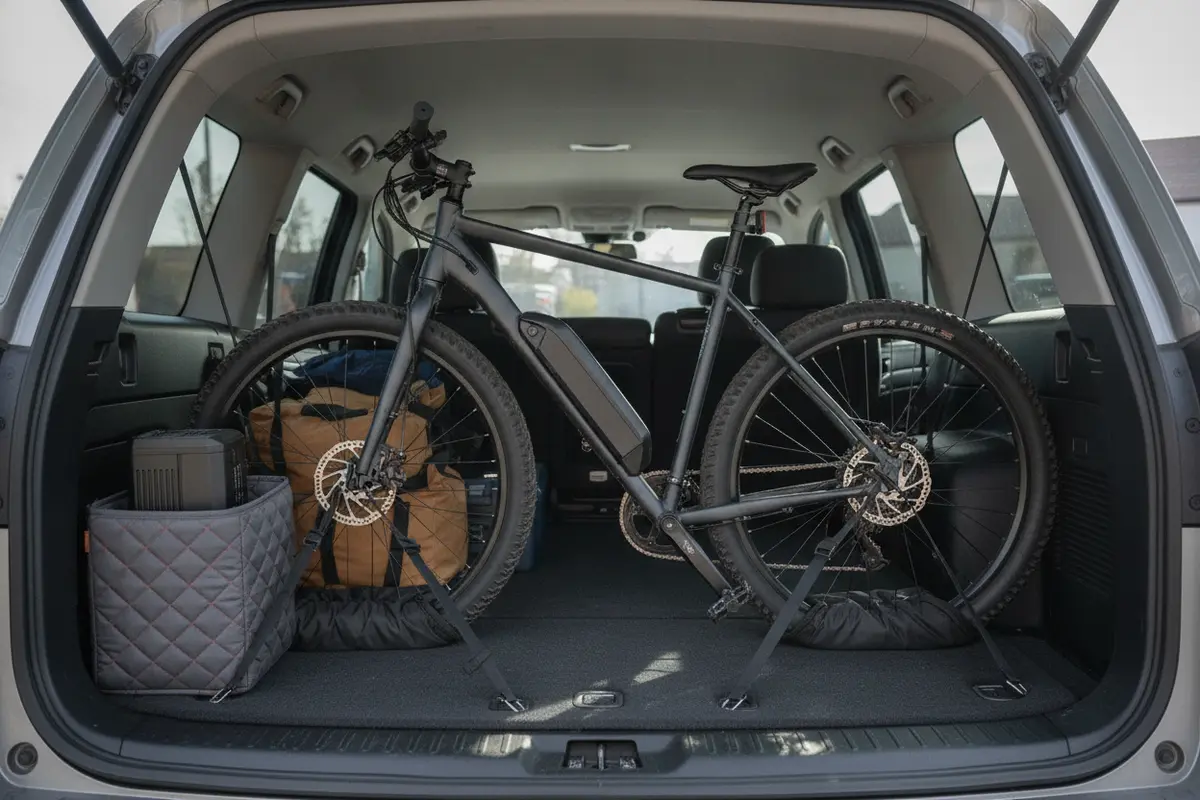
In your own vehicle, secure the bike so it cannot shift, and prevent a loose battery from being struck or crushed by other cargo. Follow the manufacturer’s guidance on whether to remove the battery. Avoid leaving a lithium-ion battery in extreme heat or cold for extended periods, and do not charge it in an unattended vehicle. If transporting the bike on a rack, review the rack and vehicle limits as well as the bike maker’s directions. Our guide to transporting an electric bike safely covers bike-loading considerations; battery rules still need separate confirmation.
For public transport, ask about e-bike dimensions, battery capacity, packaging, and whether the bike is treated as regular luggage or a hazardous item. Some operators may allow an e-bike but not its battery, while others may require advance approval or prohibit the battery entirely. Never assume a local transit rule applies to an intercity carrier.
How can you make a reliable travel plan?
Build your plan around the written rules of every carrier on your itinerary, not a single general battery limit. Make a checklist, keep the specifications handy, and leave time for a backup plan if the battery cannot travel with the bike.
- Identify: Confirm the battery’s Wh rating, chemistry, removability, and condition.
- Map: List each airline, shipper, train, bus, ferry, or rental provider involved.
- Ask: Request rules for your exact battery and route, including packaging and documentation.
- Document: Save confirmation, policy links, manuals, and photographs of the label.
- Recheck: Verify current instructions before departure or shipment, especially after itinerary changes.
- Plan alternatives: Consider traveling without the battery only if the carrier accepts the bike, and arrange a lawful source of compatible power at the destination.
Compatibility matters if you plan to use a replacement charger or battery at your destination. Use only a charger specified for the exact battery system; a charger with a matching plug is not necessarily compatible. If you need technical help with your bike, Voltaire Cycles provides service for many bicycle brands in Bend. For a trip-ready bike, ask what checks are appropriate for your model and schedule any work before departure.
What questions should you ask before traveling?
Use these questions when contacting each carrier. Keep the answers with your itinerary so that staff can quickly confirm what was approved.
- Does this service accept my exact battery, based on its Wh rating and condition?
- Can the e-bike travel with the battery installed, or must it be removed?
- Can a removed battery travel separately, and under what conditions?
- What packaging, protective measures, marks, or documents are required?
- Does the answer apply to every leg, connection, and direction of travel?
- Who should I contact if check-in or drop-off staff have questions?
For an e-bike you have not yet purchased, consider travel needs early. Battery size, removability, and the availability of support at your destination can affect convenience. You can browse the electric bike selection and compare models, then ask a local expert about practical ownership questions before deciding.
Frequently asked questions about electric bike travel battery rules
Can I take my e-bike battery on a plane?
Do not assume you can. The airline must confirm whether the battery’s capacity, configuration, and itinerary meet its current requirements. Many e-bike batteries are too large for ordinary passenger baggage allowances. Ask the airline directly before booking.
Can I check an e-bike battery in my luggage?
Only if the airline’s current rules specifically permit the battery in that configuration. A removable battery is not automatically allowed in checked luggage, and placing it inside a bike case does not bypass restrictions. Follow the airline’s instructions for the battery and bicycle separately.
Can I ship a battery without the bike?
Possibly, but acceptance depends on the carrier, battery, packaging, service, and route. Contact the carrier’s dangerous-goods team before packing. Do not send it through an ordinary parcel service without confirming that the service accepts it.
Does a smaller battery always make travel easier?
A lower Wh rating may meet some carrier thresholds, but capacity alone does not settle eligibility. Battery condition, packaging, installed or spare status, carrier policy, and route can matter. Verify the exact requirements for your trip.
What if I cannot find the watt-hour rating?
Check the battery label, owner’s manual, or manufacturer’s product information. If the figure remains unclear, ask the manufacturer for written specifications and ask the carrier what documentation it accepts. Do not estimate the rating or travel on an assumption.
Call Voltaire Cycles to discuss your bike and travel preparation
Carrier rules are specific and can change, so confirm current requirements for every leg before you pack, book, or ship your electric bike battery.