

Electric Bike Storage Outdoors: Protection and Security
Electric bike storage outdoors can work when indoor space is limited, but a quick cover is not a complete plan. Shelter, moisture control, battery habits, charging safety, and a reliable lock all matter. With the right setup, riders in Bend and surrounding Central Oregon communities can protect the frame and electrical components while keeping the bike ready for the next trip.
Call Voltaire Cycles for a free storage and service consultation
What is the safest approach to electric bike storage outdoors?
The safest approach is to keep the bike under a roof, off damp ground, covered with breathable material, and secured to a fixed anchor. Remove a removable battery when the bike will sit unused, and charge it in a dry indoor location with the manufacturer-approved charger. Outdoor storage should be a protected option, not an exposed one.
In Bend and nearby Central Oregon communities, a storage plan may need to handle intense sun, dust, cold nights, rain, and occasional snow. Start with the most protected location available. A covered porch, locked shed, or weather-resistant enclosure is better than an uncovered driveway. Keep the bike away from sprinklers, roof runoff, low spots, and areas where snow or ice can collect.
It also helps to separate daily parking from long-term storage. A bike that is outside for an hour between errands needs a convenient cover and lock. A bike that will sit for several weeks needs a cleaning, a battery plan, a dry charging area, and a more careful inspection before it returns to service.
How should you choose shelter for electric bike storage outdoors?
A good shelter blocks direct precipitation and sunlight while allowing air to move around the bike. It should leave enough room to roll the bike in without scraping handlebars, racks, mirrors, or pedals. The floor should be firm and level so the bike cannot tip over when parked or when you remove the battery.
Consider these shelter features:
- A solid roof: This reduces exposure to rain, snow, falling debris, and ultraviolet light.
- Side protection: One or two walls can limit wind-driven moisture without trapping condensation.
- Drainage: Water should move away from the storage area rather than pool beneath the tires.
- Ventilation: Openings help damp air escape after a wet ride.
- Room to work: Leave space to inspect tires, wipe the frame, and remove the battery safely.
- A stable parking point: A kickstand, wheel chock, or rack should keep the bike upright without pressing on delicate controls.
A fully sealed plastic space is not automatically better. If wet air is trapped inside, condensation can form on metal parts and electrical connections. If you use an enclosure, check it regularly and open it when conditions allow the bike to dry. Do not place the bike directly beneath a roof edge where runoff can land on the display or charging port.
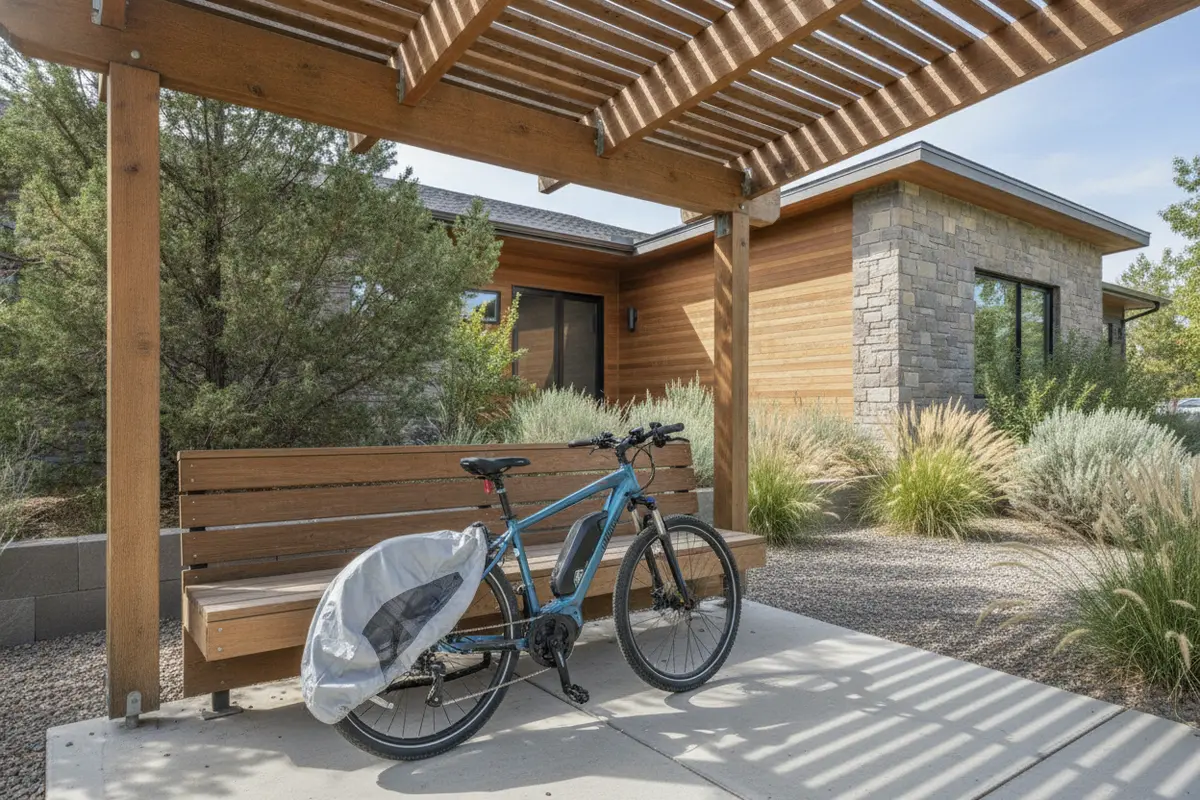
Which cover works best for an electric bike stored outdoors?
Choose a bicycle cover that repels water, resists sun exposure, fits the complete bike, and can stay in place during wind. A cover is a second layer of protection. It should not replace a roof or be placed over a wet bike for long periods.
Measure the bike with its usual accessories. A front basket, large rear rack, mirrors, fat tires, or a suspension seatpost can make a standard cover too short or too tight. A cover that pulls against the display, brake levers, or sharp rack edges can wear quickly. It can also leave openings where water reaches the components you meant to protect.
Before covering the bike, wipe away standing water and mud. Pay attention to the display, charging port, connectors, chain, brake areas, and suspension components. Let damp surfaces dry whenever possible. A breathable cover is preferable to an airtight sheet that holds moisture against the frame.
For riders building a complete storage setup, a protective bicycle cover may be worth considering. Check current product details and dimensions before ordering. A cover is most useful when paired with a roof, a dry floor, and a routine for removing it after wet weather.
How do humidity and temperature affect outdoor storage?
Humidity creates a gradual storage problem, while rapid temperature changes can create condensation. Moisture can encourage corrosion on the chain, fasteners, brake hardware, and other exposed metal. A cold bike moved into warmer damp air can collect moisture on surfaces, and a covered space that warms quickly in the sun can trap humid air.
Use this routine after rain, snow, or heavy dew:
- Move the bike into the most sheltered area available.
- Inspect the frame, display, controls, charging port, battery contacts, and cable connections.
- Dry the frame and contact points with clean cloths.
- Keep the cover from touching muddy or wet components.
- Leave the bike uncovered long enough for remaining moisture to evaporate.
- Clean and lubricate the drivetrain according to the bike maker's instructions.
- Check for rust, cracked housings, loose hardware, or a connector that does not look normal.
Do not use a space heater, heat gun, hair dryer on high heat, or open flame to dry an electric bike or battery. Gentle airflow and time are safer. Do not seal a damp bike inside a bag or plastic enclosure. If you see corrosion near electrical contacts, a damaged connector, swelling, unusual odor, or heat from the battery, stop using the battery and ask the manufacturer or a qualified technician for guidance.
Cold weather deserves its own check. Before a ride, allow a battery that has been stored in a very cold place to reach the temperature permitted by the manufacturer. Do not guess at acceptable charging or operating temperatures. The instructions for the specific battery and bike should control.
Should you remove the battery before storing an electric bike outside?
Removing a removable battery is one of the most useful outdoor-storage habits. It reduces exposure to cold, heat, moisture, and theft. Store the battery indoors in a dry area away from direct sunlight, ignition sources, children, and anything that could damage the case.
Follow the battery and bike manufacturer's storage instructions. In general, avoid leaving the battery completely empty for a long period, and avoid storing it in extreme heat or freezing conditions. Keep the battery on a stable surface where it cannot fall. Protect the contacts from dirt and moisture, but do not wrap a battery in a material that traps heat during charging.
Removing the battery also makes the rest of the storage decision easier. The bike can remain under a covered shelter while the most sensitive and valuable component stays in a controlled indoor location. If the battery is not removable, focus on a roofed, dry enclosure and follow the maker's instructions closely rather than forcing the battery or its housing.
Do not guess about a battery that is swollen, cracked, leaking, unusually hot, or damaged after a crash. Do not charge it or put it back on the bike until you receive qualified guidance. Keep it away from flammable materials while you arrange that guidance.
| Storage condition | Recommended action | Why it matters |
|---|---|---|
| Daily outdoor parking | Use a roof, cover, lock, and quick moisture check | Limits weather exposure and opportunistic theft |
| Several days unused | Remove the battery and store it indoors | Protects the battery from temperature and moisture extremes |
| Seasonal storage | Clean, dry, inspect, secure, and follow the maker's battery guidance | Reduces corrosion and prevents surprises at the next ride |
| Wet or damaged battery | Do not charge; seek qualified advice | Charging a damaged battery can create a safety risk |
Where should you charge an electric bike battery?
Charge the battery in a dry, stable, well-ventilated location using the charger intended for that battery. Keep the charger and battery away from rain, snow, standing water, flammable materials, and blocked ventilation. The U.S. Consumer Product Safety Commission advises consumers to use the correct charger and stop using lithium-ion batteries that show damage or overheating signs. Do not charge beneath an outdoor cover or inside a damp shed unless the manufacturer specifically permits that setup.
Inspect the charger, cable, plug, and battery before each charging session. Stop if a cord is frayed, a connector is wet, or the battery looks damaged. Follow the charging time and temperature instructions supplied with the bike. When charging is complete, disconnect the system as directed instead of leaving an unknown setup unattended for extended periods.
A household outlet may be suitable when the bike maker permits it, but the outlet does not make an outdoor charging location safe. The battery, charger, plug, and connection all need protection from moisture. Keep cords away from walkways where they can be pinched, cut, or become a trip hazard.
If you need a replacement or spare component, confirm voltage, connector type, and compatibility first. Voltaire Cycles lists products such as the CG362LiM-ST Charger and CG365LiM-BZ Charger, but availability and fit can change. Ask for help before purchasing a charger for a different model.
How can you secure an electric bike stored outdoors?
Use a high-quality lock through the frame and around a fixed, immovable object. Weather protection does not stop theft. A cable through the wheel alone is easy to defeat, and a bike left beneath a cover can still be identified and removed. Position the lock where it is difficult to lift or twist, and keep the bike away from gates, tools, or objects that could help someone remove it.
For longer outdoor storage, layer your protection:
- Use a primary hardened lock through the frame and a secure anchor.
- Add a second lock through a wheel or another structural point.
- Remove the battery and display, when the design allows it.
- Store the bike behind a locked gate or inside a locked enclosure.
- Record the serial number, purchase information, and clear photos.
- Consider motion lighting or a camera that covers the storage area.
- Keep the storage location private when possible, rather than advertising an expensive bike from the street.
A compact lock can help for short stops, but match the security level to the time and location. An ABUS Tex Mini Mini is one example of a listed security product; review its current specifications and decide whether its size and design fit your bike and anchor. No lock replaces a secure indoor or locked enclosure for extended unattended storage.
What should you inspect after storing an electric bike outdoors?
Before the next ride, inspect the parts that affect control, braking, power, and contact with the road. Check the tires, brakes, wheels, chain, controls, lights, display, and battery connection. Look for moisture, loose hardware, corrosion, low tire pressure, or damage to the charging port.
Use a short pre-ride sequence:
- Confirm that the bike is stable and that the wheels turn freely.
- Check tire pressure and look for cuts, embedded debris, or a slow leak.
- Squeeze both brake levers and look for normal, even resistance.
- Confirm that the battery is seated correctly and that its contacts are clean and dry.
- Turn on the display and check for warning messages.
- Test lights, throttle or assist controls, and the bell when equipped.
- Test the brakes at low speed before entering traffic or a trail.
Outdoor storage is also a good reason to keep a small maintenance kit nearby. A pump, clean cloths, approved lubricant, and basic tools can support routine checks, but electrical diagnosis and battery work should be left to a qualified technician. A compact bicycle pump can be useful if its specifications match your tires and riding needs.
Racks and bags can change how a bike fits under a cover or inside a storage space. Measure the complete bike, including accessories, before buying. For example, review the fit of a TOPEAK Beam Rack or a Sure Grip Rack rather than assuming every rack works with every frame. An accessory that makes a bike wider or taller may require a larger shelter and a different lock position.
How should seasonal outdoor storage be planned?
Seasonal storage should end with a clean, dry, documented bike and begin with a cautious inspection. Before a long period without riding, wash away dirt without forcing water into electrical openings, dry the frame, inspect the drivetrain, and check the tires. Remove accessories that can trap moisture or make the bike unstable. Photograph the bike and record its serial number before putting it away.
Choose the driest secure location available and keep the tires supported as recommended by the bike maker. Do not stack objects against the display, brake levers, derailleur, or wheels. Leave enough room to remove the cover and inspect the bike without dragging it across the floor. Check the enclosure periodically for leaks, pests, condensation, and changes in temperature.
When the riding season returns, do not simply charge and leave. Recheck tire pressure, brakes, chain, bolts, connectors, and battery condition. Take a slow test ride in a controlled area. A bike that has been still for months may need maintenance even if it was covered.
When should you ask for electric bike storage and service advice?
Ask for professional help when you are unsure about battery condition, charger compatibility, water exposure, unusual noises, electrical faults, or a secure rack and lock setup. A consultation can also help when an older rider needs an easier way to remove the battery or move the bike into shelter.
Voltaire Cycles of Central Oregon serves Bend and Central Oregon with a showroom experience that includes hands-on evaluation, test rides, expert consultation, service, repairs, custom builds, and electric conversions. The shop provides multi-brand repairs, maintenance, diagnostics, and guidance for electric mobility products. Online shoppers beyond the area can also request help before choosing a product or accessory.
Bring useful details to a service conversation: the bike's make and model, battery type, charger label, where the bike was stored, what weather it experienced, and any warning messages or unusual smells. Photos of the storage space and the battery connection can also make an initial discussion more productive. Do not continue testing a system that is hot, damaged, wet inside, or behaving unexpectedly.
Talk with a Bend electric mobility specialist about your setup
Frequently Asked Questions
Can an electric bike stay outside overnight?
It can, but a covered, dry, locked location is much better than an exposed driveway. Remove the battery when practical, keep the bike off wet ground, and dry it after rain or heavy dew.
Can I leave the battery on the bike in a covered shed?
Follow the battery maker's storage instructions. Removing a removable battery usually gives better protection from temperature, moisture, and theft. Store it indoors when the shed is damp, very hot, or very cold.
Can I charge an electric bike outdoors?
Only use a charging location and setup permitted by the manufacturer. The battery, charger, plug, and connection must stay dry and ventilated. Do not charge a wet or damaged battery.
Is a bike cover enough for outdoor storage?
No. A cover helps, but it does not replace a roof, ventilation, drying routine, battery care, or a strong lock. Choose a breathable, correctly sized cover and avoid covering a wet bike for long periods.
The best electric bike storage outdoors plan combines shelter, dry battery storage, safe charging, routine inspections, and layered security so your bike is protected and ready when you are.