
Are Electric Dirt Bike Street Legal in Oregon? A Rider's Guide
Are electric dirt bike street legal in Oregon? Sometimes an electric two-wheeler may qualify for public-road use, but many dirt-focused models are built and sold for off-road riding only. The answer depends on the exact vehicle classification, its manufacturer documentation, required equipment, title and registration eligibility, and the route you plan to ride. A product name or a set of lights does not settle the question.
Call for a free electric mobility consultation
Are electric dirt bikes street legal under Oregon rules?
Short answer: Do not assume that an electric dirt bike is legal on public roads. First determine whether the exact model is classified and approved for road use, then confirm any Oregon title, registration, equipment, rider, and route requirements with the appropriate authorities. If the manufacturer labels it off-road only or the paperwork does not support road registration, treat that as a serious warning and verify before riding.
The phrase “electric dirt bike” describes a style of vehicle, not one universal legal category. A low-speed electric bicycle, a motorcycle-style electric vehicle, and an off-highway vehicle can look similar in a photo while following different rules. Motor output, design, speed capability, certification, and the way the vehicle is documented all may matter. For this reason, a casual “street legal” label in a listing is a starting point for questions, not proof that the bike can be used on your commute.
Think of the decision as two separate checks. Vehicle eligibility asks whether the model can be used on public roads under the applicable vehicle rules. Location access asks whether a specific road, path, trail, or parcel allows that vehicle. Passing one check does not automatically pass the other. A road-registered vehicle can still be barred from a particular path, and an off-road vehicle may be appropriate at an authorized riding area without being road legal.
What type of electric two-wheeler are you evaluating?
Before comparing accessories or performance, identify what the manufacturer says the vehicle is. Similar styling can hide meaningful differences in intended use and paperwork. Use the model label, manual, seller documents, and vehicle identification details rather than guessing from the seat, pedals, or motor size alone.
| Vehicle description to investigate | Documents and details to check | Practical next question |
|---|---|---|
| Electric bicycle | Whether the exact model fits the applicable bicycle definition and class; operating limits and included documentation | Which Oregon bicycle rules and path restrictions apply to this model and route? |
| Motorcycle-style electric vehicle | Manufacturer certification, vehicle identification, equipment, and title eligibility | Can Oregon DMV title and register this specific configuration for the intended road use? |
| Off-highway electric vehicle | Off-road designation, owner manual, and any applicable OHV paperwork | Which designated riding areas allow this vehicle, and what local requirements apply? |
| Unclear or modified model | Original specifications, modification list, labels, and the basis for any seller claim | Can the state confirm eligibility using the model and identifying details before purchase? |
This table is a screening tool, not a legal determination. If the paperwork uses a category you do not recognize, ask the state agency which requirements apply to that classification. A change made after manufacture can also complicate the answer; do not assume an added component changes the original vehicle category.
How do you check whether an electric dirt bike is street legal in Oregon?
A useful check starts with the exact bike, not a broad brand or model family. Two versions with similar names may have different equipment or documentation. Collect the information first, then ask focused questions so that the answer can be tied to the vehicle you actually plan to buy or ride.
- Record the identifying details. Write down the manufacturer, full model name, model year, and vehicle identification number if available. Photograph the identification plate and any labels about intended use. Keep the product listing, invoice or proposed invoice, and owner manual together.
- Read the manufacturer documents. Look for an explicit road-use or off-road-only statement, certification information, and descriptions of the vehicle category. Note any limits, missing documents, or statements that conflict with the seller’s description. Do not treat a retailer’s shorthand as a substitute for manufacturer paperwork.
- Ask the seller a precise question. Instead of asking only “Is it street legal?”, ask whether this exact model and configuration can be titled and registered for public-road use in Oregon. Ask which documents support the answer and whether the claim applies to the version being sold, not a different model in the same range.
- Confirm with Oregon DMV. Provide the model and identification details and ask about title and registration eligibility and any applicable requirements. If the information is incomplete, ask what additional documentation the agency needs. Save the response and note the date, since rules and vehicle offerings can change.
- Check rider and equipment requirements. Once the classification is clear, ask which equipment, licensing, helmet, insurance, and registration rules apply. Requirements may vary by category. Do not build your own checklist by combining rules from unrelated bicycle and motorcycle classes.
- Verify the exact route. Check the rules for each road, path, trail, or recreation area you intend to use. Read posted signs and contact the relevant land manager where access is unclear. Confirm any local restrictions separately from state registration.
A written record makes the answer easier to use later. Save the product page as a PDF or screenshot, but do not rely on that page alone: listings can change and may use broad marketing language. Keep the manual, vehicle identification details, seller correspondence, and any state response in one folder. If you speak with an agency by phone, write down the date, the office contacted, the question asked, and any follow-up documents requested. If an answer is conditional, record each condition and verify that the bike you are buying meets it. That simple paper trail helps prevent a common mix-up: receiving an answer about a model family, then buying a different trim or configuration with different documentation.
When comparing two candidates, make a line for each one rather than treating a brand’s whole range as one vehicle. Record the exact model and year, what the manufacturer calls it, whether road-use documentation is available, what the seller says about registration, and what remains unconfirmed. Mark unknown items as unknown, not as a yes. A bike with fewer unanswered questions may be a better fit for a planned commute than a more powerful option whose registration path is uncertain. If your plan depends on riding a public road, do not complete the purchase until the essential eligibility questions have a clear answer.
For example, imagine a buyer wants to ride from a Bend neighborhood to a trailhead. The bike’s seller calls it street legal, but the listing shows no road certification details. The useful next move is not to buy mirrors and test the route. The buyer should obtain the model documents, ask DMV about that precise version, then check whether the trailhead road and the trail itself allow it. That process may reveal two different answers: eligibility for the road and access to the trail.
Oregon DMV’s current vehicle information is the sensible starting point for title and registration questions. The available external discussion from PeopleForBikes also highlights that higher-powered or faster electric two-wheelers may not fit common e-bike definitions; it is a policy discussion, not a substitute for Oregon rules. Read PeopleForBikes’ discussion of e-bikes and e-motos, then confirm your own model with the state.
Why might a dirt-focused electric bike not qualify for road use?
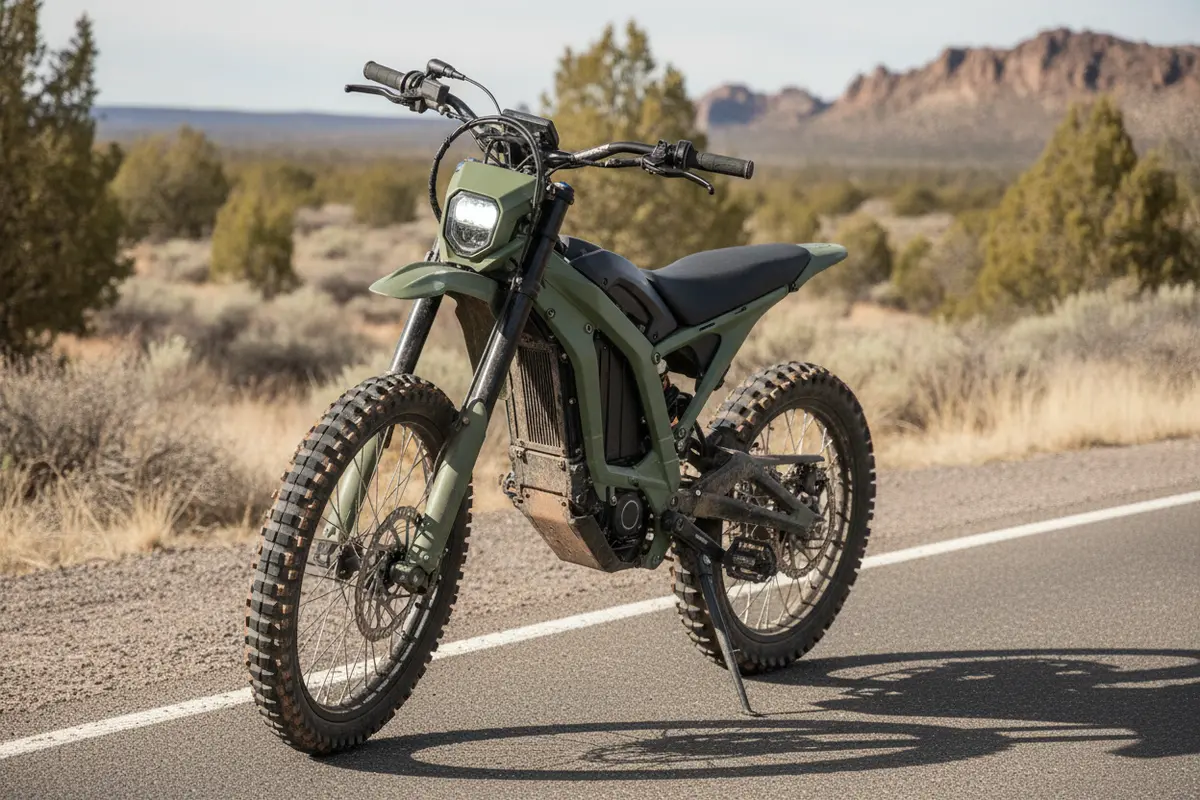
Off-road models are designed for a different setting. A model may lack equipment required for its road category, may not carry the documentation needed for title or registration, or may be expressly designated for off-highway use. Even if a bike has a headlight, brake light, or mirrors, that visible equipment does not by itself answer whether the underlying model can be registered.
Power and speed can also create classification questions. A machine that travels faster or has more motor output than a typical electric bicycle should not be assumed to follow bicycle rules just because it has pedals or is marketed as a “bike.” PeopleForBikes discusses this distinction in the source above, but the legal answer for an Oregon owner depends on current state requirements and the actual vehicle.
Modifications deserve the same caution. Installing lights, turn signals, mirrors, or a horn may address an equipment detail but may not change the vehicle’s original designation, certification, or title eligibility. Before spending money on parts, ask the manufacturer and DMV whether the exact model can be converted and registered for the use you intend. Get the answer first; do not rely on a conversion video or a parts list for a different vehicle.
If a road-legal option needs visibility equipment, compare products only after identifying its requirements. A bicycle light option can be considered for visibility, but buying a light does not establish legal eligibility. Likewise, protective equipment such as a road helmet may be part of a rider’s preparation; check the applicable rules for the vehicle and riding location.
Where can you ride an off-road electric dirt bike?
“Off road” does not mean every unpaved surface is open to every motorized vehicle. Access depends on who manages the land, the type of vehicle, the posted designation, and any permits or safety conditions. A bike path, mountain-bike trail, public road, private parcel, and designated off-highway riding area are not interchangeable places to ride.
- For public roads: Verify vehicle eligibility and all road-use requirements before entering traffic. Follow posted restrictions and do not use a shoulder or access road as a workaround if your vehicle is not allowed there.
- For paths and bike trails: Check the path or land manager’s rules for the specific vehicle category. Access allowed for pedal-assist bicycles does not necessarily include a throttle-powered or motorcycle-style dirt bike.
- For designated OHV areas: Confirm that electric models are accepted, which permits or registrations apply, and whether the area has seasonal closures or additional requirements.
- For private property: Get permission from the owner, respect boundaries and quiet-hour limits, and ask whether local rules apply. Do not assume that an open gate means public access.
For a Central Oregon ride, make a short route file before leaving: the trailhead or property name, the managing organization, the vehicle type you have, the relevant access page or contact, and any permit or closure details. Check it again close to the ride date because seasonal access and posted conditions can change. If any section of the route remains uncertain, choose a confirmed location rather than testing the rule in the field.
Transport is another practical detail. If you need to carry an off-road machine to an allowed area, confirm the bike’s weight, dimensions, and rack compatibility with the vehicle and carrier instructions. A hitch-rack option is one product to review for bicycle transport, but check its stated capacity and fit for your specific machine before loading it. Do not assume a rack intended for ordinary bicycles is suitable for a heavier electric dirt bike.
How should you compare options before buying?
Start with where you actually want to ride. A commuter who needs public-road access has a different buying test from a rider who can transport an off-road bike to a permitted area. Write down the places you expect to use it, whether road travel is essential, and whether you can transport it. Then match each candidate to that use before comparing speed or styling.
- If a road commute is essential, put documented classification, title eligibility, registration, and applicable rider requirements at the top of your list. Treat an uncertain answer as a reason to pause, not as a small detail to resolve after purchase.
- If trail riding is the priority, identify legal riding areas first. Then compare the bike’s intended use, transport needs, protective gear, and maintenance support. A model that cannot be used on a nearby trail may not fit your plan even if its performance looks appealing.
- If you want both, ask whether one exact model is approved for both purposes and verify each use independently. Do not infer public-road access from off-road capability, or trail access from road registration.
In the Bend area, a local showroom visit can help you compare electric mobility options in person, ask questions, and evaluate fit or handling where a test ride is appropriate. A test ride helps you understand comfort and control; it cannot certify legal status. Voltaire Cycles of Central Oregon serves shoppers through a Bend showroom and online purchasing, and offers service across brands. For general electric-bike alternatives, review the electric bike conversion kit information as a separate product path; a bicycle conversion product is not a way to establish that an off-road dirt bike is road legal.
Keep legal checks and mechanical checks distinct. A technician can help evaluate condition, controls, brakes, or service needs. The relevant state agency and land manager are the sources for registration and access rules. A well-maintained bike can still be restricted from a road or trail, while a legally eligible bike still needs safe setup and maintenance.
Frequently asked questions
Are electric dirt bikes street legal in Oregon if they have lights?
Not automatically. Lights are only one equipment consideration. Classification, manufacturer documentation, title eligibility, registration, and the rules for the intended road also matter. Confirm the exact model with Oregon DMV before riding on a public road.
Can I ride an off-road electric dirt bike on a bike path?
Do not assume that you can. Access depends on the bike’s category and the rules for that specific path or trail. Check posted restrictions and ask the land manager if the language is unclear, especially when rules distinguish pedal-assist bicycles from motorized vehicles.
Does a seller’s “street legal” claim settle the question?
No. Ask for the documents and the basis for the claim, then confirm the exact model and identification details with Oregon DMV. A statement about a similar model or a version sold in another state may not establish eligibility for the bike you are considering.
Can I make an off-road electric dirt bike road legal by adding equipment?
Not necessarily. Adding mirrors, lights, or signals does not automatically change classification or guarantee title and registration eligibility. Confirm whether the manufacturer and state allow the exact model to be registered for your intended use before buying parts or modifying the bike.
Call to discuss your electric riding plans
The safest approach is to identify the exact vehicle, verify its classification and Oregon requirements, and check every intended road or riding area before you buy or ride.