
A Dirt Bike Electric: How to Choose the Right Ride
If you are considering a dirt bike electric option, start with the kind of riding you actually plan to do. A machine for a managed off-road course has different practical requirements from a vehicle for exploring private property, and neither choice should be based on a top-speed claim alone. Fit, controls, terrain, charging, maintenance, and where riding is allowed all matter.
What should you decide before choosing a dirt bike electric model?
Short answer: Define your riding location, experience level, and intended frequency first. Then compare models only within the category that fits those needs, checking current specifications and local rules rather than assuming every electric off-road vehicle is treated as a bicycle.
Write down the actual use case: occasional recreational laps, riding on private land with permission, or another defined setting. Identify who will ride, how much experience they have, and whether the vehicle will be transported to the riding area. These details affect the importance of manageable controls, seat height, weight, battery access, and transport logistics.
Also distinguish an electric dirt bike from an electric bicycle. A dirt bike-style vehicle may have a throttle, higher power, or speeds beyond the limits associated with e-bikes. Classification and where a vehicle may be used depend on the vehicle and local rules. Do not assume that an off-road path, public road, bike lane, or mountain-bike trail permits every electric vehicle.
How does a dirt bike electric vehicle differ from an e-bike?
Short answer: The labels describe different types of vehicles and do not by themselves establish legal access. Compare the actual controls, power, speed, equipment, and manufacturer classification, then confirm applicable rules for the exact place you plan to ride.
Many e-bikes are designed around bicycle components and pedal assistance; some also provide throttle assistance, depending on their class and configuration. Electric dirt bikes are generally designed for off-road riding and may have motorcycle-style controls and performance. The categories can overlap in casual marketing language, so the model name is not enough to determine its legal status.
The Lexington, Massachusetts guidance on electric e-motos and electric dirt bikes explains that vehicles with a throttle that can exceed 20 mph are not e-bikes under its local guidance. That is a useful reminder to check the rules that apply where you live and ride; it is not a substitute for local regulations in Oregon or another state.
| What to compare | E-bike | Electric dirt bike |
|---|---|---|
| Typical design intent | Bicycle-style transport or recreation | Off-road riding |
| Controls to inspect | Pedals, assist controls, and sometimes throttle | Model-specific throttle and motorcycle-style controls may be present |
| Access question | Check class-specific route rules | Confirm that the exact vehicle is allowed at the intended riding site |
| Useful buying check | Fit, assist behavior, battery, and intended route | Fit, handling, power delivery, battery, and permitted use |
How should you match performance to your riding?
Short answer: Choose controllable performance for the terrain and experience you have, not the largest number in a listing. A test ride in a suitable, permitted setting can tell you more about response and confidence than a specification in isolation.
Consider the surface and environment. Smooth, open practice areas differ from uneven ground, loose turns, and steep sections. More power does not automatically mean more control, and higher speed raises the stakes for braking, protective equipment, and rider skill. If a rider is new, prioritize predictable response and a comfortable position.
Ask how the vehicle responds when starting, slowing, and turning. Check that the rider can reach the controls comfortably and can stop with confidence. If a test ride is offered, follow the shop's safety directions and wear appropriate protective gear. Never test an off-road vehicle on a public path or road unless it is explicitly permitted there.
What fit and handling checks matter most?
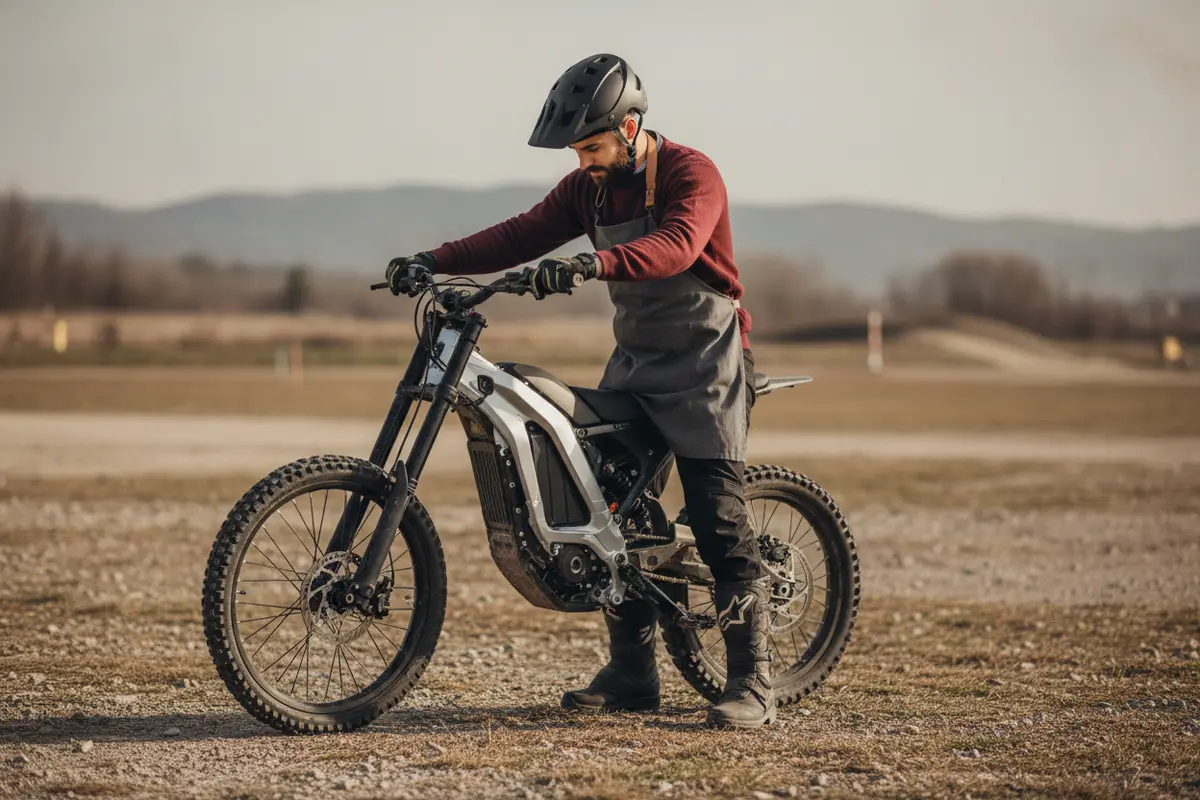
Short answer: The rider should be able to mount, balance, operate the controls, and stop the bike without straining. Check fit in riding gear and ask for help evaluating handling; a vehicle that feels unwieldy at a standstill may be difficult to manage on uneven ground.
- Reach: Can the rider hold the bars with relaxed shoulders and operate each control?
- Foot position: Is the stance comfortable, and can the rider put a foot down when needed?
- Weight: Can the rider steady and maneuver the vehicle safely when it is not moving?
- Braking: Are the controls understandable and easy to operate without shifting grip?
- Transport: Can the vehicle be loaded, secured, and stored with the equipment available?
For younger or less experienced riders, involve the responsible adult in every fit and safety decision. Do not buy based only on a rider's height or age; geometry and control feel vary by model. Ask the seller to explain the manufacturer's intended rider and use guidance.
How should you compare battery, charging, and range?
Short answer: Treat range as an estimate that changes with rider, terrain, speed, temperature, and riding style. Confirm the battery specification, included charger, charging instructions, and expected support directly from the current model information.
Range claims are not a promise for every ride. Repeated acceleration, hills, soft surfaces, higher speeds, heavier loads, and cold conditions can use energy differently from a steady ride on easy terrain. Think in terms of the duration and distance you need, with a margin to return safely rather than using the entire estimated range.
Before purchase, ask what charger is supplied and which outlet and charging conditions the manufacturer specifies. Use only the approved charger and follow the battery manual. Keep charging equipment dry, avoid damaged cables, and stop using a battery that appears damaged or behaves unusually. Ask a qualified technician about inspection or service instead of opening or modifying a battery pack.
What should you know about maintenance and service?
Short answer: Follow the model's maintenance schedule and arrange checks when braking, controls, tires, fasteners, or electrical behavior seem abnormal. Service needs vary by vehicle, so confirm parts availability and the shop's ability to support the specific model before purchase.
Off-road riding can expose components to dust, vibration, impacts, and moisture. Keep the vehicle clean according to its manual, inspect tires and brakes before rides, and listen for new noises or changes in control feel. Do not use a pressure washer or cleaning method unless the manufacturer says it is safe for that model.
Ask whether routine work, diagnostics, and model-specific repairs can be supported locally. Voltaire Cycles offers multi-brand repair and technical service; you can review its electric bike repair and service information and confirm whether the exact vehicle is supported. Service capability should be checked rather than assumed for every model.
Where can you ride an electric dirt bike?
Short answer: Confirm permission for the exact vehicle at the exact site before riding. A trail open to bicycles or e-bikes may not allow a dirt bike-style vehicle, and rules can differ among public lands, private property, roads, and designated recreation areas.
Check land-manager rules, posted signs, and any local requirements. If riding on private land, obtain permission and clarify boundaries. If transporting the bike to a riding area, plan for secure loading and safe unloading. Do not infer access from another rider's behavior or from a product's off-road label.
For a Bend-area purchase, a local conversation can help you identify questions to take to the relevant land manager and the vehicle manufacturer. The right answer depends on the vehicle's classification and site rules, not a general claim that all electric dirt bikes can use trails.
What should you compare before buying?
Short answer: Compare intended use, fit, control feel, battery and charging details, maintenance support, and permitted riding locations side by side. Verify every model-specific claim with current product information, since specifications and availability can change.
- Set the use case. Name the rider, terrain, frequency, and transport plan.
- Check classification and access. Ask the manufacturer and relevant land manager what applies.
- Evaluate fit. Have the intended rider try the position and controls where a suitable test ride is available.
- Review ownership details. Confirm charger, battery guidance, maintenance intervals, and parts or service options.
- Compare complete cost and support. Include necessary protective equipment and transport needs, not just the vehicle price.
- Make a safety plan. Choose appropriate protective gear, supervision, and a permitted place to ride.
Shoppers who are still weighing electric bicycle options can also browse the electric bicycle collection. A bicycle may be a better fit when the primary goal is pedal-assisted transportation or riding routes governed by bicycle rules; verify the specific model's class and route access.
How can you assess a real-world use case before buying?
Consider two hypothetical riders. One expects short sessions on a permitted private practice area and has experience with off-road controls. The other wants an electric vehicle for mixed errands and shared bicycle paths. Even if both search for an electric dirt bike, their needs point in different directions. The first should focus on fit, control response, equipment, and site permission; the second should first compare bicycle-style products and applicable route rules rather than assume a dirt bike-style machine will work for the commute.
A third example is a rider who has a suitable location but must transport the vehicle in a family vehicle. The practical buying questions now include the loading method, tie-down points approved by the manufacturer, storage space, and whether the battery should be removed for transport. Confirm these details in the manual; do not improvise a loading setup that could damage the vehicle or create a road hazard.
Turn these examples into a simple decision sheet. Write the rider and experience level at the top, then list the planned terrain, typical ride duration, charging location, transport method, and local access rules. Add a column for each model under consideration and leave any unknown answer marked as “confirm.” That makes it easier to compare facts rather than relying on memory or a single impressive specification.
How can a test ride answer questions that specifications cannot?
A specification sheet can describe dimensions and performance figures, but it cannot tell you how comfortable the controls feel in your hands or whether you can manage the vehicle confidently at low speed. In a suitable setting, evaluate the basic sequence of mounting, starting, moving slowly, applying the brakes, and stopping. Ask the staff member what the test area allows and follow all directions.
Afterward, note what felt natural and what did not. Could you reach the controls without changing your grip? Did the throttle response feel predictable? Could you stop smoothly? Did the vehicle feel balanced while turning slowly? These observations are more useful than a vague impression such as “it felt powerful.” A rider who feels uncertain should pause and ask questions rather than treating uncertainty as something to overcome through speed.
Voltaire Cycles provides local showroom support and hands-on product evaluation for shoppers in Bend. Use a visit or phone consultation to clarify the questions that depend on current model details. Online shoppers can also review the available electric mobility options and contact the shop before deciding if a detail is unclear.
What ownership questions belong on your checklist?
Before buying, ask for the current manual and written specifications for the exact model and version. Confirm the rated rider guidance, battery details, charger included, charging limits, maintenance schedule, warranty terms, and parts availability. If any document uses a term you do not recognize, request a plain-language explanation. Do not rely on a verbal summary for a technical limit you will need later.
Plan the recurring routines too. Decide where the vehicle will be stored, how charging equipment will be kept dry and protected, and who will perform pre-ride checks. Put the first inspection interval from the manual on a calendar. Keep a record of unusual noises, error messages, impacts, or changes in braking so you can explain them clearly if service is needed.
For every unknown, identify who can answer it: the manufacturer for model specifications, the land manager for access, and a service provider for repair capability. This division avoids asking a retailer to make legal determinations or assuming that a product page answers every maintenance question. A careful buyer leaves with a practical ownership plan as well as a vehicle.
Call the Bend shop to discuss your ride
Frequently asked questions
Is an electric dirt bike the same as an e-bike?
No. The name alone does not settle the classification. Compare the actual vehicle design, controls, power, and manufacturer information, then check local rules for the route or site.
Can I ride an electric dirt bike on a mountain-bike trail?
Do not assume so. Access depends on the particular vehicle and the land manager's rules. Confirm permission before riding, even if other electric vehicles are allowed there.
Does the advertised range tell me how far I will ride?
It is an estimate, not a guarantee. Terrain, speed, rider and cargo weight, temperature, and riding style can all affect the distance. Plan a reserve and follow the manufacturer's battery guidance.
Should a first-time rider choose the most powerful model?
Not automatically. Prioritize manageable fit, predictable controls, appropriate supervision, and a permitted practice area. Ask the manufacturer or a knowledgeable retailer to help assess suitability for the rider's experience.
Choosing an electric dirt bike is easier when the vehicle, rider, and riding location all fit the same plan. Verify the details before you buy, and ask questions whenever a specification or access rule is unclear.