

Winter Electric Bike Riding: Tips for Cold Weather and Snow
Snow and cold do not have to end your e-bike season in Bend. With the right preparation, a winter ride can still be comfortable, predictable, and genuinely fun. Whether you are commuting across town or heading out for a quiet Central Oregon adventure.
Shop cold-weather-ready electric bikes online at Voltaire Cycles.
Successful winter electric bike riding comes down to protecting battery performance, choosing traction for the conditions, dressing in layers, and cleaning the bike after wet or salty rides. Charge the battery at room temperature, keep it dry, and match your tires and riding style to snow and ice.
The details matter more in winter because cold affects battery efficiency, while moisture, grit, and reduced traction place extra demands on the bike and rider. Start with the advantages of riding through Central Oregon's colder months, then build a practical routine for your battery, tires, clothing, maintenance, and model selection.
Why Winter Electric Bike Riding Works in Central Oregon
Central Oregon's winter months reward riders who plan ahead. Commuters can keep replacing short car trips, while outdoor enthusiasts get quieter roads and familiar routes in a different season. The key is matching your equipment and riding habits to the conditions rather than waiting for every day to be dry and mild.
That preparation starts with choosing an e-bike that fits how and where you ride. Tires with suitable tread, dependable lighting, comfortable cold-weather gear, and a plan for battery care all make winter outings more practical. If you are still comparing options, browse Voltaire Cycles' electric bikes for sale online, or visit the Bend showroom to ask questions and take a hands-on test ride.
Local advice matters when conditions change
Central Oregon riders also benefit from local guidance. Voltaire Cycles combines electric mobility expertise with a Bend showroom, test rides, and certified service. So you can discuss your route and riding goals with people who understand the area. That support is useful for commuters planning wet or snowy trips, as well as recreational riders deciding whether a particular setup is appropriate for a trail.
Before heading out, confirm your e-bike class and where it is allowed. Mountain bike trails and other paths may restrict higher-class e-bikes, and local winter trail regulations can differ from summer rules. Follow posted signs and current land-manager guidance instead of assuming that a route remains open or has the same access rules year-round.
For a shorter checklist before your next outing, see these quick winter e-bike tips. This article builds on that reference with a more comprehensive look at batteries, tires, and clothing. Plus maintenance and model selection, so winter riding becomes a manageable part of life in Bend and across Central Oregon.
How Cold Weather Affects Your E-Bike Battery
Cold weather does not automatically make an e-bike battery unsafe to use, but it can change how the battery performs. A little preparation helps you plan realistic rides, protect the battery, and avoid charging it when conditions are too cold.
Why Range Drops in the Cold
Lithium-ion batteries rely on chemical reactions to deliver energy. Cold temperatures slow those reactions, which can temporarily reduce both power output and available capacity. In practical terms, your bike may feel less responsive under load, and the battery indicator may fall faster than it does on a mild day. The U.S. Department of Energy identifies battery life and range in cold climates as important considerations for electric-bike use, while ReadyNC explains that cold slows the chemistry inside lithium-ion batteries.
That performance loss is generally related to the battery's temperature. As the battery warms during use, some of its normal power and range can return. For longer winter rides, leave more range in reserve instead of planning a route that uses nearly the entire charge. You can also review our guide to e-bike battery care and range for broader charging and maintenance guidance.
Charge at Room Temperature
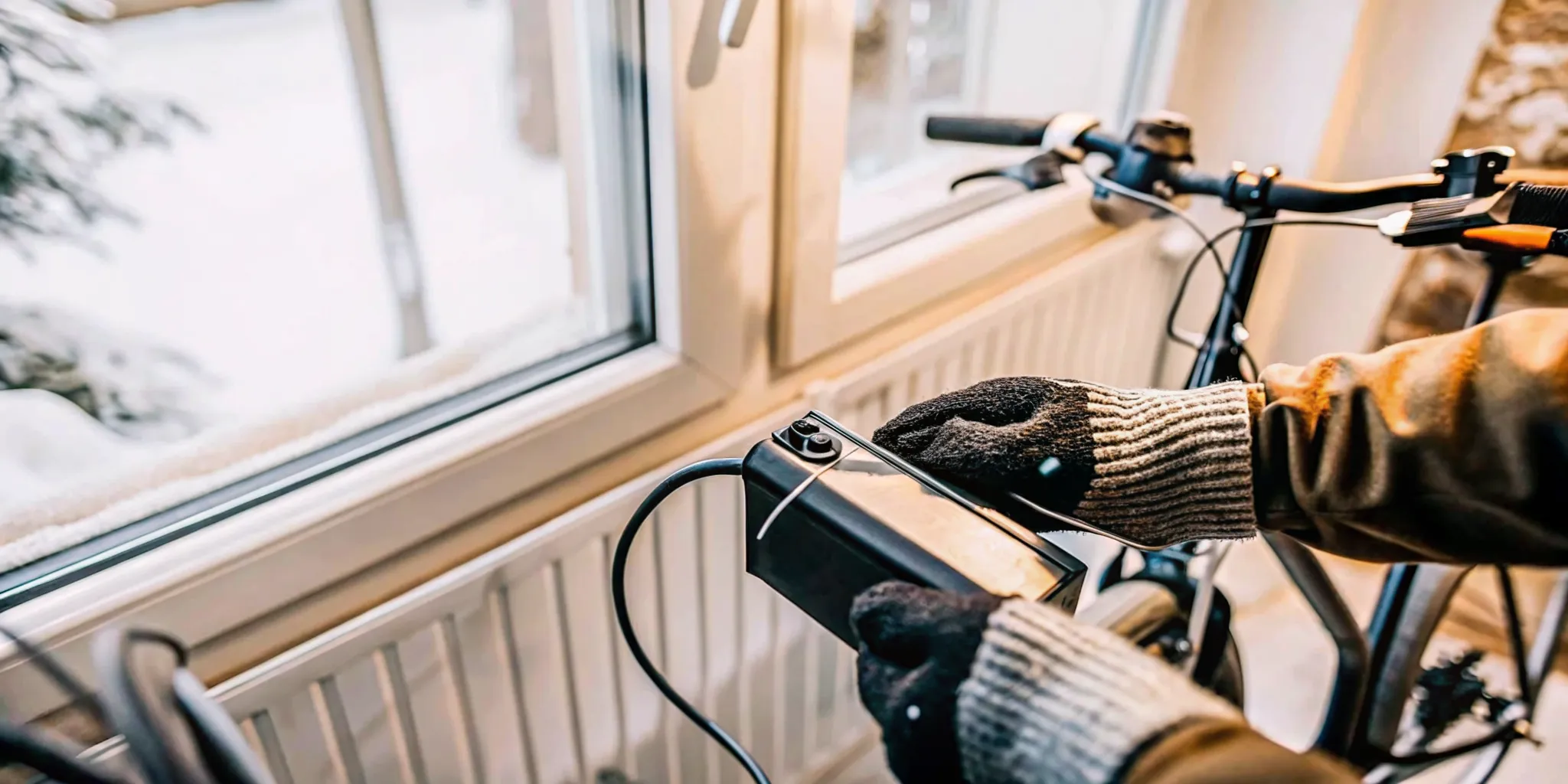
After a cold ride, bring the battery indoors and let it return to room temperature before connecting the charger. Never charge a frozen or very cold battery: charging under those conditions can contribute to long-term capacity loss. So warming the battery first is a simple step worth making part of your winter routine.
If the battery is removable, take it off the bike soon after you return. Keep the charger and battery dry, and inspect the contacts before reconnecting anything. If a battery is unusually hot, damaged, swollen, or behaving differently from normal, stop using it and ask a qualified technician for guidance.
Store the Battery Indoors
For storage, choose a cool, dry location away from direct sunlight and extreme temperatures. ReadyNC recommends protecting lithium-ion batteries from both extreme heat and extreme cold. Avoid leaving the battery overnight in an unheated garage when temperatures are severe.
Remove the battery when the bike will be parked for a long period, particularly in cold or wet weather. This recommendation is also included in the District Department of Transportation's e-bike guide. Keeping the battery indoors makes charging easier and gives you a chance to check its condition before your next ride.
Fat Tires vs. Studded Tires for Snow and Ice
The right tire depends less on the word "winter" and more on the surface you expect to ride. Winter-specific tires with deeper tread can clear loose snow and provide more predictable handling than a smooth commuter tire. For snow and ice, local riding guidance recommends deeper tread patterns or studs to improve grip and stability.
Match the tire to the surface
Fat tires have a wide contact patch that can help an e-bike float over soft, loose snow instead of sinking as quickly. They also add a stable feel on uneven winter surfaces. Lowering tire pressure within the manufacturer's approved range can increase the tire's ability to conform to the ground. But pressure should not be reduced so far that the rim or sidewall is put at risk.
Studded tires are the more direct choice when ice is the main concern. Their metal studs can bite into slick frozen surfaces where tread alone may not provide enough grip. They are especially useful for shaded paths, icy intersections, compacted snow, and other places where traction can change within a few feet. You can browse studded tires sold at Voltaire Cycles when comparing options.
Knobby winter tires sit between those choices. They provide deeper tread for loose snow, slush, and wet gravel without the added hardware of studs. They can be a practical all-around option if your route is mostly plowed or soft rather than consistently icy. Whichever tire you choose, ride smoothly and leave extra room for braking: tire tread cannot eliminate the risk of sliding on ice.
| Tire type | Best snow condition | Ice grip | Best for | Trade-offs |
|---|---|---|---|---|
| Fat tire | Loose or soft snow. | Limited without studs. | Stability and flotation. | Can feel slower. Does not replace ice-specific traction. |
| Studded tire | Compacted snow and mixed winter surfaces. | Strongest option for icy sections. | Routes where ice is common. | More rolling resistance and road noise. |
| Knobby winter tire | Plowed snow, slush, and wet gravel. | Better than smooth tread, limited on glare ice. | Mixed routes and general winter use. | Less flotation than a fat tire. Less ice grip than studs. |
If your winter route includes both soft snow and unavoidable ice. Ask a local technician to help balance tire width, tread, studs, and pressure for your e-bike and riding habits. For background on wide-tire handling, see the benefits of fat tires on e-bikes.
What to Wear for Winter E-Bike Rides
Dress for the temperature you will actually experience, not the effort you expect to produce. An e-bike does not create engine heat like a motorbike, and pedal assist can mean less exertion than riding a traditional bicycle. That combination makes it easy to feel comfortable at the start and noticeably cold a few minutes later. So the practical answer is a flexible layering system that lets you adjust as conditions change.
Build your layers around moisture and wind
Start with a moisture-wicking base layer that moves perspiration away from your skin. Avoid cotton next to your body because damp fabric can leave you chilled when the pace slows or a winter breeze picks up. Add an insulating mid layer, such as fleece or another warm, breathable layer, then finish with a windproof shell. If rain or wet snow is possible, choose a shell with waterproof protection and enough room for your other layers.
The goal is warmth without restricting your control of the bike. You should be able to reach the brakes, shift, and turn your handlebars comfortably. Open or remove a layer when climbing, and add it back before a downhill stretch or a stop. Packable layers are especially useful for longer rides around Bend, where conditions can change over the course of an outing.
Not sure which winter setup fits your ride? Ask a Voltaire Cycles e-bike expert for guidance.
Protect hands, feet, and visibility
Cold hands and feet often end a ride before the rest of your body is ready to stop. Wear insulated, weather-resistant gloves that still allow precise brake control. Warm socks and weatherproof footwear help keep your feet comfortable, while a neck gaiter can protect the gap between your jacket and helmet. For especially cold commutes, handlebar mitts are an optional way to add wind protection without relying on bulky gloves alone.
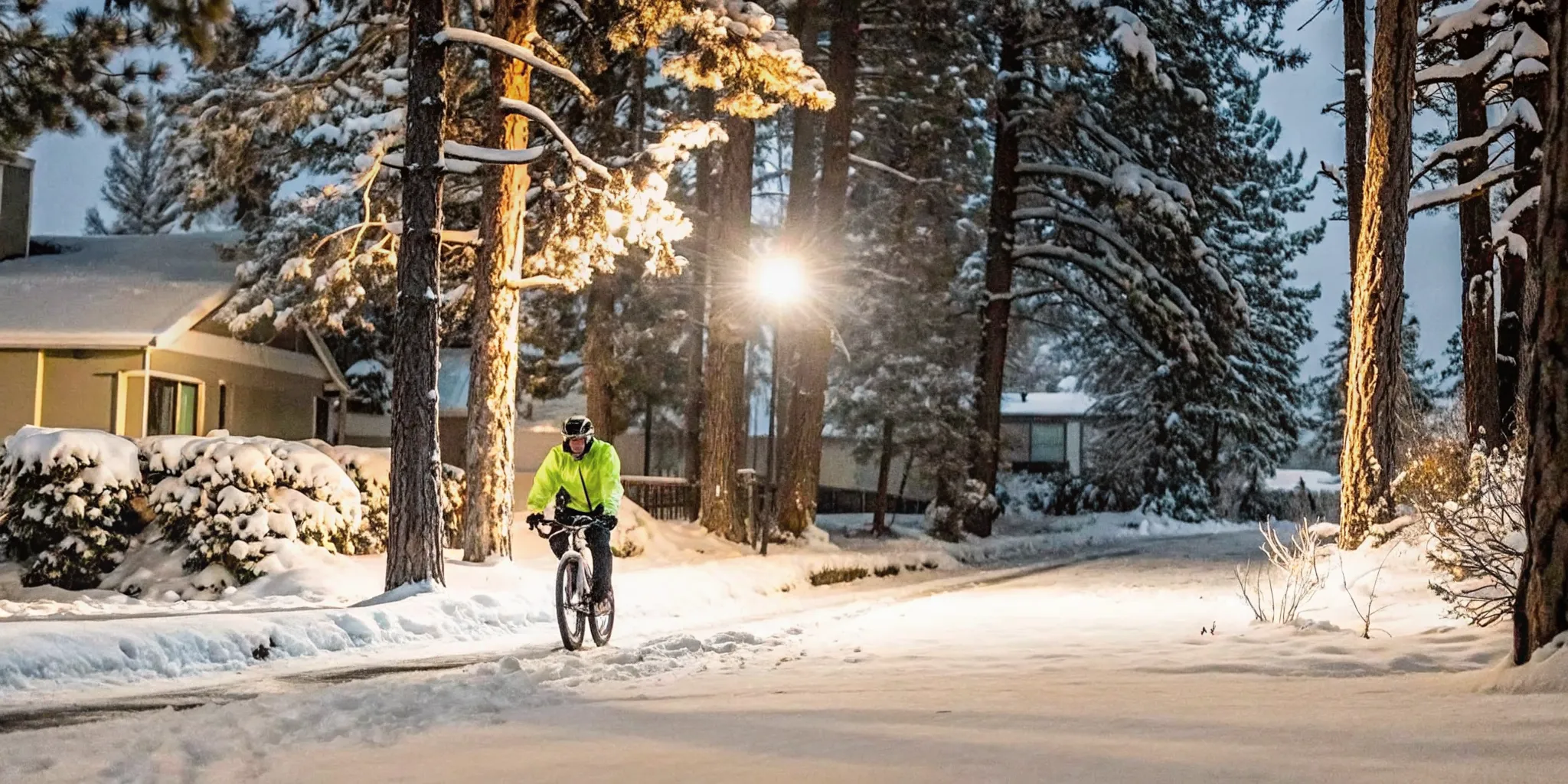
Winter also brings shorter daylight hours and reduced visibility in precipitation. Choose bright or reflective outerwear, and use front and rear lights even when you are riding a familiar route. Visibility is part of your riding gear, not an afterthought.
If you are deciding what equipment or riding setup fits your routine, Voltaire Cycles can help through an electric bike consultation in Bend. The right advice should account for your commute, clothing, comfort, and the conditions where you plan to ride.
Winter E-Bike Maintenance After Wet and Salty Rides
Wet roads, de-icing residue, and road grit can turn a routine winter ride into a maintenance problem. Salt and moisture accelerate corrosion on chains, cassettes, and other drivetrain components, so a little attention after each messy ride can prevent premature wear. You do not need a complicated workshop setup, but you do need a consistent routine.
Clean the drivetrain and check the bike
Start by wiping down the frame and fork with a clean, damp cloth. Avoid blasting water directly at the motor, battery housing, display, or bearings. Give the chain and drivetrain a closer inspection, removing visible grit before applying a bicycle-specific lubricant. Wipe away excess lubricant so it does not collect more dirt on the next ride. If the chain feels rough, the shifting becomes inconsistent, or corrosion is visible, schedule bike repair services in Bend before a small issue becomes an expensive one.
Check the brakes more frequently during winter. Rain, salt, and grit can reduce braking performance, and contaminated or worn components deserve prompt attention. Confirm that the brake levers feel consistent and that the pads or rotors are not visibly damaged. A quick tire check also helps you spot a loss of pressure or embedded debris before you head back onto the road.
After a wet ride, remove the battery if the bike will remain parked for a long period, particularly in cold or wet conditions. Wipe the battery and its contacts dry before reinstalling it, and store the battery indoors in a cool, dry place away from extreme temperatures. If the battery is cold from the ride, let it return to room temperature before charging. These simple habits protect the battery while it is not in use.
Winter electric bike riding also calls for smoother control. On snow, ice, or compacted slush, modulate braking and steering rather than grabbing a lever or turning sharply. Sudden movements can make the wheels slide, even when the bike has appropriate winter tires. Keep your speed controlled and leave extra space for stopping. For a fuller preparation checklist before the season gets underway, review how to prepare your electric bike for winter.
Book a free e-bike consultation with a Voltaire Cycles expert.
E-Bike Models That Handle Winter Best
The best winter bike is not defined by a single motor or battery size. It is the one that gives you predictable control when roads are wet, shoulders are rough, and daylight is limited. As you compare options, look for a combination of traction, stability, braking confidence, usable range, and practical protection from spray.
Which e-bike design features matter most in winter?
Fat tires can be a strong choice for packed snow, loose surfaces, and uneven winter roads. Their wider contact patch can help the bike feel more planted, although tire pressure and tread still matter. If your regular routes include ice, look at whether a bike can be paired with appropriate traction equipment rather than assuming any wide tire will grip every surface.
Stable geometry and an easy-to-manage riding position are equally important. A commuter-style e-bike with a balanced frame can make stop-and-go riding more comfortable. And a step-through design may be easier to mount when you are wearing heavier layers or carrying work gear. Riders who prioritize a lower, more accessible step-over should test the frame in person rather than choosing from photos alone.
Reliable brakes deserve special attention. Winter riding calls for smooth speed control, especially when pavement is damp or a surface is slick. Look for a setup that feels progressive and easy to modulate, then make sure the pads, rotors, cables, or hydraulic system receive regular checks throughout the season.
Battery range that suits your real route is better than an impressive-sounding claim that does not match your routine. Cold temperatures can reduce available power and range temporarily, so leave practical headroom for longer commutes, hills, detours, and slower riding. A removable battery can also make it easier to store and charge the pack in a suitable indoor environment.
Finally, consider full-coverage fenders, useful lights, and room for racks or other commuting accessories. Fenders help limit water and grit reaching you and the bike, while visibility equipment supports safer riding during shorter winter days.
Voltaire Cycles prioritizes Segway options alongside other carefully selected electric mobility products. Browse Segway e-bikes and scooters to compare the current collection, or review the electric bikes for sale at Voltaire Cycles for broader categories, including commuter, fat-tire, and step-through styles. Segway e-bikes are available to explore through the Bend showroom and online. A test ride at 2755 NW Crossing can help you judge frame fit, braking feel, balance, and mounting comfort before you commit to a winter setup.
Frequently Asked Questions
Can you ride an e-bike in snow and cold weather?
Yes, if conditions are manageable and the bike is prepared for them. Use tires with deeper tread or studs for snow and ice, ride at a controlled speed, and avoid sudden braking or steering that can make the wheels slide. Check local trail rules as well, since winter access and e-bike class restrictions can differ by route.
Does cold weather damage an e-bike battery?
Cold temperatures can temporarily reduce lithium-ion battery power and riding range because the battery's chemical activity slows while it is cold. The battery should be stored in a cool, dry place away from extreme temperatures, including extreme cold. See the lithium-ion battery safety guidance for additional storage precautions.
Can I charge my e-bike battery immediately after a winter ride?
Let the battery return to room temperature before charging, especially after a cold ride. Charging while the battery is still very cold can contribute to long-term capacity loss. If the bike will sit outside for an extended period, remove the battery and keep it in an appropriate indoor storage location.
Are fat tires or studded tires better for winter riding?
They solve different traction problems. Fat tires can provide a broader contact patch and help the bike feel more stable on suitable snowy surfaces. While studded tires are the stronger choice when icy paths are the main concern. Choose based on your normal route, then keep tire pressure and tread condition within the manufacturer's guidance.
What should I wear on a winter e-bike ride?
Dress for the actual air temperature rather than expecting the bike to keep you warm. E-bikes do not produce engine heat, and riders may pedal less intensely than they would on an acoustic bike. Use comfortable layers, a wind-resistant outer layer, warm gloves, and insulated socks, and add visible clothing and reliable lights for darker conditions.
Ready to Prepare for Winter Riding?
The right bike, tires, clothing, and care routine can make cold-weather rides more comfortable and manageable. If you want help comparing winter-ready options for your riding style, schedule a free electric bike consultation with the Voltaire Cycles team. You can shop online or visit the Bend showroom to talk through your needs and choose a practical next step before your next winter ride.