
What to Look For When Buying an Electric Bike
Choosing an e-bike is less about finding the most powerful motor or largest battery and more about matching the bike to the rides you will actually take. A weekday commuter, a trail rider climbing Central Oregon terrain, and a recreational rider seeking extra confidence may need very different equipment.
Knowing what to look for when buying an electric bike means comparing the motor and sensing system, battery capacity and expected range, total weight, e-bike class, and the service available after purchase. Those details affect how naturally the bike accelerates, how confidently it handles hills, how easily you can transport it, and how well it fits your local routes.
Start by picturing your regular ride, including its hills, surfaces, distance, storage, and charging setup. That practical description will make the technical choices clearer and help you decide which features deserve priority before you compare models.
Shop our selection of quality electric bikes and compare the options in one place.
Start With How You Plan to Ride
Before comparing motors, batteries, or screens, picture a normal week on the bike. Will you ride to work, carry groceries, explore dirt roads outside Bend, climb neighborhood hills, or take relaxed rides with friends? Your answer should guide the frame, tires, riding position, motor, and available accessories. An electric bike that feels perfect for a paved commute may be awkward on rocky trails, while an e-MTB can be unnecessary weight for short errands.
That use-case-first approach also clarifies what you expect the motor to do. If you want exercise with a little help on headwinds and inclines, pedal assist may be all you need. If you want help getting started from a stop, managing a heavy load, or easing fatigue on longer rides, a throttle may be important. Throttle-equipped models can be useful, but they also change how the bike responds and may be governed by different local access rules. Consider where you expect to ride, then confirm which class and controls are allowed on those paths and trails.
Match the bike to your daily route
For commuting, look for dependable lighting, fenders, comfortable ergonomics, and a battery sized for the round trip rather than the shortest advertised ride. For cargo or family errands, account for the combined weight of the rider, bike, rack, and load. For recreation, range and comfort may matter more than maximum speed. Riders planning frequent hills should pay close attention to torque and gearing. A motor that delivers steady assistance while climbing can feel very different from one that simply switches on after it detects pedaling.
Torque sensing measures how firmly you pedal and generally produces more proportional, natural-feeling assistance. Cadence sensing detects that the cranks are turning and tends to provide a simpler on-or-off response. Neither is automatically right for every rider. A relaxed recreational rider may value straightforward assistance, while a commuter or hill rider may prefer a response that tracks effort more closely. A test ride is the best way to compare them.
E-bikes are popular in part because they can be convenient, time-saving, economical, and environmentally friendly compared with some car trips, according to research reported in a published review of electric-bike transportation. Start by defining the trips you want to replace or improve, then explore our electric bike collection with that real-world list in mind.
The Three Classes of Electric Bikes, Explained
Electric bike classes help you compare speed and motor operation before considering accessories or display features. The class printed on a product listing is a starting point for understanding where the bike may be allowed, not a universal trail pass. Rules differ by city, land manager, bike path, and trail type, so confirm local requirements before riding.
Class 1: pedal-assist for a natural ride
A Class 1 e-bike provides assistance only while you pedal, and the motor assists up to 20 mph. Once you reach that speed, you can continue riding under your own power, but the motor no longer adds assistance. This makes Class 1 a straightforward choice for riders who want help on starts, gradual climbs, or longer commutes while keeping the familiar feel of pedaling.
Class 1 bikes are often the easiest category to consider for paved multiuse paths, subject to posted rules. They suit riders who want a predictable experience around pedestrians. Check each path's current policy rather than relying on the class label alone.
Class 2: pedal-assist plus throttle control
Class 2 e-bikes can provide pedal assistance up to 20 mph and also include a throttle. Depending on the model, the throttle can move the bike without continuous pedaling, which may help when starting from a stop or taking a brief break from pedaling. That convenience can change how a trail manager views access, so Class 2 permission is not automatically the same as Class 1 permission.
Class 3: higher-speed pedal assistance
Class 3 e-bikes use pedal assist up to 28 mph. They are designed for riders who want to maintain higher speeds on roads, bike lanes, and longer commutes, when the route and local rules allow it. Class 3 is not a throttle category by definition, and the additional speed can make traffic awareness, braking distance, and route selection more important.
When comparing options, decide whether your priority is broad path compatibility, throttle convenience, or sustained speed on roads. For a deeper checklist of practical questions, review questions to ask before buying an electric bike. Then verify the rules for the paths and trails you actually plan to use. Regulations vary significantly by location and trail type, so checking local laws before riding is an essential part of choosing the right class. Consumer Reports explains the three classes and the importance of checking local regulations.
What to Look For When Buying an Electric Bike Motor: Torque, Cadence, and Drive Type
The motor determines how an electric bike feels when you start, climb, and accelerate. Two details matter immediately: how the bike detects your pedaling and where the motor delivers power. Understanding both helps you choose assistance that feels natural for your routes instead of simply choosing the largest motor listed on a product page.
Torque sensing or cadence sensing?
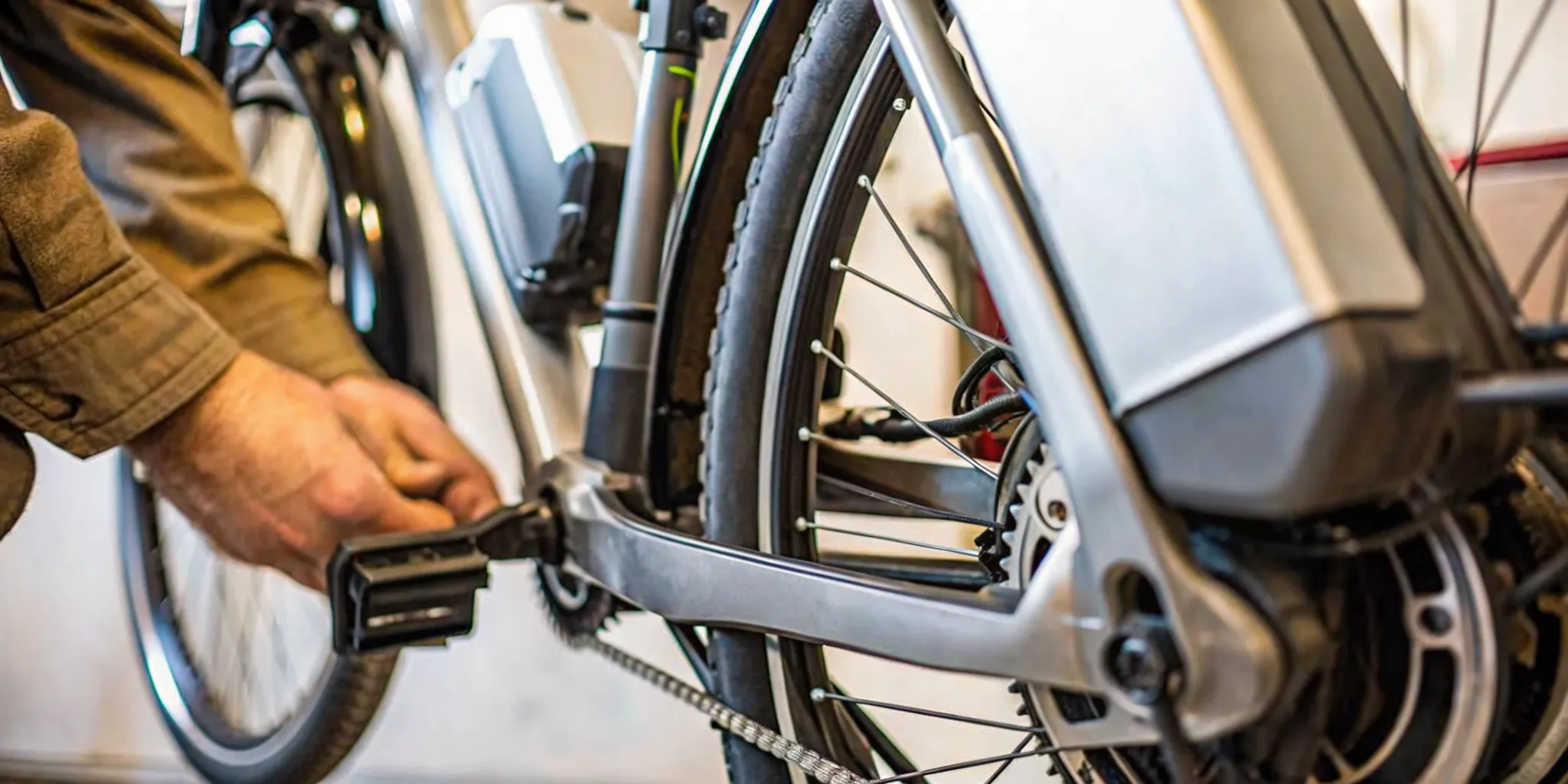
A torque sensor measures how firmly you press on the pedals and responds with proportional assistance. Push harder and the motor contributes more; ease off and the support tapers with you. That response often feels closer to riding a conventional bicycle, which can be useful when you want fine control on climbs, corners, or mixed surfaces.
A cadence sensor detects whether the cranks are turning. Once you begin pedaling, the motor provides assistance according to the selected level, creating a simpler on-and-off response. Cadence sensing can be a practical choice for riders who want predictable help getting underway or who prefer not to push hard on every ride. During a test ride, pay attention to how quickly assistance begins and stops, and whether the response feels smooth at the speed you expect to maintain.
Mid-drive versus hub-drive motors
Motor placement changes the bike's balance, climbing behavior, and service considerations. A mid-drive motor applies power through the bicycle's drivetrain. Consumer Reports notes that mid-drive systems are often recommended for hilly terrain because they can provide better torque and efficiency than hub-drive motors. That can matter on Central Oregon routes with sustained grades or when carrying extra gear.
| Consideration | Mid-drive | Hub-drive |
|---|---|---|
| Power delivery | Works through the drivetrain and generally offers stronger torque for steep hills. | Drives the wheel directly, providing straightforward assistance for everyday riding. |
| Ride priorities | A strong fit for climbs, varied terrain, and riders who want balanced handling. | A practical fit when simple operation and relaxed riding are the priorities. |
| Cost and complexity | Can involve a more complex system and higher purchase cost. | Generally simpler, quieter, and often more affordable than a mid-drive system. |
Neither design is automatically better for every rider. A flatter commute may not require mid-drive climbing performance, while a heavier rider or frequent hill user may appreciate the extra torque. Compare the motor with your real route, preferred effort, and service expectations. A local test ride can reveal differences in start-up response and hill control that specifications alone cannot.
Battery, Range, and Weight: The Numbers That Matter
Battery capacity is usually listed in watt-hours, or Wh. Think of watt-hours as the battery's energy budget: a higher number generally gives the motor more energy to draw from. But it does not guarantee a fixed number of miles. A manufacturer's range estimate is a starting point, not a promise. Range changes with battery capacity, motor power, terrain, rider weight, cargo, and the level of pedal assist you use. Hills, soft surfaces, headwinds, heavy loads, and high assist can all reduce the distance available between charges. Consumer Reports identifies these same variables as important factors in real-world range.
When comparing models, match the battery to your actual ride instead of choosing the largest number automatically. A short neighborhood commute may not need the same capacity as a long Central Oregon outing with climbing and gear. Ask how the estimate was measured, whether the battery is removable, and how much range remains when you use the assist level you prefer. If you regularly ride hills or carry equipment, leave room between your expected trip distance and the advertised maximum.
Charging should be convenient and controlled
Most e-bike batteries can be charged from a standard household outlet, which makes overnight or between-ride charging straightforward. Use the charger supplied or approved for that specific battery system, and look for tested, certified batteries and chargers. Inadequately tested products and unattended charging can create serious fire risks, so avoid improvised chargers and follow the manufacturer's instructions. The safety guidance reviewed by Consumer Reports emphasizes using tested and certified equipment. While a medical review of lithium-ion battery incidents also highlights the importance of responsible charging practices.
Weight affects every part of ownership
An e-bike's weight matters most when you lift it onto a rack, carry it up steps, load it into a vehicle, or store it at home. A heavier bike may feel stable on the road, but that benefit does not help if transporting it is difficult. Check the rack's actual weight capacity, confirm that it supports the bike's frame and wheel design, and consider whether removing the battery makes loading easier. A test lift is as useful as a test ride.
Finally, treat the battery as a service component, not a lifetime part. Battery lifespan is finite, and eventual replacement after many charge cycles is normal. Ask about replacement availability, service support, and safe storage before you buy. That conversation can matter as much as the initial range figure, especially when you plan to keep the bike for years.
Buy From a Local Expert and Test Ride in Bend First
Specifications can narrow your choices, but an electric bike still needs to feel right beneath you. At the Voltaire Cycles Bend showroom, you can compare riding positions, controls, motor response, and fit with guidance from people who work with electric mobility every day. That hands-on conversation is especially useful if you are moving from a traditional bicycle. Managing joint or balance concerns, or choosing between a commuter, recreational bike, and higher-performance model.
A test ride also reveals details that a product page cannot. Pay attention to how easily you start, whether the assist feels predictable, how confidently you can stop, and whether the frame and handlebars feel comfortable at low speed. Try the bike on the type of surface you expect to ride. If you are considering Segway, you can explore the Segway collection online, then use a showroom conversation to match a model's features to your actual routes and priorities.
Assembly and service matter after the sale
Professional assembly is more than unpacking a box and tightening a few bolts. A qualified technician can inspect the brakes, drivetrain, wheels, electrical connections, and controls before you ride away. Proper setup helps the bike perform as intended and gives you a clear starting point for safe operation. Ongoing maintenance is equally important. Regular attention to the motor, battery connections, brakes, and electrical components supports performance and longevity. While a local service relationship gives you somewhere to turn when a problem appears.
Voltaire Cycles combines certified technical expertise with multi-brand service, so the support conversation does not end with a single purchase. That can be valuable when you add accessories, change your riding habits, or need help maintaining an electric bike over time. Local service and professional inspection improve the practical ownership experience, not just the initial buying decision.
Rent before you commit
If you are still unsure about size, comfort, or riding style, a rental can be a useful bridge between research and purchase. Voltaire's Bend electric bike rentals let you spend meaningful time riding instead of making a decision from a short parking-lot loop. You can learn how the bike handles hills, pavement, paths, and longer outings, then bring specific observations back to the showroom team.
For shoppers beyond Central Oregon, you can shop the electric bike collection online while still using local expertise as a benchmark for fit, setup, and service. The best choice is the bike you can ride comfortably, maintain responsibly, and confidently use for the trips you actually plan to take.
Ready to compare real electric bikes side by side? Shop the electric bike collection.
Frequently Asked Questions
What should I look for in an e-bike for hills?
Prioritize a motor with strong torque and a drive system suited to your terrain. A mid-drive motor is often a good fit for sustained climbs because it applies power through the drivetrain and can provide better torque and efficiency than a hub-drive system. Your gearing, rider weight, cargo, and preferred assist level also affect hill performance. A test ride on a real incline is more useful than choosing by motor wattage alone. Consumer Reports explains the mid-drive advantage for hilly terrain.
How far can an electric bike travel on one charge?
There is no single range number that applies to every rider. Battery capacity, motor power, terrain, rider weight, tire pressure, weather, and the level of pedal assist all influence how far you can go. Compare batteries by watt-hours, or Wh, and treat the manufacturer's range estimate as a best-case reference rather than a guarantee. If your rides include hills, heavy loads, or frequent high assist, choose more capacity than the minimum you expect to need.
Which e-bike class is best for a first-time rider?
Class 1 provides pedal assist up to 20 mph. Class 2 adds a throttle and also reaches up to 20 mph, and Class 3 provides pedal assist up to 28 mph. The best choice depends on where you ride, how much control you want from pedaling, and which paths or roads you plan to use. Rules vary by location and trail type, so check local requirements before riding. Review the class definitions and riding considerations.
What battery safety details should I check before buying?
Choose an e-bike with a tested battery and a charger designed for that battery system. Avoid unknown replacement chargers, damaged battery cases, and unapproved modifications. Charge according to the manufacturer's instructions and do not leave a battery unattended while charging. A certified, professionally assembled system gives you a stronger starting point for safe ownership and future service.
Do I need a local e-bike shop after I buy?
Local support can be valuable for assembly, fit, brake and drivetrain adjustments, diagnostics, and routine service. Before buying, ask who will handle repairs, whether replacement parts are available, and how warranty issues are managed. In Bend, a hands-on test ride and advice from an experienced electric mobility technician can help you choose a bike that fits your route. Storage, and transport needs instead of relying on specifications alone.
Ready to Choose the Right E-Bike?
A short conversation and test ride can help you compare comfort, fit, handling, and assist feel before you commit to a bike. If you are shopping in Bend or elsewhere in Central Oregon, visit the Bend showroom for a test ride and free consultation. Contact us to talk through how you plan to ride and leave with a clearer sense of which e-bike fits your everyday needs.