

What Is a Electric Bike? Beginner Guide
Choosing an electric bike gets easier once you know what the motor, battery, and controls actually do. These bicycles are designed to add assistance to your pedaling, whether you are commuting through Bend. Climbing Central Oregon roads, or looking for a more comfortable way to enjoy a ride.
If you are asking what is a electric bike, it is a bicycle with an integrated electric motor and rechargeable battery that assist propulsion. Depending on the model, you may activate that help by pedaling, using a throttle, or selecting a support level. The right choice depends on how you plan to ride, the terrain you face, and the support you want after purchase.
Ready to explore electric bikes? Shop Voltaire's electric bike selection.
From pedal assist and throttles to classes, motor designs, battery capacity, range, charging, and service, the key terms below will help you compare options with confidence. Start with how the system works, then connect each specification to your everyday riding needs.
What Is an Electric Bike and How Does It Work?
An electric bike is a bicycle with an integrated motor that helps propel the bike while you ride. A rechargeable battery supplies energy, a controller manages how that energy reaches the motor, and sensors detect rider input. The drivetrain then transfers your pedaling effort and motor assistance to the wheel.
That combination is what separates an e-bike from a conventional bicycle. You still have a bicycle frame, pedals, wheels, brakes, and a mechanical drivetrain, but an electrical system can make starts, hills, headwinds, or longer rides feel more manageable. The amount of help depends on the bike's design and the assistance mode selected.
The motor creates assistance
The motor is the component that turns electrical energy into rotational force. Many e-bikes use either a hub-drive motor, mounted in a wheel, or a mid-drive motor, positioned near the pedals and crank. These layouts can produce different handling and pedaling characteristics, so the motor's location matters when comparing bikes.
The battery and controller coordinate the system
The rechargeable battery stores the energy used by the motor. The controller acts as the system's traffic manager: it interprets rider input, regulates electrical output, and manages the connection between the battery and motor. A handlebar display may show information such as battery level, assistance mode, speed, or distance, depending on the model.
Sensors help the bike determine when and how to provide assistance. Depending on the system, they may detect pedal movement or the force a rider applies to the pedals. The controller uses that information to adjust motor support. Your chain, belt, gears, or other drivetrain components then help transfer the combined input to the driven wheel.
Specifications are model-specific, so terms such as watts, torque, battery capacity, and range should be compared within the type of riding you plan to do. Voltaire's electric bike selection provides product details to help shoppers compare those systems before arranging a test ride in Bend.
How Do Pedal Assist and Throttles Change the Ride?
Pedal assist makes an e-bike feel like a bicycle with adjustable support. You pedal, sensors detect your input, and the motor adds assistance through the selected support level. In a typical pedal-assist system, the bicycle still requires pedaling for electric assistance. That can make starts, hills, headwinds, and longer rides feel more manageable without removing the cycling experience.
There are two common ways a bike senses your effort. A cadence sensor responds mainly to whether the pedals are turning. It generally provides assistance after pedaling begins, creating a straightforward on-and-off feeling. A torque sensor responds to how firmly you are pressing the pedals. Support can feel more proportional to your effort, which many riders find natural when accelerating, climbing, or adjusting their pace. The best choice depends on how you want the bike to respond, not on one universal definition of a better system.
For a deeper comparison, read our guide to pedal assist versus throttle and learn more about torque-sensing pedal assist.
A throttle changes the interaction because it can request motor assistance without relying on continuous pedal input, depending on the bike's design and controls. Some beginners appreciate that extra flexibility when starting from a stop or taking a short break from pedaling. Others prefer pedal assist because it preserves a familiar riding rhythm and encourages active participation.
Both systems can be useful. A systematic review found that e-cycling generally provides at least moderate physical activity, with lower intensity than conventional cycling but higher intensity than walking. That makes assistance a practical way to stay active while choosing how much effort to contribute on a particular ride. During a test ride, notice how quickly assistance begins, how smoothly it changes, and whether the controls feel intuitive.
What Are E-Bike Classes, Motors, and Key Specifications?
Once you understand the basic controls, three labels help you compare an e-bike: its class, motor layout, and motor specifications. These labels describe how assistance is delivered, but they do not replace a test ride or a check of the rules where you plan to ride. Specifications are also model-specific, so compare the complete product details rather than one headline number.
| Class | Assistance concept | Typical use to consider |
|---|---|---|
| Class 1 | Pedal-assist support while you pedal, generally limited to a lower assisted speed. | Bike paths, neighborhood rides, and riders who want assistance that feels closely tied to pedaling. |
| Class 2 | Pedal-assist plus a throttle on applicable models, with assistance generally limited to a moderate speed. | Starts, hills, and situations where a short burst of motor support is useful. |
| Class 3 | Pedal-assist designed for a higher assisted speed, with access rules that can vary. | Commuting and longer road rides where maintaining a faster pace matters. |
This is a general US framework, not a statement of Oregon or local law. Class definitions, speed limits, trail access, helmet requirements, and throttle restrictions can differ by jurisdiction and facility. Check current local rules before riding on a path, trail, or roadway. A broad overview notes that many road-legal models limit motor assistance somewhere between 20 and 28 mph. Depending on regional rules, while other frameworks describe pedal assistance stopping at 15.5 mph. Those figures should not be treated as universal specifications.
Hub motors versus mid-drive motors
A hub motor sits in a wheel, while a mid-drive motor is positioned near the bike's crank and can work through the bicycle's gears. A hub design can be a straightforward fit for many everyday bikes. A mid-drive may make the relationship between gearing, pedaling, and hills more central to the ride. The better choice depends on terrain, riding style, frame design, service needs, and the model's full system.
What do watts and torque tell you?
Watts and newton-meters of torque are separate motor specifications. Wattage describes an aspect of power output, while torque describes twisting force. Neither number alone predicts the entire riding experience. Look at both alongside the class, controller behavior, battery capacity, gearing, rider weight, terrain, and the manufacturer's stated limits. This approach makes comparisons more useful than choosing the largest number.
How Do E-Bike Batteries, Range, and Charging Work?
The battery stores the energy that powers the motor, while the controller manages how that energy is delivered as you ride. Battery capacity is commonly measured in watt-hours, or Wh. A higher Wh rating can provide greater potential distance when other conditions are comparable, but it does not create a universal range promise.
Range depends on the specific model and on how you use it. Rider weight, hills and other terrain, assist level, weather, cargo, tire condition, riding speed, and battery age or condition can all change how quickly energy is used. Higher assistance generally draws more power. Treat a product page's range figure as a model-specific reference, then consider your actual route and riding habits.
What affects e-bike charging time?
Charging time also varies by battery capacity, charger, battery condition, and the model's charging system. For example, one manufacturer describes different full-charge estimates for 500 Wh and 625 Wh batteries, but those figures are examples rather than a standard for every e-bike. Follow the manufacturer's instructions and use the approved charger for your system.
Some displays show battery level, estimated range, support mode, speed, and distance. These estimates can change during a ride as terrain and assist settings change. So leave a practical margin instead of planning a route around the last mile of displayed range. For a deeper explanation, read this guide to e-bike battery range and lifespan.
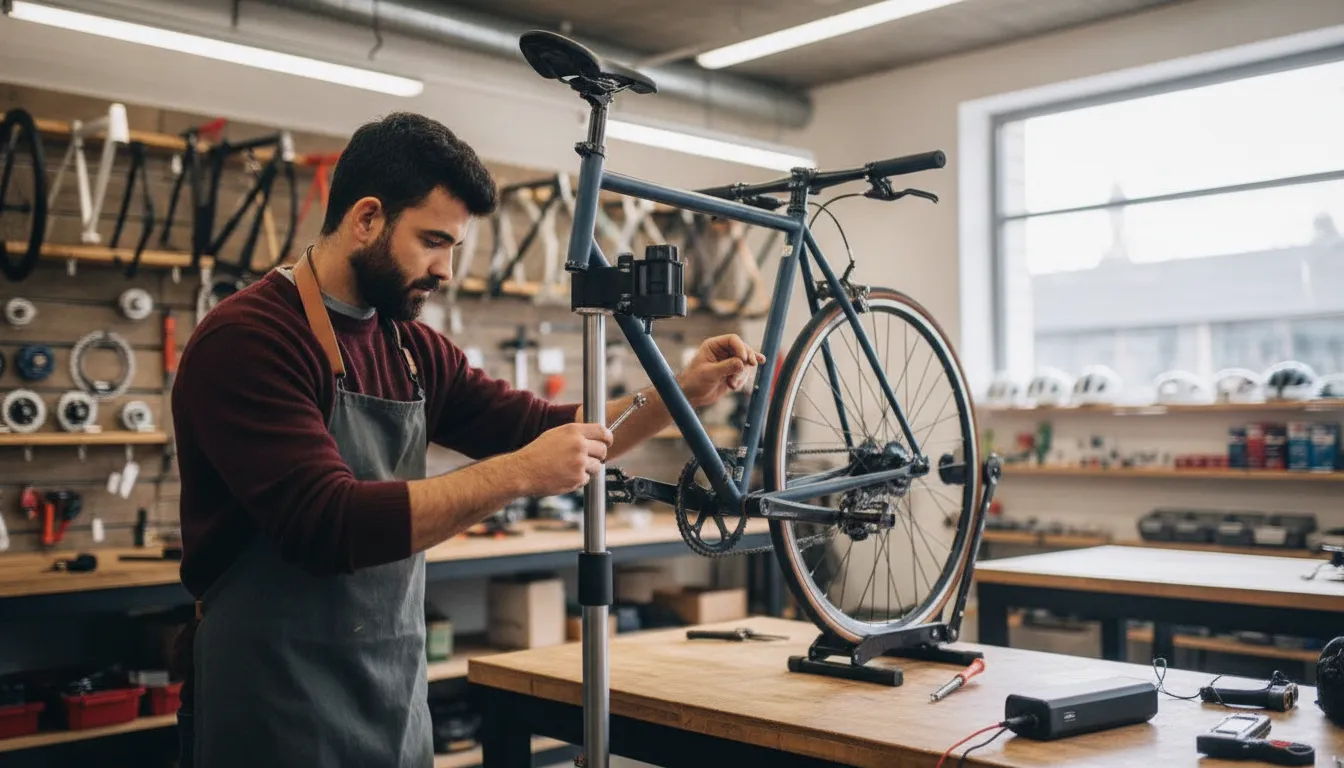
Can you charge an e-bike at home?
Many riders charge at home using the equipment specified for their model. Learn more about how to charge an e-bike at home, including the practical details to check before plugging in. If you are comparing models, review battery capacity, charger information, expected use, and local service support together rather than choosing by one range number alone.
What Should Beginners Look For When Choosing an Electric Bike?
Start with how you expect to ride, not with the biggest motor or the longest advertised range. Will you commute, ride paved paths, explore Central Oregon, carry equipment, or simply make hills more manageable? Your answer helps narrow the right frame, tires, riding position, and utility features.
Match the bike to your body and routine
A comfortable fit matters more than a long specification sheet. Check that you can stand over the frame, reach the handlebars without straining, and operate the brakes and display confidently. Step-through frames can be easier to mount, while a more upright position may suit casual rides or riders who want less pressure on their hands and back. Consider storage, vehicle transport, and where you will charge the battery, too.
Compare the system, not one number
Decide whether you prefer pedal assist, a throttle, or both, then consider how naturally the controls respond. Motor wattage and torque describe different aspects of performance, while battery capacity is commonly expressed in watt-hours. Range, speed, motor output, torque, battery capacity, charging time, and class are model-specific, so compare complete product specifications rather than assuming one figure tells the whole story.
Also think about the bike's class and where you intend to ride. A commuter setup may prioritize predictable assistance and practical comfort, while trail riding may call for different tires, suspension, and control characteristics. If you are comparing a Segway model or another specific bike, read its current product page carefully instead of applying another model's specifications.
Value setup and support
A test ride can reveal fit and control differences that photos cannot. Voltaire's Bend showroom offers hands-on product evaluation, test rides, and expert consultation. The team also supports beginners with explanations of motors, batteries, range, charging, classes, and maintenance. For online shoppers, product pages provide metrics such as range, speed, power, torque, and battery capacity.
Shop electric bikes online, or visit the Bend showroom to compare options with guidance. Local support and certified technical service can remain valuable after purchase, especially when a bike needs electrical diagnostics, battery testing, or other specialized work.
How Do You Maintain and Service an Electric Bike?
Routine care for an electric bike combines ordinary bicycle maintenance with attention to its electrical system. Before rides, check tire pressure and inspect the tires for cuts, embedded debris, or unusual wear. Squeeze the brake levers and confirm that braking feels consistent. Also look over the drivetrain for excessive dirt, loose parts, or a chain that needs lubrication. These simple checks can help you notice a problem before it affects a ride.
Keep the battery contacts and charging connection clean and dry, and use only the charger specified for your bike. Inspect the charger, cable, and connectors for visible damage before plugging in. Follow the model's storage and charging instructions, especially when the bike will sit unused. Battery care is model-specific, so the owner's manual and product documentation should take priority over general advice.
When should an electric bike receive professional service?
Arrange an inspection when the motor cuts out unexpectedly, assistance feels inconsistent, the display shows an error, the battery will not charge normally, or a connector appears damaged. Unusual motor noise, recurring brake problems, and drivetrain issues also deserve attention. Avoid opening a battery pack or bypassing electrical safety components yourself. Electrical faults can require diagnostic equipment and model-specific procedures, not just a mechanical adjustment.
Voltaire Cycles' service center has certified technicians who work on electric vehicle brands, including brands not sold in the store. Available capabilities include electrical diagnostics, battery testing and replacement, motor and controller work, software updates, and connectivity troubleshooting. The team also performs systematic inspections, documents work, and verifies the bike before return. Learn more about professional e-bike service for support in Bend and Central Oregon.
Is an Electric Bike a Good Fit for You?
An electric bike can be a practical choice when you want to ride farther, manage hills more comfortably, or make cycling part of everyday transportation. Pedal assistance still lets you contribute effort. Research has found that e-cycling can provide at least moderate physical activity, with less intensity than conventional cycling but more than walking.
Use this checklist when deciding whether an e-bike matches your routine:
- Commuting: Consider an e-bike if you want to replace short car trips or arrive without exhausting yourself, especially when your route includes hills.
- Recreation: If you enjoy outdoor riding but want help extending a ride, adjustable assistance can make changing terrain easier to manage.
- Accessibility and confidence: Assistance may help riders who are returning to cycling, managing reduced stamina, or looking for a more approachable way to stay active. Fit, controls, and stable handling still matter.
- Cargo and errands: If you regularly carry groceries, equipment, or other loads, look for a bike designed for that use rather than adding weight to a standard model.
- Beginner support: Check whether you can get clear guidance on controls, battery care, fit, and maintenance before you buy.
Specifications such as range, motor output, torque, and battery capacity are model-specific, so compare them against your actual route and cargo needs. In Bend, Voltaire's showroom offers hands-on product evaluation, expert consultation, and test rides. That experience can help you judge fit and handling more reliably than a specification sheet alone.
Shop electric bikes and find the right fit for your riding goals.
Frequently Asked Questions
Do you still have to pedal on an electric bike?
Usually, yes. Pedal-assist e-bikes use sensors to detect your pedaling and add motor support at the level you select. Some models also include a throttle that can provide assistance without pedaling, subject to the bike's design and applicable riding rules. You still control steering, braking, and speed.
How long does an e-bike battery last?
Battery life depends on the battery, charging habits, storage conditions, riding frequency, and how much assistance you use. For a purchase decision, compare the battery's watt-hour capacity, the manufacturer's care guidance, and the availability of testing or replacement support. A larger battery may offer more potential range, but terrain, rider weight, weather, and assist level also matter.
What is the downside of an electric bike?
An e-bike can be heavier and more complex than a traditional bicycle because it adds a motor, battery, controller, and electrical controls. It also needs charging and occasional electrical or battery service. The right model can still make riding more practical, especially for hills, longer trips, commuting, or riders who want to manage effort.
What should a beginner check before buying an electric bike?
Start with fit and intended use, then compare the class, motor location, torque, battery capacity, controls, and expected riding conditions. Ask how the bike will be serviced and whether you can try it before buying. Voltaire's Bend showroom offers hands-on evaluation, test rides, and expert guidance for local shoppers, while its service center supports electric vehicle brands beyond those sold in-store.
Ready to Choose Your Electric Bike?
Finding the right e-bike is easier when you can compare features with your riding goals in mind. Shop electric bikes to explore your options, then visit the Bend showroom for practical guidance and a test ride.