

Torc Sensing Ebike Charging Time: What to Expect
For most e-bike shoppers, charging is less complicated than it first appears: a standard household outlet and the correct charger are usually all you need. The bigger question is how long your battery will take to refill and how your riding style affects that routine.
For a typical Segway e-bike, torc sensing ebike charging time is often about 4 to 6 hours from a household outlet. Though the exact time can range from roughly 3 to 8 hours based on battery capacity and charger output.
Charging habits matter, too. Keeping the battery cool, using the included charger, and avoiding prolonged storage at an extreme state of charge can help preserve useful capacity over time. Torque sensing also shapes the ride itself by responding to how firmly you press the pedals. So understanding that system makes the rest of the ownership experience easier to evaluate.
Shop Segway torque-sensing e-bikes at Voltaire Cycles and talk with a local expert about charging, battery care, and a test ride in Bend.
Here is how pedal pressure becomes smooth, responsive motor assistance on a Segway e-bike.
How Torque-Sensing E-Bikes Turn Pedal Pressure Into a Smooth Ride
Ever wonder why one electric bike feels like it is helping you pedal, while another feels as if the motor suddenly switches on? The difference often comes down to how the bike detects your effort. A torque-sensing system measures how much pressure you apply to the pedals and adjusts motor assistance in proportion to that effort. That creates a ride that feels responsive without making the motor feel separate from you.
Inside the drive system, the torque sensor detects changes in force as you press through each pedal stroke. Push harder to start from a stop, climb a Bend hill, or accelerate into a headwind, and the system can respond with more support. Ease off your pressure, and assistance reduces. Cycling Electric describes this proportional response as a more natural and intuitive experience than a system that reacts mainly to whether the cranks are turning: how torque sensors work.
Why does proportional assistance feel more natural?
Torque sensors can detect subtle changes in pedal force and adjust motor power accordingly. Instead of waiting for a fixed cadence threshold, the bike responds to what your legs are doing in the moment. That is useful when you are navigating stop signs, shared paths, rolling terrain, or a crowded downtown street where smooth starts and controlled speed matter.
The result often feels closer to riding a conventional bicycle with extra strength available when you need it. You still choose your line, cadence, and pace. The motor simply adds support that follows your effort. On a gradual climb, for example, you can maintain a steady pedaling rhythm rather than feeling a sudden surge at a preset trigger point. On a descent or a level stretch, easing your pressure naturally reduces the boost.
What does this mean for Bend riders?
Central Oregon riding can shift quickly between flat streets, rolling routes, and steeper sections. A responsive system lets you make small adjustments instead of constantly changing between on and off assistance. Riders who want that connected feel can explore Segway torque-sensing e-bikes and compare models such as the Segway Myon with a local expert at Voltaire Cycles.
Torque sensing does not mean the bike does all the work. Your input still shapes the ride, and the selected assist level affects how much support the motor provides. That makes a test ride valuable: try starting, climbing, slowing, and accelerating, then notice whether the assistance follows your pressure smoothly. A good match should feel predictable and supportive, whether you are commuting across Bend or heading out for a longer Central Oregon ride.
How Long Does an E-Bike Typically Take to Charge?
Most e-bike batteries take roughly 3 to 8 hours to reach a full charge. For many riders, planning on about 4 to 6 hours is a practical expectation, although the exact time depends on the battery's capacity and the charger's output. A smaller battery paired with a higher-output charger may finish sooner than a larger battery using a standard charger. The National Renewable Energy Laboratory identifies charger amperage and total battery capacity as the main variables behind typical charging times. NREL's battery guidance provides the technical background for that range.
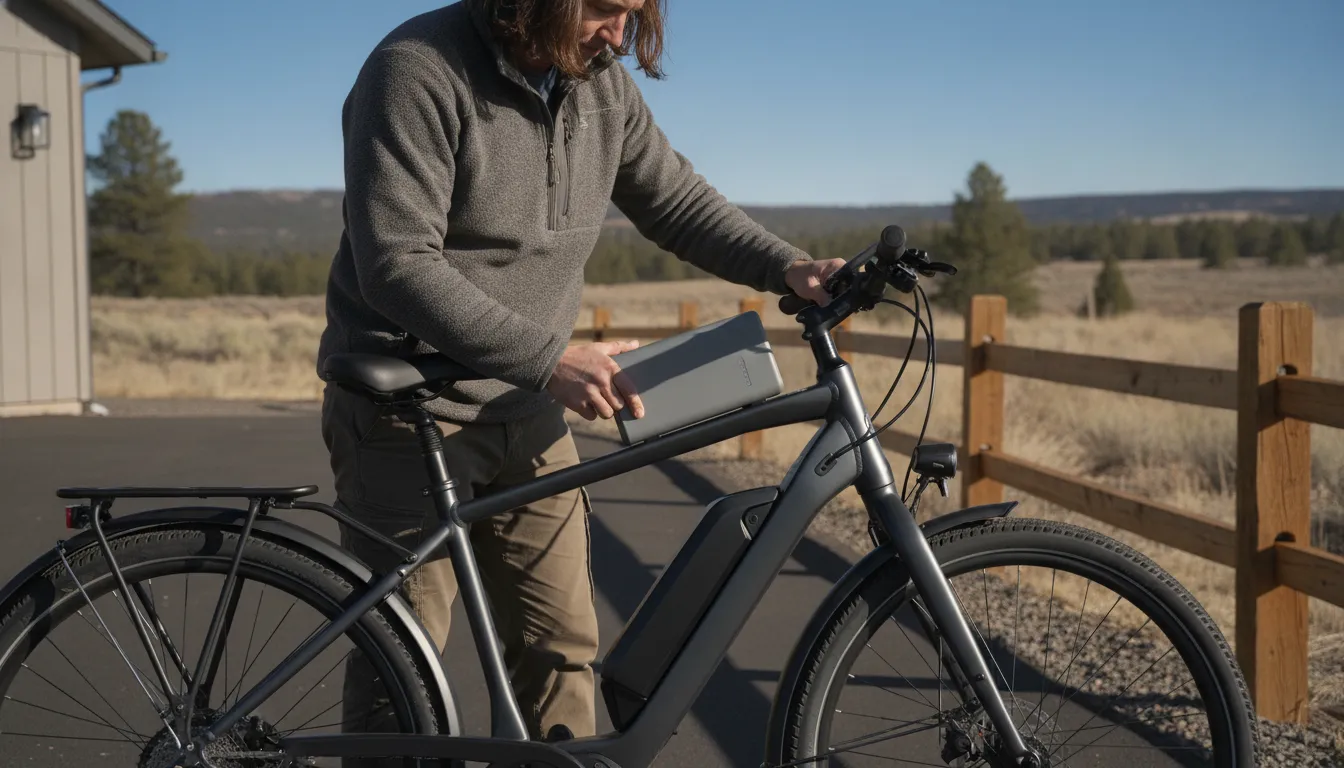
What changes the charging time?
Battery capacity is the amount of energy the pack can hold. A higher-capacity battery can support longer rides, but it generally takes longer to fill from empty. Charger output works in the opposite direction: more output can shorten the charging window when the battery and manufacturer-approved charger are designed to work together. Do not substitute a charger simply because it appears to charge faster. The charger must match the e-bike system's voltage and requirements.
Your starting charge level also matters. Charging from about 50 percent is normally much quicker than charging from empty. The final portion can take longer because the system balances the cells as the battery approaches full capacity. That balancing phase is useful even when the displayed percentage seems to rise slowly. If you are heading out later in the day, a partial charge may be enough for the planned trip. But allow extra time when you want the battery fully topped off.
| Charging scenario | Approximate time | Best practice |
|---|---|---|
| Starting from near empty | Roughly 4 to 6 hours | Plan ahead and allow the final balancing phase |
| Starting from about 50 percent | Usually faster than from empty | Good choice before a short ride |
| Fast charger | Shorter wait | Use only if approved by the manufacturer |
| Charging inside on the bike | Same as standard | Park near a cool, dry outlet |
Are fast chargers better for an e-bike battery?
A specialized fast charger can reduce waiting time, which may be useful for a rider who needs to get back on the road quickly. The tradeoff is heat. Higher-speed charging can generate more heat, and repeated exposure to that stress may accelerate battery aging compared with standard charging rates, according to NREL. For everyday charging, use the manufacturer-approved standard charger unless your e-bike documentation specifically supports a faster option.
For more detail on charge levels, range planning, and long-term care, review these practical e-bike charging tips. If your charging time suddenly becomes much longer than usual, the charger, connection, or battery may need inspection rather than a stronger charger.
Can You Charge a Torque-Sensing E-Bike With a Regular Household Plug?
Yes. A torque-sensing e-bike does not require a special outlet in your home. Its dedicated charger is designed to connect to a standard household outlet, then deliver the appropriate electrical output to the battery. The torque sensor affects how the motor responds while you ride. It does not change the basic process for recharging the battery.
When the battery reaches full capacity, the battery management system, or BMS, stops the charging process automatically. That protection is designed to prevent continued charging and help manage the battery safely. Even with that safeguard, follow the charging instructions for your specific e-bike and charger rather than treating the battery like an appliance that can be ignored indefinitely.
Can you charge the battery on or off the bike?
Depending on the bike's design, you may be able to charge the battery while it remains mounted to the frame or remove it and charge it indoors. Charging on the bike is convenient when it is parked near an outlet. Removing the battery can be useful when the bike is stored in a garage, shed, or other location without a suitable power source. Segway e-bike models and their battery access points can vary, so check the owner's manual for the correct connection sequence and placement.
Before connecting anything, make sure the charging port, plug, and cable are clean and dry. Seat the connector fully and avoid forcing it into place. If the connection feels loose, the cable is damaged, or the port shows visible wear, stop and arrange an inspection instead of trying to improvise a repair.
Where is the safest place to charge?
Choose a cool, dry, well-ventilated area away from direct sunlight and confined hot spaces. Keep the charger and battery on a stable surface with room for air to circulate. Do not cover the charger while it is operating, and keep charging equipment away from moisture. A temperature-controlled indoor location is generally more suitable than a hot vehicle, an enclosed cabinet, or a spot exposed to afternoon sun.
Use only the charger provided with the e-bike or one specifically recommended for that battery. Chargers that look interchangeable may have different voltage or current specifications. Using the wrong one can damage the battery management system and battery cells, and it can create a fire risk. If you are unsure which charger belongs with your bike, ask a qualified service professional before plugging it in.
For more practical guidance, see our common e-bike charging questions, or contact Voltaire Cycles for help choosing and caring for a Segway e-bike in Bend.
What Charger Comes With Your Segway E-Bike?
Segway e-bikes come with a standard lithium-ion battery charger designed for the bike's battery system. In everyday use, that means you can connect the charger to a regular household wall outlet. Then plug it into the bike's charging port or the removable battery, depending on the model. Use only the charger supplied with the bike or one specifically approved for that battery. A charger with the wrong voltage or current can damage the battery management system and create a safety risk.
The most important reference is the user manual for your exact Segway model. Charging instructions can vary by battery design, indicator lights, connector location, and whether the battery is intended to be charged on or off the bike. Follow the manual's guidance for connection order, charging conditions, and what the indicator should show when charging is complete. Those instructions also support proper battery care and warranty compliance. Voltaire Cycles can help Bend-area riders understand the setup before they leave the showroom.
Why should you occasionally charge the battery fully?
Regular partial charging is practical for normal rides, and you do not need to drain a lithium-ion battery completely before recharging it. However, an occasional full charge can help the battery management system calibrate its fuel gauge. The display may then provide a more useful estimate of the remaining state of charge instead of relying on a gauge that has only seen partial cycles. Treat this as a periodic calibration step, not a reason to leave the battery connected indefinitely.
For Central Oregon riders, this can be useful when preparing for a longer outing, a weekend ride, or a test ride route with more elevation. Start with the manual's recommendations, charge in a suitable location, and allow the system to finish its normal cycle. You can browse the Segway e-bike collection for current models and ask the Voltaire team which charging setup fits your riding plans.
What does a sudden change in charging time mean?
A charge that takes noticeably longer than usual deserves attention, especially if the change is sudden. It can point to a weakening battery, a charger problem, or an issue with the wall outlet. First, confirm that the charger is connected correctly and that the outlet is working. Do not substitute an unapproved charger or continue using equipment that becomes unusually hot, smells abnormal, or shows visible damage.
If the longer charge time persists, stop troubleshooting by guesswork and have the system inspected. Bring the charger and battery to a qualified service provider so the components can be evaluated together. Voltaire Cycles provides certified e-bike service in Bend for riders who need practical guidance before a small charging irregularity becomes a larger battery problem.
How to Maintain Your E-Bike Battery and Extend Its Life
Good battery care is mostly a matter of managing heat, charge level, and storage habits. Lithium-ion batteries gradually lose capacity over time, but thoughtful daily use can help you get dependable performance from your e-bike for longer. The same habits apply whether you ride a Segway commuter e-bike around Bend, take weekend trips, or keep your bike ready for occasional use.
Store the battery cool, dry, and partly charged
Extreme heat is one of the biggest threats to lithium-ion battery longevity. Avoid leaving your e-bike or removable battery in direct sun, a hot vehicle, an uninsulated shed, or another place where temperatures can build quickly. For longer storage, choose a cool, dry location away from moisture and heat. Battery manufacturers emphasize that heat and temperature extremes are among the most damaging conditions for lithium-ion cells. See Bosch's eBike battery guidance for more on safe storage and charging habits.
For storage lasting more than a few days, aim for a state of charge between 20% and 80%. This middle range helps limit chemical aging, according to guidance summarized by Mayo Clinic. You do not need to drain the battery completely before recharging. Lithium-ion batteries do not have the old-style memory effect associated with some earlier rechargeable battery chemistries, so partial charges are fine and often more practical.
Do not leave the battery fully empty
A short ride that leaves the battery near empty is not automatically a problem. The concern is letting it remain fully discharged for weeks or months. Voltage can drop below the battery management system's safe threshold, potentially preventing the pack from accepting a future charge. If the battery is nearly empty, recharge it soon rather than putting the bike away indefinitely. For seasonal storage, check the charge periodically and bring it back toward the recommended 20% to 80% range.
Know the normal signs of aging
Battery capacity naturally declines after repeated use. Research from the National Renewable Energy Laboratory places a typical lithium-ion e-bike battery lifespan in the range of roughly 500 to 1,000 full charge cycles. Although actual results depend on the battery, riding conditions, and care. A gradual reduction in range is different from a sudden change. If your range drops sharply, charging takes much longer than usual, or the battery behaves inconsistently, stop and have it evaluated.
Inspect the case and charging area occasionally. Swelling, cracking, leaking, smoke, or unusual heat while charging or riding are warning signs, not normal wear. Stop using the battery, move away from anything flammable if it is safe to do so, and seek professional guidance. Do not open the pack or attempt a cell-level repair. Voltaire Cycles can provide certified e-bike service in Bend when a battery or charging system needs inspection.
For more practical storage and charging habits, review our guide to extending e-bike battery life. A little attention between rides can protect both range and peace of mind.
Charging Do's and Don'ts Every Owner Should Follow
A dependable charging routine is simple, but small habits matter when you ride through Central Oregon's changing weather. Use the following checklist whether your e-bike stays in a Bend garage, comes inside after a damp commute, or spends the winter between rides. For broader service reminders, review proper e-bike maintenance.
- Do inspect the connectors before plugging in. Check the charging port, charger plug, and cable ends for dirt, debris, moisture, or visible damage. A clean, dry connection supports efficient charging and helps reduce electrical risk. If a connector is damaged, do not force it into place or continue testing it yourself.
- Do charge in a cool, dry, ventilated area. Keep the battery away from direct sunlight, heaters, enclosed hot spaces, and damp floors. Moisture can damage the battery's electronics and create a short-circuit risk, so dry the bike before connecting the charger after rain or wet-road riding.
- Do use the charger specified for your e-bike. The correct charger matches the battery's voltage and charging requirements. Avoid substitutes unless the manufacturer or a qualified technician explicitly confirms compatibility. Follow the Segway user manual for charging location, connection order, and storage instructions.
- Do use lower assist when you want to preserve range. Maximum motor assistance uses more energy than lower settings, especially on long commutes or sustained climbs. Select the assist level that matches the terrain and your effort instead of treating full power as the default.
- Do keep the bike rolling efficiently. Check tire pressure regularly and keep it within the range recommended for your tires. Proper inflation reduces rolling resistance, which can help you travel farther on the same charge. It is a quick check before a neighborhood ride or a longer Central Oregon outing.
- Do allow occasional full charging when appropriate. A periodic full charge can help the battery management system, or BMS, calibrate its state-of-charge reading. The BMS also monitors cell voltage and temperature during charging, so normal charging behavior may include a slower final phase.
- Do recognize sleep mode as normal. Some batteries enter a low-power sleep mode after an extended period without use to protect the cells. Follow the manual's wake-up procedure rather than assuming the battery has failed. If the system will not wake as directed, seek professional help.
- Don't leave the battery exposed to moisture or extreme conditions. Store it in a dry, temperature-stable place, particularly during wet winters or freezing periods. Never charge a visibly wet battery, and do not use one that is swollen or unusually hot. Stop using it and arrange an inspection.
- Don't ignore a sudden change in charging time. A charge that takes much longer than usual can point to a charger, outlet, or battery problem. Unplug the system safely and have the issue checked rather than repeatedly restarting the charge.
Shop Segway torque-sensing e-bikes at Voltaire Cycles and get Bend-based expert advice on charging schedules, battery maintenance, and a test ride that fits your riding route.
Frequently Asked Questions
How long should I leave my e-bike charging?
Charge until the battery reaches full, then disconnect it when practical. A full charge commonly takes about 3 to 8 hours, depending on battery capacity and charger output, while a partially charged battery will usually finish sooner. The final stage can take additional time as the cells balance. NREL guidance supports this general charging range.
How do torque sensors work on e-bikes?
A torque sensor measures how much pressure you apply to the pedals and adjusts motor assistance to match your effort. Press harder for more support and ease off for less. This creates a responsive, natural-feeling ride, especially when starting, climbing, or changing pace.
Do torque sensors help extend e-bike battery range?
They can help use energy efficiently because assistance responds to your actual pedaling instead of delivering the same support continuously. Your real-world range still depends on rider weight, terrain, wind, tire pressure, temperature, and assistance level. Treat torque sensing as one part of range management, not a guaranteed mileage increase.
What is the typical charge time for a torque-sensing e-bike?
Many torque-sensing e-bikes take roughly 4 to 6 hours to recharge from low or near-empty, but the exact time depends on the battery and the included charger. Use the charger specified for your Segway model, charge in a cool, ventilated area, and have the battery inspected if charging suddenly takes much longer than usual.
Ready to Shop a Segway E-Bike?
Choosing the right charging setup is easier when you can compare the bike, charger, and support options together. For shoppers in Bend and across Central Oregon, Voltaire Cycles can help you make a practical choice and answer questions about battery care and everyday use.
Shop Segway e-bikes at Voltaire Cycles and get certified local service support in Bend for your charging and battery questions.