

Off Road Ebike vs Mountain Bike: Bend Trail Advice
Off Road Ebike vs Mountain Bike: Bend Trail Advice
When a Central Oregon trail points uphill, the key question is not whether one bike is universally better. It is how you want to spend your effort, time, and attention on the ride. A traditional mountain bike gives you a light, direct connection to the trail. An off-road e-bike adds adjustable assistance for climbs, longer routes, and days when fatigue or limited time would otherwise shorten the outing.
Explore Voltaire Cycles' electric bike collection
In an off road ebike vs mountain bike comparison, the e-bike can make elevation and distance more manageable. The traditional mountain bike is usually lighter, simpler to carry, and entirely powered by you. The right fit depends on your preferred exertion, handling feel, transportation setup, trail access, and comfort. The Segway Xaber 300 is one high-performance off-road model to investigate, but its power and intended use make a careful fit and access review especially important.
This guide compares the two choices by assistance, range, weight, handling, trail etiquette, maintenance, and rider profile. Use it to narrow the decision, then confirm current product specifications and local trail rules before riding.
What Is the Main Difference in an Off Road Ebike vs Mountain Bike?
An off-road e-bike uses a motor to assist the rider, while a traditional mountain bike depends entirely on rider power. That difference changes how you manage climbs, distance, fatigue, and pace, but it does not remove the need for balance, steering, braking, and good trail judgment.
On a traditional mountain bike, every acceleration and uphill section comes from your legs. Many riders choose that experience because the physical challenge is central to the outing. A lighter bike can also feel quick when changing direction, lifting over an obstacle, or loading onto a vehicle. Mechanical simplicity may be another advantage for riders who prefer fewer systems to monitor.
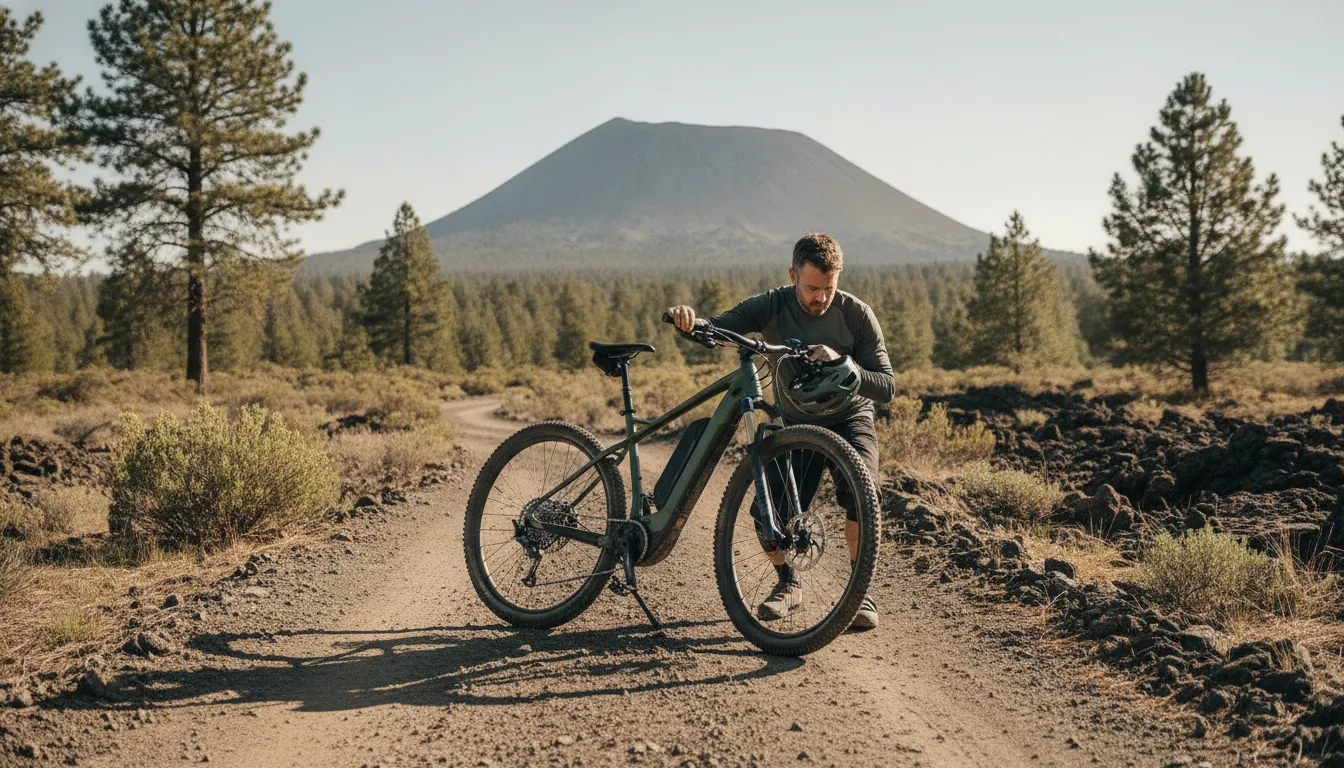
An off-road e-bike adds support to your pedaling. You still choose a line, manage traction, brake before a corner, and respond to changing terrain. Assistance can reduce the physical demand of a long climb or help you keep moving when your energy is uneven. It may also help riders return to outdoor activity after a break or ride with friends whose fitness levels differ.
That does not make an e-bike a substitute for skill. Power can affect speed, braking distance, and the way the bike responds on loose or technical surfaces. Riders need to learn the controls, start with an appropriate assist level, and practice smooth power delivery before tackling challenging terrain.
Research on electrically assisted cycling has found that e-bikes can support physical activity for people who might otherwise be less active. A systematic review of electrically assisted cycling provides useful context, although individual effort still depends on the rider, settings, terrain, and route.
How Do Assist and Range Change an Off Road Ride?
Assist level is an effort dial, not an automatic replacement for pedaling. Lower support preserves more rider effort and battery, while higher support can help manage steep grades, headwinds, or a long return route.
On a smooth approach or gradual climb, a low setting may give you the response you want without overwhelming the ride. On a sustained grade, more support can help maintain momentum. You continue to steer and pedal, but you have another way to manage how quickly fatigue builds.
Range should be treated as a planning estimate, not a guaranteed itinerary. Rider weight, temperature, elevation, surface, tire pressure, wind, stop-and-go riding, and assist level all affect consumption. A technical route with repeated climbs can use more energy than a smooth route at the same distance. Build in reserve capacity when charging is unavailable.
A traditional mountain bike does not have battery range to calculate. Your practical range is shaped by fitness, food, water, weather, and the energy you have left for the return. That simplicity can be appealing. An e-bike offers more control over effort, but it asks you to plan charging and monitor the battery.
A study of electrically assisted cycling found that lower perceived effort and shorter travel time can support more frequent use than traditional cycling. The research on electrically assisted bicycles is not a promise about every rider's experience, but it helps explain why assistance can make consistent activity more realistic.
How should you plan battery range for an off-road route?
Plan from the route's hardest features, not its headline mileage. Check the total climbing, surface, weather, expected assist level, and availability of a safe charging point. Keep enough reserve for navigation changes or a slower return. If you are riding with others, do not assume a manufacturer's maximum range means you can maintain the same pace or support level for the whole trip.
The Segway Xaber 300's official specifications describe a 72V 44Ah battery, multiple ride modes, and range figures that vary by mode and speed. Review the official Xaber 300 specifications for the current details. Those figures describe the product under stated conditions, not a universal trail guarantee.
How Does Off Road Ebike vs Mountain Bike Weight Affect Trail Handling?
Off-road e-bikes are usually heavier because the motor, battery, controls, and stronger supporting components add mass. That can make lifting and transport harder, while the lower, distributed weight may feel planted once the bike is rolling.
Weight is most obvious when the bike is stationary. Consider how you will lift it onto a rack, move it through a garage, carry it around an obstacle, or load it into a vehicle. Check the rack's weight rating and loading method before buying. A traditional mountain bike is often easier to handle in those situations.
| Situation | Off-road e-bike | Traditional mountain bike |
|---|---|---|
| Climbing | Assistance can reduce the effort required for sustained grades | All climbing power comes from the rider |
| Tight handling | Added mass may require earlier braking and smoother inputs | Lower mass can feel quick and responsive |
| Transport | May need a higher-capacity rack or loading aid | Often easier to lift, carry, and rack |
| Stopping | Speed and mass make brake condition and control especially important | Braking is matched to a lighter rider-powered setup |
Once moving, weight is only one part of handling. Tire choice, suspension setup, geometry, rider position, and speed matter too. A heavier bike can feel stable over rough ground, but it can also carry more momentum into a corner. Learn how the bike responds before riding fast on a narrow or loose trail.
Can You Ride an Off-Road E-Bike on Any Mountain Bike Trail?
No. Trail access depends on the land manager, local policy, and the e-bike class or vehicle type. A route open to traditional bicycles may have separate rules for electric-assist bikes, so check current guidance before riding.
Start by identifying who manages the trail. Read posted rules and current online guidance, then confirm that your specific bike is permitted. Do not infer access from a bike's appearance or from permission at another trail system. Voltaire Cycles' electric bike class guide can help with general classification questions, but the land manager's rules control access.
Yield with patience and control
Approach blind corners and narrow sections at a speed that leaves room to stop. If you meet a hiker, horse, or rider, slow down and give them space. Announce yourself early when passing is appropriate, and wait rather than forcing someone toward the edge. Extra power should make considerate riding easier, not make a busy trail feel faster.
Protect the trail surface
Stay on the designated tread. Avoid cutting switchbacks, skidding, widening the route around puddles, or riding when the surface is vulnerable to damage. Mud, dust, and loose rock can change how quickly the bike stops, so adjust speed and assist before the trail becomes difficult. Responsible behavior protects access for every user.
Which Bike Fits Your Riding Style, Fitness, and Comfort?
Choose a traditional mountain bike if rider-powered effort, lower transport weight, and direct handling are your priorities. Choose an off-road e-bike if adjustable assistance, longer outings, group compatibility, or fatigue management are more important. Neither choice is automatically better.
- For a focused workout: a traditional mountain bike keeps every climb and acceleration in your legs.
- For longer or steeper outings: an off-road e-bike can help preserve energy for distance and the return trip.
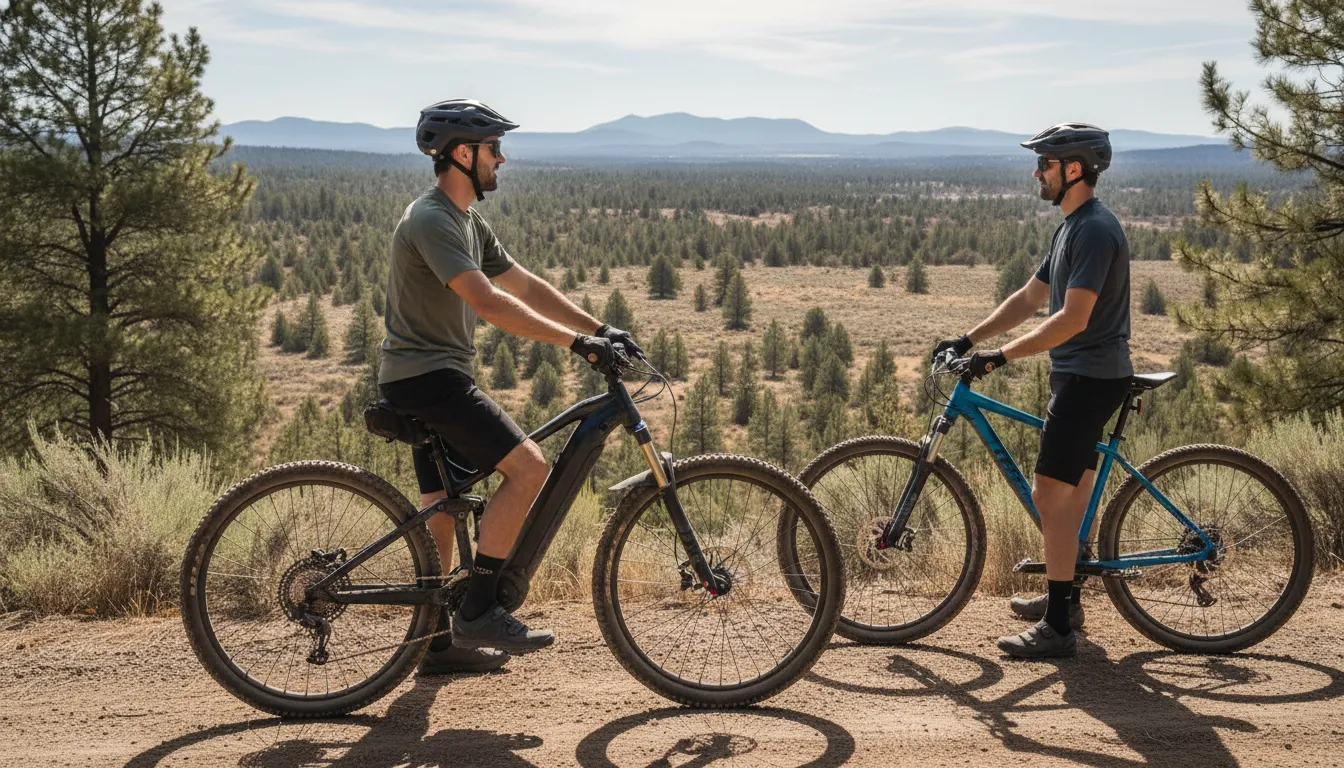
- For mixed-ability groups: adjustable assistance may make it easier to ride together without forcing every rider into the same effort.
- For frequent lifting or transport: a lighter traditional mountain bike may be more practical.
- For changing fitness or accessibility needs: assistance may make regular outdoor riding more manageable.
Fit still comes first. Pay attention to reach, frame size, saddle position, control placement, and how confidently you can start and stop. Assistance cannot compensate for a bike that feels too large, too aggressive, or difficult to control.
The Segway Xaber 300 deserves a separate suitability check because it is a high-performance electric dirt bike rather than a generic low-power commuter e-bike. Segway lists a 21 kW peak output and substantial suspension travel. Its product weight should also be considered before transport or trail use. Review the manufacturer's specifications and intended use. Then confirm the rules for the place where you plan to ride. Do not treat power as proof of trail permission.
For hands-on comparison, Voltaire Cycles serves Bend and Central Oregon with electric mobility products, service, and test-ride guidance. Browse the Segway collection or visit the Bend showroom to discuss terrain, comfort, transport, and riding goals.
What Maintenance Does Each Bike Need?
Both bike types need care for tires, drivetrain parts, suspension, wheels, and brakes. Check tire condition and pressure before a ride. Inspect the chain and drivetrain after dusty or muddy outings. Pay close attention to brake feel, pad wear, rotor condition, and unusual sounds before tackling a long descent.
An off-road e-bike adds a battery, motor, wiring, controls, sensors, and software. Keep charging equipment dry and use the manufacturer's recommended charging process. Do not ignore inconsistent assistance, an electrical warning, damaged wiring, or a battery that behaves differently from normal. These symptoms deserve qualified assessment rather than repeated use.
Moisture and debris also matter. Clean the bike using a method appropriate for its components, avoid directing high-pressure water at bearings or electrical connections, and let the bike dry before storage or charging. A traditional mountain bike has fewer electrical systems, but it still needs timely mechanical service after hard use.
Voltaire Cycles provides service and repairs for electric bikes and other brands. A professional inspection can help identify wear before it becomes a larger safety or reliability problem.
How Should You Decide Between the Two?
Write down the ride you actually take most often. Include distance, elevation, surface, transport method, desired workout, and who you ride with. If you enjoy earning each climb and regularly handle the bike without assistance, a traditional mountain bike may be the better fit. If hills, fatigue, or time constraints keep you from riding as often as you want, an off-road e-bike may expand your options.
Then test the details that specifications cannot fully answer. Can you reach the controls comfortably? Does the bike feel balanced at low speed? Can you brake smoothly? Can you load it safely? Do the assist levels feel predictable? A short hands-on ride can reveal more than comparing one number on a product page.
Finally, confirm trail access and plan for service. The right bike is one you can ride legally, control confidently, transport realistically, and maintain properly. For Central Oregon riders, local advice can connect the product choice with the terrain and conditions you actually face.
- Match the bike to your preferred effort and fitness goal.
- Confirm the fit, controls, transport setup, and trail access.
- Plan battery range or personal energy with a safe reserve.
- Choose a service plan that supports the bike you ride.
Compare electric bikes at Voltaire Cycles before your next trail ride
Frequently Asked Questions
Are off-road e-bikes allowed on all mountain bike trails?
No. Access depends on the trail manager, local policy, and the bike's classification. Check current rules before riding and follow posted yield and speed guidance.
Do off-road e-bikes weigh more than regular mountain bikes?
Usually. The motor and battery add mass, which can make lifting and transport harder. That weight may also feel stable while rolling, depending on the bike's design and setup.
How does range affect off-road riding?
Battery range affects how far you can ride with assistance, but it changes with terrain, rider input, temperature, speed, and assist level. Plan with reserve capacity.
Is the Segway Xaber 300 suitable for mountain bike trails?
Suitability depends on the model's intended use, the rider's skill, and the specific trail rules. Review official specifications and confirm access before riding.
Which is better for fitness, an off-road e-bike or a mountain bike?
Neither is automatically better. A mountain bike requires rider-only effort, while an e-bike lets you adjust support. The better choice is the one that matches your goals and helps you ride consistently and safely.