

Himiway Ebike Alternatives and Buying Considerations
Himiway Ebike Alternatives and Buying Considerations
Himiway has become a familiar name for riders who want a long-range electric bike, fat tires, and a substantial payload capacity. Still, a Himiway ebike is only one possible answer. The right choice depends on how the bike fits your body, where you will ride, how you will charge it, and what support you can access after delivery.
This guide is not a brand popularity contest. It is a practical way to compare Himiway with other electric bikes, including Segway models available through Voltaire Cycles of Central Oregon. Use the criteria below to narrow the field before you buy online or visit a Bend showroom.
Shop electric bikes and compare available options at Voltaire Cycles.
What is a Himiway ebike alternative?
A Himiway ebike alternative is another electric bike that meets the same primary need, such as all-terrain riding, commuting, cargo hauling, or long recreational trips. It does not have to match every specification. A useful alternative may offer a better fit, different sensor behavior, easier local support, stronger connected features, or a frame that suits your regular terrain.
That distinction matters because shopping by one number can lead to a poor match. A larger battery may add weight. Fat tires may feel stable on loose surfaces but can roll more slowly on pavement. A powerful motor may be unnecessary for a flat commute. Instead of asking which brand is universally best, ask which bike is easiest for you to ride, charge, maintain, and enjoy.
How should you compare a Himiway ebike with alternatives?
Compare the complete ownership fit, not just advertised motor wattage or maximum range. Start with frame size and riding position, then evaluate terrain, battery capacity, sensor response, braking, carrying needs, controls, warranty procedures, service access, and storage. A bike that performs well on paper can still be the wrong choice if it is difficult to lift, charge, or get repaired.
| Decision factor | Questions to ask | Why it matters |
|---|---|---|
| Rider fit | Can you stand over, mount, stop, and place both feet confidently? | Comfort and control affect every ride. |
| Terrain | Will you ride pavement, gravel, hills, hardpack, or mixed surfaces? | Tires, suspension, brakes, and motor tuning should match the route. |
| Battery | What is the watt-hour capacity, and can the battery be removed for charging? | Capacity and charging convenience shape real-world range. |
| Assistance | Does the bike use torque sensing, cadence sensing, or more than one input? | The sensor system changes how natural and predictable assistance feels. |
| Support | Where will diagnostics, mechanical work, and warranty questions be handled? | After-sale help is part of the purchase decision. |
The goal is not to create a perfect spreadsheet. It is to identify the two or three factors that will make the biggest difference to your daily experience.
Which Himiway ebike alternative fits commuting?
For commuting, look for a manageable frame, predictable assistance, secure lighting, practical weather resistance, and a battery that fits your charging routine. A heavy fat-tire bike can work for a mixed route, but a more commuter-focused model may be easier to maneuver, store, and carry. Consider traffic visibility, rack compatibility, fenders, locking points, and how the bike behaves at low speed.
Voltaire's Segway Myon is one example of a different approach. Its product page lists electronic shifting, turn signals, connected features, and a maximum range claim of 80 miles. Those features may appeal to a rider who prioritizes an integrated commuter experience over the widest tires or the largest-feeling frame. Confirm current availability, sizing, and included equipment on the Segway Myon product page before making a decision.
Which Himiway ebike alternative is better for trails and mixed terrain?
For trails and mixed terrain, prioritize control, traction, braking, suspension, and fit before chasing a maximum-range number. Wide tires can help on loose gravel and uneven surfaces, while suspension can reduce fatigue on rough routes. However, the best configuration depends on the actual trail. A bike for maintained gravel is not automatically a mountain bike, and local trail access rules still apply.
The Segway Xafari is a concrete alternative for riders who want a connected adventure-oriented bike. Its current product information lists a 936Wh battery, up to 88 miles of claimed maximum range, 26 x 3.0 tires, front and rear suspension, hydraulic brakes, and rider-height adjustability. Treat those figures as model-specific claims, not a promise for every route. Wind, elevation, rider weight, temperature, assist level, tire pressure, and surface all affect range.
For more aggressive performance, the Segway Xyber occupies a different category from a conventional commuter. Compare its size, power delivery, storage needs, and intended riding environment with your actual use. A larger or faster bike is not automatically safer or more comfortable on a route that calls for agility and easy stops.

What should you check about battery capacity and real-world range?
Check watt-hours, battery removability, charger details, temperature conditions, and your planned assist level instead of relying on a single maximum-range figure. Watt-hours provide a useful capacity comparison, but range is a result of many inputs. Hills, headwinds, cargo, tire pressure, stop-and-go riding, rider weight, and frequent high-assist use can reduce the distance between charges.
Ask these practical questions:
- Can the battery be removed and charged inside your home or office?
- Is the charger included, and what outlet does it use?
- Can you purchase a replacement battery through a clear support channel?
- What is the battery warranty term, and how is a defect evaluated?
- Where will you store the bike and battery during very hot, cold, or wet weather?
Himiway's official warranty policy is the right source for its current coverage terms. The policy describes a two-year manufacturer warranty for covered manufacturing defects and separate prorated battery terms. It also explains that battery defects are assessed by Himiway and that labor at an offline repair shop is not automatically reimbursed. Those details illustrate why a warranty promise and local service availability are related but different questions.
Does sensor type matter when comparing electric bikes?
Yes. A torque sensor responds to how hard you push the pedals, while a cadence sensor generally responds to pedal movement. Torque sensing can feel more proportional and natural when you vary effort, especially on hills or in stop-and-go riding. Cadence-based assistance can feel simple and predictable, but the experience depends on the controller tuning, assist levels, and rider preference.
Do not select a bike from the sensor label alone. Ask to try the starting behavior, low-speed assistance, hill response, throttle operation if equipped, and braking transition. A test ride can reveal whether the bike feels calm and controllable or abrupt and overpowered. It can also expose reach, saddle height, handlebar position, and step-through comfort issues that a product page cannot.
As you compare options, you can browse Voltaire's Segway collection and note which models appear to match your preferred riding feel and use case.
How do service and warranty change the buying decision?
Service and warranty are different layers of ownership support. A manufacturer warranty may cover a qualifying defect, but you still need a process for diagnosis, parts, labor, shipping, and communication. A local shop may be able to perform paid mechanical or electrical work, yet that does not mean it can approve a manufacturer's warranty claim or guarantee reimbursement.
Before choosing a Himiway ebike or an alternative, ask who handles:
- Initial assembly, safety checks, and adjustments.
- Brake, drivetrain, tire, and wheel service.
- Electrical diagnosis, display, controller, and wiring issues.
- Battery testing and replacement guidance.
- Warranty documentation, photos, shipping, and manufacturer communication.
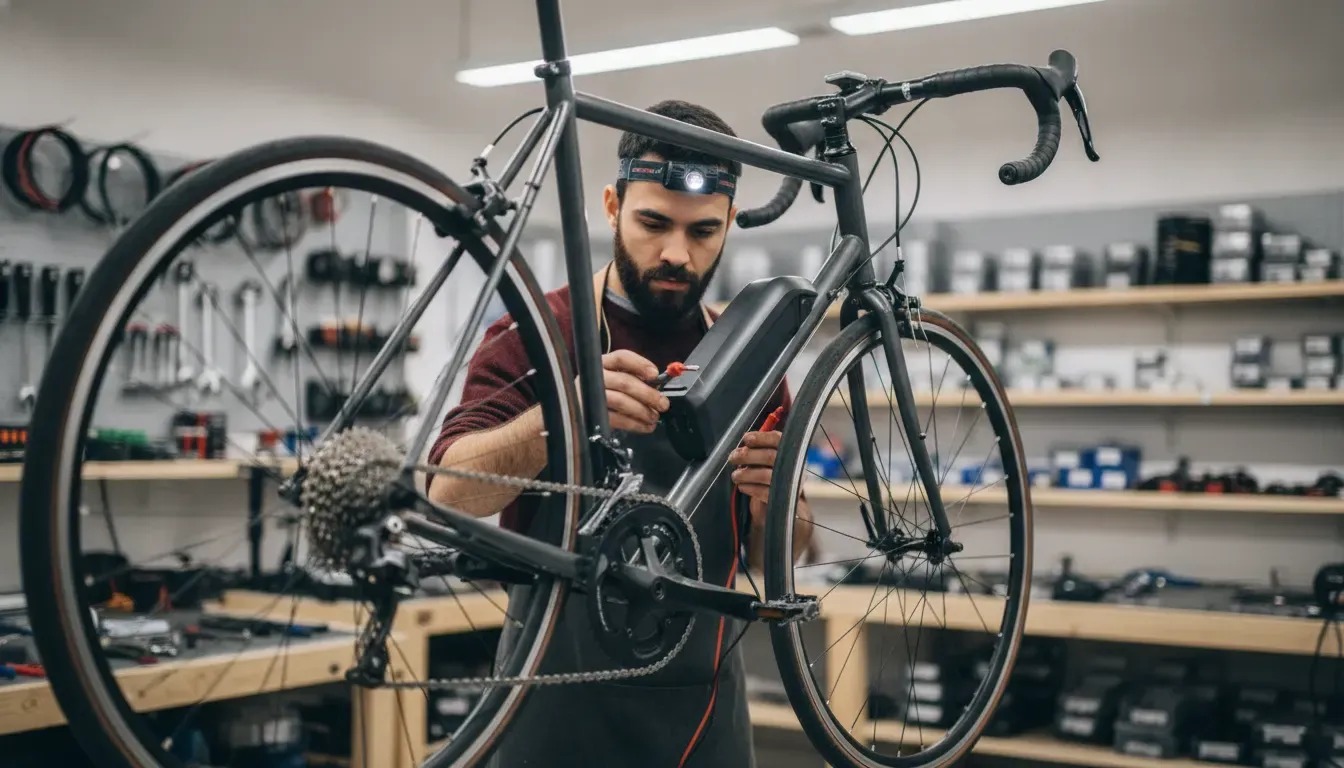
Voltaire's Bicycle Repair Services page explains that the shop works with bicycle, trike, and recumbent brands and handles mechanical, electrical, custom-build, and retrofit needs. That is useful local support, but shoppers should still confirm what service is available for the exact bike and what work remains subject to the manufacturer's warranty process.
What should Central Oregon riders consider before buying?
Central Oregon riders should match the bike to elevation changes, gravel and paved routes, storage conditions, local service access, and the specific places they are allowed to ride. Bend shoppers also have an advantage that online comparison pages cannot provide: they can sit on a bike, check reach, try the controls, and discuss setup before committing.
Think through your regular starting point and route. Will the bike live in a garage, apartment, or vehicle? Will you need to lift it onto a rack? Do you ride in shoulder-season rain or cold? Will a wide tire help on your route, or create unnecessary rolling resistance? Are you comfortable with a high-step frame, or would a step-through design make mounting easier?
For online customers outside Central Oregon, use the same questions with the product page and support team. Ask for the current geometry, included equipment, battery details, assembly expectations, and return or warranty instructions in writing. A careful pre-purchase conversation can prevent an expensive mismatch.
Himiway ebike alternatives: a simple buyer checklist
Use this checklist when you have narrowed your options:
- Define the job. Write down your most common route, distance, surface, hills, cargo, and storage location.
- Confirm fit. Compare recommended rider height, frame reach, standover comfort, saddle adjustment, and total bike weight.
- Compare usable range. Review watt-hours, charging location, assist levels, tire pressure, and the conditions that reduce range.
- Test the controls. Pay attention to start-up behavior, sensor response, throttle operation, shifting, braking, lights, and display readability.
- Read support terms. Separate manufacturer warranty coverage from local labor, diagnostics, shipping, and parts support.
- Plan for ownership. Consider racks, locks, storage, maintenance intervals, software or app requirements, and replacement-battery access.
- Compare the exact model. Brand-level claims do not replace model-specific specifications and current availability.
This process can lead to a Himiway, a Segway, or another brand. The useful outcome is a bike that fits your body and route, not a purchase justified by one impressive specification.
Schedule a Bend consultation with Voltaire Cycles to compare electric-bike options before you buy.
Frequently asked questions
Are Himiway ebike alternatives only for people who dislike Himiway?
No. Alternatives are useful for any shopper who wants to compare frame fit, terrain performance, connected features, service access, warranty procedures, or charging convenience before choosing. A Himiway may remain the right fit after a fair comparison.
Is a larger battery always better?
No. A larger battery can support more capacity, but it can also add weight and cost. Compare watt-hours with your route, charging access, carrying needs, and expected assist level. Maximum-range claims are not the same as guaranteed distance.
Can Voltaire repair a Himiway ebike?
Voltaire offers multi-brand bicycle repair and electrical service, but available work can depend on the exact model, parts, and diagnosis. Contact the shop before scheduling and distinguish paid local service from Himiway warranty authorization.
Which Segway models should I compare with a Himiway?
Start with the use case. The Segway Myon is oriented toward connected commuting, the Segway Xafari toward mixed-terrain adventure, and the Segway Xyber toward a higher-performance experience. Review each current product page and test fit where possible.
What is the best Himiway ebike alternative?
There is no universal best alternative. The right choice is the model that fits your body, route, range needs, storage, support expectations, and budget. A Bend consultation or careful online product comparison can make those tradeoffs easier to evaluate.