
A High-Power Electric Bike Motor Guide for Riders
A High-Power Electric Bike Motor Guide for Riders
Motor wattage gets most of the attention when shoppers compare electric bikes, but it is only one part of the ride. Torque, battery capability, local class rules, and the difference between short bursts and sustained output all shape how a bike climbs, accelerates, and handles real terrain.
Shop our Segway e-bike collection to compare high-torque models and see these specs in action.
A high-power electric bike motor delivers substantially more assistance than a typical 750-watt-class system. But the best choice depends on how that power is rated and where you can legally ride. Compare continuous and peak output, torque, battery compatibility, frame components, and intended use rather than choosing by the biggest wattage number alone.
The Segway Xaber 300 shows why context matters. It lists 21 kW of peak power and 8 kW of nominal power, which places it in high-power e-moto territory rather than the typical street e-bike category. Start by separating those two ratings, then look at what torque and e-bike classes mean for your route and goals.
What Makes a High-Power Electric Bike Motor Different?
A high-power electric bike motor combines substantial output, strong torque, and a power system built to deliver that performance reliably. The category can range from a boosted 1,000W street e-bike to an off-road e-moto rated from 8 kW nominal to 21 kW peak. The right comparison depends on how the motor makes power and where the vehicle is meant to be ridden.
Peak power is the temporary maximum output available in a short burst, such as accelerating, climbing a steep pitch, or clearing an obstacle. Continuous power is the output a motor can sustain over a longer period, such as holding speed on an extended climb. Continuous power is often the more useful number for judging sustained performance and heat management. The Segway Xaber 300 lists 21 kW of peak power and 8 kW of nominal power, a clear example of the difference.
Watts vs Torque: What Do the Numbers Actually Mean?
Watts describe how quickly a motor can use energy, while torque describes its turning force. Wattage helps show how strongly a system can keep accelerating or maintain speed under load. Torque helps explain how confidently it starts from a stop and climbs a steep grade. Neither number tells the whole story on its own.
| Specification | What it measures | What it affects | What riders feel |
|---|---|---|---|
| Wattage | The rate of motor power output | Acceleration potential, sustained speed, and the ability to handle demanding loads | Strong pull as speed builds and effective power against slope and wind |
| Torque (newton-meters) | The motor's turning force | Low-speed acceleration, hill starts, and climbing response | A forceful launch and immediate assistance on uphill terrain |
Think of watts as the motor's overall work rate and torque as its leverage at the wheel. A rider hauling cargo up a Bend-area incline often notices torque first, especially from a stop. A rider chasing speed or sustained performance on open, demanding terrain also needs adequate wattage, battery support, gearing, and strong components. Road slope and wind resistance change the load the motor must overcome, so the same rating can feel different in different conditions. For a lower-power comparison, review the high-power 1000 watt electric bike motor capabilities and evaluate the complete system rather than buying on wattage alone.
What Is the Legal Power Limit for Electric Bike Motors?
In the United States, many jurisdictions use a three-class e-bike framework. Class 1 and Class 2 models generally provide assistance up to 20 mph, while Class 3 models can assist up to 28 mph. A motor around 750 watts is commonly associated with street-legal Class 1 and Class 2 e-bikes, but exact rules vary by state, city, trail system, and vehicle type. A high-power electric bike motor that exceeds those limits may be regulated as an off-road vehicle or electric motorcycle instead.
The class system describes how an e-bike operates, not just how large its motor is. Class 1 assists only while you pedal. Class 2 adds a throttle that can propel the bike without pedaling, subject to the speed limit. Class 3 is pedal-assist with a higher assisted speed, commonly up to 28 mph. Faster, more powerful models may need stronger brakes, appropriate tires, lights, mirrors, registration, insurance, or other equipment depending on where they are ridden.
Wattage alone therefore does not determine whether a bike is legal on a public road or shared path. Check the current Oregon rules and the regulations for your city, county, park, bike path, and trail. Local access rules can be more restrictive than statewide rules, and laws can change.
Some vehicles sit clearly outside the conventional class framework. The Segway Xaber 300 lists 8 kW of nominal power, 21 kW of peak power, and speeds up to 60 mph. It is an off-road electric dirt bike, not a typical commuter e-bike, so it should not be treated as street-legal just because it has two wheels. See the Segway Xaber 300 product details and verify the rules for your riding location. Choosing the vehicle category before choosing maximum power is the practical rule.
Hub Motors vs Mid-Drive Motors: Which Is Better?
Hub motors drive the wheel directly, while mid-drive motors send power through the bicycle's drivetrain. That difference affects climbing ability, balance, maintenance, and how naturally the bike responds. Neither design is automatically best.
When does a hub motor make sense?
A hub motor sits in the front or rear wheel and applies force directly at the tire. Because it does not rely on the bike's chain and gears to transfer power, the design is simple and typically needs less drivetrain maintenance. It feels practical for paved commuting, neighborhood riding, and flatter routes where steady cruising matters more than shifting gears to climb.
Why are mid-drive motors effective on steep terrain?
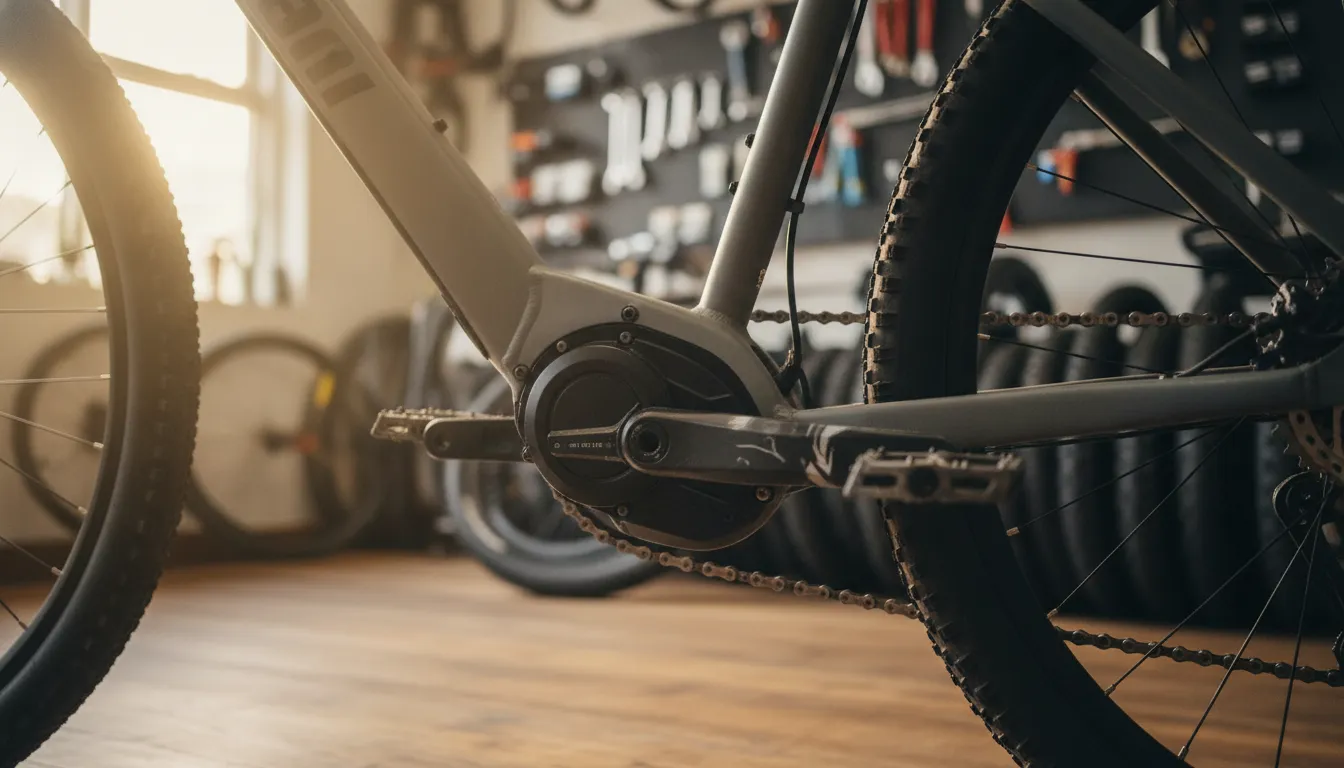
A mid-drive motor mounts near the crank and uses the bicycle's gears. Selecting a lower gear lets the motor work more effectively against a steep grade, much like downshifting in a car. This drivetrain connection generally gives mid-drives better torque and efficiency on varied, steep terrain. Centralizing the motor's weight can also help preserve balance on uneven trails. On the other hand, high-power riding places real loads on the chain, cassette, and other drivetrain parts, so correct shifting, durable components, and regular inspection matter.
How do torque and cadence sensors change the ride?
Torque sensing measures how firmly you press the pedals and responds with assistance proportional to that effort. The result is usually more natural and responsive, with smoother transitions when effort or terrain changes. Cadence sensing detects that the cranks are turning and typically delivers assistance based more on movement than pedal pressure. For steep climbs around Bend, a mid-drive paired with torque sensing is often the most controlled choice. For flat commuting, a hub motor with cadence sensing may offer simplicity. A high-torque Segway Xaber 300 review shows how powerful assist feels on real singletrack.
How to Choose the Right High-Power Electric Bike Motor
The best motor is not the one with the largest number on the spec sheet. Start with how and where you ride, then match the motor, battery, frame, brakes, and controls to that use. Use this checklist to guide your choice:
- Commuting: A moderate system with smooth assist suits stop-and-go streets, bike lanes, and frequent charging. Prioritize manageable weight, reliable braking, and easy-to-control assist.
- Paved trails and recreation: Look for responsive power delivery and enough battery capacity for your normal distance. Torque sensing feels more natural because the motor responds to pedal pressure.
- Steep climbs: Focus on torque over wattage alone. Hills, headwinds, rider weight, and cargo all raise the load, so strong sustained output and suitable gearing matter more than a flashy peak figure.
- Off-road and hunting use: Clearance, suspension, tires, braking, and low-speed control are as important as motor output. The motor must match a frame and components built for its torque stresses.
- Class and legality: Confirm the model fits the e-bike class and access rules for your roads and trails. High-output e-motos can exceed street-legal limits and may be off-road only.
- Battery capacity: Ensure the pack can deliver the current the motor demands, especially on climbs and high-speed riding, so voltage does not sag and range stays useful.
- Conversion compatibility: For a conversion, verify frame strength, dropouts, wheel size, drivetrain, controller, battery management, and braking together. The frame is part of the power system.
- Test ride: A hands-on ride is the surest way to judge whether the power feels controlled and appropriate before you commit.

Does a High-Power Motor Drain Your Battery Faster?
Yes. A high-power electric bike motor can use substantially more energy than a lower-output system, especially during hard acceleration, steep climbs, headwinds, or sustained high speeds. The tradeoff is not automatically a short ride, though. Battery capacity, riding mode, terrain, rider weight, tire pressure, and how often the motor runs near its limit all affect the result.
Motor power is closely tied to electrical current. When a motor demands more power, the battery must deliver more current, so the pack needs an appropriate discharge capability to avoid sagging voltage under load. Capacity, often measured in watt-hours or kilowatt-hours, determines how much energy the pack stores. A higher-capacity battery generally gives a high-power bike more range when conditions are comparable.
There is no dependable single range number for every rider. A high-power bike ridden gently in a lower assist mode can travel much farther than the same bike ridden continuously at maximum output. Wind, hills, loose terrain, cold weather, and repeated stops can reduce range further. The Segway Xaber 300 uses a 3.17 kWh battery, a large pack for a high-power electric dirt bike. Yet its actual ride time still depends on the selected mode and terrain.
Get Expert Help Choosing, Servicing, and Building Your Motor
Choosing a high-power electric bike motor is more than a wattage decision. The motor, battery, frame, drivetrain, brakes, and controls must work together for the way you actually ride. A qualified technician can help you compare those tradeoffs before you invest in a system that is too aggressive, poorly matched, or hard to maintain.
At Voltaire Cycles of Central Oregon, our Bend showroom gives riders a place to ask detailed questions, compare models, and take a test ride before choosing. Our certified technicians service all electric vehicle brands, and we help with custom builds when a stock configuration does not fit your goals. Regular service becomes more important as power and riding intensity increase, since higher loads place extra stress on the drivetrain, bearings, and brakes. Research on electric-bike control systems notes that motor torque can be managed to reduce the effort required from the rider. But dependable assistance still relies on properly matched and maintained parts (research on electric-bike torque control).
Start with certified service and repairs from a local team, or browse all electric bikes and bring your questions to the Bend showroom.
Frequently Asked Questions
What does peak versus continuous power mean?
Continuous power is the output a motor can sustain during extended riding. Peak power is the higher output available in short bursts, such as starting on a steep incline. Compare both figures when evaluating a model. The Segway Xaber 300 lists 21 kW peak power and 8 kW nominal power on its product page.
What is the legal power limit for an electric bike motor?
Limits depend on your location and the e-bike class. In many US jurisdictions, Class 1 and Class 2 e-bikes are commonly limited to 750 watts, while Class 3 models may assist to higher speeds. High-power e-motos can exceed those limits and may be restricted to off-road use, so check current local rules before riding.
Does torque sensing change how a motor feels?
Yes. A torque sensor responds to how firmly you press the pedals and adjusts assistance accordingly. That usually feels more natural and responsive than cadence sensing, which primarily detects whether the pedals are turning. Torque sensing helps when you want controlled assistance on hills, uneven ground, or at low speed.
How should I choose a motor for an electric bike conversion?
Start with your intended terrain, riding speed, local regulations, and the assistance you need. Then confirm that the motor, battery discharge capability, controller, brakes, and frame are compatible. A higher-output motor can stress components, so a qualified technician should review the complete system before installation.
Shop the Segway collection to explore high-torque models and get started with the right motor.