
Fat Tire Ebike Price: What Affects Total Cost
A fat tire e-bike can be a comfortable commuter, a stable gravel-bike platform, or a serious off-road machine. That range of uses is why a single sticker-price answer can be misleading. Fat tire ebike price reflects the frame, motor, battery, wheels, suspension, brakes, included equipment, delivery, setup, and the support available after the sale.
Compare Segway electric bikes and scooters at Voltaire Cycles
Rather than chasing the lowest listing, compare what the complete bike is designed to do and what you will need to own it successfully. A lower-cost build may be sensible for light neighborhood use, while a more robust model can make better financial sense for frequent gravel, cargo, hunting, or rough-terrain riding.
How does fat tire ebike price vary by build?
Fat tire ebike price varies mainly because bikes with the same wide tires can have very different motors, batteries, frames, suspension, brakes, and support packages. A practical comparison separates the cost of the bike itself from the cost of making it fit your terrain, rider needs, transportation, and long-term maintenance plan.
Think in three broad build positions rather than rigid dollar bands:
- Value-oriented: Best for moderate trips, paved paths, neighborhood riding, and riders who can accept simpler components and fewer included accessories.
- Mid-range: A balanced choice for regular commuting, mixed pavement and gravel, longer rides, and shoppers who want stronger components without paying for every high-performance upgrade.
- Premium or high-performance: Built for demanding terrain, heavier loads, repeated elevation changes, extended outings, or riders who place a high value on suspension, braking, range, and serviceability.
Those positions are not quality grades by themselves. A simpler bike can be the better purchase when it matches the use case. A high-output motor and large battery add little value if your rides are short and mostly flat, while an under-equipped bike can become expensive when it needs immediate upgrades.
What does a fat tire e-bike price include?
A listed price should cover more than the frame and motor. Before comparing two bikes, check whether the price includes the battery, charger, assembly, shipping, pedals, fenders, racks, lights, warranty support, and the adjustments needed for a safe first ride. Missing equipment can make an apparently lower price less useful.
Read the product-page specification list carefully. Ask whether the battery is included, whether the quoted range is a controlled-condition maximum, whether the bike arrives professionally assembled, and who will diagnose an electrical or mechanical problem if something needs attention.
Which components have the biggest effect on cost?
The biggest cost drivers affect power delivery, control, durability, comfort, and range. Comparing one specification in isolation can hide tradeoffs, so ask whether each upgrade solves a problem you actually expect to have.
Motor type, torque, and control
Motor wattage is only one part of the story. Ask whether the number describes continuous or peak output, then look for torque, controller behavior, assist modes, throttle configuration, and the terrain the bike is intended to handle. A motor that feels strong on a flat road may not provide the same experience on a loose climb with cargo.
Hub motors can be straightforward and effective for commuting and general riding. Mid-drive systems can use the bike's gears to manage climbs efficiently, but they may cost more and require a rider who is comfortable shifting. Neither layout is automatically better. The right choice depends on terrain, cadence, load, maintenance preferences, and local service capability.
Battery capacity and cell quality
Battery capacity is commonly expressed in watt-hours. More watt-hours can support longer rides, but real range also depends on rider weight, wind, temperature, tire pressure, terrain, assist level, and cargo. Treat an advertised maximum as a best-case reference, not a promise for every ride.
Battery quality, mounting, charging equipment, protection, and replacement support also matter. A battery that is easy to remove may be valuable for apartment or winter storage. A well-integrated battery can improve appearance and protection. Ask what replacement process exists and whether the shop can help diagnose battery, charger, or connection issues.
For a deeper look at range, charging, storage, and battery lifespan, read Voltaire's e-bike battery guide. The goal is not to buy the largest battery automatically. It is to buy enough usable capacity for your normal ride with a sensible margin.
Frame, wheels, and fat tires
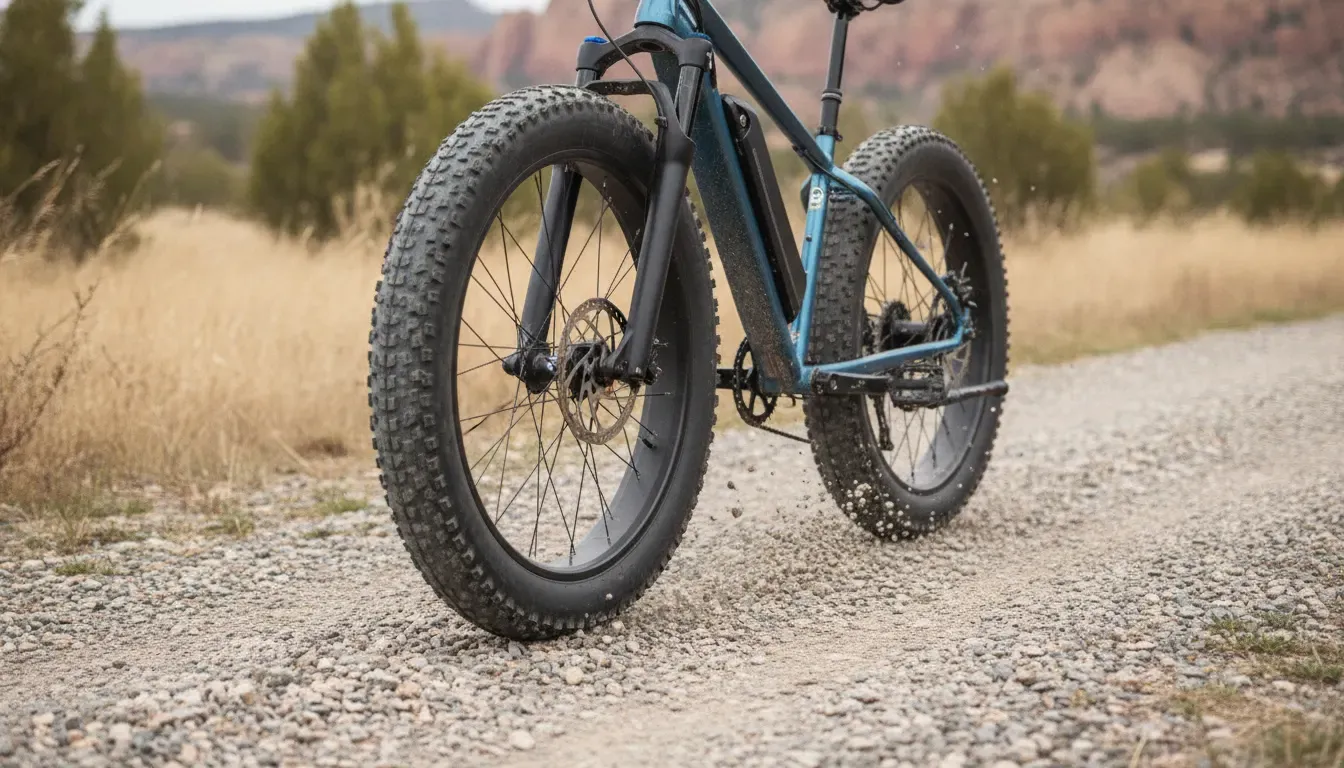
Fat tires add material, rolling surface, and wheel-building demands. Frame strength, axle standards, rim construction, tire casing, puncture resistance, and replacement availability can all influence the total cost. The widest tire is not necessarily the most durable, efficient, or comfortable option for your route.
Ask how the wheel and tire package behaves on your surfaces, then consider storage and transport. A wide, heavy bike may need a stronger vehicle rack, more garage space, and more effort to lift than a narrower commuter model.
Suspension and braking
Suspension can add comfort and control on rough surfaces, but it also adds cost, weight, and service considerations. Front suspension may be enough for many mixed-surface riders. Full suspension can make sense when the route, speed, rider comfort, or terrain regularly justifies it.
Brakes deserve the same careful comparison. Hydraulic brakes can offer useful control and modulation, especially for heavier systems, hills, cargo, or repeated stops. Mechanical brakes may be simpler to adjust and maintain. Compare rotor size, lever feel, replacement parts, and technician access instead of selecting by a label alone.
What extra costs should you budget beyond the bike?
The complete cost of ownership starts when the bike arrives. A realistic budget accounts for required safety equipment, useful accessories, transport, initial setup, routine wear, and occasional electrical or mechanical service. These costs are not reasons to avoid fat tires; they help you compare two purchases honestly.
- Safety and visibility: A helmet, lights, reflective equipment, and a lock may be essential depending on how and where you ride.
- Transport: Fat tires and heavier frames may require a compatible rack, hitch capacity, adapter, or a different loading routine.
- Comfort and utility: Fenders, a rear rack, bags, grips, a better saddle, or weather protection can make a commuter or utility bike much more usable.
- Setup: Assembly, brake adjustment, derailleur tuning, torque checks, and a fit review are part of the value of a safe handoff.
- Wear items: Tires, tubes, brake pads, chains, cassettes, cables, and bearings wear at different rates depending on mileage, terrain, rider weight, and weather.
- Electrical support: Chargers, batteries, displays, sensors, connectors, and controllers may need diagnosis or replacement during a long ownership period.
Do not assume every accessory should be purchased immediately. Start with the equipment that supports your actual rides, then add items after you understand your fit and route. A consultation can prevent buying an incompatible rack or paying for upgrades that do not solve a real problem.
Want help matching equipment to your route? Browse Voltaire's electric bike selection and note the motor, battery, wheel, suspension, and included-equipment details before you compare models.
Which fat tire ebike price tier fits your riding?
The right fat tire ebike price tier depends on the job, not just your preferred feature list.
| Comparison point | Why it affects value | Questions to ask |
|---|---|---|
| Motor and battery | Shapes hill response, assist feel, and usable range. | What terrain, load, and ride length should it support? |
| Wheels and tires | Influences traction, comfort, rolling effort, and replacement needs. | Do the width and casing fit your routes and storage? |
| Setup and service | Supports safe handoff, maintenance, diagnostics, and long-term ownership. | Who will assemble, adjust, and service the bike? |
Start with terrain, distance, rider and cargo weight, storage, transport, and service needs. Then choose the least expensive build that meets those requirements with a reasonable margin for comfort, control, and future use.
Commuting and paved paths
If most rides are paved, a commuter-oriented e-bike may be more efficient and easier to transport than a fully equipped fat-tire model. Choose fat tires when their comfort, stability, or surface flexibility is genuinely useful. Compare lights, fenders, rack mounts, upright fit, battery access, and the bike's weight before paying for off-road hardware you will rarely use.
Voltaire's Segway Myon electric bike provides a concrete commuter-oriented comparison point within the broader Segway product selection. The purpose is not to declare one model right for everyone. It is to help you compare the cost of a design built around everyday riding with the cost of a wider, more terrain-focused setup.
Gravel, mixed surfaces, and recreation
Mixed-surface riders often benefit from a balance of traction, comfort, battery capacity, and manageable weight. Look for a frame and wheel package suited to the surfaces you will actually ride. A modest suspension system, strong brakes, and useful mounting points may provide more value than the highest advertised motor output.
Heavy loads, hunting, and demanding terrain
Riders carrying gear or traveling on rougher terrain should pay closer attention to payload guidance, torque, braking control, frame strength, suspension, wheel durability, battery capacity, and service access. This is where the least expensive option can become a false economy if it needs multiple upgrades or cannot handle the intended conditions reliably.
High-power models also require careful attention to local rules and permitted routes. Confirm class, throttle, speed settings, and land-use requirements before assuming a particular bike can be used on every road or trail. A shop that understands the local riding environment can help separate useful capability from marketing language.
How can you compare two fat tire e-bikes at the same price?
Compare two bikes at the same price by normalizing the complete package. Put both specification sheets side by side, then score each bike against your actual use case. The more expensive-looking component is not always the better value if it adds weight, complexity, or capability you will not use.
- Define the ride: Write down typical distance, surface, hills, rider weight, cargo, weather, storage, and transport constraints.
- Compare usable power: Review motor layout, torque, assist behavior, gearing, and control quality rather than relying on a peak-watt number.
- Compare usable range: Review battery watt-hours and the conditions behind any range claim. Leave room for cold weather, hills, wind, and aging.
- Inspect control systems: Compare brakes, tires, wheels, suspension, lights, and contact points for your terrain and comfort needs.
- Count included equipment: Identify the charger, pedals, fenders, racks, lights, assembly, shipping, and setup that are actually included.
- Price the support plan: Ask who can service the bike, obtain wear parts, diagnose electrical problems, and help with warranty questions.
- Test the fit: A short test ride can reveal reach, saddle comfort, steering feel, starting behavior, braking confidence, and whether the bike is practical to move.
Use the comparison to identify the lowest-risk purchase, not just the lowest initial number. If one bike is easier to service, includes the equipment you need, and fits your riding better, its total value may be higher even when the two listed prices look similar.
Why does local service change the total value?
Local service changes the ownership equation because an e-bike is both a bicycle and an electrical system. A nearby technician can inspect fit and assembly, diagnose unusual noises or power issues, and help you keep wear items from becoming larger problems. That support can be especially valuable when a fat-tire bike is ridden in dust, mud, cold, or heavy-use conditions.
Voltaire Cycles of Central Oregon supports riders from its Bend showroom with test rides, technical consultation, repairs, maintenance, and multi-brand service. The shop's bicycle repair service is relevant to the total-cost question because service access is part of the ownership plan, not an afterthought.
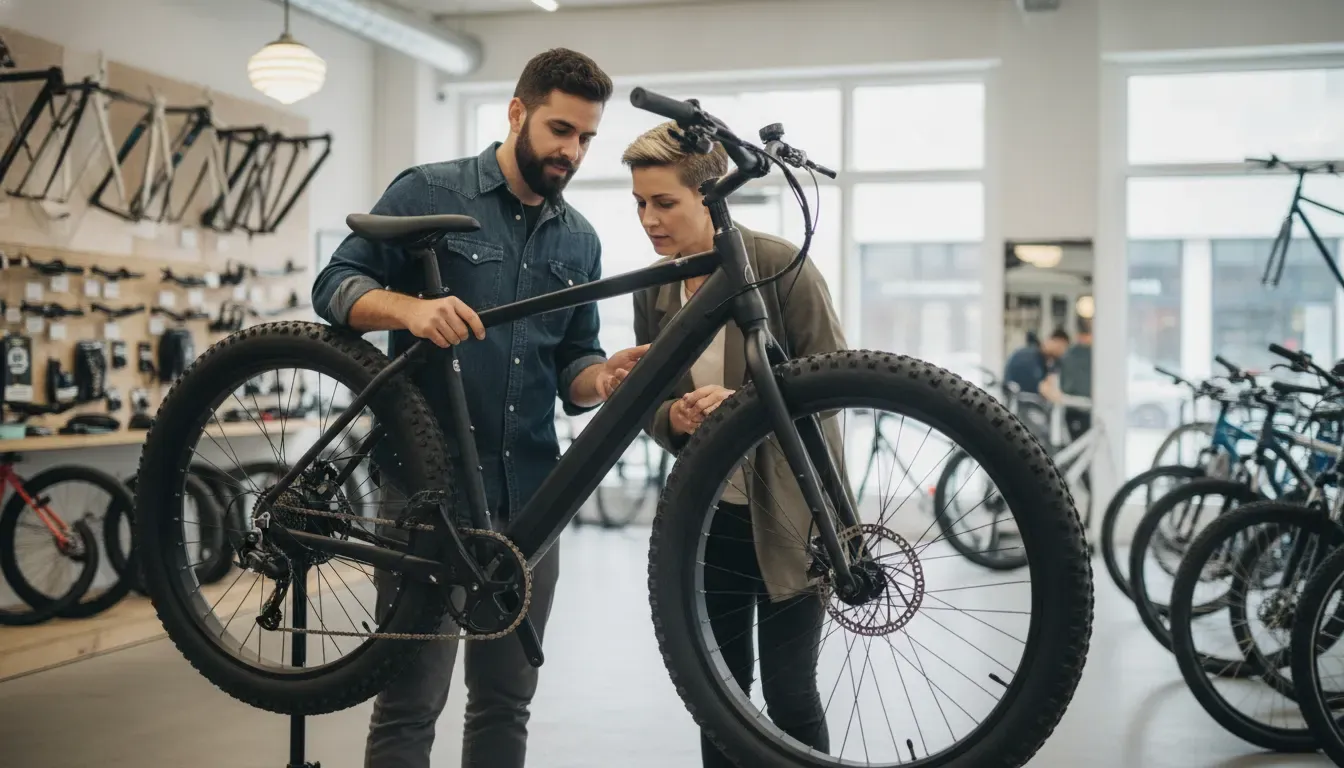
For local shoppers, a test ride can help you compare tire feel, starting effort, steering, braking, and fit before you commit. Voltaire's electric bike rental experience can also help Central Oregon riders validate how a bike feels in real conditions before purchasing, where appropriate. Online shoppers can still ask for technical guidance and should confirm how setup, shipping, warranty, and service questions are handled.
What is the smartest way to shop for fat tire e-bike value?
The smartest approach is to define your route and load, compare complete specifications, verify what is included, and account for setup and service. Treat current prices and promotions as changeable, then ask whether the bike remains a good match after a sale ends. Value is the fit between capability and real use.
Before buying, ask about realistic range conditions, payload, included accessories, maintenance, diagnostics, replacement parts, and a test ride. This keeps the conversation focused on ownership rather than hype and gives an advisor enough information to recommend a suitable build.
Explore electric bikes at Voltaire Cycles and request help comparing your options
Frequently Asked Questions
How much does a fat tire e-bike cost?
Fat tire e-bike prices span value, mid-range, and premium builds because the category includes simple commuter bikes as well as high-performance off-road models. The meaningful comparison is what each bike includes: motor, battery, wheels, suspension, brakes, accessories, setup, shipping, warranty support, and service access.
Are fat tire e-bikes more expensive than regular e-bikes?
They can be, because wider tires, stronger wheels, larger frames, added suspension, and more robust braking or power systems may increase manufacturing and ownership costs. A fat-tire bike is not automatically more expensive, however. The final difference depends on the build and the use case it is designed to support.
What matters more, motor watts or battery watt-hours?
Neither number matters in isolation. Motor output affects acceleration and hill performance, while battery watt-hours help determine available energy. Torque, controller behavior, gearing, rider weight, terrain, temperature, tire pressure, and assist level shape the ride and real-world range, so compare the complete system.
Do fat tires justify a higher price?
Fat tires can justify a higher price when you need their traction, stability, comfort, or surface flexibility. They may not be worth the added weight and rolling resistance for a rider who stays on smooth pavement. Test the bike on your likely route and compare transport, storage, and replacement-tire costs.
What extra costs should I plan for?
Plan for safety equipment, a lock, lights, fenders, racks or a compatible vehicle carrier, assembly or setup, routine tune-ups, tire and tube replacement, brake wear, and eventual electrical support. You may not need every accessory on day one, but including likely ownership needs produces a more honest total-cost comparison.
Is a local test ride worth it before buying?
Yes, when one is available. A test ride can reveal fit, steering, starting behavior, braking confidence, tire feel, and whether the bike is practical to lift or transport. A local consultation can also clarify service, warranty, and component questions that are difficult to resolve from a product listing alone.