
Fat Tire Ebike Financing Guide: Compare Your Options
Fat Tire Ebike Financing Guide: Compare Your Options
A fat tire e-bike can support neighborhood transportation, gravel-road exploring, winter riding, and weekend recreation. Start with the bike and a complete ownership budget. Before comparing a monthly payment, consider how you will ride, which features you need, and what support will make the purchase practical.
Browse electric bike options and ask Voltaire Cycles about current financing choices.
Fat tire ebike financing is easier to evaluate when you compare total repayment, term length, fees, down payment, eligibility requirements, and return conditions. A low monthly payment is only one part of the agreement.
Voltaire Cycles of Central Oregon helps shoppers compare electric mobility options in a Bend showroom and online. This guide explains installment plans, purchase-linked credit, personal funds, and general-purpose borrowing. It avoids quoting rates or assuming one option fits every rider. Financing details can change, so confirm current terms directly before applying.
What should you decide before looking at fat tire ebike financing?
Before reviewing a payment product, define the riding experience and bike configuration you are trying to support. Your routes, distance, terrain, cargo, storage, and comfort needs determine the purchase scope. Once those choices are clear, judge financing by whether it supports a suitable e-bike and a manageable ownership plan.
Start with the places you expect to ride. A fat tire e-bike may be used on paved streets, gravel roads, uneven paths, private property, or recreational routes. Think about how often you will ride and how far you travel. Consider the terrain around your home and whether you need to carry groceries, camping equipment, work items, or other gear. A short-errand rider may need a different configuration from an outdoor enthusiast planning longer rides.
Next, separate essential features from preferences. Frame size, riding position, tire width, braking components, motor response, battery capacity, and total weight can affect comfort and control. If you have physical limitations or plan to carry a passenger, include those needs before looking at a payment amount. The same applies if you expect to place the bike on a vehicle rack. A lower payment cannot make an unsuitable bike a good value.
Review Voltaire Cycles' fat tire e-bike guidance with a written checklist. Mark each feature as required, useful, or optional. You can also compare the recommendations in this e-bike buying guide. A checklist limits the risk of financing upgrades that do not improve your actual rides.
Include the complete purchase, not only the bike
The financed amount may not be the bike's advertised price. Depending on your riding plans, the full purchase can include a lock, helmet, lights, fenders, rack, bags, phone mount, weather protection, assembly, delivery, taxes, and other equipment. List these items before comparing payment schedules. This keeps an affordable-looking plan from leaving you with an incomplete setup.
Also account for ongoing ownership. Routine care, replacement wear items, secure storage, optional insurance, and future service can affect the cost of keeping the bike ready to ride. Voltaire Cycles offers local consultation and multi-brand service in Bend. The team can help local shoppers think through fit and support before committing. Online customers should gather the same information and confirm available service options before checkout.
Which fat tire ebike financing options should you compare?
Common choices include installment plans, purchase-linked promotional credit, personal funds, and general-purpose credit. Each one changes the balance between predictable payments, flexibility, approval conditions, and total cost. Compare the complete agreement. Do not rely only on the payment shown at checkout. Confirm which parts of the purchase the offer actually covers.
An installment plan divides the purchase into scheduled payments over a stated term. It can make budgeting easier because the payoff date and payment schedule are defined. However, a longer term can keep the account open longer and may increase the total amount repaid. Check the down payment, payment dates, payoff terms, late-payment consequences, and any disclosed fees.
Store or promotional credit may be connected to one purchase or a limited promotional period. Read the eligibility rules, promotion deadline, regular terms after the promotion, minimum payments, and any deferred-interest language. Do not assume the advertised benefit applies to every accessory or charge. Ask what happens if the balance is not paid under the required conditions.
Personal funds avoid opening a new credit account, but using savings can reduce the cushion available for emergencies or planned expenses. General-purpose credit may offer flexibility if you already have an account. Compare its borrowing cost, available limit, fees, and repayment rules with purchase-specific options.
| Option | How it works | What to check | Potential fit |
|---|---|---|---|
| Installment plan | Scheduled payments over a defined term. | Total repayment, fees, down payment, dates, and payoff terms. | Buyers who value a clear schedule. |
| Store or promotional credit | Purchase-linked credit with offer-specific conditions. | Eligibility, deadline, post-promotion terms, minimum payments, and deferred-interest language. | Buyers who can meet every condition. |
| Personal funds | Payment from savings without a new credit account. | Emergency reserves, upcoming expenses, and remaining cushion. | Buyers who can pay without weakening reserves. |
| General-purpose credit | Existing credit line or separately arranged borrowing. | Borrowing cost, fees, available limit, flexibility, and account terms. | Buyers comparing an existing resource. |
The best choice depends on the agreement and your circumstances. Avoid selecting a plan solely because its payment appears lower. A plan that fits the monthly budget but extends repayment or adds conditions may be less suitable than an option with a different schedule and clearer total cost.
How do you compare the true cost of an e-bike payment plan?
To compare the true cost, review what leaves your account from the first payment through the final payoff. Check the amount financed, down payment, term, disclosed APR or equivalent borrowing cost, fees, and total repayment. A lower monthly amount can still cost more overall when the term is longer or additional charges apply.
Begin with the cash price and identify exactly what the plan finances. Does the balance include only the e-bike, or does it also include accessories, delivery, taxes, or other charges? Subtract the down payment. Then review each disclosed finance charge and fee. The result should be a total repayment figure you can understand. If the offer does not make that figure clear, ask where it appears in the agreement.
Next, compare the term against how long you expect to keep and use the bike. A shorter term may require a higher scheduled payment, while a longer term may reduce the payment but extend the obligation. Neither is automatically better. The useful question is whether the payment remains comfortable while the total cost and payoff timeline still make sense for your situation.
Review timing details carefully. Note when the first payment is due, whether the payment date can change, how early payoff is handled, and what happens after a missed payment. For promotional credit, record the promotion's end date and the conditions required to receive its advertised treatment. Keep a copy of the disclosures and final purchase scope for your records.
The Consumer Financial Protection Bureau's loan comparison guidance reinforces a useful principle: compare more than the monthly payment. Although an e-bike is not an automobile, the same habit applies to any purchase agreement. Look at the amount you borrow, the length of the obligation, and the full amount you will repay.
A simple comparison worksheet
- Write down the bike, accessories, taxes, delivery, and other items included in the purchase.
- Record the cash price, down payment, amount financed, scheduled payment, term, and total repayment.
- List every disclosed fee, eligibility condition, deadline, and late-payment consequence.
- Compare the final payment schedule with your normal monthly obligations and emergency cushion.
- Ask for clarification before applying if any term, charge, or promotional condition is unclear.
Can your monthly budget handle the full cost of ownership?
Yes, but the payment is only one part of the ownership budget. Leave room for practical equipment, charging, secure storage, routine care, optional coverage, and unexpected needs. A realistic budget helps you choose a fat tire e-bike and payment plan that remain comfortable after the excitement of purchase has passed.
Accessories can change how useful the bike is. A commuter may prioritize lights, a lock, fenders, a rack, and carrying capacity. A recreational rider may need a way to transport the bike, weather protection, or equipment suited to uneven routes. A rider who stores the bike outdoors may need a stronger security plan. Identify the items that make your intended use possible, then decide which are needed now and which can wait.
Consider service as part of the ownership conversation. Tires, brake components, chains, cables, electrical connections, and other wear items may eventually need inspection or replacement. This does not mean every rider will incur the same cost or schedule. It means you should know where to ask questions and how to keep the e-bike in safe working condition. Voltaire Cycles' service and repair team supports a range of electric mobility products, including brands not purchased at the store.
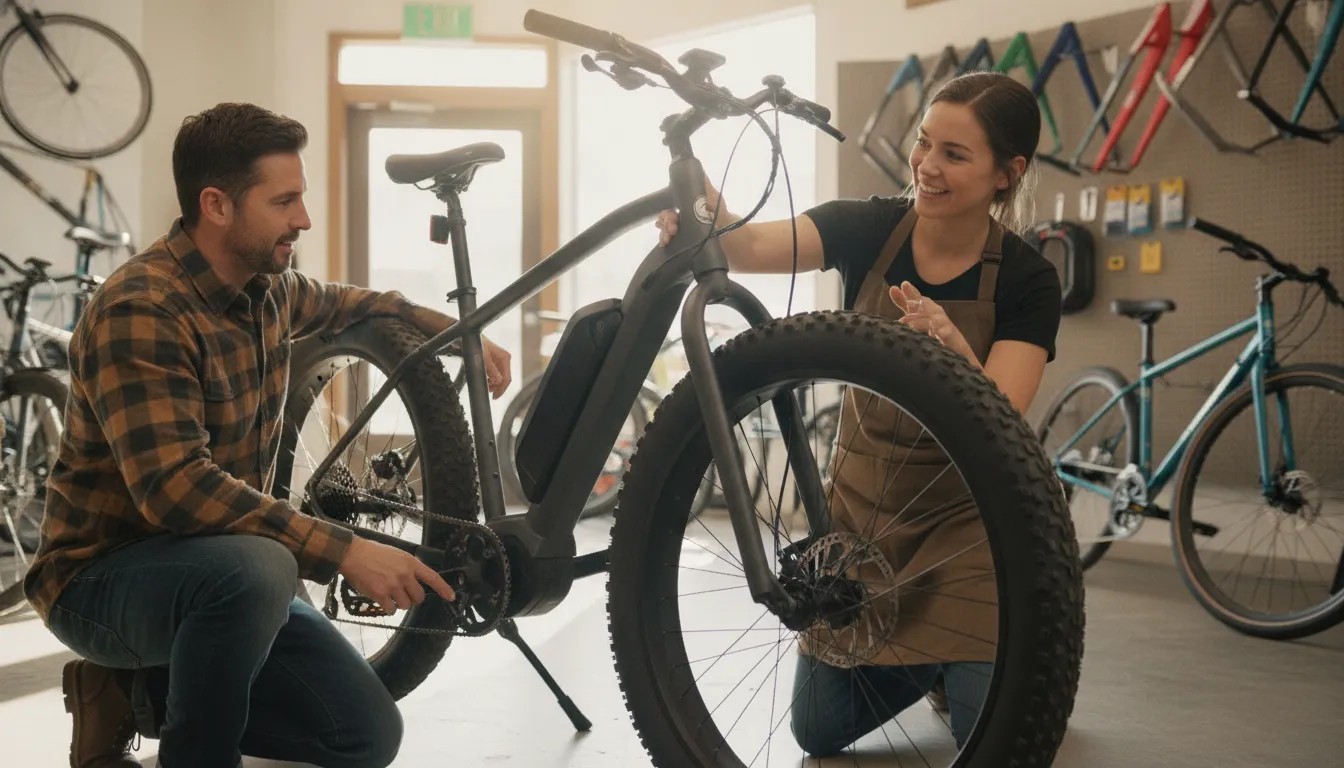
Storage and transport also deserve a place in the budget. Fat tires and heavier frames can affect which rack, lift, or storage location works for you. Measure available space, check the rack's capacity, and ask for guidance before assuming a standard setup will fit. Paying for a bike that cannot be stored or transported conveniently can reduce how often you use it.
Finally, keep an emergency cushion. Do not use every available dollar for a down payment if doing so leaves no room for essential expenses. A financing plan should support mobility and recreation without creating pressure that undermines the rest of your budget.
What questions should Bend and online shoppers ask before committing?
Before accepting an offer, ask questions that connect the payment terms to the bike and the ownership experience. Bend shoppers can discuss fit and intended use at the Voltaire Cycles showroom, while online customers can request the same information before checkout. The goal is to understand the agreement and support plan, not simply to qualify for credit.
- What is included in the amount financed, and what will I need to pay separately?
- What is the total repayment amount after all disclosed charges?
- How long is the term, and when does the first payment become due?
- Are there eligibility rules, deadlines, or promotional conditions I must meet?
- What happens if I pay early, pay late, or miss a payment?
- Will the plan cover accessories, delivery, taxes, or only the e-bike?
- Which bike configuration best matches my routes, comfort needs, and storage plan?
- Where can I get service, repairs, and setup help after delivery?
Keep the answers, disclosures, and final purchase scope together. If the numbers or conditions are unclear, pause before submitting an application. A showroom conversation or online product question can help you resolve fit and equipment issues before financing turns an uncertain choice into a long-term obligation.
Voltaire Cycles can also help you compare the bike itself against your intended use. A test ride, where available, may reveal whether the riding position, controls, acceleration, and handling feel right. That experience is valuable because financing a bike you enjoy using is more meaningful than financing a specification list that does not match your needs.
Frequently Asked Questions About Fat Tire Ebike Financing
What financing options are commonly available for a fat tire e-bike?
Common options include installment plans, purchase-linked promotional credit, personal funds, and general-purpose credit. Compare total repayment, fees, down payment, due dates, eligibility rules, and early or late payment conditions. Current offers can change, so ask Voltaire Cycles for the details that apply to the bike and purchase scope you are considering.
Should I choose the lowest monthly payment?
Not by itself. Compare the total amount repaid, the term, fees, and the conditions attached to the offer. A lower monthly payment may come with a longer obligation or additional charges. Choose a schedule that fits your budget while keeping the complete cost and payoff timeline clear.
Can accessories be included in fat tire ebike financing?
That depends on the specific payment product and purchase terms. Ask whether accessories, taxes, delivery, assembly, or other charges are included before applying. Building a complete purchase scope first helps you avoid assuming that a payment plan covers equipment you still need to buy separately.
Where can Bend shoppers get help comparing a fat tire e-bike?
Bend shoppers can visit Voltaire Cycles of Central Oregon for product guidance, fit questions, and current financing information. Online customers can review products and contact the store before checkout. Because terms and inventory can change, confirm the current offer and bike details directly rather than relying on an older example.