

Electric Tricycle with Cover: Weather and Cargo Considerations
An electric tricycle with cover can make errands, recreation, and everyday transportation more comfortable when the weather changes. A roof or enclosed canopy may help shield a rider and cargo from sun, light rain, and wind, but it also changes how the trike handles, stores, and stays visible. The right choice depends on more than whether a cover looks convenient.
Call for a free electric mobility consultation
What should you look for in an electric tricycle with cover?
An electric tricycle with cover should match the rider, route, cargo, and local conditions. Start with the cover itself, then evaluate stability, visibility, ventilation, storage, and fit as one complete system. A covered trike that protects you from a shower but blocks your view or cannot fit in your storage area may be a poor everyday match.
For Central Oregon riders, conditions can shift between bright sun, cold mornings, wind, dust, and occasional rain. Test the trike with the cover installed and ask how it behaves when turning, stopping, loading, and parking. Research on motorized tricycles also identifies them as a transportation option with potential environmental and energy benefits; you can review the discussion in this study of motorized tricycles. Treat that general research as background, not as a substitute for evaluating a specific model.
What should you bring to a test ride?
Bring the questions and objects that represent real use. If the trike will carry groceries, bring a reusable bag or note the dimensions of a typical load. If you use a cane, brace, or other mobility aid, explain where it needs to go. Measure the doorway, garage, or shed where the trike will be stored and compare those measurements with the complete vehicle.
Use a short test route that includes a start, stop, turn, and parking maneuver. Pay attention to how quickly you can reach the brakes and controls, whether the cover rattles, and whether you can see around the frame and canopy. These small observations often reveal more than a long straight ride.
How does a cover protect against Central Oregon weather?
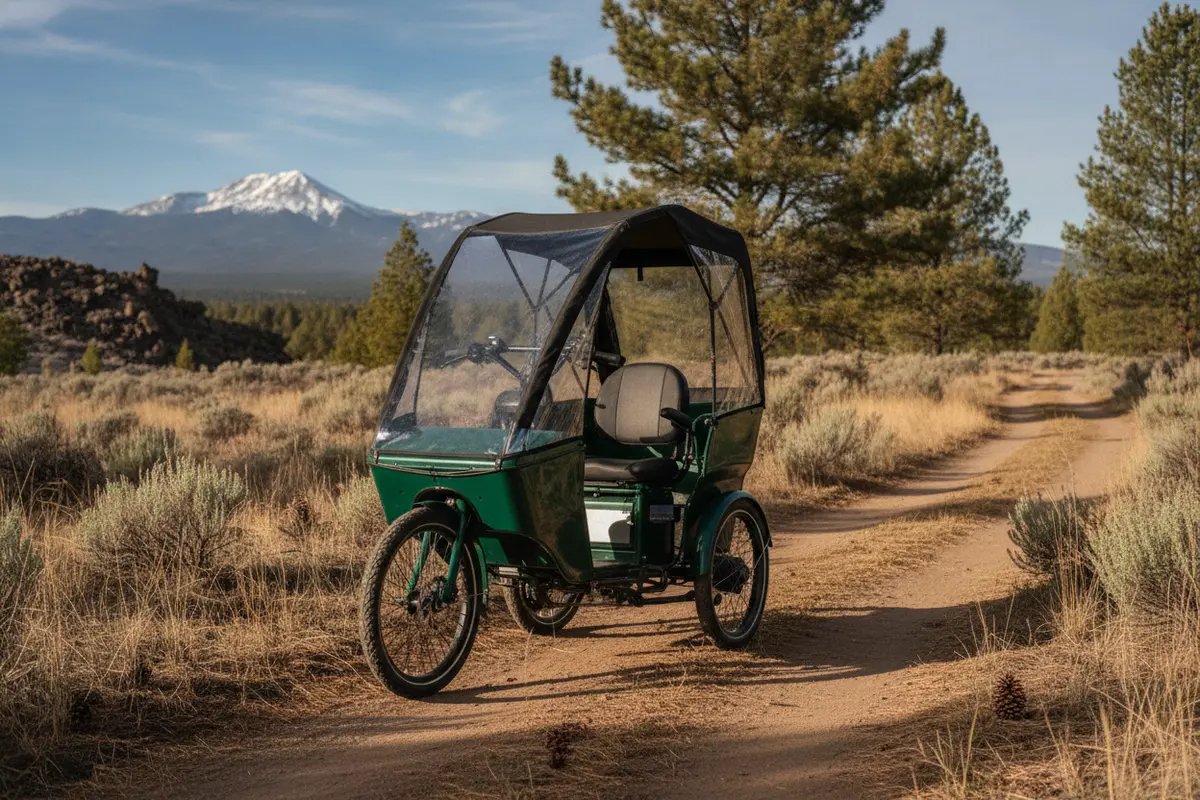
A cover can reduce direct exposure to sun, light precipitation, and wind. It does not automatically make a trike waterproof. Look for a roof or canopy that sheds water away from the rider, seams that do not direct runoff into the seating area, and side protection that does not interfere with steering or braking.
Weather protection is also about what the cover does when conditions are dry. A broad canopy may create shade, while a narrow windshield or partial enclosure may preserve more airflow. Ask whether panels can be opened or removed. Flexible protection is useful when a morning ride is cool but the afternoon is warm.
Keep expectations realistic. Heavy rain, standing water, snow, and strong crosswinds require more caution regardless of the cover. Protect electrical connections according to the manufacturer’s instructions, dry the trike after a wet ride, and store it under cover when possible. A weather-resistant design is not permission to leave the battery or controls exposed to prolonged moisture.
How should you prepare for changing conditions?
Plan around the day’s route instead of treating a canopy as a complete weather system. Check that rain gear can be stored without blocking the controls, and keep a dry cloth available for clear panels, mirrors, and the display. Dust and pollen can reduce visibility just as quickly as rain, especially when a clear side panel is close to the rider’s face.
Wind deserves a separate check. A tall cover presents more surface area than an open trike, so gusts may affect steering or parking. Choose a sheltered place to stop, hold the trike securely when dismounting, and avoid leaving it unattended where a canopy can catch a sudden crosswind. Ask how the cover is secured and whether it should be removed for storage or transport.
Does a covered electric tricycle remain stable?
Three wheels provide a stable platform when the trike is stopped and can make loading or mounting easier. Stability while moving still depends on wheel layout, tire contact, frame design, rider position, cargo weight, speed, and the surface. A cover adds height and may catch wind, so a covered trike can feel different from an uncovered model.
Take turns slowly during a test ride. Keep cargo low and centered, and avoid placing a heavy load high behind the seat or in a roof-mounted area. Do not assume that a wide cargo box makes every corner safe. Braking before a turn, rather than during a sharp turn, helps keep the ride controlled.
Ask a retailer to demonstrate how the trike handles a sloped driveway, a tight turn, and a stop on an uneven surface. Riders who have balance concerns should focus on easy entry, reachable controls, predictable braking, and confidence at low speed. A test ride is more useful than choosing from photographs alone.
How do route surfaces change the ride?
A paved neighborhood route may feel very different from a gravel shoulder, a cracked path, or a sloped driveway. Before buying, describe the surfaces you expect to use and ask which tires, seating position, and braking setup suit those conditions. Do not judge stability only on a smooth showroom floor.
Practice starting on a slight incline if that reflects your daily route. Confirm that the trike can be held securely while you mount, load, or unlock it. On uneven ground, reduce speed and keep both hands ready at the controls. The cover should remain secure and should not flap into the rider’s view as the surface changes.
How can you maintain visibility and ventilation under a cover?
A cover should protect without making the rider difficult for other road users to see. Check the position of headlights, rear lights, reflectors, turn signals, and any flags. The canopy should not hide lighting or create blind spots when you look over your shoulder. High-contrast panels can help, but never rely on color alone for visibility.
Ventilation matters in both hot weather and enclosed designs. Open sides may improve airflow but provide less protection from rain. Clear panels can preserve a view but may fog or collect dust. Sit in the trike and look forward, to both sides, and behind you. If the cover has windows, check whether they can be cleaned easily and opened safely.
Visibility also includes the rider’s ability to communicate. Make sure you can reach the bell, horn, brake levers, display, and lights without leaning around the cover. If a cover changes the position of a control or blocks a mirror, address that before buying.
What details should you inspect before riding?
- Look for clear sight lines at eye level while seated, not only while standing beside the trike.
- Check that windows, vents, and openings can be adjusted without taking a hand far from the controls.
- Confirm that lighting and reflectors remain visible from the front, rear, and sides.
- Ask how condensation, dust, and scratches on clear panels should be managed.
- Test the bell, horn, brakes, display, and lights with the cover closed and open.
What cargo features matter most?
Covered trikes are often chosen because they can carry groceries, mobility items, recreation gear, or a daily bag while offering some weather protection. Compare the usable cargo area, not just the outside dimensions. Measure the opening, floor length, width, and height under the cover. A box that looks large may be difficult to load if the opening is narrow.
Check the stated cargo limit and distribute weight according to the manufacturer’s directions. Keep heavy items low, secure loose objects, and leave space for your feet and steering movement. A cover can protect cargo from direct weather, but it may not seal against blowing rain or dust. Use suitable bags or containers for items that cannot get wet.
Consider how you will load the trike. A low step-in height, wide-opening cargo area, and stable parking position can matter more than maximum capacity. If you regularly shop, carry a folding chair, or transport supplies, bring a representative load to a consultation or test ride. That makes fit and balance easier to judge.
How can you organize cargo safely?
Separate items by weight and how often you need them. Put dense items on the lowest part of the cargo area, keep fragile objects away from the edges, and place frequently used items where they can be reached without leaning across the controls. Secure bags so they cannot shift into a wheel, chain, brake, or steering area.
Measure more than capacity. A tall package may fit inside the compartment but interfere with the canopy, while a wide grocery bag may not pass through the opening. Ask whether tie-down points, liners, or dividers are available for the model. If the trike is used for accessibility needs, leave enough room for the rider to mount and dismount without stepping around loose cargo.
How do you choose the right fit?
Fit includes the rider’s body position, reach, step-through access, seat adjustment, and relationship to the cover. Sit with both hands naturally on the controls. Check that your knees have clearance, your feet can reach the ground as intended, and the seat can be adjusted without putting you too close to the handlebars.
Try mounting and dismounting from both sides if your usual parking situation requires it. If you use a cane, brace, or other mobility aid, consider where it will go while riding. The cover should not force a slouched position or make it difficult to turn your head.
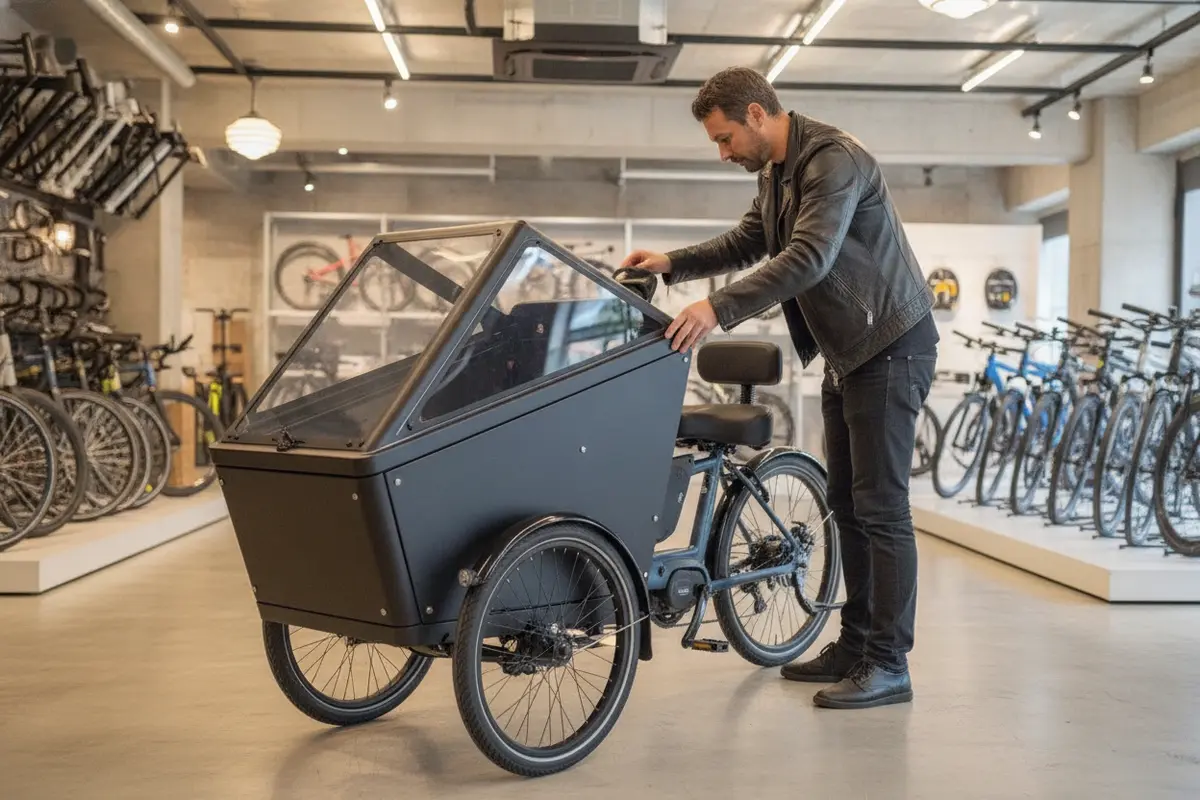
Families and couples should not assume one setup fits everyone. A rider who is taller may need more headroom, while another rider may prioritize a lower step-through and closer controls. Bring the person who will use the trike most often to the showroom. Voltaire Cycles of Central Oregon offers hands-on product evaluation and test rides in Bend, which can help turn these questions into practical observations.
What makes a fit comfortable for longer rides?
Comfort comes from the relationship between the seat, pedals, handlebars, and cover. Your shoulders should remain relaxed, your elbows should not be locked, and your knees should have room through the pedal rotation. Check headroom while wearing the hat or helmet you normally use. A canopy that feels spacious for a few minutes may feel restrictive after an hour.
Ask whether the seat and controls can be adjusted for your usual clothing and footwear. Check that you can see the display without hunching forward and that you can reach the parking brake or other securing feature while seated. A comfortable fit also makes it easier to maintain attention on the route.
What should you plan for storage and transport?
Measure the complete trike with the cover attached. Record its length, width, height, and turning space. Then measure the garage door, shed entrance, elevator, storage corner, or other place where it will live. A cover that folds or detaches may make storage easier, but confirm where the removed parts will be kept.
Transport is another consideration. Many ordinary bicycle racks are not designed for the width or weight of an electric trike. A rack must be compatible with the frame, tires, total load, and vehicle. Review options such as a Sure Grip rack or a hitch rack option with a technician before purchase; compatibility depends on the specific trike and vehicle.
For smaller cargo needs, a rack-top bag such as the TOPEAK beam rack or a compatible Ortlieb trunk bag may be useful on compatible bicycles, but do not assume a bicycle accessory fits a covered trike. Ask about mounting points, clearance, weight limits, and whether the cover or cargo box remains accessible.
How can you make storage easier?
Create a simple storage checklist before ordering. Measure the narrowest doorway, the highest obstruction, and the turning area needed to position the trike. Include the space required to open a door, lift a cover panel, remove a battery if the model requires it, or access a charger. A few extra inches may make daily use much easier.
Think about security and maintenance at the storage location as well. The area should keep the trike reasonably dry, allow tires and controls to be inspected, and provide a safe place for the charger. If a cover is removed for transport, store it where it will not be folded wet or crushed under other equipment.
Which features should you compare before buying?
The following comparison keeps the decision focused on daily use. Exact equipment varies by model, so confirm current specifications with the retailer or manufacturer.
| Area | What to check | Why it matters |
|---|---|---|
| Weather protection | Roof, side panels, drainage, removable sections | Helps manage sun, light rain, cold, and changing conditions |
| Visibility | Lights, reflectors, windows, mirrors, sight lines | Supports awareness and communication around traffic and paths |
| Stability | Wheel layout, braking, center of gravity, wind response | Influences confidence when turning, stopping, and loading |
| Ventilation | Open sides, vents, adjustable windows, heat buildup | Keeps the cabin more comfortable in sun and warm weather |
| Cargo | Opening size, usable volume, load rating, tie-down points | Determines whether everyday items fit securely |
| Fit | Step-through height, seat range, control reach, headroom | Supports comfortable mounting and riding |
| Storage | Overall dimensions, folding or removable cover, parking space | Prevents surprises at home or during transport |
How should you compare compromises?
Every cover design balances protection, airflow, weight, visibility, and convenience. More side coverage may help in cold or wet weather but can reduce ventilation. A compact canopy may be easier to store but protect less cargo. A larger cargo area may be practical but require more room to park and turn.
Write down your top three daily needs before comparing models. For one rider, those priorities may be a low step-through, clear sight lines, and room for groceries. Another rider may prioritize shade, headroom, and transport compatibility. Ranking needs prevents a striking feature from overshadowing a basic requirement.
Where can you test an electric tricycle with cover?
Local testing is especially valuable for a covered electric tricycle because the cover affects more than comfort. At Voltaire Cycles of Central Oregon in Bend, shoppers can discuss use cases, examine electric mobility options, and take a hands-on test ride. The store also provides multi-brand service and repairs, so ask how routine maintenance, adjustments, and future support would work for the model you are considering.
Bring a list of routes and tasks. Mention whether you expect to ride on paved roads, neighborhood streets, paths, gravel, or gentle slopes. Describe the weather you are likely to encounter and the cargo you want to carry. If you already own a bicycle or trike, a technician can also discuss whether an all-brands repair and service visit or a new vehicle better fits your needs.
For riders shopping online outside Central Oregon, use the same checklist and ask for measurements before ordering. Voltaire Cycles combines a Bend showroom experience with online purchasing, so remote shoppers can still prepare specific questions about fit, cover design, cargo, and transport.
During a consultation, ask for a clear explanation of routine care and service access. Confirm which adjustments are expected after initial use, how to report a concern with the cover or controls, and what information you should retain about the battery and charger. These questions help you compare ownership support along with the vehicle itself.
Call to plan your electric tricycle test ride
Frequently Asked Questions
Is an electric tricycle with cover waterproof?
Usually, a cover offers partial weather protection rather than complete waterproofing. Check the design, seams, openings, and manufacturer guidance, and protect sensitive cargo and electrical components during heavy or prolonged rain.
Will a cover make an electric tricycle harder to ride?
It can change wind response, visibility, ventilation, and overall dimensions. A properly fitted cover may remain easy to use, but you should test low-speed turns, braking, and parking with the cover installed.
How much cargo can a covered electric tricycle carry?
The answer depends on the model’s published cargo rating and how weight is distributed. Compare usable cargo dimensions as well as the weight limit, and keep heavy items low and secure.
Can I transport a covered electric tricycle on a car rack?
Some vehicle racks may support a compatible trike, but compatibility is not universal. Confirm the trike’s weight and dimensions, the rack’s rating, hitch requirements, and clearance with a qualified retailer or technician.
Should I remove the cover before storing or transporting the trike?
That depends on the cover design, storage space, and rack or vehicle clearance. Measure the trike in both configurations and follow the manufacturer’s instructions. If the cover is removed while wet, let it dry before folding it for storage.
How do you make the final choice?
Choose the electric tricycle with cover that fits your actual routes, rider position, cargo routine, storage space, and weather expectations. Compare the complete experience in person when possible, then confirm specifications, service support, and transport requirements before placing an order.