

Electric Scooter Waterproof Rating: How to Read IP Codes
An electric scooter waterproof rating can help you understand how a model is tested against dust and water, but it does not mean the scooter is waterproof or safe in every wet condition. An IP code is only one part of the decision; the manual, component limits, damage, and how you ride all matter. Before relying on a rating, confirm the exact model guidance and treat water exposure conservatively.
Call for model-specific scooter guidance
What does an electric scooter waterproof rating actually tell you?
An IP rating describes protection tested under defined conditions, not a promise that a scooter can be submerged or ridden through any storm. The letters IP stand for ingress protection. The code that follows uses digits to indicate protection against solids and water, with the water digit giving a general comparison between tested levels. Always read the maker’s instructions for the particular scooter and its components.
“Water-resistant” and “waterproof” are often used casually in product descriptions. Neither phrase alone tells you how a scooter handles rain, spray, standing water, or a pressure washer. An IP code gives more structure, but it does not erase practical limits: seals can wear, ports can be left open, and impact damage can change how well a housing keeps water out.
Do not assume every part of the scooter has the same protection. The display, battery enclosure, motor, controller, charging port, and connectors may have different vulnerabilities. A rating may apply to a specific enclosure or test configuration, rather than guaranteeing that the assembled scooter will remain protected after years of use.
The IP code is useful because it gives shoppers a common way to compare claims, but the number should be treated as a starting point rather than a riding instruction. Check whether the rating appears in the owner’s manual or official product documentation, and whether the wording applies to the complete scooter or a particular component. If the rating is absent, unclear, or described only in marketing copy, do not assume that the scooter can handle rain.
How do you read the digits in an IP code?
The first digit relates to protection from solid objects and dust. The second relates to water exposure under specified test conditions. A higher water digit generally corresponds to a more demanding defined test, but it is not a universal “rainproof” score. A missing or unavailable digit may be represented with an X; do not interpret X as proof of protection.
Some ratings address dripping water, sprays, or jets under controlled test conditions. Those tests do not necessarily reproduce a scooter moving at speed through rain, water entering a damaged seal, or a puddle hitting the underside. Nor do they establish that charging a wet scooter is safe. The manufacturer’s owner’s manual should be the final word for usage, cleaning, and charging. For a general explanation of how ingress protection codes are standardized, consult the International Electrotechnical Commission’s overview of IP ratings. Treat the code as a controlled test classification, not a guarantee for every real-world exposure.
| What to check | What it can tell you | What it does not guarantee |
|---|---|---|
| IP code on the product or manual | Tested ingress protection level for a stated configuration | Protection against all weather, immersion, or every component failure |
| Owner’s manual | Maker’s allowed conditions and care instructions | That a damaged, modified, or poorly maintained scooter remains protected |
| Port and seal condition | Whether obvious openings are closed and intact | That unseen seals or internal parts are dry |
| Warranty terms | How the maker handles specified defects and exclusions | Coverage for water damage unless the terms explicitly provide it |
What does splash exposure mean for an electric scooter?
A splash is not a single standardized condition. A light spray from a damp path differs from deep standing water, a forceful hose stream, or a fast ride that drives water into openings. Even a scooter with a stated water rating may have restrictions against riding in heavy rain or through puddles. If the manual sets a limit, follow it rather than trying to infer a safer limit from the IP digits.
When conditions are wet, reduce speed, avoid puddles and flooded areas, and leave extra room for stopping. Wet pavement can reduce tire grip and braking performance. Water can also hide potholes or debris. If rain becomes heavy, visibility drops, or water covers the road surface, the prudent choice is to stop riding and move to a dry, safe place.
Before heading out, check forecasts and your route as well as the scooter itself. A short trip on a damp, paved path is different from an exposed commute with standing water and poor visibility. Consider whether you have a dry place to wait or a way to end the ride if the weather worsens. Do not use a water rating to justify crossing a flooded section; the depth and flow may be difficult to judge, and water can conceal hazards beneath the surface.
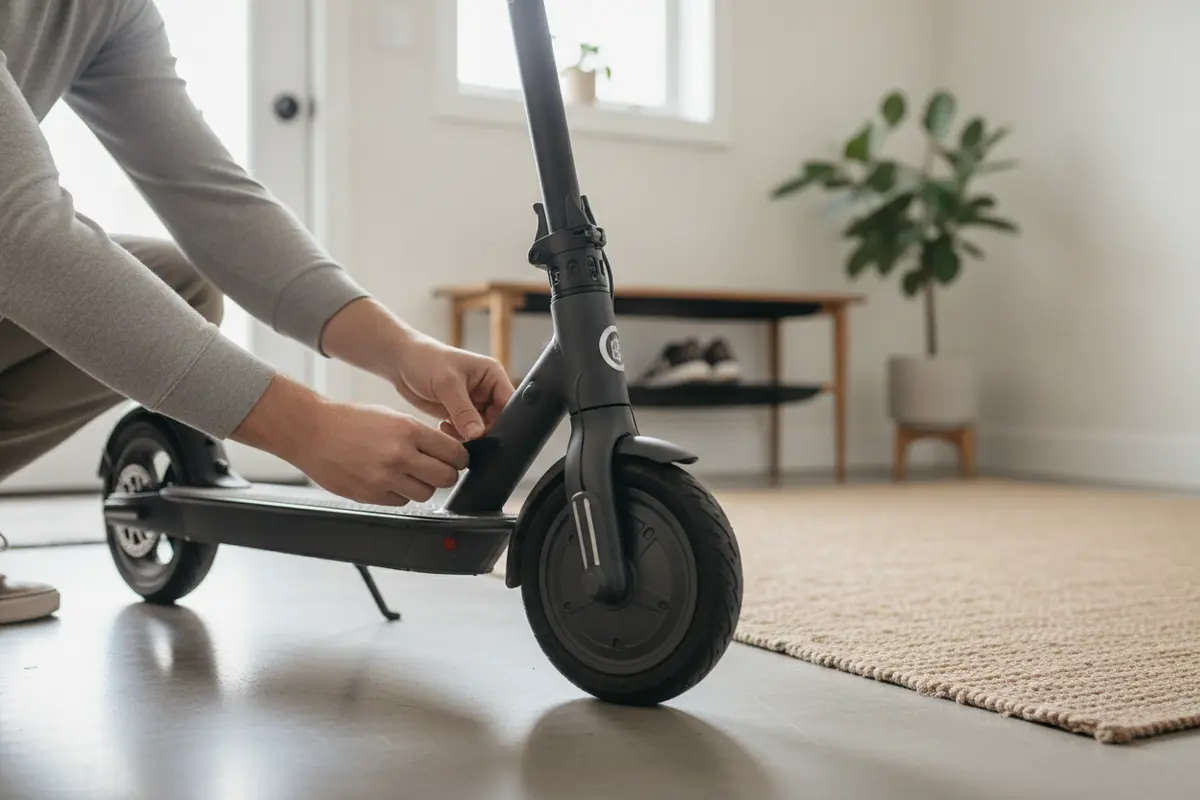
Keep the charging port cover closed and inspect the scooter before heading out. Look for cracked housings, loose covers, damaged cables, or missing seals. Do not ride if you see damage around a battery compartment or electrical connection. Find compatible parts and accessories through the Segway collection, and confirm the correct fit for your model before ordering.
How should you charge a scooter after a wet ride?
Do not plug in a scooter that is wet or has a damp charging port. Move it to a dry, ventilated location and follow the manufacturer’s instructions for drying and inspection. Do not use heat guns, open flames, or improvised methods to force-dry electrical components. If water may have entered the charging port, battery area, or controls, do not charge it until you have consulted the maker or a qualified service professional.
Use only the charger specified for the scooter. Keep the charger and its connections dry, and avoid charging near standing water or where the scooter could be exposed to rain. Before connecting it, check the charger cable, plug, and port for moisture or visible damage. If you notice unusual heat, odor, smoke, or a warning message, disconnect power if it is safe to do so and seek professional help.
Charging guidance varies by model. A rating for water ingress does not automatically apply to the charger, and it does not mean the scooter can be charged outdoors in wet weather. Check the manual for storage and charging temperature limits as well as any instructions about removing or handling the battery.
Make the charging decision in order: first consider whether the exterior is dry; then inspect the port and connector; then check that the charger and cable are dry and undamaged; finally confirm the manual’s instructions. If you are unsure whether water reached an electrical area, pause rather than testing the scooter or plugging it in. A cautious delay is preferable to exposing a wet connection to power. Keep the charger in a dry location too, since a dry scooter does not make a wet charger safe.
How do you clean and store an electric scooter?
After a ride in damp conditions, wipe the scooter with a soft cloth and let it dry fully before charging or storing it. Pay attention to the deck, fenders, wheel areas, and exterior near seams, while avoiding water intrusion into ports and controls. A cloth or gentle damp wipe is usually a safer starting point than spraying the scooter down.
Do not assume a water rating permits pressure washing. A jet can force water past seals even when ordinary splashes would not. Avoid soaking electrical parts, submerging the scooter, or using solvents and abrasive cleaners unless the manual allows them. For care products, check compatibility with the maker’s finish and components; the store’s all-weather lubricant listing is not a substitute for scooter-specific cleaning instructions.
Use a repeatable cleaning routine after wet exposure. Switch the scooter off, remove loose dirt with a soft dry cloth, and use only the cleaning method the manual permits. Keep liquid away from the display, switches, seams, charging port, and battery area. Do not spray cleaner directly onto the scooter; if the manufacturer permits a damp cloth, apply moisture to the cloth rather than flooding a component. Let the scooter air-dry in a sheltered place, then inspect it before charging or riding again.
Store the scooter indoors in a dry place, away from repeated exposure to rain and standing water. Keep the charging area dry and clear. If the scooter has been exposed to more water than the manual permits, do not simply store it and assume it will be fine: arrange an inspection if symptoms appear or water may have reached electrical areas.
For longer storage, follow the maker’s battery instructions rather than relying on a generic routine. Manuals may specify whether the battery should remain installed, how it should be charged, and which temperature range is appropriate. Keep the scooter away from places where leaks, condensation, or direct weather can reach it. A protective cover may reduce dust, but it should not trap dampness against the scooter; make sure both the vehicle and storage space are dry before covering it.
Can water exposure affect a scooter warranty?
Warranty coverage depends on the manufacturer’s written terms and the cause of a problem. Some warranties exclude water damage or damage from use outside stated conditions. Others distinguish manufacturing defects from exposure, misuse, modification, or normal wear. Read the warranty for your exact model and keep documentation of any inspection or repair.
An IP rating is not a warranty promise. It does not mean every water-related failure is covered, nor does an exclusion prove that every wet ride voids coverage. Avoid making assumptions based on a retailer description or a rating alone. If a claim may be needed, document what happened and contact the manufacturer or authorized service provider before attempting repairs.
Keep a copy of the relevant model manual and warranty, and note the date and circumstances of an exposure if the scooter later develops a problem. Describe what happened plainly, including whether the scooter was ridden in rain, splashed, washed, or submerged. Avoid opening sealed housings or attempting an electrical repair before you have checked the warranty process. Those steps help a service provider understand the issue without relying on guesses about whether the IP code should have prevented it.
For service questions, a local technician can help assess visible damage and direct you to model-appropriate next steps. Voltaire Cycles of Central Oregon provides repair and service support across brands; see the all-brand repair and service page for information. You can also explore electric bikes and mobility options if a scooter is not the right fit for your riding needs.
What should you do if your scooter got soaked?
If a scooter has been caught in a downpour, crossed deep water, or fallen into water, prioritize safety over testing whether it still turns on. Do not switch it on or connect a charger if you suspect water entered electrical areas. Move it only if safe, keep it away from flammable materials, and follow the manufacturer’s emergency guidance. A qualified service professional can inspect it before further use.
For minor exterior dampness, wipe it dry and inspect covers, ports, cables, and the battery area. Watch for changes in braking, acceleration, display behavior, or charging. Stop using the scooter if it behaves unexpectedly. A working display does not prove that internal parts are dry or undamaged.
When arranging help, provide the brand and exact model, a short account of the exposure, and any warning messages or unusual behavior. Tell the technician whether the scooter was switched on or charged afterward. This information can guide an inspection and reduce unnecessary trial-and-error. Do not carry or handle a damaged battery if doing so seems unsafe; follow the manufacturer’s instructions and local emergency guidance if there is smoke, heat, or another immediate hazard.
Frequently Asked Questions
Does an IP rating mean an electric scooter is waterproof?
No. An IP rating describes protection under defined test conditions. It is not a guarantee against immersion, heavy weather, wear, or water entering damaged seals. Follow the scooter’s manual.
Can I ride my electric scooter in light rain?
Only if the manufacturer allows it for your model and conditions. Ride cautiously, avoid puddles, and stop if rain becomes heavy or visibility and traction decline.
Can I hose off an electric scooter?
Do not hose or pressure-wash it unless the manual expressly says that method is acceptable. Use a soft cloth and gentle cleaning approach, keeping water away from ports and controls.
Should I charge my scooter right after a wet ride?
No. Make sure the scooter, charger, and charging port are dry, and follow the model’s instructions. If water may have entered an electrical area, consult the manufacturer or a technician before charging.
Explore Segway electric scooters and mobility products
An electric scooter waterproof rating is useful context, not permission to ignore weather, charging, or care instructions. Check the exact model guidance, protect the scooter from unnecessary water exposure, and ask for help when its condition is uncertain.