
Electric Off-Road Bike for Hunting: Buying Guide
An electric off-road bike for hunting has to do more than look rugged at the trailhead. It needs predictable traction, useful low-speed control, enough range for the route and load, a way to carry essential gear, and a maintenance plan for dust, cold, moisture, and long distances. The right choice also starts with confirming where that vehicle may legally travel.
Schedule an electric bike consultation with Voltaire Cycles in Bend
This guide focuses on buying considerations rather than naming one universal best hunting bike. Use it to compare pedal-assist e-bikes, higher-powered electric off-road vehicles, and Segway models you may want to investigate. Product fit, route rules, and hunting success are never guaranteed by a motor, tire, or battery specification.
What should an electric off-road bike for hunting be able to handle?
An electric off-road bike for hunting should match the rider, terrain, cargo, and route rules before it is matched to a brand. Start with the hardest realistic section of the trip: surface, elevation, distance, weather, gear, and return plan. A bike that stays comfortable and controllable when loaded is more useful than one chosen only for a headline power number.
Central Oregon can combine loose volcanic soil, hardpack, embedded rock, ruts, roots, dust, and steep grades. Define the complete load, including clothing, water, tools, navigation equipment, optics, emergency supplies, and any legally permitted field gear. Check the bike's published payload limit, the rack limit, and the effect of cargo on balance and braking.
A fat tire, throttle, suspension system, or high-output motor does not grant permission to ride a particular road or trail. A vehicle that works on a designated motorized route may not be appropriate on a non-motorized trail. Treat route research as part of the purchase decision.
How much torque and traction do hunters really need?
Hunters usually need controllable torque and dependable traction more than maximum speed. Torque helps a loaded bike start and climb at low speed, while tire width, tread, pressure, suspension, and rider technique determine how that power reaches the ground. More output can also be harder to manage, so test low-speed behavior before buying.
Torque for climbs and loaded starts
Ask how the motor delivers power at low speed, how assist levels are controlled, and whether the system responds smoothly when traction is limited. Abrupt power can spin a rear tire or disturb balance on a narrow route. Mid-drive and hub-drive systems can both serve different riders, so compare control, serviceability, weight, and route needs rather than assuming one layout always wins.
Tires, pressure, and ground contact
Wide tires can increase contact and stability on soft or uneven surfaces, but they do not eliminate punctures or guarantee flotation. Use a pressure range appropriate for the tire and load, inspect sidewalls, and carry an inflation or repair solution. Full suspension may reduce fatigue over repeated impacts, but it adds weight and setup requirements.
How should you plan range for a hunting trip?
Plan range from the hardest realistic ride, not the maximum number printed on a product page. Distance, elevation, rider and cargo weight, temperature, tire pressure, assist level, wind, surface, and stop-and-go riding all change battery use. Build a turn-around point and reserve energy for a detour or slower return.
A route can become longer when a gate, washout, closure, or steep section changes the plan. Use the full distance from the vehicle to the intended area and back, then confirm the current status of the roads or trails. Treat the manufacturer's maximum range as a comparison point, not a promise.
| Planning factor | Why it changes range | What to do before the ride |
|---|---|---|
| Elevation and loose ground | Climbing and wheel slip demand more energy. | Reserve power for the return and use only the assist needed for control. |
| Rider and cargo weight | A heavier system requires more work on climbs and starts. | Estimate complete loaded weight and compare every rated limit. |
| Cold or wet weather | Temperature and difficult surfaces can reduce usable range. | Start charged, protect connectors, and make the turnaround conservative. |
| High assist or throttle use | High output and frequent stops can consume energy quickly. | Practice settings beforehand and do not equate throttle range with pedal-assist range. |
Segway's official Xafari specifications list a 936Wh battery and up to 88 miles under stated test conditions. Real range still depends on the rider, route, weather, mode, and load. You can review Segway electric bikes and scooters at Voltaire Cycles as a starting point, then match the model to the trip.
What gear and cargo setup should an off-road hunting bike carry?
A useful hunting-bike cargo setup keeps heavy items low, secure, balanced, and accessible without exceeding bike or rack limits. The goal is not to carry everything. Carry what supports the route, weather, communication, navigation, first aid, and a safe return while preserving steering and braking control.
- Pack water, food, and weather-appropriate layers.
- Carry a compact pump, tire plugs or a correctly sized tube, and tire levers.
- Add a multi-tool, spare fasteners, and bike-specific recovery items.
- Bring first-aid supplies and a charged communication device.
- Use lights and reflective equipment where permitted and appropriate.
Keep dense items close to the frame. Prevent bags from touching the wheel, drivetrain, brake rotor, suspension, or steering. Before leaving the trailhead, turn the bars through their range, squeeze both brakes, and confirm rack straps and fasteners remain stable. Voltaire's Segway Xafari Hunt Bike listing is one hunting-oriented setup to investigate, not a guarantee of fit.
Does a quiet electric bike make a good hunting vehicle?
Electric drive can reduce engine noise compared with a gas-powered vehicle, but quiet operation is not a hunting guarantee. Wildlife, wind, terrain, rider movement, braking, tires, and loose gear can all create sound. Use the quieter drivetrain as one consideration, then follow land-manager rules, ethical hunting practices, and safe distance from people and animals.
Avoid rattling straps and hard objects touching the rack. Approach uneven sections slowly, brake before loose corners, and never use a bike to chase, harass, or force an animal. Early starts, shade, dust, rain, and forest roads can also reduce visibility, so use appropriate lighting where permitted and give other users room.
What access and classification questions should you answer first?
Confirm the vehicle classification and the exact route rules before you buy or ride. Land managers can distinguish among e-bikes, electric motorcycles, OHVs, and other motor vehicles, while routes can have vehicle-class, seasonal, width, or permit restrictions. A product description is not a legal access decision.
The U.S. Forest Service electric bicycle guidance explains that access depends on local designations. For Central Oregon, the Deschutes National Forest says its Motor Vehicle Use Maps are the official maps for public motorized travel on designated routes. Check the vehicle class, season, and route designation for the unit you plan to visit.
Review current hunting rules from the Oregon Department of Fish and Wildlife as well. Regulations and in-season updates can change. This article is not legal advice, and Voltaire Cycles cannot grant access to public or private land. If a vehicle is closer to an electric dirt bike or motorcycle, do not assume bicycle rules apply. Ask the land manager before the trip.
How should weather and field maintenance affect the purchase?
Choose a hunting bike you can inspect, clean, charge, and repair after a demanding ride. Dust, mud, cold, water, vibration, and transport can expose weak points in tires, fasteners, brakes, connectors, suspension, and battery mounting. Local service support matters because a field problem can become a safety issue when the route is remote.
Before each ride, check tire condition and pressure, brake feel, rotors, chain or belt, wheel security, rack fasteners, steering, lights, battery engagement, and visible cable or connector damage. After riding, follow the manufacturer's cleaning instructions and avoid high-pressure water at bearings, displays, connectors, or battery interfaces. Follow battery charging and storage instructions and do not take a damaged or swollen battery into the field.
Voltaire's Bend repair and service center is a relevant resource when comparing support after purchase. Ask what the shop can service, what must go to the manufacturer, and how seasonal maintenance is handled.
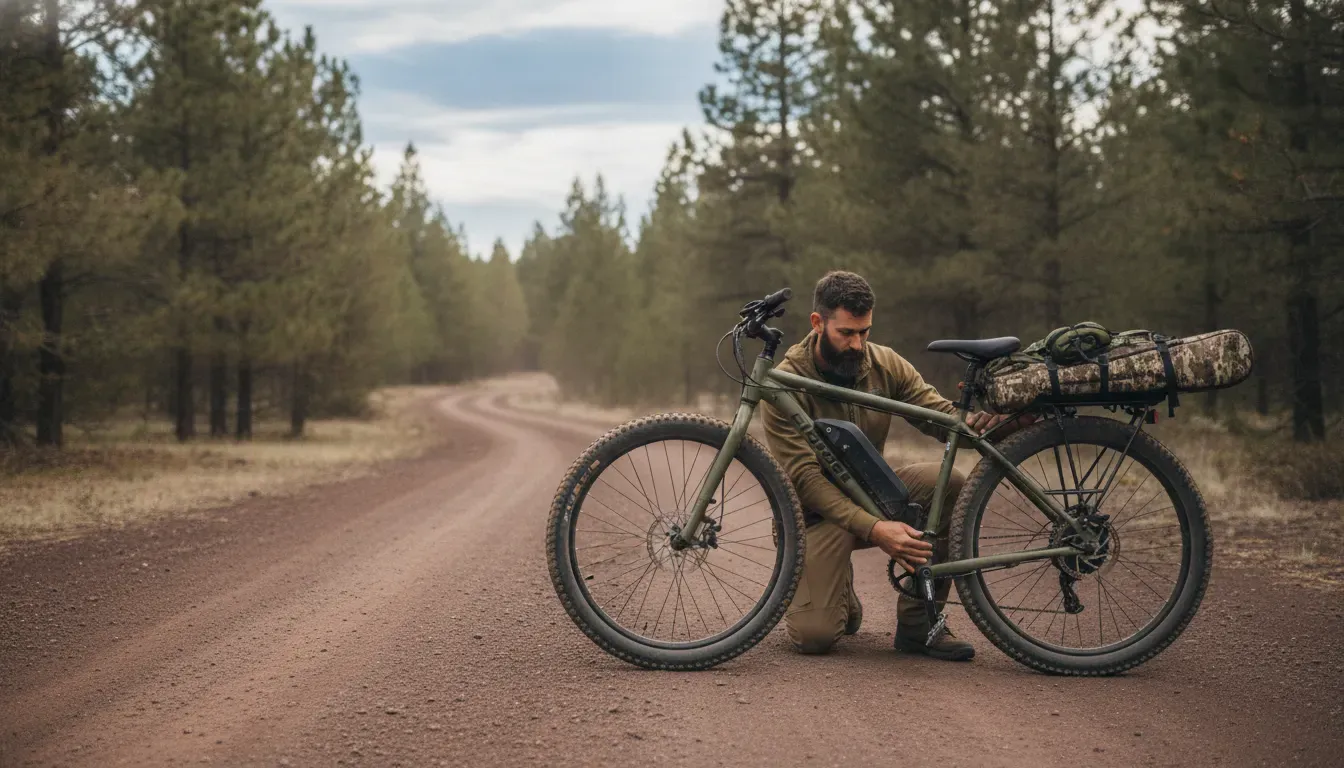
How do you test an electric off-road bike for hunting before purchase?
Test the bike with the movements and load that resemble your route, not only a fast pass across a smooth parking lot. Confirm fit, starts, stops, turning, low-speed power, braking, reach, and cargo balance. A short, controlled ride can reveal whether the bike feels manageable before a remote trip.
Begin unloaded, then add representative weight if the shop can do so safely. Practice starting on a mild incline, easing through a tight turn, stopping on a downhill, and stepping off without the bike falling toward you. Notice whether the controls are easy to use with gloves and whether you can modulate power without a sudden surge.
Ask the retailer which components are included, which are optional, and which require professional installation. Confirm charger compatibility, battery removal, rack limits, tire size, brake parts, service intervals, and warranty routing. If you expect to transport the bike, measure the rack or vehicle space before purchase.
Write down the route, load, weather window, and access questions you still need to resolve. A test ride cannot answer a land manager's rule, and a comfortable bike cannot replace a conservative range plan. Use the ride to evaluate control and fit, then use official sources to validate the trip.
Which Segway models are worth investigating?
Segway models can be useful comparison points, but the right choice depends on classification, route, fit, load, and support rather than the brand name alone. Voltaire Cycles focuses on Segway products and can help compare current options, yet specifications and availability should be checked on the live product page before purchase.
The Segway Xafari is an adventure-oriented e-bike with published torque, battery, suspension, tire, and assist information. The Segway Xyber is another higher-performance option with a different power and battery configuration. Compare them by the trip requirements, not range or wattage alone. The Segway Xaber 300 belongs in a separate electric dirt-bike conversation, where classification, equipment, transport, route rules, and service must be answered first.
You can also browse Voltaire's electric bike collection and bring a written route and load plan to a consultation. An in-person fit check and controlled test ride can reveal low-speed handling, reach, braking feel, and cargo balance that a specification sheet cannot.
Get a route-and-load consultation for your electric off-road bike for hunting
FAQ: Electric Off-Road Bikes for Hunting
The safest purchase starts with a route-specific answer. Identify the vehicle category, verify access, estimate loaded range, and choose a bike and support plan you can manage in the field. Use these questions to organize a conversation with a retailer and the relevant land manager.
What is the best electric off-road bike for hunting?
There is no universal best model. The right choice depends on terrain, route access, rider fit, cargo, range, weather, classification, and service. Compare a specific trip with a specific vehicle, then test the loaded bike at low speed before buying.
How much range does an electric hunting bike need?
Plan for the full route, elevation, load, temperature, surface, and return reserve instead of relying on a maximum range claim. Map a conservative turnaround point and confirm that the route remains open. Cold weather, loose ground, heavy cargo, and high assist can reduce usable range.
Are electric bikes allowed on hunting trails in Oregon?
It depends on the vehicle category, land manager, route designation, season, and current rules. Check official route maps and regulations for the exact unit. Do not infer access from a bike's appearance, motor output, a third-party map, or another route.
Is a high-torque electric bike better for steep hunting terrain?
Useful low-speed torque can help on climbs and with a loaded bike, but traction, control, brakes, tires, rider skill, and route conditions matter just as much. Test smooth power delivery and braking on an incline. More power is not automatically safer or more appropriate.
Where can Central Oregon riders get help choosing and servicing an electric bike?
Voltaire Cycles in Bend offers electric mobility products, consultations, test-ride support, and service resources. Bring your route, expected load, rider fit needs, and maintenance questions. Product availability, specifications, and access suitability should be confirmed before purchase.